REVIEW · SOUTH WEST ENGLAND
The Big One 150ft Abseiling Experience
Book on Viator →Operated by Up & Under Adventures · Bookable on Viator
A 150ft drop beats any couch day. This 150ft abseil near Weston-super-Mare is built for real beginners: you get guided coaching, helmets and harnesses, and step-by-step support from instructors like Rob and James. I also love the way the day mixes adrenaline with scenery, with views over the Severn Channel and the city.
You should know one thing before you book: it depends on good weather. You’ll also want a moderate physical fitness level for the walking and handling your gear through the session.
In This Review
- Key highlights to know before you go
- The Big One 150ft abseiling: why this Uphill location is such a good match
- How the session actually works: from the trial abseil to the 150ft drop
- Safety gear and instruction that makes the height feel less scary
- Views over the Severn Channel: the part you’ll remember after the nerves
- What’s included, what’s not, and what that means for your day
- Timing and group size: how it affects your confidence
- Meeting point at Uphill: where you start and how the session wraps up
- Who this is best for (and who might rethink it)
- Should you book The Big One 150ft abseiling experience?
- FAQ
- How long does the Big One 150ft abseiling experience take?
- Where does the experience start and end?
- What is included in the price?
- Is there a practice abseil before the 150ft drop?
- Are snacks or drinks provided?
- Do I need climbing/rock shoes?
- What fitness level is required?
- What happens if the weather is poor?
Key highlights to know before you go
- Practice first at about 30–40ft, so the 150ft feels earned, not random
- Helmets and harnesses are provided, and the team focuses on correct fit
- Small groups (up to 6), which means you actually get attention
- Coaching that builds confidence, praised for patience and encouragement (Rob, James, Scottie)
- Severn Channel and city views make the climb and set-up feel worth it
- Rock shoes aren’t provided, so you’ll want to plan your footwear
The Big One 150ft abseiling: why this Uphill location is such a good match
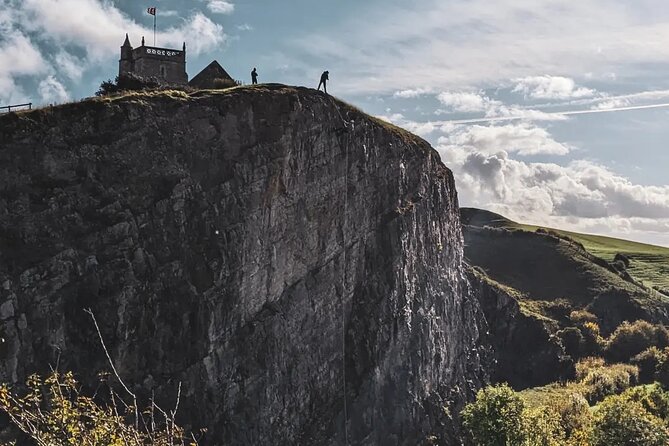
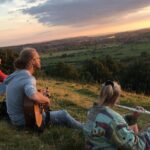
This is South West England adventure tourism with a real-world thrill attached: Uphill, by Weston-super-Mare, with the Severn Channel and the city in your line of sight. The whole concept feels designed to give you a proper “I did it” moment. And the experience format helps: you’re not just dropped at the top and told good luck.
The session runs about 3 hours, with a limited group size of max 6 travelers. That’s a big deal. Fewer people means more time for checks, questions, and one-on-one feedback. It also keeps the energy calmer, which matters when you’re standing at a big edge.
Price is $68.55 per person. For what you’re getting, it’s not just paying for height. You’re paying for trained instruction, safety gear, and a structured progression from practice to the main drop. When you compare that to the cost and complexity of arranging your own rope access (and the safety risk that comes with doing it wrong), this is strong value.
One more practical note: it’s popular. On average, it gets booked about 38 days in advance, so if this is on your “must do” list, don’t wait for the last minute.
You can also read our reviews of more tours and experiences in South West England.

How the session actually works: from the trial abseil to the 150ft drop
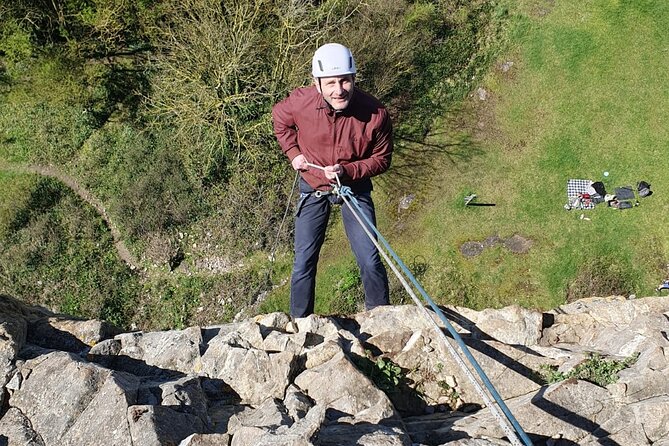
The day is structured so you learn before you commit. You start with a practice abseil of about 30–40ft. That lower section is where you get your bearings: how it feels to be on the rope, what you’re supposed to do with your body, and how the control system works with the coaching.
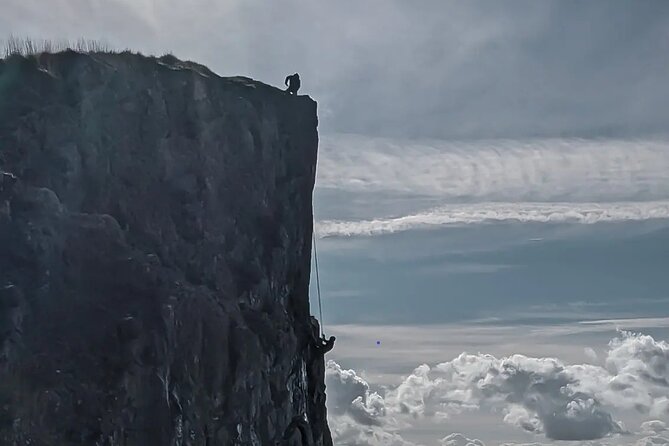
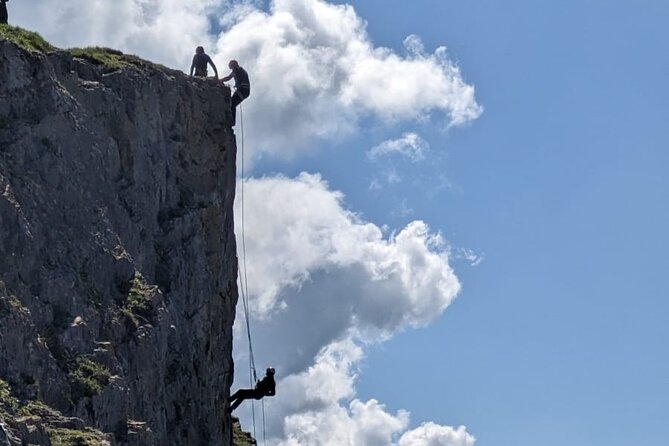
Then you move up to take on The Big One: the 150ft abseil from the top. This matters psychologically. Many people worry about the moment they’ll have to step out or look down. Doing the training section first gives your brain proof that you can do the basics and still keep control.
The activity includes a session called Stop 1 at an Uphill Local Nature Reserve area. In practice, that stop is where the teaching and preparation happen before you get into the main abseiling work. It’s part of what keeps the whole day from feeling like chaos. You’re not rushing straight into the hardest part.
Also, the schedule isn’t just “one descent and done.” The way the program is run (and the way people describe repeating the abseil) signals that you’ll be supported to progress at your own pace. Even if you’re nervous, the whole point is that you get the right level of coaching at the right moment.
Safety gear and instruction that makes the height feel less scary
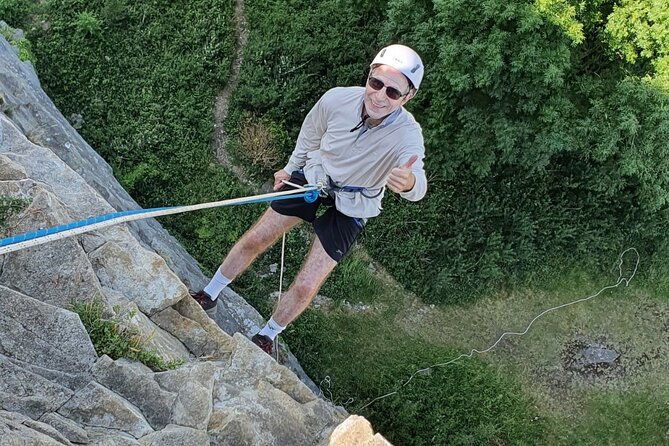
The included kit is a key selling point: you get climbing equipment for the activity, including helmets and harnesses. The difference between scary and manageable is often gear fit and instruction quality. Here, that’s the focus.
From the reviews, the consistent theme is that instructors are professional without turning the day into a stiff lecture. People specifically call out how instructors like Rob and James are patient and encouraging, especially for complete beginners. One theme you can count on: they take time to get equipment correctly worn and make sure you understand what you’re required to do before you go.
In a lot of adventure activities, the safety talk can feel rushed. This doesn’t sound like that. Instead, the coaching is described as building confidence step-by-step, and that lines up with the “practice first” format. You’re not just learning rules. You’re learning what to do while your heart rate is trying to escape.
Practical mindset tip: treat the instructions like a checklist, not advice you’ll ignore when adrenaline kicks in. If you’re unsure about hand position, stance, or timing, ask. The structure exists so you can get those answers before you’re at the edge.
Views over the Severn Channel: the part you’ll remember after the nerves
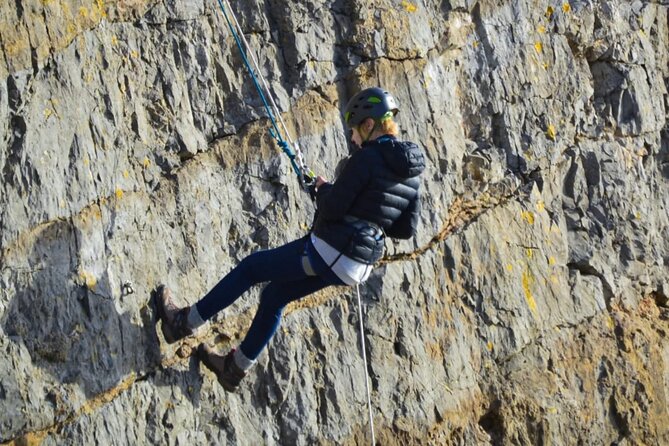
Yes, the main event is the 150ft descent. But what makes this experience more than a one-note thrill is that the top comes with scenery.
The highlights call out impressive views of the Severn Channel and the city. That changes how the “wait around at height” feels. Instead of focusing only on the drop, you get a sense of place. You’re at a real coastal location, not a warehouse stunt.
And once you’re on the rope, those views can actually help your brain. Looking at a fixed, distant reference point is often easier than staring straight down. You’ll still feel the height. You just won’t feel trapped in it.
If you’re the type who gets overwhelmed by waiting, you’ll likely appreciate that the process is coached and paced. You’re not left hanging while someone chats. You’re guided, trained, checked, then asked to go when ready.
What’s included, what’s not, and what that means for your day
Here’s where this experience gets practical fast.
Included:
- Use of climbing equipment appropriate for the activity
- Helmets and harnesses (so you don’t need to source safety gear yourself)
Not included:
- Snacks and drinks (there is an onsite shop/cafe where you can buy refreshments)
- Parking fees
- Climbing/rock shoes (these aren’t provided)
That last point matters more than people expect. If you show up in the wrong footwear, it can make you less comfortable and more tense. Since shoes aren’t provided, you’ll want to bring your own suitable climbing/rock shoes or plan around what’s available to you locally.
Food-wise, plan for a gap. This is about 3 hours, and you might work up an appetite after the adrenaline wears off. Since you won’t be handed snacks by the team, go in thinking: I’ll grab a drink or snack at the onsite shop/cafe if I want one.
Also consider what’s not mentioned: there’s no mention of changing facilities, storage, or rental shoes. So the safest plan is to arrive ready for the activity and keep your needs simple.



Timing and group size: how it affects your confidence
You’re booking a popular activity, with people securing spots ahead of time. The average booking window is about 38 days, so expect that this operator can fill slots.
The group cap of 6 travelers changes your experience in measurable ways:
- You spend less time waiting while staff handle gear for lots of people.
- You’re more likely to get feedback quickly.
- You can keep your focus because the group energy stays manageable.
This matters especially for first-timers. A rope course or abseil can feel intimidating even when you know you’re safe. When you’re in a small group, the instructor can read your body language and respond faster. Based on the way people talk about instructors like Rob, that support is part of the experience, not an accident.
If you’re nervous, small group size is a quiet comfort. You’ll feel less like you’re on display and more like you’re learning.
Meeting point at Uphill: where you start and how the session wraps up
You meet at The Boathouse Uphill, Uphill Wharf, Uphill, Weston-super-Mare BS23 4XR, UK. The activity ends back at the same meeting point.
That “starts and ends here” setup is helpful. It reduces logistical stress. You’re not trying to coordinate transport from some far-off climbing area afterward. You can just finish, regroup, and head to food or parking from the same spot.
One more small planning point: wear what you’d feel comfortable moving in for about 3 hours, since this is not just standing still before and after. The session includes training and then the main abseil, and your body will do more than you’d expect if you’re imagining a quick photo-op.
Who this is best for (and who might rethink it)
This abseiling experience is a strong fit for:
- Complete beginners who want expert coaching, not guesswork
- People who value safety checks and clear instruction
- Anyone who wants a confidence-building structure: practice first, then commit to the full 150ft drop
- Those who want a thrill with actual support. Reviews specifically highlight first-time participants and people in their 60s and 70s who felt encouraged and safe
It may be less ideal if:
- You’re uncomfortable with heights to the point that even practice won’t calm you
- You don’t have a moderate fitness level needed for the physical demands of the day
- You’re not prepared to bring climbing/rock shoes since they aren’t included
- Weather is a gamble for your schedule. This activity requires good weather, and if it’s cancelled you’ll be offered a different date or a refund
If you’re on the fence, don’t overthink it. The whole setup is built to handle nerves. But it still requires your participation—no hiding behind the rope.
Should you book The Big One 150ft abseiling experience?
If you want a guided, beginner-friendly way to do a real 150ft abseil with professional kit and coaching, I think you’ll like this. The best part isn’t just the height. It’s the structure: practice first, equipment checks, patient instructors, and time for encouragement.
Book it if:
- You want small-group attention (max 6)
- You appreciate safety gear being provided and fitted
- You’d enjoy views over the Severn Channel
- You’re ready to bring your own climbing/rock shoes and plan for refreshments on-site
Skip or postpone it if:
- Bad weather will ruin your schedule
- You’re not confident you can handle a moderate physical effort for the full session
- You’re not prepared for what’s not included (especially footwear)
Bottom line: this feels like a smart, high-value adventure for people who want to challenge themselves with real support. The “big” moment is there, but you earn it the right way. And when you step over the edge, you’ll understand why people keep coming back for another go.
FAQ
How long does the Big One 150ft abseiling experience take?
It runs for approximately 3 hours.
Where does the experience start and end?
It starts at The Boathouse Uphill, Uphill Wharf, Uphill, Weston-super-Mare BS23 4XR, UK, and ends back at the same meeting point.
What is included in the price?
The price includes use of climbing equipment, including helmets and harnesses.
Is there a practice abseil before the 150ft drop?
Yes. You’ll do a practice abseil of about 30–40ft before going on to the 150ft abseil.
Are snacks or drinks provided?
No. Snacks and drinks are not provided, but there is an onsite shop/cafe where you can buy refreshments.
Do I need climbing/rock shoes?
Yes. Climbing/rock shoes are not provided.
What fitness level is required?
You should have a moderate physical fitness level.
What happens if the weather is poor?
This experience requires good weather. If it’s cancelled due to poor weather, you’ll be offered a different date or a full refund.