Coventry tells its story in layers. This walking tour strings together landmarks that connect the old city, the post-war rebuilding plan, and the industries that made Coventry famous, from Lady Godiva to jet engines and bikes. I love how the tour keeps the focus on specific places you can point to, and on the theme of the City of Tomorrow plan as the city reshaped itself.
I also like the quick, story-led pacing: most stops are outside and the time between them feels manageable. It’s a mostly flat walk (just over two miles) with only some inclines/ramps and a small patch of cobbles, so you’re not dragging through long detours. One thing to consider: the meeting point can be a little hard to find if you rely only on a pin, since the real starting spot is by the Godiva statue in Broadgate square.
In This Review
- Key highlights I’d plan around
- Before you go: meeting point, timing, and walking reality
- Stop 1: Lady Godiva Statue and the City of Tomorrow plan
- Stop 2: Ribbon weaving, survival near St Mary’s
- Stop 3: Sir Frank Whittle and the jet engine story
- Stop 4: Lady Herbert’s Garden—bicycles, city walls, and Alfred Herbert
- Stop 5: The Coventry Ring Road (A4053) and engineering for movement
- Stop 6: Millennium Place and Coventry’s motor industry rise-and-fall
- Stop 7: Palmer Lane—off-the-beaten-track details
- Stop 8: The Old Grammar School corner art and local naming
- Stop 9: Belgrade Theatre and Coventry’s arts timeline
- Stop 10: Bond’s Hospital—500+ years of the same purpose
- Stop 11: St John the Baptist and the phrase Sent to Coventry
- Stop 12: Historic Spon Street—industries that shaped a road
- Stop 13: Coventry Market Shopping Centre quick stop
- Stop 14: Bull Yard and Shelton Square—City of Tomorrow in public art form
- Stop 15: Cheylesmore Manor House—700 years old, royal palace energy
- Stop 16: New Union Street and Greyfriars Spire
- Stop 17: Ford’s Hospital—exquisite civic architecture
- Stop 18: Hertford Street and back to Broadgate
- Value and practical fit: is this the right walk for you?
- Should you book The Jigsaw of History Tour?
- FAQ
- How long is the Jigsaw of History Tour in Coventry?
- Where does the tour start and where does it end?
- Is the tour mostly flat, or does it involve hills?
- What’s included for admission fees at the stops?
- Is the tour offered in English?
- How many people are in a group?
- Are service animals allowed on the tour?
Key highlights I’d plan around
- Broadgate to Lady Godiva sets up the post-war City of Tomorrow masterplan theme right away
- Industrial stories in plain sight, including ribbon weaving and what survived near St Mary’s
- A stop for Sir Frank Whittle, linking Coventry engineering to the RAF and the jet age
- Bicycles + the Coventry City Wall, with the industrialist Alfred Herbert saving key sections
- Motor city ups and downs, from the rise of car manufacturing to how it almost disappeared
Before you go: meeting point, timing, and walking reality
The tour starts at Sky Blue City Walks on Broadgate in Coventry (CV1 1NE), and it ends back at the same meeting point. You’re set for about 2 hours 45 minutes, and the walking distance is just over two miles—mostly flat, with some ramps/inclines and one small area of cobbles.
I’d wear comfy shoes even if the route sounds easy. One cobbled patch is small, but Coventry cobbles can be slick or uneven, and you’ll be stopping often. The group is capped at 12 travelers, which helps you actually hear the guide instead of playing phone-tag around a crowd.
Most stops are outside, and the tour is in English. You’ll also have a mobile ticket, and the route is described as near public transportation, so you can usually plug into local transit without a headache.
One practical tip: if the weather turns, don’t panic. There’s an example of the guide offering a city-walk-style alternative when conditions weren’t great—so check in if rain is heavy or visibility is poor.
You can also read our reviews of more historical tours in Coventry
Stop 1: Lady Godiva Statue and the City of Tomorrow plan
You start at the heart of Broadgate around the Lady Godiva Statue. This is more than a famous sculpture—your guide uses it to launch the idea of Coventry rebuilding and planning its future after the war.
The City of Tomorrow masterplan is credited to Donald Gibson, and the tour uses that frame again and again as you move through the city. It’s a clever way to stop thinking about Coventry as only “old versus new,” and start seeing the city as a set of choices—what to save, what to rebuild, and what to repurpose.
Stop 2: Ribbon weaving, survival near St Mary’s
Next up is the last surviving former ribbon weaving factory in the city centre. You’ll hear the rise and fall of the ribbon trade, then watch the story shift into what remains of the older cathedral landscape nearby.
This is where the tour does something useful: it pairs industry with the physical evidence still standing, including the surviving wall of the original Coventry Cathedral at St Mary’s. If you like history you can see without museum passes, this stop fits that style.
Stop 3: Sir Frank Whittle and the jet engine story
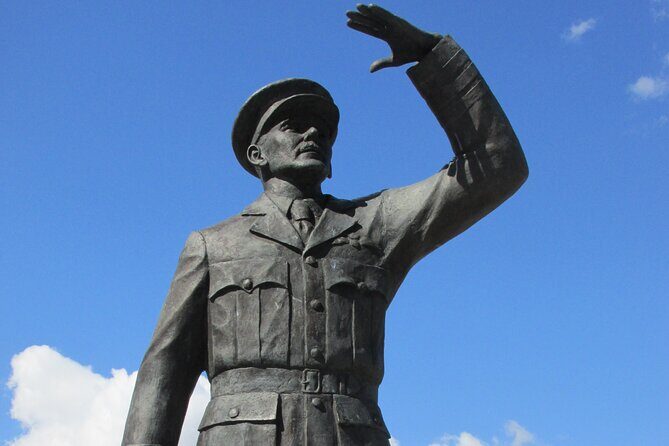
Then you pivot to aviation and engineering with a stop near the Sir Frank Whittle statue. Whittle was an Earlsdon-born engineer and RAF officer, known for inventing the jet engine.
Even if you’re not an aviation nerd, this works because it connects Coventry’s identity to real technical invention—not just craftsmanship. It also sets you up for the tour’s broader message: Coventry produced ideas that changed the wider world.
Stop 4: Lady Herbert’s Garden—bicycles, city walls, and Alfred Herbert
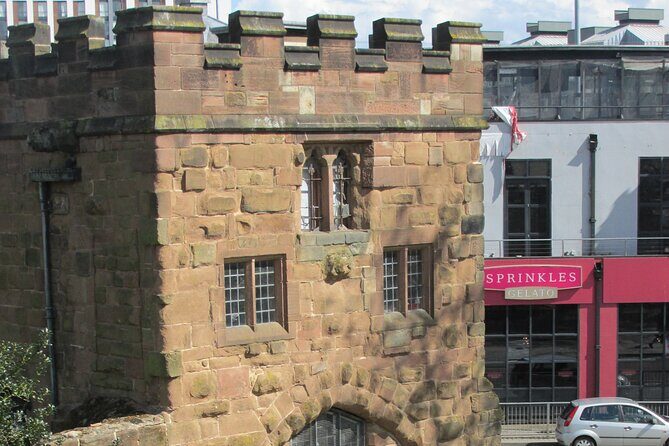
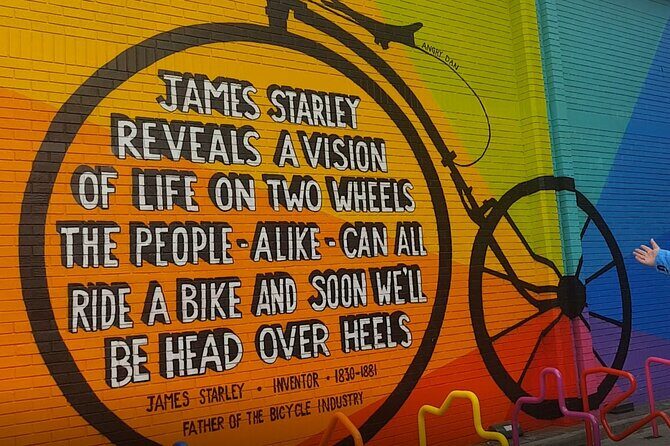
After Whittle, you move into Lady Herbert’s Garden, where the tour stretches into the story of the bicycle industry and how the modern bike came together over time. It’s one of the best “theme stops” on the route because it ties together invention, manufacturing, and design.
Then the tour turns to the Coventry City Wall, including the best-preserved section. You’ll hear how it was built and why industrialist Alfred Herbert helped save it from destruction.
From there, the story gets even more dramatic: you’ll be told how the wall was once needed, and the tour connects it to the true beginning of the English Civil War. This is the kind of stop that makes you look at bricks differently—no longer background, but plot points.

Stop 5: The Coventry Ring Road (A4053) and engineering for movement
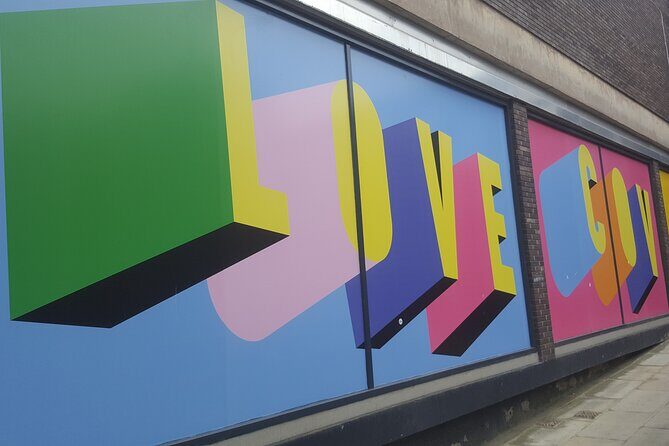
You’ll spend a couple minutes on A4053, the Coventry Ring Road. It’s short, but the point is strong: this isn’t only a history of buildings; it’s also a history of systems—how Coventry planned for traffic flow and the movement of goods and people.
This stop also matches the “City of Tomorrow” mindset from the start. You’re seeing how post-war thinking turned into concrete road engineering, right down to the ring road geometry.
Stop 6: Millennium Place and Coventry’s motor industry rise-and-fall
At Millennium Place, near the Coventry Transport Museum, you get the motor industry story in the open air. The tour explains how Coventry became the motor city of England and a global centre for car manufacture—then follows up with how most of that manufacturing almost disappeared forever.
This is a huge theme for anyone who likes industrial cities. Coventry isn’t just a backdrop; it’s a case study in what happens when manufacturing strategies shift. Even the “almost gone” portion matters because it sets up why preservation, reinvention, and new uses of old spaces became so important.
Stop 7: Palmer Lane—off-the-beaten-track details
Now you step away from the obvious routes with Palmer Lane. This is designed for people who enjoy the small stuff: a few corners of Coventry where locals know there’s something worth noticing, but visitors might miss it.
It’s also a useful pacing stop. After the heavy industry stories, the tour gives you a breather while still keeping momentum.
Stop 8: The Old Grammar School corner art and local naming
At one street corner, you’ll see the building some people call the Old Grammar School—plus an artwork celebrating Coventry’s motor industry and building names tied to the most famous poet from the city.
This is a good stop for anyone who likes layered street scenes: art meets identity meets local references. The “ticket not included” note here matters in one way: if you want to go beyond what’s visible from outside, you may need to arrange separate entry yourself.
Stop 9: Belgrade Theatre and Coventry’s arts timeline
Next is the Belgrade Theatre, where the tour uses artworks around the outside of the building to tell the story of the theatre itself. You’ll hear about Coventry’s long history of plays and then go further into specific names and milestones.
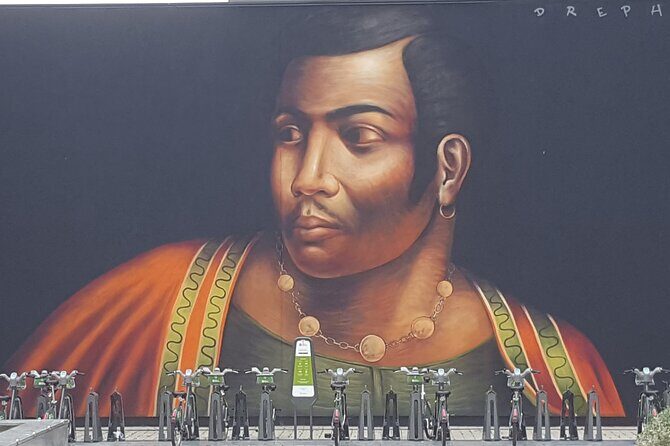
Two striking points are included: Ira Aldridge, who—200 years after Othello was written—became the first Black man to play the leading role, and a focus on three prominent women of the arts in Coventry’s history.
This stop balances the engineering theme by reminding you Coventry also led culturally. It’s one of the places where the tour feels like it’s collecting “human stories” instead of only “industrial facts.”
Stop 10: Bond’s Hospital—500+ years of the same purpose
At Bond’s Hospital, you take in a few details connected to a building built in 1505 by Thomas Bond. The tour stresses something simple but impressive: it’s still used for the same purpose today, over 500 years later.
It’s a great pause in the loop of modern industry and war rebuilding. If you care about civic continuity, this is one of those times when you can look at a façade and feel the weight of time.
Stop 11: St John the Baptist and the phrase Sent to Coventry
Outside the Parish Church of St John the Baptist, the guide explains why it’s claimed to be the origin of the phrase Sent to Coventry. This is a quick stop—just enough context to make the phrase feel less like a random saying.
Even if you’ve heard the expression before, you’ll likely leave with a clearer sense of why Coventry’s name became linked to that particular idea.
Stop 12: Historic Spon Street—industries that shaped a road
Then comes one of the longer stretches: Spon Street. Here the tour talks about industries like dying, tanning, watchmaking, and bicycles, plus how Spon Street was for centuries one of the major roads in the country.
This stop is also a reminder that what you see now isn’t always what shaped the area. The tour hints that not everything is as it may first seem around here, which is exactly how old-city streets feel: the modern version is only the latest layer.
Stop 13: Coventry Market Shopping Centre quick stop
You’ll pop into Coventry Market Shopping Centre for a short look—just a quick orientation moment. The tour note says it’s not on Sundays, so if you’re visiting on a Sunday, plan for the possibility that this specific stop may be adjusted or skipped.
Even when brief, it can help you connect the downtown street grid to how people shop and move today.
Stop 14: Bull Yard and Shelton Square—City of Tomorrow in public art form
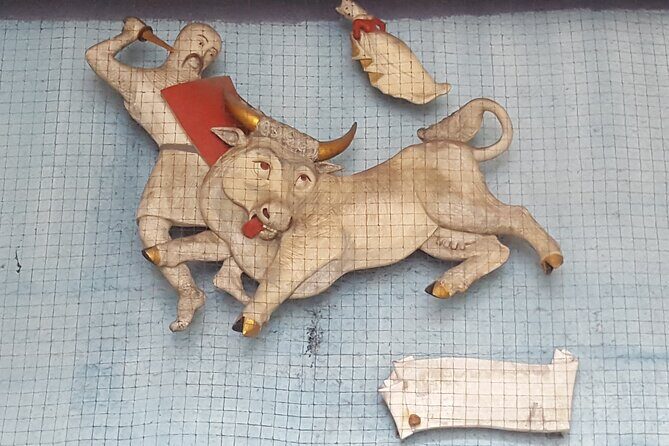
In Bull Yard and Shelton Square, you learn more about the City of Tomorrow and you’ll see eclectic public artworks tied to local stories. You also hear what the area had been like in days gone by.
I like this stop because it turns planning history into something you can actually see in the streetscape. Public art is often just treated as decoration—here it’s used like a map.
Stop 15: Cheylesmore Manor House—700 years old, royal palace energy
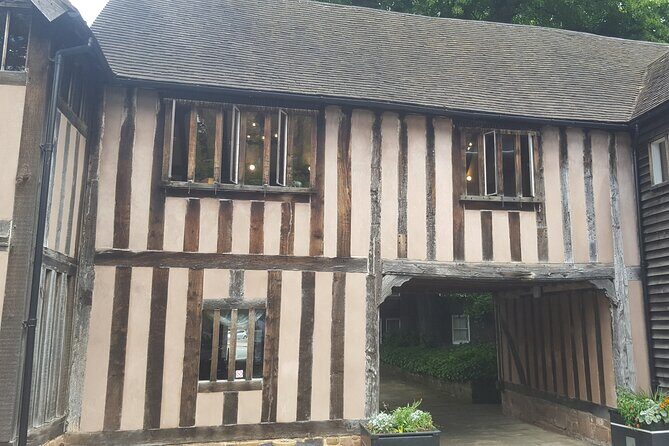
At Cheylesmore Manor House, you get highlights of the story of a place described as a 700-year-old Royal Palace in the city heart. The “ticket not included” note suggests you’ll mostly be experiencing it from the outside unless you arrange something separately.
This is one of those stops that helps Coventry feel bigger than its industrial reputation. It gives you a sense of governance, status, and long-term presence.
Stop 16: New Union Street and Greyfriars Spire
On New Union Street, you hear the story of Coventry’s great survivor: Greyfriars Spire. This is a strong visual anchor, because spires are hard to ignore and they often survive when other buildings don’t.
If you’ve been mentally filing Coventry as “mostly rebuilt,” this stop forces the issue: some landmarks remain to carry memory forward.
Stop 17: Ford’s Hospital—exquisite civic architecture
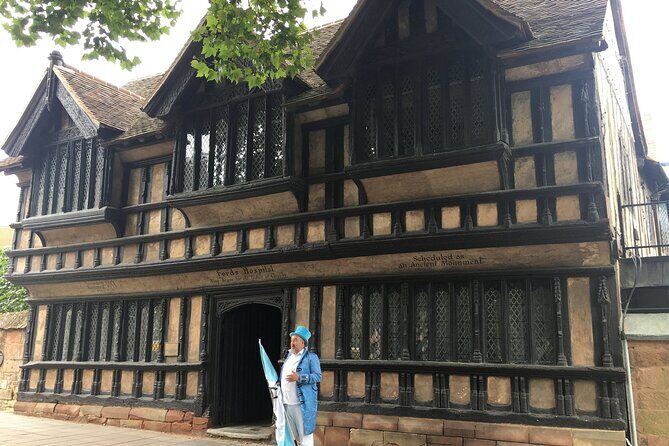
Next is Fords Hospital, introduced with a travel writer’s early-1900s praise: perhaps nothing in the kingdom was so exquisite. You’ll take in a handful of details here in a short window.
This stop fits the tour’s broader pattern: the city is shaped by institutions, not just factories. Hospitals, schools, churches—these are the backbone structures that keep showing up as you walk.
Stop 18: Hertford Street and back to Broadgate
Finally, the tour winds down with a couple minutes on Hertford Street as you meander back toward the starting point. It’s the kind of last stop that works like a recap without forcing a formal recap.
You end where you started in Broadgate, which helps you mentally “snap” the whole route together.
Value and practical fit: is this the right walk for you?
At $17.05 per person for about 2 hours 45 minutes, this isn’t a budget-busting add-on—it’s a solid value if you like city history told in the real streets. What you’re paying for is not museum time. It’s the guide’s ability to connect one landmark to the next, so you don’t end up with a list of photos.
This tour is especially good if you:
- Want a city-focused history walk that mixes industry, arts, and civic life
- Like outdoor stories where most stops are free admission from the outside
- Prefer a small group (max 12) and a moderate pace
It may be less ideal if you:
- Need long seated breaks or mostly flat paths with zero uneven footing (there’s some inclines/ramps and cobbles)
- Want a heavy emphasis on interior museum-style exhibits, since several stops are outside and some entries are marked as not included
Should you book The Jigsaw of History Tour?
If you’re spending a day in Coventry and you want more than the obvious highlights, I’d book it. The tour’s best trick is its structure: it treats Coventry like a puzzle where factories, planners, artists, and even phrases in everyday language all connect.
Start with this if you’re the kind of traveler who enjoys putting context around what you see—especially if Coventry is new to you. And if you’re a local or a repeat visitor, it still works because it’s built around places many people don’t look at closely.
Go with good walking shoes, arrive near the Godiva statue so you’re not hunting, and be ready for a guide who brings the stories to life with humor and local pride.
FAQ
How long is the Jigsaw of History Tour in Coventry?
It’s about 2 hours and 45 minutes (approx.) and the walk is just over two miles.
Where does the tour start and where does it end?
It starts at Sky Blue City Walks on Broadgate, Coventry CV1 1NE, UK, and it ends back at the same meeting point.
Is the tour mostly flat, or does it involve hills?
It’s mostly flat with some inclines and ramps, plus one small area of cobbles.
What’s included for admission fees at the stops?
Many stops are listed as free admission. Some stops are marked as admission ticket not included, so you may need to pay separately if there’s entry available there.
Is the tour offered in English?
Yes, the tour is offered in English.
How many people are in a group?
The maximum group size is 12 travelers.
Are service animals allowed on the tour?
Yes, service animals are allowed.