REVIEW · MIDDLESBROUGH
Walkabout Durham History Tour
Book on Viator →Operated by Walkabout Durham · Bookable on Viator
Durham rewards you for walking. This 90-minute history tour strings together Durham Cathedral, river bridges, and university buildings into one easy route that helps you read the city as you go. You also end right at the Cathedral main doors, so your walk naturally turns into sightseeing.
I like two things a lot. First, the guide (often Peter) is friendly and genuinely happy to answer questions, from city facts to personal pointers on what to do next. Second, the pacing gives you great bearings fast, so you can keep exploring afterward without feeling lost.
The main catch is that Durham is hilly, and you’ll be on your feet for about 90 minutes. Bring comfy shoes, and if the weather turns, you’ll want a light layer.
In This Review
- Key things to know before you go
- Why a 90-minute Durham history walk works so well
- Market Place start: Town Hall, Guildhall, and the faces behind Durham
- Framwellgate and Prebends Bridges: the river turns into the main viewpoint
- Durham University Bailey stops: St Cuthbert’s Society, St Mary the Less, and the Scots rivalry
- Bow Lane and Palace Green Library: reaching the UNESCO core before Cathedral doors
- Price and value: what $22.20 buys you in real time
- Who this tour suits best
- Should you book this Walkabout Durham History Tour?
- FAQ
- How long is the Walkabout Durham History Tour?
- Where does the tour start and where does it end?
- Is the tour offered in English?
- Is there an admission fee for the sights along the route?
- What group size should I expect?
- Do I need a paper ticket?
- Is the tour dog-friendly?
- How far in advance do people typically book?
- Is free cancellation available?
Key things to know before you go
- Small group size (max 20): You’ll get room for questions without feeling rushed.
- A guide who shares local tips: You’re not just hearing facts; you’re getting ideas for what comes next.
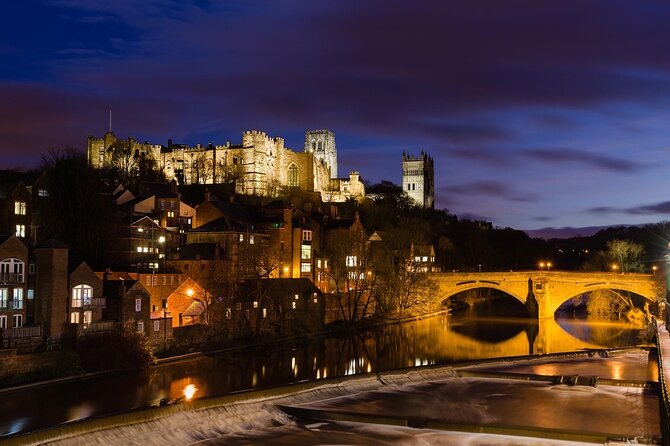
- Iconic river views: Framwellgate Bridge and Prebends Bridge give you standout sightlines.
- Durham University inside the story: You’ll pass through the Bailey areas tied to Durham’s legends and rivalries.
- UNESCO surroundings at Palace Green: You end up at the heart of the World Heritage setting before the Cathedral doors.
- Dogs welcome: Service animals are allowed too, so it works for more visitors than many tours.
Why a 90-minute Durham history walk works so well
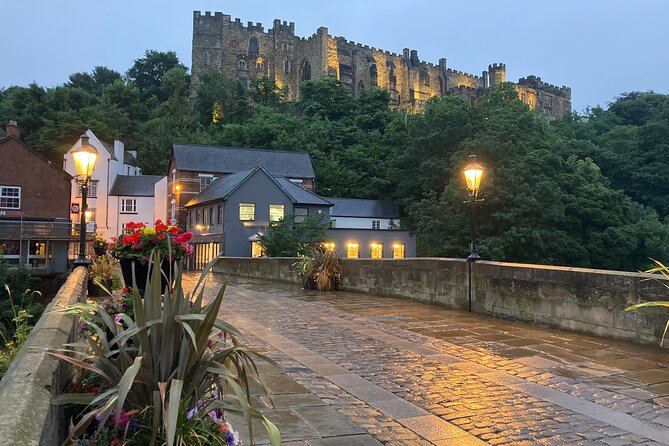
If you only have a limited amount of time in Durham, this style of tour makes sense. The route keeps you moving through the “story zones” people usually want to see anyway: Market Place, the river bridges, and the Cathedral area. That means you learn while you’re also ticking off the obvious landmarks.
You get three practical wins. One, the walk helps you understand where everything sits relative to each other, especially around Durham Cathedral and the river. Two, the guide’s friendly approach makes it easy to ask follow-up questions, not just listen passively. Three, you leave with top tips for the rest of your visit, which is the part that often makes the difference between a decent trip and a great one.
The duration matters too. At roughly 1 hour 30 minutes, it’s long enough for context, but short enough that you can still enjoy a meal, a pub, or a longer Cathedral visit right after—without feeling chained to a schedule.
And because it’s a small group (up to 20), the whole thing stays personal. Even if you’re traveling with a dog or you’re with family, the vibe stays relaxed rather than formal.
You can also read our reviews of more tours and experiences in Middlesbrough.



Market Place start: Town Hall, Guildhall, and the faces behind Durham
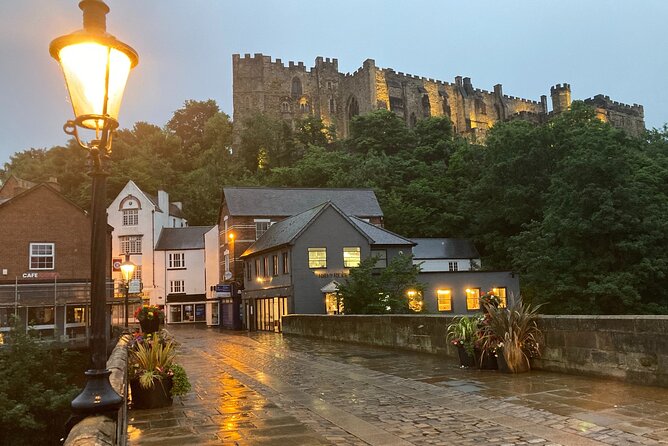
You meet at the Market Place (Durham DH1 3NJ), right in the core of the city. This is a smart place to start because it immediately anchors the walk in the old civic center, where history isn’t hidden behind ticket booths—it’s written into the buildings and monuments.
From here, you’ll spot the 19th-century Town Hall and Guildhall, St Nicolas’ church, and statues that point back to key moments in Durham’s past. The guide takes time to explain the figures who shaped the city and the wider county, which gives the rest of the walk a sense of cause and effect. Instead of just seeing stone and streets, you start understanding what drove change over time.
You also get an early taste of Durham’s layout. There’s a short move from the Market Place toward Framwellgate Bridge, so you’re not spending half the tour stuck figuring out directions. That’s a big quality-of-life detail if you arrive hungry, tired, or just unsure which way the river runs.
One small drawback to keep in mind: Market Place is the liveliest part of the area, so if you’re sensitive to crowds, plan to arrive a few minutes early. Once the walk gets going, the group spreads out and it becomes much easier to enjoy the view and the explanations.
Framwellgate and Prebends Bridges: the river turns into the main viewpoint
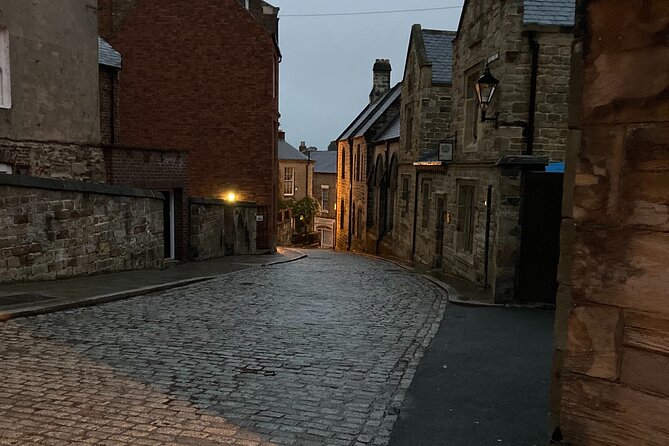
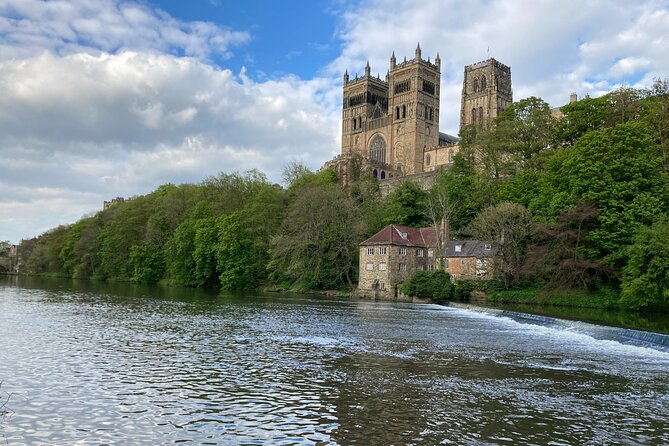
The walking section from stop to stop is part of the experience, not just a transfer. The stop at Framwellgate Bridge is your first real “wow” viewpoint. It’s described as the oldest of Durham’s bridges, and the angle gives you a magnificent view of Durham Castle and Durham Cathedral.
This is where the tour starts blending places with characters. You’ll hear about the Castle and the famous Prince Bishops of Durham, the rulers who helped shape how the city worked and what power looked like here. It’s a quick section, but it’s the kind of context that makes the skyline feel less random.
After Framwellgate, you head along a picturesque riverside stretch toward the next stop. The timing is short—around five minutes on foot—so you keep your momentum without losing the scenery.
Prebends Bridge comes next, and it shifts the focus to the riverbanks and the mills. You’ll also get spectacular views of the Cathedral from this angle. If you’ve ever seen photos of Durham Cathedral from “that spot,” this is one of the likely sources. The best part is that you understand why the view is framed that way, since you’re walking the river corridor rather than only seeing a postcard angle.
If you’re a photographer, this part of the day is the payoff. Even with quick stops, you’ll have enough time to look up at the Cathedral and compare it to what you saw around the Market Place. Your brain starts building a map, fast.
Durham University Bailey stops: St Cuthbert’s Society, St Mary the Less, and the Scots rivalry

As the walk moves away from the riverfront, you’ll get into Durham’s medieval and university-linked spaces. The stop at St Cuthbert’s Society (within the Durham University setting) is a turning point because it connects the city’s story to academic life.
On the way to the South Bailey, you’ll encounter the medieval city wall and hear about a historic rivalry with the Scots. That kind of story adds texture to what can otherwise look like “just another set of old buildings.” Instead, you’re seeing how power boundaries and tensions shaped the city’s edges and routes.
From there, you enter the Bailey, which is where you start to feel how Durham Cathedral sits at the center of multiple worlds at once: the religious center, the medieval defenses, and the modern university. If you like places where old and current life overlap, this section is a strong fit.
St Mary the Less is the next stop, and it’s especially interesting because it has connections to Durham legends. You’ll also hear that it’s affiliated with St John’s college, which helps you place it within the university fabric. The tour looks at the architecture around the Bailey area while tying it to stories, so you’re not just ticking off sites—you’re learning how legends get attached to specific corners.
One practical note: this part of the walk can feel a bit more exposed to weather depending on conditions. If it’s windy or rainy, keep your layer light and packable. You don’t need winter gear for a short walk, but you do want to be comfortable enough to listen.
Bow Lane and Palace Green Library: reaching the UNESCO core before Cathedral doors
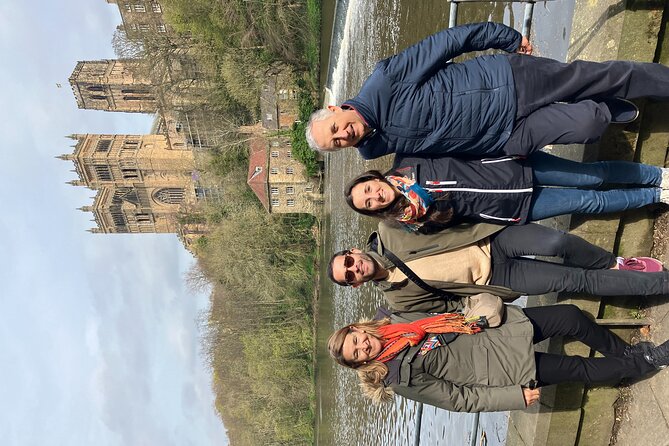
Near the Cathedral area, the walk becomes more intimate. At Bow Lane, you explore the eastern side of the Cathedral and hear early medieval stories, including the tales around St Cuthbert. You’ll also learn about several of the colleges of Durham University. That matters because those colleges aren’t random; they’re part of how Durham’s academic world grew inside a city shaped by older institutions.
Then you move along The Bailey toward Saddler Street, which keeps the Cathedral presence in view as the route tightens. This is a good stretch for anyone who wants to understand how Durham “holds itself together” visually. Streets curve, buildings step, and suddenly the Cathedral stops being just a landmark and starts looking like the city’s organizing center.
Finally, you reach Palace Green and the Palace Green Library area. This is described as sitting in the heart of a UNESCO World Heritage setting, and the tour uses that backdrop to talk about battles, tragedies, and miracles that show up heavily in the Durham story. The goal here isn’t to overload you with dates. It’s to give you the emotional and narrative beats that make Durham feel distinct from other historic towns.
The tour culminates at the doors of Durham Cathedral (ending at the cathedral main doors). That’s a nice design choice. You’re not dragged away at the moment you’re most excited. Instead, you finish where you’d naturally want to be spending more time.
If you want to go further afterward, this ending spot is ideal because you can pivot quickly into Cathedral visiting, browsing nearby streets, or finding a café without backtracking across town.




Price and value: what $22.20 buys you in real time
At $22.20 per person, this isn’t a big splurge. It’s priced like a practical city intro that’s meant to be used on your first day or when you only have a short window. The duration—about 90 minutes—also supports the value. You get enough time for context and questions, but you’re not paying for an all-day block.
A huge value signal is the structure of the stops. The tour lists admission free for the key segments, so you’re paying for the guided walk and interpretation, not for constant ticketing. That makes it easier to budget if you’re also planning a Cathedral visit or another paid attraction later.
The small group limit of 20 matters more than people think. In a bigger group, history tours often turn into a “follow the leader” experience where questions get swallowed. Here, the format supports interaction. It’s also why the guide can share top tips at the end, instead of just rushing everyone out.
I also like that it’s a mobile-ticket experience, with confirmation at booking time. That reduces friction when you’re trying to enjoy the city rather than fuss with admin.
And yes, dogs and service animals are welcome. If you’re traveling with a companion who can’t do long stretches alone, a short, purposeful route like this is often the better choice.
Who this tour suits best
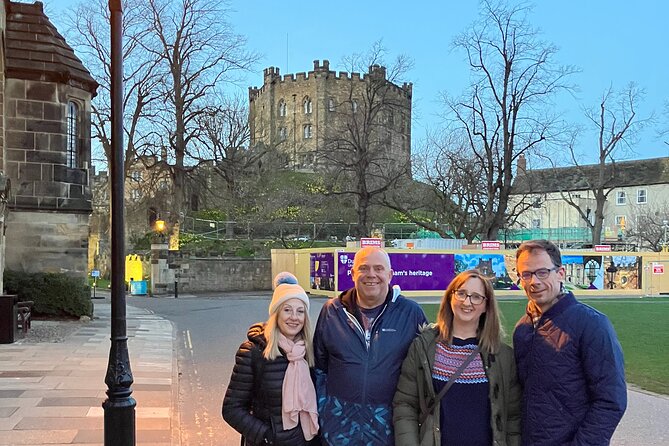
This is a strong option if you’re visiting Durham for the first time and want a fast mental map. It’s also a great fit for families and mixed-age groups because the tour is straightforward, paced for walking, and centered on outdoor landmarks and easy-to-follow transitions.
If you’re history-minded but you don’t want heavy academic lectures, the stories and legends format will feel friendly rather than intense. It’s also ideal for anyone who loves scenic city views, since the bridges are built into the itinerary in a way that makes sightseeing feel natural.
On the flip side, if you hate hills or you struggle with uneven pavement, you’ll need to take extra care. The tour runs in a compact area, but Durham’s slopes are real. Plan for that, take breaks when needed, and focus on staying comfortable so you can enjoy the explanations.
Should you book this Walkabout Durham History Tour?
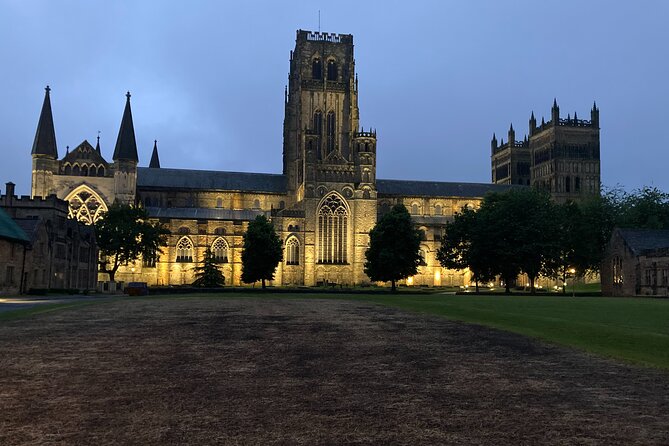
Book it if you want a quick, question-friendly introduction to Durham that finishes at the Cathedral doors. The route is efficient, the viewpoints are strong, and the guide’s willingness to share local tips is exactly what helps you turn a walk into a full day of exploring.
Skip it only if you’re looking for a long, ticket-heavy deep-dive or you need a flat, minimal-walking itinerary. For most people, this is the sweet spot: a short history tour that helps you understand what you’re seeing and gives you a sensible next step right after.
If your visit is tight, this one is an easy way to get oriented and leave with a clearer sense of how Durham became Durham.
FAQ
How long is the Walkabout Durham History Tour?
It runs for about 1 hour 30 minutes.
Where does the tour start and where does it end?
It starts at Durham Market Place (Durham DH1 3NJ) and ends at the Durham Cathedral main doors (Durham DH1 3EH).
Is the tour offered in English?
Yes, the tour is offered in English.
Is there an admission fee for the sights along the route?
The tour lists admission tickets as free for the stops included in the itinerary.
What group size should I expect?
The tour has a maximum of 20 travelers.
Do I need a paper ticket?
No. A mobile ticket is provided.
Is the tour dog-friendly?
Yes. Dogs are welcome, and service animals are allowed.
How far in advance do people typically book?
On average, it’s booked about 15 days in advance.
Is free cancellation available?
Yes. You can cancel up to 24 hours in advance for a full refund.