REVIEW · PLYMOUTH
Walking Tour Experience in Plymouth
Book on Viator →Operated by Plymouth Walking Tours · Bookable on Viator
Plymouth has layers, and this walk turns them into a simple route. You’ll move from the Mayflower story to Elizabethan streets, then along the Barbican waterfront and back streets, with pauses for WWII context and skyline views at the Hoe. I especially like how the tour covers major sights without turning into a checklist, and the fact you get researched explanations in clear plain English from Hannah.
Two things I really liked: the relaxed pace (so questions are welcome) and the way the guide uses photos and postcards to make old Plymouth feel real, not dusty. One thing to consider: this is an outside-walk style experience, so if you’re hoping to go inside historic buildings or paid attractions, you’ll need separate tickets since the tour doesn’t enter places along the route.
In This Review
- Key things to know before you go
- Walking Plymouth’s history without wasting your time
- Price and value for a 1h40 guided route
- Where the tour starts: Pilgrim Way basics
- Mayflower Steps: the origin story, in the right place
- Elizabethan House area: understanding change over 400 years
- Barbican waterfront: Drake, artists, pubs, and the Blitz
- Saint Andrew Street and back lanes: small streets, big stories
- Prysten House and surrounding landmarks: merchant wealth and religious history
- Civic Centre and the post-war look: why the city changed shape
- Hoe Park: the views that make all the walking worth it
- Smeaton’s Tower: the iconic tower and the reef story
- Royal Citadel: fortifications and Plymouth’s naval port role
- Why Hannah’s guiding style changes the whole experience
- Pace, departures, and group size you’ll actually feel
- Weather and what to pack
- Who this tour is best for
- Should you book this Plymouth walking tour?
- FAQ
- How long is the walking tour?
- What does the tour cost?
- What language is the tour offered in?
- Is there a mobile ticket?
- Does the tour include entry into attractions?
- Where does the tour start?
- What’s the group size limit?
- Is the tour suitable for all ages and abilities?
- What happens if the weather is poor?
- What’s the cancellation window?
Key things to know before you go
- Small group size (max 16): easier questions and a pace that stays comfortable.
- Outside-focused route: big sights, no entrance-ticket scramble.
- Mayflower to Drake to WWII: you’ll connect the dots across centuries without extra effort.
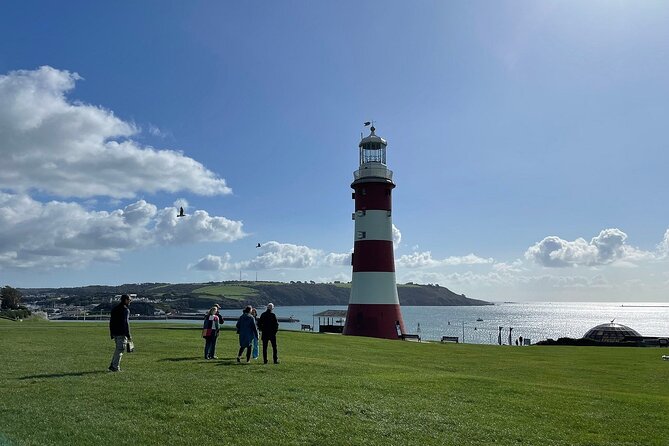
- Hoe Park views plus Smeaton’s Tower area: great photo chances over Plymouth Sound.
- Morning or afternoon departures: handy if you’re planning the rest of your day.
Walking Plymouth’s history without wasting your time
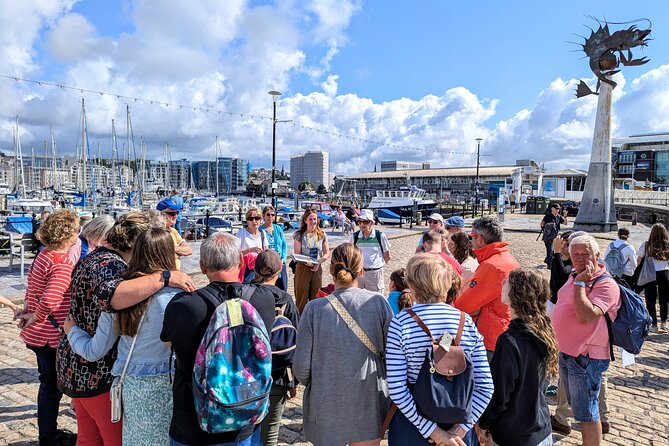
If you only have a day (or even just a few hours) in Plymouth, the best use of your time is doing a guided loop that gives you the geography first. This tour does that. You start near Pilgrim Way and end back where you began, so you’re not doing the annoying thing where you get dropped off and suddenly can’t find your next stop.
The timing is about 1 hour 40 minutes. That’s long enough to get real context, but short enough that it won’t drain your whole schedule. It also makes sense for mixed groups: there are no intense climbs promised, and the tour is designed for all ages and abilities, with a pace that’s meant to feel manageable.
One practical bonus: the tour uses a mobile ticket and runs in English. That matters in Plymouth, where street signs and local history can move fast. With a guide leading the way, you can stop thinking about logistics and focus on the story in front of you.
Also, you’re in luck if you like asking questions. Hannah’s style is conversational, and the pace is comfortable—so you’re not stuck waiting for the tour to finish before you can get answers.
You can also read our reviews of more tours and experiences in Plymouth.



Price and value for a 1h40 guided route
At $20.72 per person, this is priced like a tour that aims to give you the most out of a short visit. You’re paying for three things: a local guide, a structured route that hits Plymouth’s key themes, and researched explanations you can’t easily pick up just by reading plaques.
It’s especially good value because you’re not forced into buying multiple attraction tickets. The walk keeps you outside at each major stop. When entrance isn’t needed, you keep costs down. When something is ticketed separately, the tour still gives you the context so you know whether going inside is worth it for you.
There’s also the small-group angle. With up to 16 people, you’re not fighting for attention, and you get more of the real two-way conversation that makes walking tours feel worth it.
If you’re comparing booking options, it can pay to check direct booking versus third-party platforms, since pricing sometimes differs. The key is still the same either way: you’re buying a guided route plus a calm, well-informed explanation.
Where the tour starts: Pilgrim Way basics
You meet at Pilgrim Way, Plymouth PL4 0LB. Ending back at the meeting point is great if you plan the rest of your day nearby (lunch, a museum visit, or a walk along the waterfront on your own after you’ve learned where everything sits).
The meeting spot being near public transportation is useful too. Plymouth isn’t enormous, but it’s still easier when you’re not negotiating multiple transfers just to start a tour on time.
Mayflower Steps: the origin story, in the right place
Stop one is the Mayflower Steps, and this is a smart start. Before you walk anywhere else, you get oriented to what Plymouth means in the Mayflower story—and what people often get wrong about it.
You’ll learn about the Mayflower voyage, where the real steps connect to the town’s story, and how Plymouth served as a departure point for other voyages too. This matters because Plymouth history isn’t only one famous ship. Once you understand the port-city role, everything else on the route clicks faster.
Even if you’ve heard the basics before, a guided explanation here helps you place details into a real physical setting. And you’re not just staring at a landmark—you’re getting the narrative structure of why it matters.
Elizabethan House area: understanding change over 400 years
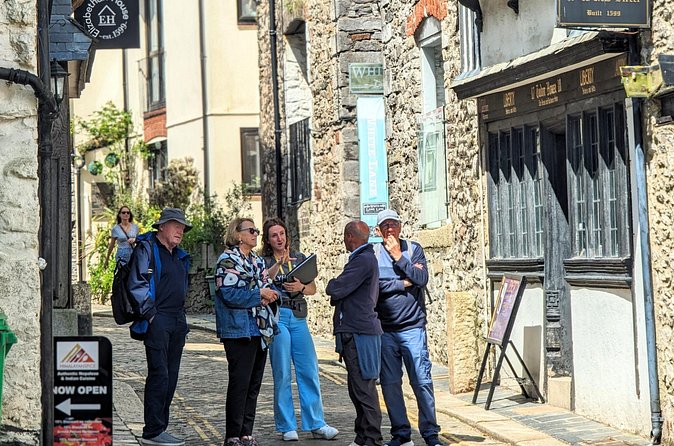
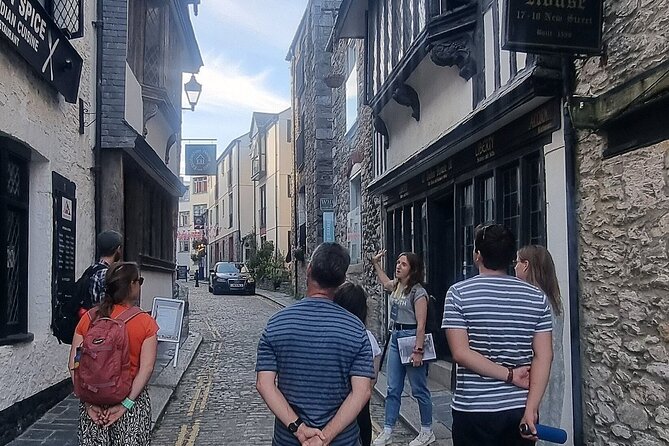
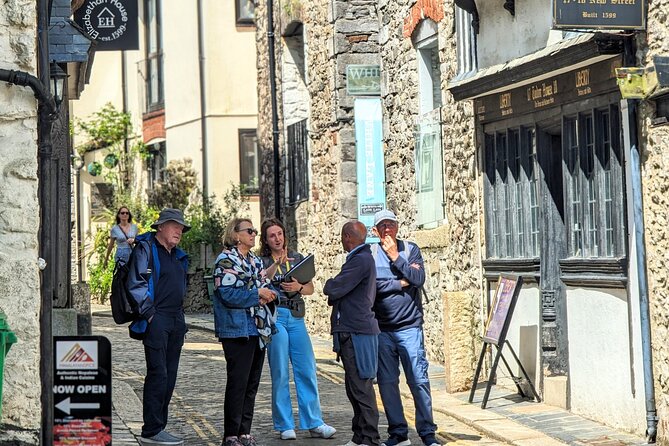
Next you head to the Elizabethan House area near New Street. The tour doesn’t go into the building, so think of this stop as a careful look at how Plymouth shifted over time, not as a ticketed interior visit.
The value here is how the guide reads the street and the surrounding architecture to explain the story of change across roughly four centuries. That’s a big deal for first-time visitors. Buildings are more than backdrops; they’re evidence of how the city evolved—economically, politically, and culturally.
If you love architecture but hate waiting in lines for entry, this stop hits a nice middle ground. You learn how the past shows up in what’s still visible today.






Barbican waterfront: Drake, artists, pubs, and the Blitz
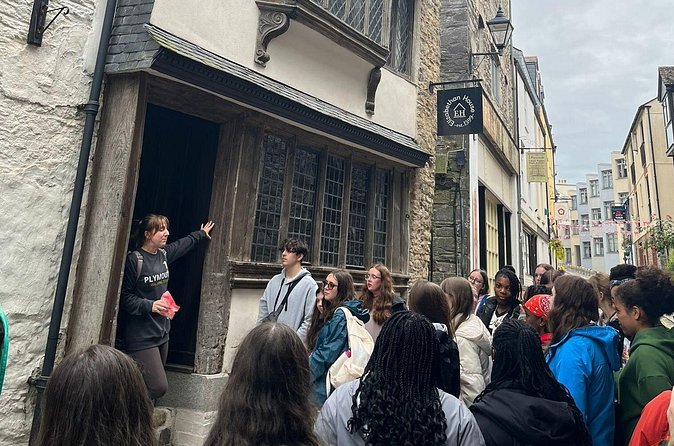
This is one of the tour’s strongest segments. The Barbican waterfront walk runs long enough to slow down and absorb it, and it covers a lot without feeling stuffed.
You’ll hear about Plymouth’s history and culture over 500 years, including major figures like Sir Francis Drake, plus names connected to Plymouth’s local life such as William Cookworthy and Lady Nancy Astor. The guide also points out how artists may have drawn inspiration from the area, so you’re not just seeing buildings—you’re learning why people keep coming back to this exact stretch of the city.
Then comes the WWII context, including the impact of the Blitz. This isn’t presented like a separate lecture; it’s integrated into how the town looks now. That connection is what makes it feel useful rather than heavy.
There’s also practical value that I always appreciate on walking tours: the guide gives local advice on restaurants, cafes, and bakeries. After you’ve spent an hour in someone else’s historical headspace, it’s nice to get directions for your next meal that actually match the neighborhood you just learned about.
This stop is also where you start to feel Plymouth’s personality: a mix of naval port identity, old-world streets, and layers of rebuilding.
Saint Andrew Street and back lanes: small streets, big stories
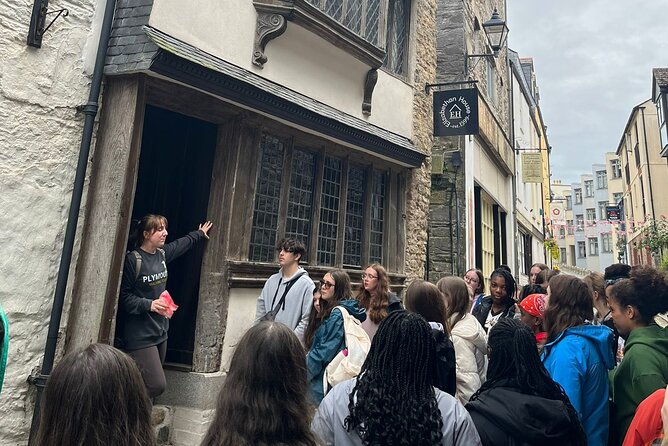
The tour continues into Saint Andrew Street and nearby back lanes, where hidden details can be easy to miss on your own. This is a short stop, but it plays an important role: it shows you how to look at Plymouth like a local, not like a tourist on a mission.
You’ll encounter spots tied to merchants and old property life, including the Merchant’s House area (noted as currently closed). Even without entry, the outside context helps you understand the kind of commerce that shaped the town.
Back streets are also where a good guide shines. It’s easy to say history happened. It’s harder to point out the visual clues. Here, you’re taught how to connect the clues you see—street layout, building style, and location—to the story the guide is telling.
Prysten House and surrounding landmarks: merchant wealth and religious history
Next comes Prysten House, described as the oldest merchant’s house in central Plymouth. This is another outside-focused stop, but the age and purpose of the building give it instant weight in the tour.
Around Prysten House you’ll also pick up other important landmarks in the area, including St Andrew’s Church, Plymouth Synagogue, and Plymouth Guildhall. Seeing these together gives you a fuller picture of the city: trade, worship, and civic life all layered into one walkable pocket.
One helpful detail: the extent of this portion can vary depending on your group’s speed and size. That’s common on small-group tours, and it’s also a sign the guide is managing the route in real time rather than forcing you through a rigid script.
If you want a tour that doesn’t make you sprint or feel rushed, this kind of flexibility is a plus.
Civic Centre and the post-war look: why the city changed shape
Now you shift from old lanes to the Civic Centre area, which sets up the post-war story. Plymouth’s modern look is tied directly to damage and rebuilding after the Blitz, and the tour makes that connection in plain language.
You’ll discuss the city’s post-war architecture and the previous damage during WWII, plus why the city centre looks the way it does today. The walk doesn’t cut straight into the core shopping lanes; it skirts the edge, which keeps the tour moving while still giving you the context you need.
This stop is valuable even if you’re not into architecture. Knowing why a city looks the way it does helps you read your surroundings more intelligently. You start to notice patterns instead of just seeing new buildings on top of old ones.
And if you’re the type who likes photographing contrast—old stone next to newer forms—this is where you’ll likely want to pause.
Hoe Park: the views that make all the walking worth it
Then you reach Hoe Park, and the tone of the tour changes in the best way: you get breathing room plus big views over Plymouth Sound.
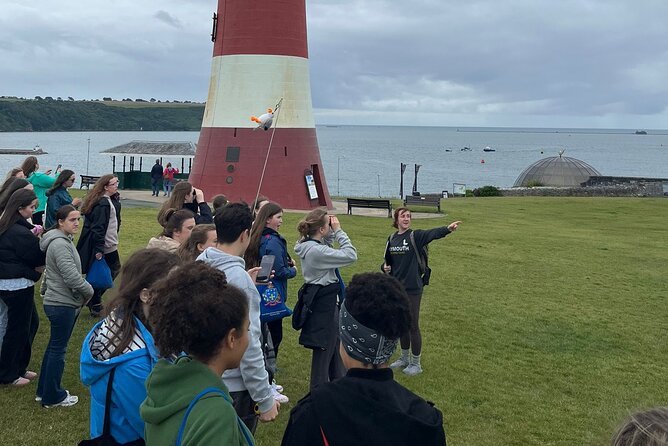
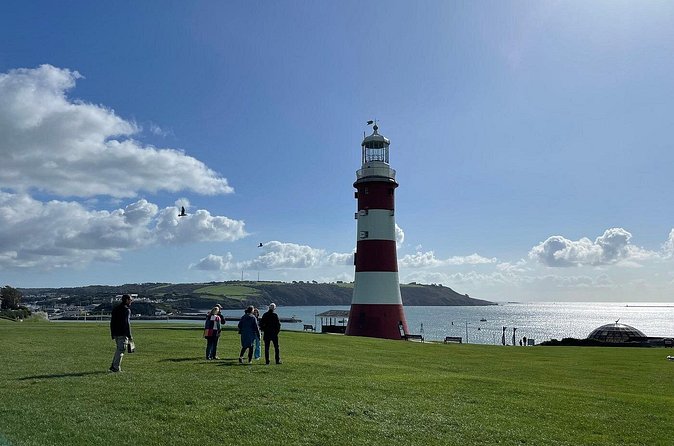
This section is about more than pretty scenery, though. You’ll learn where the name comes from and what to look for around the Hoe, including memorials and features such as Smeaton’s Tower, the Naval War Memorial, and Tinside Pool.
The Hoe is also where the tour becomes a visual geography lesson. You can understand Plymouth’s naval identity because the water and coastline are right there, not just referenced in a book.
If the day is clear, there’s even a nice extra: you can use binoculars to try to spot today’s lighthouse on the horizon. Binoculars aren’t mentioned as provided, so if you have them, bring them. If you don’t, don’t panic—this is still a great viewpoints stop without them.
Smeaton’s Tower: the iconic tower and the reef story
The tour then focuses on Smeaton’s Tower itself. You’ll learn why the tower is so iconic and where it once sat out on Eddystone Reef. That detail connects a famous structure to the wider history of the surrounding sea and navigation.
This is a short stop, but it’s the kind of short stop that adds a mental picture. You see the tower area, then the guide gives you the story behind its place in maritime history—so it lands with meaning, not just photos.
It’s noted that any admission is not included here, and since the tour is outside-focused overall, you should assume you’re not going inside unless you choose to do that separately.
Royal Citadel: fortifications and Plymouth’s naval port role
The last main stop is the Royal Citadel, where you walk around the outside of the fort. You’re looking at a fort dating from 1666, and you’ll also hear how Plymouth became important as a naval port.
This is one of those stops where the outside perspective actually works. Seeing fortifications from the outside helps you understand design choices tied to coastlines, sightlines, and defense. You’re not stuck inside a museum wall; you’re using the actual coastal setting to interpret the story.
You’ll also look out toward other fortifications around the coast. Even if you don’t recognize them by name, the idea of an interconnected defense network becomes obvious once you’ve seen Plymouth from this angle.
Why Hannah’s guiding style changes the whole experience
I keep coming back to this because it’s the difference between a good walking tour and a memorable one: Hannah’s delivery.
From what I was able to gather about her style, she’s personable and funny, but she also takes questions seriously. The pace stays relaxing, and she gives clear descriptions at every stop, including short context between the bigger landmarks.
She also uses photos and postcards to bring the past into focus. That matters more than people expect. Looking at old pictures while standing near the modern street can be the moment you truly understand how a city evolves—what stayed, what disappeared, and what rebuilt into something new.
If you’re the kind of traveler who likes two-way conversation, you’ll likely feel comfortable here. The guide isn’t just talking at you. She’s also guiding you to look more closely at what’s in front of you.
Pace, departures, and group size you’ll actually feel
This tour is offered with a choice of morning or afternoon departures. That’s useful when you’re juggling tides, museum hours, or just trying to avoid the worst part of your day for weather.
The group size is capped at 16, which makes a difference on a walking tour with lots of stops. Smaller groups keep the route flexible and make it easier to hear answers. It also helps if you’re with kids, grandparents, or anyone who needs a slower rhythm.
The walking time is about 1 hour 40 minutes. A typical pattern is short stops with explanations, then a longer segment to let you take photos and absorb the area. That structure keeps you from feeling stuck at each landmark.
And because it’s outside-based, you aren’t dealing with interior crowding or lines. Your energy stays focused on the city.
Weather and what to pack
This experience requires good weather. That doesn’t mean you need a perfect sunny forecast, but it does mean you should expect the tour to run best when streets are dry and you can comfortably walk.
Bring the basics: comfortable shoes for pavement and curbs, and layers because Plymouth weather can change fast. If you like spotting details at distance, consider bringing binoculars for the lighthouse horizon moment at the Hoe.
Who this tour is best for
You’ll probably love this Plymouth walking tour if:
- You want a guided route that ties together Mayflower, Francis Drake, and WWII without getting overwhelmed.
- You like outside walking tours more than sitting in a vehicle.
- You want a clear introduction to the city so you can explore on your own afterward.
It’s also a good fit for mixed groups because the experience is described as inclusive for all ages and abilities, and the pace is set to be relaxed.
If you’re the type who plans entire days around going inside lots of attractions, this may not fully scratch that itch since the tour doesn’t enter places and doesn’t include attraction admissions.
Should you book this Plymouth walking tour?
Yes, if you want a smart orientation to Plymouth in under two hours. This is a strong first-choice tour because it gives you the “where” and the “why” behind major landmarks—from the Mayflower Steps to the Barbican waterfront, then to coastal views at the Hoe and fort history at the Royal Citadel.
Skip it only if you’re specifically chasing indoor museum time or paying for multiple attractions. This walk is built for outside learning: you come for the route, the context, and the way Hannah uses photos and postcards to connect centuries into one clear path.
If you have any flexibility in your schedule, pick the departure time that best matches the rest of your day. You’ll finish back at the starting point, already knowing where to go next.
FAQ
How long is the walking tour?
It’s about 1 hour 40 minutes.
What does the tour cost?
The price is $20.72 per person.
What language is the tour offered in?
The tour is offered in English.
Is there a mobile ticket?
Yes, it uses a mobile ticket.
Does the tour include entry into attractions?
No. The tour does not go inside attractions, so entry isn’t required for the stops on this route.
Where does the tour start?
The meeting point is Pilgrim Way, Plymouth PL4 0LB, UK.
What’s the group size limit?
The maximum group size is 16 travelers.
Is the tour suitable for all ages and abilities?
It’s described as inclusive for all ages and abilities, and most travelers can participate.
What happens if the weather is poor?
The experience requires good weather. If it’s canceled due to poor weather, you’ll be offered a different date or a full refund.
What’s the cancellation window?
You can cancel for free up to 24 hours in advance for a full refund.