REVIEW · MANCHESTER
Angel Meadow Manchester History Tour with Author Dean Kirby
Book on Viator →Bookable on Viator
Angel Meadow is Manchester’s forgotten scar. This 90-minute Angel Meadow Manchester History Tour with author Dean Kirby turns an often-skipped riverside district into a clear story of Victorian hardship and industrial change.
What I love is the way the walk stays conversational, with real back-and-forth questions, and how your guide points out the best places to photograph as you go. The biggest thing to keep in mind: much of the original slum setting has been redeveloped, so you’ll mostly be reading history through street corners and traces, not intact Victorian buildings.
In This Review
- Key reasons this tour works so well
- Why Dean Kirby’s Angel Meadow walk feels personal
- Start at Sadler’s Cat: your 2:00 pm setup for an easy start
- St Michael’s Flags and the River Irk: where the story gets real
- Angel Meadow Park: trees above, hardship underneath
- What makes the walkthrough so easy to enjoy
- Photo spots and practical city viewing
- Price and value: $27.62 for a story you can’t get from plaques
- Who should book this Angel Meadow tour with Dean Kirby
- Getting ready: weather, walking, and comfort
- Where you’ll end and how to handle your return
- Should you book the Angel Meadow Manchester History Tour with Dean Kirby?
- FAQ
- How long is the Angel Meadow Manchester History Tour?
- How big is the group?
- Who leads the tour?
- Where do I start and where does the tour finish?
- Is the tour offered in English?
- Is there an admission fee for the sights?
- Do I get a mobile ticket?
- Are service animals allowed?
- What should I know about weather and cancellations?
Key reasons this tour works so well
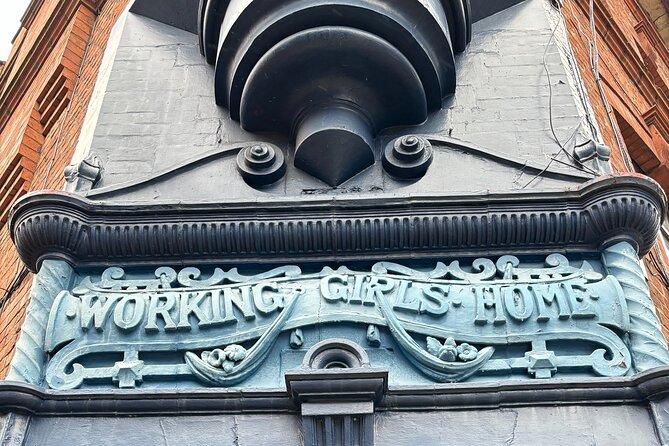
- Dean Kirby leads: historian and writer with firsthand command of the subject
- Small group (max 15): you get time to ask questions and steer the conversation
- River Irk route: you connect poverty, mills, and everyday life along the water
- Photo spot guidance: you’re shown where the views and angles actually make sense
- Overlooked area of Manchester: you see a district many visitors miss entirely
Why Dean Kirby’s Angel Meadow walk feels personal
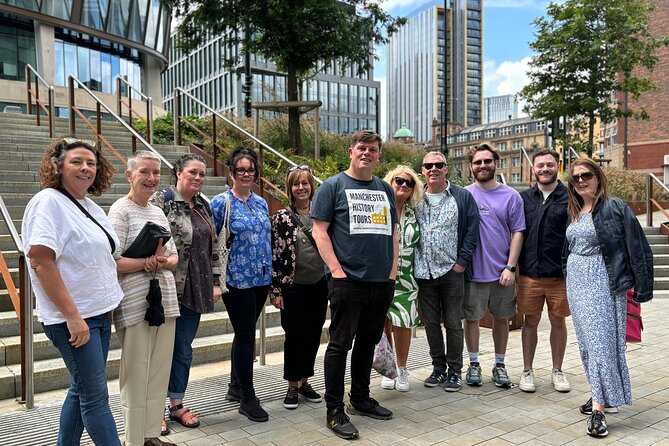
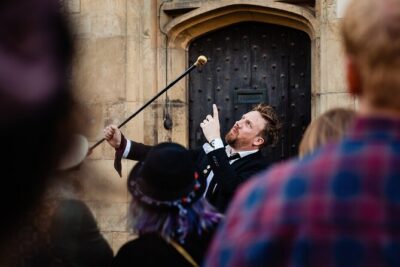
This tour earns its strong reputation because it’s not a drive-by “see the sights” lesson. Dean Kirby brings the stories down to human scale: who lived there, what daily life felt like, and how the industrial boom was tied to people getting squeezed into crowded lodging and hard conditions.
You’ll also like the tone if you prefer history that talks back. With a small-group format and lots of openings for questions, the walk doesn’t feel like a lecture where you have to keep up or miss the point. It feels like a guided conversation you can step into.
And yes, the guide thinks about more than facts. If you care about photos, you’ll appreciate that you’re shown photo spots while walking, not after, so your camera roll matches what you’re learning.
You can also read our reviews of more tours and experiences in Manchester.


Start at Sadler’s Cat: your 2:00 pm setup for an easy start
The tour begins at Sadler’s Cat, Hanover St, Manchester M60 0AB with a 2:00 pm start time. That timing matters. In the afternoon, you’re less rushed, and you can settle in before the walk shifts from “here’s where we are” to “here’s what happened here.”
You’ll want to arrive with enough time to find the group and get your bearings. This is a walk-focused experience, not a sit-down briefing for an hour, so the first few minutes set the tone for how much you’ll catch as you move.
You’ll also get planning-friendly details that make life simpler: it uses a mobile ticket, it’s offered in English, and it’s near public transportation. If you’re traveling solo or just want an organized social moment with other history-minded folks, the format is built for that too.
St Michael’s Flags and the River Irk: where the story gets real
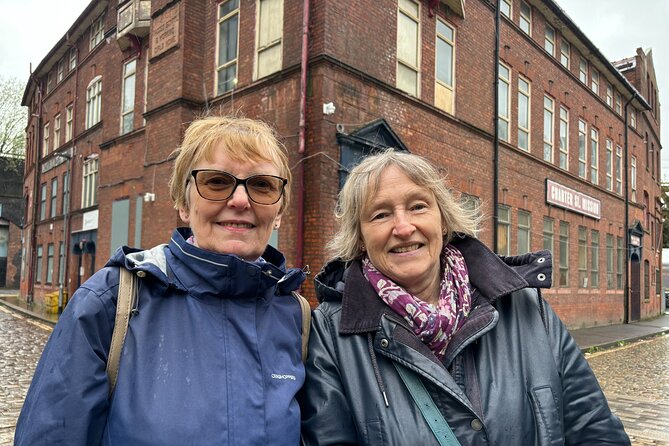
Stop 1 is St. Michael’s Flags & Angel Meadow Park, and the core of what you’re learning lands in a very specific way: the River Irk corridor. Instead of “industrial Manchester” as a vague concept, you’re shown how the district’s geography shaped daily life.
Dean Kirby frames Angel Meadow as a Victorian slum so extreme it earned the phrase Hell upon Earth from Friedrich Engels. That line is memorable, but the value is what comes next: the explanation that about 30,000 people were trapped by poverty while cotton mills rose nearby. You can almost feel how the industrial revolution’s power worked in two directions at once—jobs and production on one side, desperation on the other.
As you walk, you’ll pick up the everyday mechanics of hardship. The district included overcrowded lodging houses and deep cellars along the river, and the streets outside weren’t safe in the way we like to assume cities were. The tour’s strength is that it doesn’t treat poverty as a one-note tragedy. It shows a whole system: housing pressure, survival strategies, and how crime and exploitation fed off chaos.
One practical tip: slow down at the story-heavy stops. If you rush ahead to “get to the next point,” you’ll miss the way the guide connects landmarks to the lived reality around them.
Angel Meadow Park: trees above, hardship underneath
After the heavier streetscape context, you head through Angel Meadow Park, which is where the walk does something clever. You get a change in pace—more open space and greenery—while still keeping the history in your head.
That contrast isn’t just for comfort. It helps you see why places keep changing, and why modern landscaping doesn’t erase the past. The park gives you a moment to reset visually, but the guide keeps steering you back to what was going on when people lived here under intense strain.
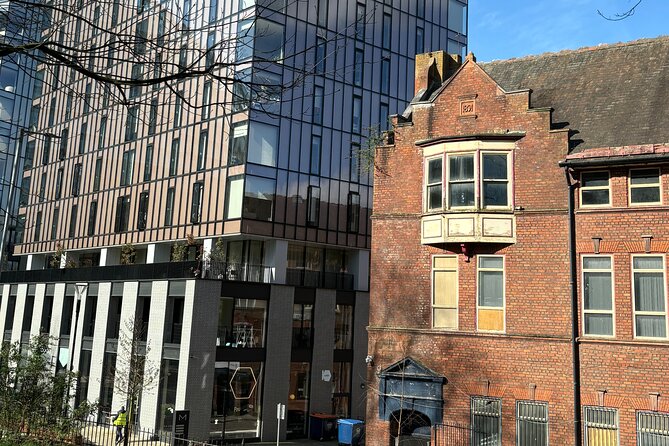
You’ll also notice how the story stretches forward into redevelopment. Newer apartments stand near former ragged schools, so you’re not only looking backward. You’re watching Manchester edit its own past. It’s a sobering effect, but it’s also a useful one for travelers who like understanding how cities grow without pretending history disappears cleanly.
There’s a photo element here too. Even if you’re not a photographer, the guide’s photo-spot suggestions help you frame the district beyond “gray street.” You learn where to stand so the location matches the lesson.
What makes the walkthrough so easy to enjoy
A one-and-a-half-hour format can go two ways: either it’s too short to matter, or it’s packed with noise. This one avoids both problems by keeping the group small and the pace readable.
With a maximum of 15 travelers, you’re not hidden behind the crowd. You can hear questions from others, and when you ask something, you’re not shouting over ten people already talking. That matters if you’re the type who likes to clarify details—dates, names, or why this area mattered in the bigger Manchester story.
You’ll also like the way the guide supports curiosity. It’s not just “here’s the story, move on.” You get space for follow-ups, and the tour doesn’t act like every question is off-topic.
And because the district is often overlooked, the tour gives you that satisfying “I didn’t know this was here” feeling—without sending you to a place that only exists for tourists.





Photo spots and practical city viewing
It’s easy to waste time on historic walks by stopping in awkward places where nothing lines up. The guide’s photo-spot guidance helps you avoid that. You’re shown good angles while you’re actually in motion, so you aren’t wandering around later trying to recreate what you missed.
In an area like Angel Meadow, good photos are also about context. You want shots that hint at the river setting, the edges of redevelopment, and the mix of older traces and newer builds. The tour helps you see those relationships, which makes your photos feel more meaningful, not just pretty.
If you’re bringing a camera or phone, wear something you’re comfortable moving in. You’ll likely spend your time between river-adjacent streets, park areas, and short walking stretches that need attention more than standing still for long periods.
Price and value: $27.62 for a story you can’t get from plaques
At $27.62 per person, this isn’t a “save money, skip the guide” kind of tour. But it also isn’t overpriced for what you’re getting. You’re paying for two things that are hard to replicate on your own: a guided narrative built around one district’s evolution, and an author-led perspective you can question.
Because it’s a small-group experience, that price feels more fair than it would for a larger bus-style tour. You’re getting near-personal access for about 1 hour 30 minutes, and the tour includes admission ticket free for the experience itself, so you’re not facing surprise entry fees on top.
You’re also buying something intangible: the ability to look at the streets and think, I know what this place meant. Without that framing, Angel Meadow can look like another working part of Manchester that modern visitors pass through quickly.
Who should book this Angel Meadow tour with Dean Kirby
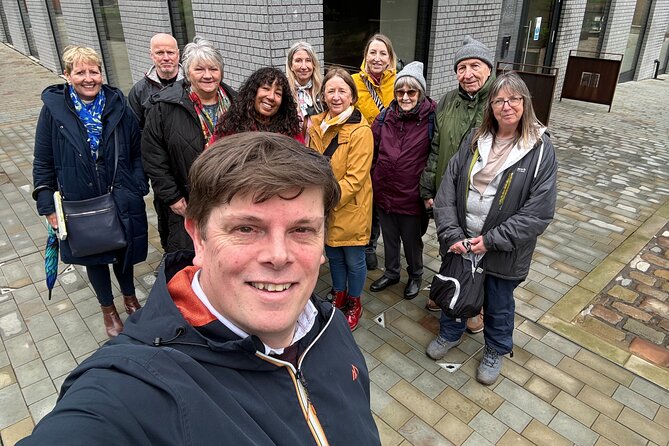
This is a strong match for you if you like:
- Victorian Manchester and the industrial story behind it
- urban change—how neighborhoods evolve and how the past leaks into the present
- walking tours where your questions matter
- history made human, not just dates on a wall
It’s also a good choice if you want a structured social moment. The experience is designed for people who enjoy history, so it can feel easier to connect with others than some tours where everyone stays quiet.
You might feel less satisfied if you’re expecting fully intact historic buildings around every corner. The area has seen significant redevelopment, and that’s part of the lesson—but it does change what you’ll physically see.
Getting ready: weather, walking, and comfort
This tour requires good weather. If Manchester’s mood turns damp, expect the operator to adjust plans rather than force it. That matters because the experience is outdoors and walk-based, not something you can do comfortably from a sheltered spot.
On the body side, the tour calls for moderate physical fitness and notes it’s not recommended for travelers who can’t negotiate steps. If you’re managing mobility limits, it’s worth thinking carefully before booking.
Good shoes are the simple answer. Even when the walk is not long in distance, the time adds up, and your goal is to focus on the story, not your feet.
Where you’ll end and how to handle your return
The tour ends at St Michael’s Flags & Angel Meadow Park, next to the entrance to Angel Meadow Park. It’s about a six-minute walk from Shudehill bus station, postcode M4 4GU.
There’s also a nice built-in kindness: the guide will walk back with any guests who want to return to the start point. That’s helpful if you’re meeting a friend at the beginning, want to stay near a specific transit stop, or just don’t want to figure out the quickest route right after the tour ends.
Should you book the Angel Meadow Manchester History Tour with Dean Kirby?
If you want a Manchester history experience that actually changes how you see the city, I’d book this. It’s a smart value at $27.62, it lasts about 1 hour 30 minutes, and it’s led by an author who knows how to connect landmarks to real human stories.
Choose it especially if you’re the kind of traveler who enjoys overlooked districts, street-level history, and learning why places look the way they do now. Just go in with the right expectation: redevelopment means you won’t be sightseeing a perfectly preserved Victorian slum—but you’ll understand what happened there, and why it still shapes the neighborhood.
FAQ
How long is the Angel Meadow Manchester History Tour?
The tour lasts about 1 hour 30 minutes.
How big is the group?
The maximum group size is 15 travelers.
Who leads the tour?
The tour is led by historian and writer Dean Kirby.
Where do I start and where does the tour finish?
You start at Sadler’s Cat on Hanover St, Manchester M60 0AB, and you finish at St Michael’s Flags & Angel Meadow Park near the entrance to Angel Meadow Park (postcode M4 4GU).
Is the tour offered in English?
Yes, the tour is offered in English.
Is there an admission fee for the sights?
The experience lists admission as free, so you should not need separate admission tickets for the tour sights.
Do I get a mobile ticket?
Yes, the tour uses a mobile ticket.
Are service animals allowed?
Service animals are allowed.
What should I know about weather and cancellations?
The tour requires good weather. If it’s canceled due to poor weather, you’ll be offered a different date or a full refund. You can also cancel for a full refund up to 24 hours before the experience’s start time.