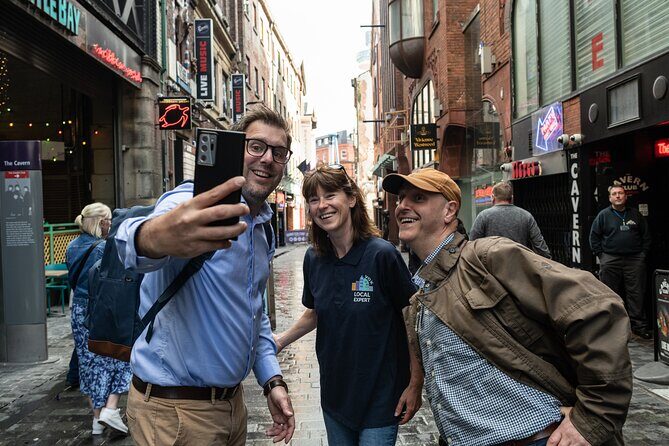
A Sunday stroll can feel like a local secret. This 3-hour East London walk links Sunday markets and canal-side neighborhoods with a real guide named Rich, plus time to snack and shop at your own pace. You’ll get a tight route that still leaves room for wandering, photos, and people-watching.
I especially like the mix of what you see: street food and handmade crafts at Broadway Market, then flowers at Columbia Road, vintage at Brick Lane, and fruit-and-veg classics at Spitalfields. The guide also brings personal stories and practical recommendations, so the walk isn’t just looking. I also love that it’s structured for browsing, with short walks between stops and built-in pause time so you don’t feel herded.
The main drawback is simple: expect a lot of walking. It’s a “morning on your feet” kind of outing, and since snacks and drinks aren’t included, you’ll want to plan for your own food budget.
In This Review
- Key Takeaways Before You Go
- A Sunday Walk That Actually Feels Like London
- Price and Value: Why $34.24 Can Be a Smart Deal
- The Route: From Cambridge Heath to Old Spitalfields
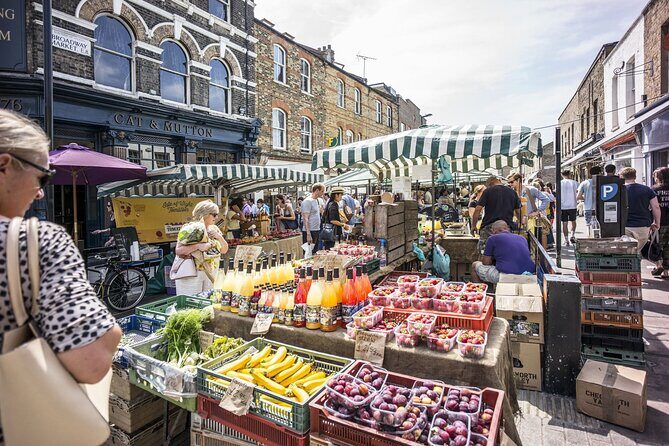
- Broadway Market: Street Food, Crafts, and Sunday Morning Energy
- Hackney City Farm: Community Built, Not Just a Photo Stop
- Columbia Road Flower Market: Victorian Streets and a Real Flower Scene
- Brick Lane: Vintage, Thrift, and a Very Good Bagel Stop
- Spitalfields Market E1: Produce Roots, Shopping Now
- Walking Between Stops: Why the In-Between Matters
- What You’ll Learn From Rich (and Why Stories Make Markets Better)
- Who This Tour Fits Best (and Who Should Skip It)
- Practical Tips for a Smooth Sunday Morning
- Should You Book This Sunday Market Walk?
Key Takeaways Before You Go
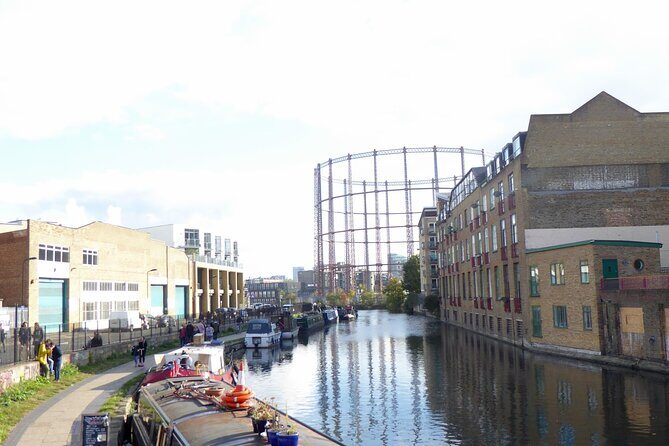
- Five markets in about three hours: a fast hit of East London without exhausting you for a full day.
- Time to explore: you get roughly 15–20 minutes free in each market to browse on your own.
- Short guided segments between stops: about 10–15 minutes of walking with factual info along the way.
- Free entry at each listed stop: the markets themselves don’t add ticket costs to the price.
- Small group size: capped at 20 travelers, so you can actually hear the guide.
- Guide-driven food tips: you’ll get pointers for where to eat and what’s worth trying.
A Sunday Walk That Actually Feels Like London
There’s a special kind of London energy on Sunday mornings, especially when markets take over whole streets. This tour uses that energy well: you cover several well-known East London stops in one go, instead of forcing you to pick just one and hope it’s enough.
What makes it work for me is the rhythm. You’ll get a guided flow that keeps you oriented, then you’ll switch gears into “wander mode” with dedicated free time. That balance is ideal if you like street life but also want control over your own shopping and food choices.
And yes, you’ll walk. But it’s not mindless walking. The route is built around short stretches between stops, and the guide fills the gaps with context so the streets start to make sense as you go.
You can also read our reviews of more tours and experiences in London.



Price and Value: Why $34.24 Can Be a Smart Deal
At $34.24 per person, you’re paying mainly for the local guidance plus the convenience of one organized route. The good news is that you’re not stacking entry fees on top of that, since the listed market admissions are free.
The value shows up in two places. First, you’re guided through multiple distinct markets—food, flowers, crafts, vintage, and produce—so your morning covers more variety than most DIY market plans. Second, the guide gives recommendations for where to eat and shop, which helps you avoid the “wrong stall, wrong line” problem that happens when you’re on your own.
One catch: snacks and food aren’t included. That doesn’t make the tour bad—it just means you should treat it like a guided sampler where you buy what you want. If you go in with an empty stomach and a small plan (like breakfast at the first stop), it feels like money well spent.
The Route: From Cambridge Heath to Old Spitalfields
The walk starts at Cambridge Heath Station Forecourt on Hackney Road, in East London. You’ll finish at Old Spitalfields Market at Horner Square, with time to keep exploring after the tour ends.
The start and end matter more than they sound. Finishing in Spitalfields is useful because it’s a natural springboard into the surrounding Brick Lane market area, so you can keep your Sunday rolling without a long repositioning effort.
Timing also works out nicely. It begins at 10:00 am and runs about three hours, which fits well into a day that still needs room for a later lunch (or a proper sit-down meal).
Broadway Market: Street Food, Crafts, and Sunday Morning Energy
Broadway Market is where the tour kicks into a friendly, “arrive hungry” mood. This stop is known for a mix of street food and handmade crafts, and the vibe tends to feel relaxed rather than showy.
You’ll get around 25 minutes here, plus extra breathing room to browse. This is a great place to fuel up early, because you’re about to hit several different market types where timing and appetite will vary.
What I like about this stop is how it sets the tone for the whole walk. Broadway Market introduces you to the maker side of East London (crafts) right alongside the snack side (food), so you immediately understand the difference between shopping for things that last and eating things you can’t stop thinking about.
A practical note: since food isn’t included, decide what you’re spending on before you get distracted by the menu boards. If you do that, you can sample without turning the morning into a budget surprise.
Hackney City Farm: Community Built, Not Just a Photo Stop
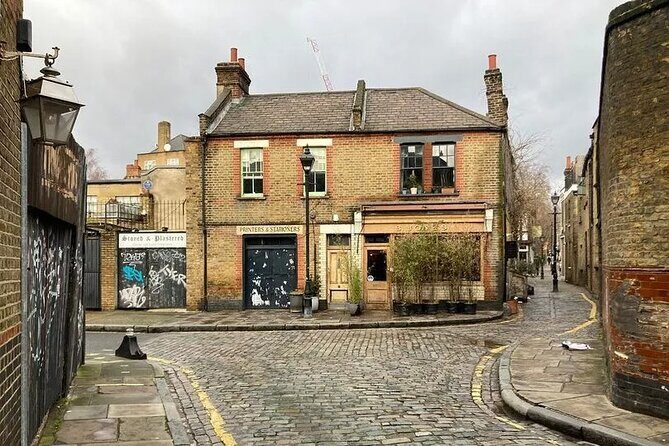
Next up is Hackney City Farm, an inner-city place shaped by and for the community. It’s a very different atmosphere from the bigger street markets, and that contrast is part of what makes the day feel real.
You’ll spend about 20 minutes here, and the point isn’t shopping—it’s seeing how community spaces work in the middle of a major city. If you like places that feel lived-in instead of staged for visitors, this stop is a nice mental reset.
This is also a good moment to pause. After the first market’s food and crafts, you get a calmer stretch of the route where you can slow down, take in the setting, and regroup.
If you’re the type who only wants markets that are mostly stalls and purchases, this may feel lighter on commerce. But if you want East London to include the human side—this is where you get it.






Columbia Road Flower Market: Victorian Streets and a Real Flower Scene
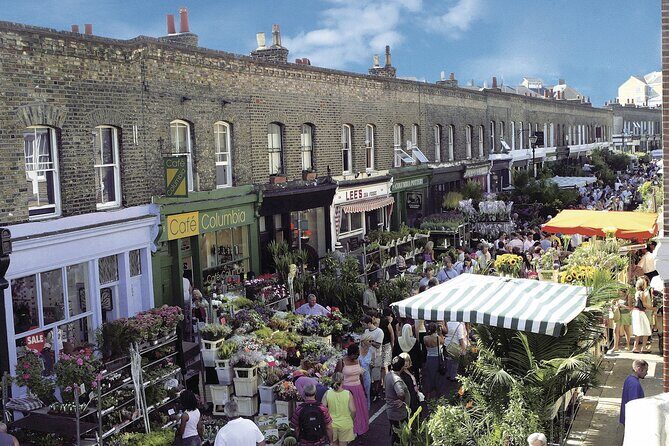
Columbia Road Flower Market is the one where flowers become the headline. During your 25-minute stop, you’ll move through flower stalls, quirky shops, and Victorian-era streets that make the whole area feel like a living set.
The big value here is seeing how specific a market identity can be. Some markets are built around food, others around clothing or crafts. This one is about plants and flowers, and that focus changes what you notice as you walk.
You’ll also likely find yourself lingering at the edges—talking with stallholders, scanning for color combinations, and taking photos that don’t feel like the usual tourist angles. Even with a group schedule, the free time gives you room to slow down.
One consideration: flowers draw crowds. Wear comfortable shoes and expect a bit of congestion, especially if the market is at its busiest.
Brick Lane: Vintage, Thrift, and a Very Good Bagel Stop

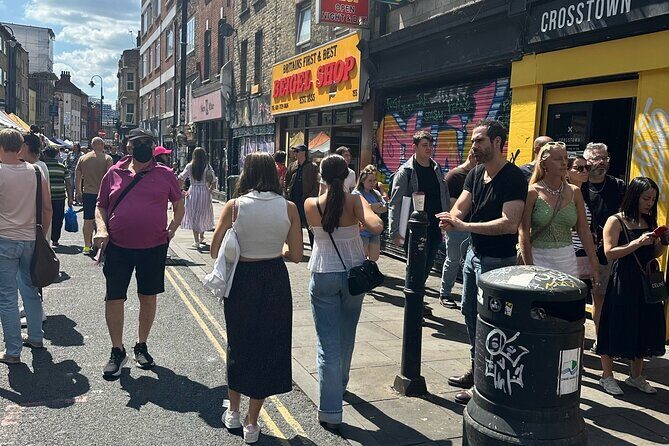
Then you move into Brick Lane, where the mood turns into vintage and thrift browsing. Expect plenty of secondhand finds and market halls, plus the kind of street-level energy that makes it hard to walk past window displays.
You’ll have about 25 minutes at this stop, and this is also where the guide’s advice becomes extra useful. You’ll get recommendations for where to eat, including a stop tied to one of London’s best cheap eats at an old bagel shop.
Even if you’re not a big “thrift buyer,” Brick Lane is worth it for atmosphere. The area is a story in motion—clothing racks, market signage, and streets that feel like they’ve been doing this for decades.
The drawback here is also straightforward: it can get tempting to browse endlessly. If you want a specific item, set a tiny target before you arrive. If you just want to wander, that’s fine too—just accept that time can disappear in vintage shops.
Spitalfields Market E1: Produce Roots, Shopping Now

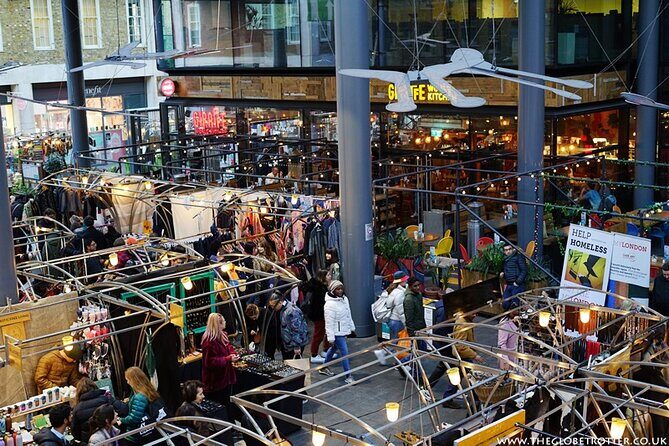
Your last market stop is Spitalfields Market E1, where an old fruit and vegetable market has evolved into a shopping paradise. The mix of food stalls and clothes gives you a good range before you wrap up.
You’ll spend about 20 minutes here, with time to explore. This stop works well as a closer because it feels like a transition point: you still get food options, but you’re also shifting toward shopping and browsing rather than just one dominant theme.
If you’ve been sampling snacks earlier, you can use this moment to go lighter—maybe a small bite or something to take away. Or you can treat it as your final chance to shop in a more “all-in-one” market setting.
When the tour ends at Old Spitalfields Market, you get extra freedom to keep going. That’s a smart finish, because you can extend the walk at your own pace in the surrounding market area instead of stopping abruptly.
Walking Between Stops: Why the In-Between Matters
The route isn’t just “arrive, browse, leave” every time. Between markets, you walk about 10–15 minutes, and that walking time is used for factual info about the area.
I like this approach because it turns the route into context. The streets don’t stay anonymous, and you start to understand why each neighborhood feels the way it does. It also helps you keep your bearings fast, which is huge in London where neighborhoods can feel similar if you don’t pay attention.
Plus, those walking segments give you a built-in structure. Even if you get sidetracked, the schedule keeps you from getting lost in the fun without finishing the day.
And because the group is limited to 20 travelers, the guide can manage the flow without rushing you constantly.
What You’ll Learn From Rich (and Why Stories Make Markets Better)
The guide for this walk is Rich, and the stand-out theme is how personal the storytelling is. You don’t just get dates and general facts—you get area stories with lived-in details that make East London feel specific.
The humor matters too. When a guide can mix funny stories with useful context, the walk feels lighter and more enjoyable. It’s one reason the pacing feels steady rather than forced.
You’ll also pick up practical recommendations. That’s the stuff that pays off in real life: knowing where to eat, where to browse, and what’s worth your time at each market. If you’re visiting for the first time, those inside pointers can make your whole day feel smoother.
Who This Tour Fits Best (and Who Should Skip It)
This tour suits you if you like markets but don’t want to plan a multi-stop itinerary on your own. It’s also a good fit if you enjoy local neighborhoods where the focus is more on everyday life than on major sightseeing landmarks.
It’s especially good for:
- First-timers who want a quick taste of East London market culture
- People who like street food, vintage browsing, and niche shopping
- Anyone who values a guide’s stories and practical food tips
You might want to skip or rethink it if you:
- Hate walking and would rather do one market slowly
- Expect snacks to be included in the price
- Want only one type of market (like only flowers, or only antiques)
Practical Tips for a Smooth Sunday Morning
This outing is short, but it’s still active. Bring layers if it’s cool, because you’ll be outside for most of the time. Also, wear shoes you can walk in for stretches without needing recovery later.
Since snacks and drinks aren’t included, budget a little extra for food. The tour is built for you to sample, but you’re the one paying the stall prices.
One smart move is to decide your top priorities in advance. Are you more interested in street food, shopping for crafts, or buying flowers/vintage? If you walk with one priority and one backup, you’ll feel satisfied even if time runs fast.
Finally, use the free time wisely. The tour gives about 15–20 minutes in each market, which is enough to find a couple of standout things if you focus instead of wandering aimlessly for the whole window.
Should You Book This Sunday Market Walk?
I think you should book this tour if you want an efficient, local-feeling East London morning with a real guide and lots of time to browse. The price-to-time ratio is strong, and the “free entry” nature of the market stops keeps your day from turning into an expense pile.
Book it if you like variety—food, crafts, flowers, vintage, and produce all in one route—plus a guide like Rich who makes the area feel personal and human. The walk is active, but it’s paced well, and the small group size helps it feel like a friendly stroll rather than a rushed production.
If you want a low-walking, fully catered day with no need to buy food, choose a different style of tour. This one is about you sampling and exploring—politely guided, never babysat.