REVIEW · LONDON
London Jack the Ripper Guided Tour with Ripper-Vision
Book on Viator →Operated by secret chamber tours ltd · Bookable on Viator
Jack the Ripper comes alive in your hands. On this East London walk, I like how Ripper-Vision projections turn present-day street corners into 1888 Whitechapel in seconds. I also like the way guides (Mick, Rob, Alan, Peter, and Andre show up in the stories I’ve heard) mix case facts with vivid, respectful storytelling so the night stays gripping without turning cheesy.
There is one catch: you’re signing up for a lot of moving on foot, and with a maximum group size of 35, sound can get tricky if you end up toward the back. If you’re the type who hates cold benches and slow crowds, plan to come prepared and stay close to the guide.
In This Review
- Key highlights worth circling
- Why Whitechapel after dark hits differently
- Ripper-Vision: how handheld projections change the walk
- Meeting at Whitechapel Gallery and getting oriented fast
- The core walk: Whitechapel street corners and six cases
- What you’ll get from the moving format
- Possible drawback: pace and walking length
- Stop-by-stop feel: what each part of the tour tends to deliver
- Phase 1: Establishing 1888 Whitechapel
- Phase 2: The first set of case locations
- Phase 3: The second set of cases and the tightening mystery
- Wrap-up near Spitalfields Market
- Guides and storytelling: what to look for on the night
- Weather-proof and night-walk realism
- Price and value: is $27.74 a fair deal?
- Who should book this tour, and who should think twice
- Quick tips so you enjoy every projection moment
- Should you book the London Jack the Ripper Guided Tour with Ripper-Vision?
- FAQ
- What time does the tour start?
- How long is the tour?
- Where do I meet the guide?
- Where does the tour end?
- Does the tour run in bad weather?
- Can I cancel and get a full refund?
Key highlights worth circling
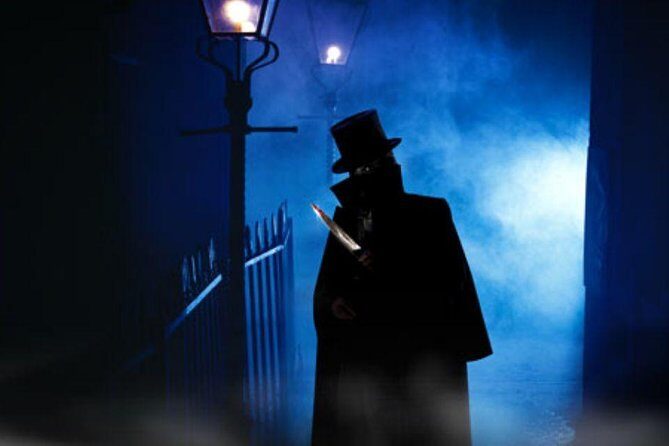
- Ripper-Vision™ projections that show how Whitechapel streets looked in Victorian times
- A guided walk centered on Whitechapel, where the murders clustered in late 1800s London
- Six Ripper cases covered, including Martha Tabram, Mary Ann Nichols, Elizabeth Stride, Catherine Eddowes, and Mary Jane Kelly
- Start at 7:30 pm and finish near Spitalfields Market for an easy continuation into the evening
- Smallish groups (up to 35) for a more personal guide-to-audience feel
Why Whitechapel after dark hits differently
London at night already has a mood. Add 1888 Whitechapel to the mix, and the East End feels like it’s switching hats: today’s street life replaces last-century alleys, brick by brick, in your imagination.
This tour works because it doesn’t just point at famous spots. It gives you a way to see the old street plan again, then ties it back to the cases—so you’re not walking from one marker to another feeling like you missed the movie.
You should expect a serious theme, and you’ll get the case history in a way that stays mindful of the victims. Guides like Mick (who’s praised for keeping the tone respectful) and Alan (praised for covering facts with energy) help keep the atmosphere dark but not disrespectful.
You can also read our reviews of more guided tours in London
Ripper-Vision: how handheld projections change the walk
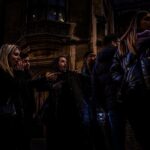
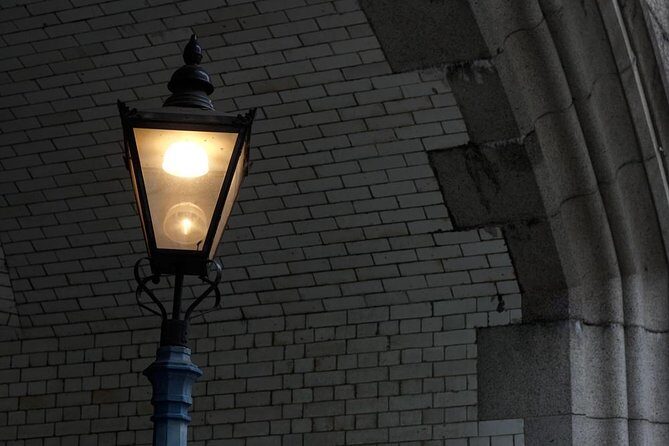
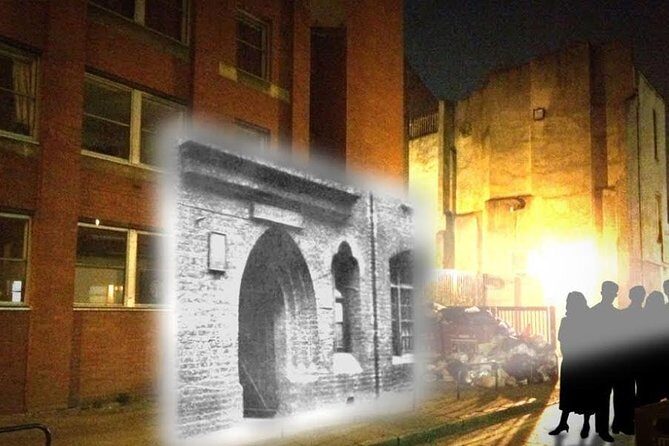
The star tool here is Ripper-Vision™—a set-up where you hold a device and see “now and then” visuals projected onto nearby walls at key points. In plain terms: you’re standing on a modern street, then watching it turn into Victorian Whitechapel in your peripheral vision.
That matters for two reasons. First, it reduces the hardest part of this topic: places have changed, and many original buildings are gone. Second, it helps your brain connect the case timeline to real geography. Instead of memorizing dates, you start picturing what the streets would’ve looked like.
A few practical notes from what people describe: the projections can be striking even if you’re skeptical at first. Some folks have said the visuals provide better perspective than photos alone, and others have liked that it’s not just a slideshow—it’s tied to the exact spots you’re standing at.
Meeting at Whitechapel Gallery and getting oriented fast
The meeting point is right at the Whitechapel Gallery area (77–82 Whitechapel High St, London E1 7QX). The tour starts at 7:30 pm, and you’ll set off by foot from there into the Whitechapel district.
Why this start location is smart: Whitechapel High Street is a central, easy-to-find artery. You also get the benefit of launching before the streets feel too empty or too loud. Evening is usually when you can hear the guide better and also feel the East End texture: pubs, pedestrians, and the kind of street noise that makes it real.
The tour ends near 101 Commercial St, London E1 6BG, close to Spitalfields Market. That’s a handy finish zone because it makes it easy to grab food or hop on public transport rather than trying to escape from a random backstreet.
The core walk: Whitechapel street corners and six cases
This is a Whitechapel-centered route. The cases cluster in the late 19th century, and the guide’s job is to connect the names to the streets you’re standing on.
The tour covers six murders. The cases I can point to from the details provided include:
- Martha Tabram
- Mary Ann Nichols
- Elizabeth Stride
- Catherine Eddowes
- Mary Jane Kelly
…and one additional case that’s included in the six.
You’ll hear the story as you move. One detail that helps you manage expectations: by around 8:30 pm, the walk typically includes sites tied to Tabram and Nichols. The second half then takes you through the locations connected to Stride, Eddowes, and Kelly.
What you’ll get from the moving format
This “walking + stop points” style is the whole point of a London murders tour. You’re using geography as the backbone. Even if you don’t catch every small fact, the route helps you understand how the East End’s layout shaped the investigation and rumor.




Possible drawback: pace and walking length
The trade-off is time on your feet. Multiple comments mention it’s a fair walk, and a few people felt it leaned heavily toward walking compared with talking. If you’re hoping for a mostly stationary presentation, this might feel like too much motion.
Also note that buildings and street layouts have changed. Where the old structures are gone, the tour relies on imagination aided by the projections. That can be a plus if you enjoy mental picture work, but less fun if you want everything visually “complete” like a museum.
Stop-by-stop feel: what each part of the tour tends to deliver
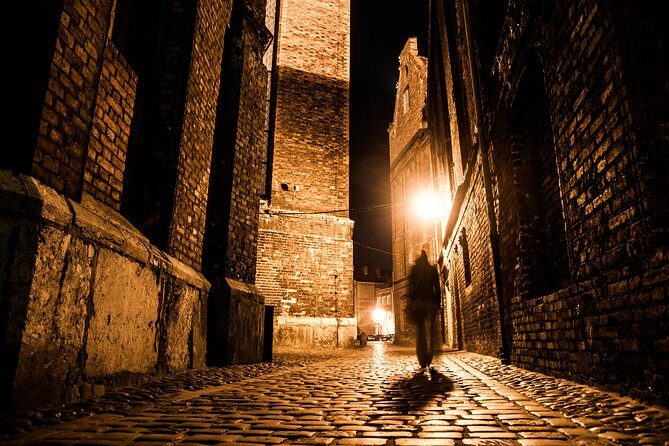
Since the tour is built around multiple spotlights along the route (with “now and then” projections at specific points), the easiest way to think about the flow is in phases.
Phase 1: Establishing 1888 Whitechapel
Early on, you’re building context. You’ll get an explanation of how Whitechapel functioned at the time: an impoverished, densely populated East End district where the everyday background noise of hardship helped create the perfect conditions for fear and speculation.
The guide also sets expectations for the types of stories you’ll hear—facts, theories, and the “why it’s still argued today” angle. This phase is valuable because it makes later stop points make sense.
Phase 2: The first set of case locations
As the walk hits the first major cluster, the guide ties each case to streets you can still find. By about halfway through, you’ve typically reached places tied to Tabram and Nichols.
If you like details, this is where the tour can feel especially satisfying: the guide often threads witness-life and street geography together so the timeline doesn’t feel like random headlines.
Phase 3: The second set of cases and the tightening mystery
The later stops focus on Stride, Eddowes, and Mary Jane Kelly. This is also where the tone often intensifies, because the case details are frequently more notorious and emotionally heavy.
If you’re sensitive to gore, you’ll want to keep in mind this is still a murders tour. One thing the format does well is balancing the horror with explanation—why the events mattered, why theories persist, and what’s known versus what’s speculation.
Wrap-up near Spitalfields Market
The tour finishes near Spitalfields Market. For many people, that makes the ending feel less abrupt because you’re right by places to eat and decompress.
Some guides add an extra closing presentation element in a nearby setting, but that’s guide-dependent. Even without that, the ending location is useful for catching the Tube or continuing your evening.
Guides and storytelling: what to look for on the night
The guides seem to be a major factor in why this tour earns such strong scores. You’ll hear vivid narration, a clear structure, and the sense that the guide has done the work to connect stories to streets.
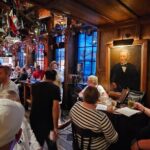
Names that come up in the guide feedback include Peter, Andre, Alan, Mick, and Rob, with praise for storytelling and keeping the audience engaged. One person even mentioned a guide’s “slide show in the pub” wrap-up, which suggests some guides add extra layers beyond the walk.
If you’re trying to choose between guides, here’s the practical truth: you can’t always pick your exact leader. So your best bet is to arrive on time, get close enough to hear well, and be ready to follow the guide’s rhythm. This tour is more about you participating with your feet and attention than about passively absorbing trivia.
Weather-proof and night-walk realism
This tour runs in all weather conditions. That line sounds standard, but it matters here because you’re outside, often for the better part of nearly two hours.
Bring layers. Wear shoes that won’t turn your feet into cold numb blocks. If it’s raining, you’ll still be moving. One review highlights a guide making real effort to keep the group dry, which is a good sign the operator takes the night seriously, not just theatrically.
Also, you’ll be in the East End at night. Bring a little common-sense awareness: keep your phone secure, and don’t get so far behind that you lose the group’s “projection moments.”
Price and value: is $27.74 a fair deal?
At $27.74 per person for about 1 hour 45 minutes, this is priced like a serious specialty walking tour rather than a basic “see the plaques” stroll.
The value equation looks like this:
- You get a professional guide (one of the main cost drivers in any tour).
- You get Ripper-Vision™ technology, which costs money and requires setup at key points.
- You get a densely packed experience built around multiple case locations in one session.
- Your finish near Spitalfields Market helps you avoid extra transport hassle right after.
Compared with cheaper tours that stop at a few obvious markers, the projection system and the multi-case coverage help justify the price. Compared with high-end private experiences, it’s still relatively affordable—especially if you like group energy and don’t mind walking.
Who should book this tour, and who should think twice
Book it if you want:
- A night walk in Whitechapel with a structured story
- Visual support for a place that has changed a lot since 1888
- A guide who leans into facts and theories while keeping the pace engaging
- An ending near Spitalfields Market for an easy night out
Think twice if:
- You struggle with long walking segments
- You need a low-noise environment to catch every word
- You prefer purely spooky atmosphere with minimal explanation (this tour leans more historical and case-focused than purely theatrical)
And a small tip for everyone: choose your viewing spot. When a group is up to 35, being toward the front makes a noticeable difference in how much you enjoy the story and visuals.
Quick tips so you enjoy every projection moment
Here’s how to get the most out of the experience:
- Arrive early enough to find the group without rushing. A smooth start helps you stay engaged for the whole arc.
- Wear comfortable shoes. You’re walking city streets, not touring a flat museum corridor.
- Dress for weather. The tour runs in all conditions.
- Keep close to the guide when the projections start. The “now and then” effect is easiest to appreciate when you’re positioned well.
If you’re doing this as part of a bigger London plan, consider building a little buffer after it. You’ll want time to decompress near Spitalfields.
Should you book the London Jack the Ripper Guided Tour with Ripper-Vision?
If you like your London history with street geography, this tour is a solid pick. The standout reason is Ripper-Vision™: it solves the biggest problem with old-case tours—lost buildings and changed streets—by visually reconnecting you to the past. Add expert-led storytelling and a route through the Whitechapel case cluster, and you get a night that feels more like “seeing” than “reading.”
One caution: commit mentally to the walking. If you want a short sit-down lecture, you may feel impatient. But if you’re happy to cover ground and enjoy the experience as an unfolding route, this is excellent value at $27.74 for nearly two hours of guided, projection-supported case history.
If your goal is a memorable East End evening with real atmosphere and strong structure, I’d book it.
FAQ
What time does the tour start?
The tour starts at 7:30 pm.
How long is the tour?
It lasts approximately 1 hour 45 minutes.
Where do I meet the guide?
Meet at Whitechapel Gallery, 77–82 Whitechapel High St, London E1 7QX, UK.
Where does the tour end?
The tour ends near Spitalfields Market at 101 Commercial St, London E1 6BG, UK.
Does the tour run in bad weather?
Yes. It operates in all weather conditions, so dress appropriately for the night.
Can I cancel and get a full refund?
Yes. You can cancel up to 24 hours in advance for a full refund. Within 24 hours, the amount paid is not refunded.