REVIEW · LONDON
Fashion History Walking Tour in London
Book on Viator →Operated by Square Mile Secrets · Bookable on Viator
Fashion explains London better than you think. In just 90 minutes, this walk turns shopping streets and landmark areas into a clear timeline of fashion history—and how clothes, rules, and power show up in the city you’re standing in. You’ll also spend time around Royal Exchange, a key stop for anyone who wants fashion connected to real-world shopping culture.
I love that you’re not stuck on a script. The guide invites your questions, so you can steer the conversation toward what you actually want to understand—like how London’s public spaces shape dress and how dress codes change over time. By the end, you’re also looking at dress codes today right outside the Bank of England, which makes the whole theme feel current, not just academic.
One possible drawback: it’s a fast, walking-focused tour, so if you’re craving long indoor museum-style stops, this format may feel a bit tight. Plan on being on your feet for about 1 hour 30 minutes, and note snacks aren’t included.
In This Review
- Key highlights worth your attention
- Fashion history in London is really about rules and power
- Starting at the Barbican Highwalk: fashion starts with place
- St. Paul’s Cathedral area: where public life meets formal dressing
- Royal Exchange: why shopping spaces change style
- Walking through the Square Mile: dress codes you can feel
- Ending at the Bank of England: dress codes in action
- What this tour is like in real life (and what to do before you go)
- Price and value: why $27.43 can make sense
- Who should book this Fashion History Walking Tour
- Should you book it?
- FAQ
- FAQ
- How long is the Fashion History Walking Tour in London?
- Where does the tour start and end?
- What language is the tour offered in?
- Is admission required for the stops?
- What’s included in the price?
- Are snacks included?
- What’s the cancellation policy?
Key highlights worth your attention
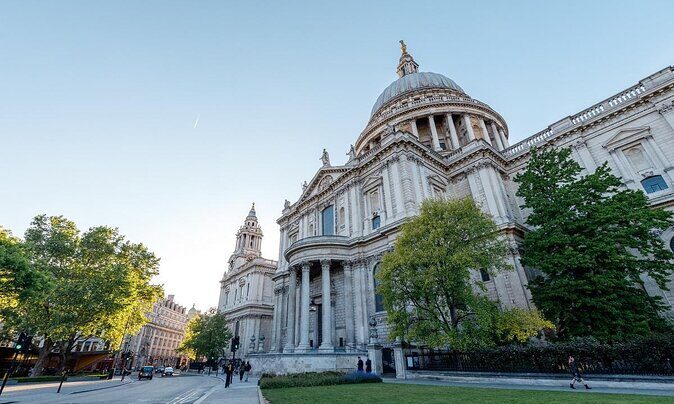
- Royal Exchange, London’s oldest shopping mall, tied directly to how style and commerce evolved
- Three major areas in a tight route: Barbican Highwalk, St. Paul’s Cathedral vicinity, and the Bank of England area
- Ask-the-guide Q&A energy, so you can follow your own fashion curiosity
- London dress codes, then and now, not just outfit trivia
- Small group size (up to 15), which makes questions actually work
- Mobile ticket and English-led format, so you can show up and get moving
Fashion history in London is really about rules and power
London fashion history isn’t only about designers and runways. On this tour, you’ll see fashion as a public language: who gets to dress how, where, and when. That matters because London is built around institutions—church, commerce, government—and clothes have long been part of how those institutions communicate authority.
What I liked most is how the tour uses the city itself as the lesson plan. Instead of treating fashion as a separate topic, it connects the dots between what people wore, where they went, and what society expected. That’s why the route through major parts of the City feels like more than a stroll.
The overall structure is also smart for your time. You’re given a compact story across a short walk, then you end at the Bank of England with a prompt that brings the theme into the present.
You can also read our reviews of more walking tours in London



Starting at the Barbican Highwalk: fashion starts with place
Your tour kicks off near the Barbican—specifically the Barbican Highwalk area. This is a practical starting point because it sets an expectation: you’re exploring how fashion history shows up in neighborhoods and built spaces, not just famous storefronts.
At this first stop, you’ll focus on how the local environment shaped the fashion industry in the area. Even if you don’t know the area well, you can follow the logic quickly: fashion doesn’t happen in a vacuum. It grows around how people work, gather, and move through a city.
The tour starts with about 30 minutes here, which is enough time to get oriented and to hear the guide explain the theme before you hop into the heavier landmark parts of the walk. Admission is free at this stop, so you’re not spending extra time figuring out tickets—you’re using that time for context.
St. Paul’s Cathedral area: where public life meets formal dressing
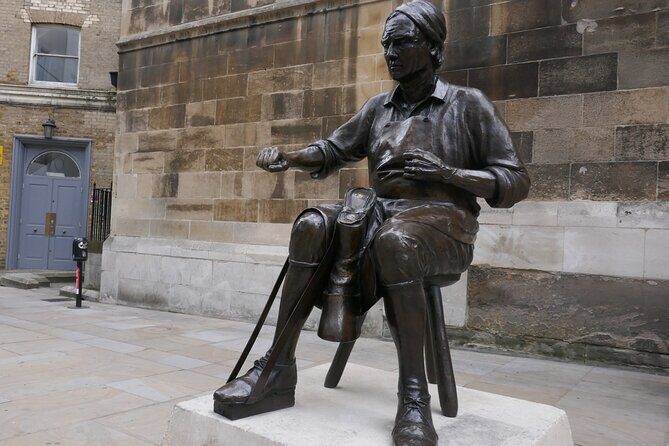
Next, you head toward St. Paul’s Cathedral, with a full 30 minutes in the surrounding area. This stop is useful because it sits in one of London’s biggest “public stage” zones. When a city landmark is this central, dressing well and dressing appropriately tends to become more visible.
On the fashion-history side, the point isn’t that you’re shopping for outfits. It’s that you’re observing how major city spaces influence what people wear and what they feel expected to wear. Around St. Paul’s, you can understand how public life and formal presentation meet—especially in a city where business, ceremonies, and tradition often share the same sidewalks.
If you like photo stops, this area also gives you something to work with. Even without a long indoor visit, the surroundings help you connect what you’re hearing to what you’re seeing in front of you.
Again, admission is free for this stop, which keeps the walk moving. And because the group is limited to 15 people, it’s easier to hear the guide while you’re outside.
Royal Exchange: why shopping spaces change style
One of the tour’s standout promises is time at the Royal Exchange. The highlight callout matters because Royal Exchange is not just “a cool place to pass by.” It’s tied to the way shopping evolved into a real cultural and social experience—where style, status, and commerce come together in one spot.
In other words: you’re not only learning about what people wore. You’re learning where fashion gets reinforced—through business crowds, buying habits, and the look of the spaces themselves.
This is the kind of stop that clicks for readers who enjoy London beyond the obvious tourist checklist. If you’ve ever noticed that some streets feel more formal, more polished, or more “power-suit” than others, this is that idea made into a history lesson.
Walking through the Square Mile: dress codes you can feel
As you move along, you’ll pass through and discuss the Square Mile’s shopping streets and historic alleyways. This part of the route helps the tour feel like more than a list of monuments. The City has a distinct vibe, and the guide uses that to explain how dress codes shaped behavior as London commerce developed.
Here’s the useful framing: dress codes are social tools. They signal roles, invite trust, and sometimes even reduce uncertainty in professional spaces. The point isn’t to judge anyone’s wardrobe. It’s to understand that clothing helps people navigate systems that can be strict—whether in business, tradition, or public expectations.
This portion is also where the tour’s “ask questions” approach pays off. If you’re curious about modern office culture, ceremonial traditions, or how “appropriate” dressing changes with time, you can usually ask something that leads to a real conversation.
You can also read our reviews of more historical tours in London






Ending at the Bank of England: dress codes in action
The tour finishes outside the Bank of England, with the final 30 minutes aimed at the City’s dress codes today. That ending location is smart. The Bank is one of those places where formality isn’t just a suggestion—it’s part of the daily atmosphere.
This final stop gives you something a lot of history tours skip: a bridge between the past and what you see right now. You’re not stuck in old silhouettes. You’re looking at how modern dress codes function in a high-stakes, professional environment.
From a value standpoint, I like this ending because it gives you closure. You spend the earlier parts of the walk learning how fashion connected to institutions, then you test the theme against the present moment as the tour closes near Bank Underground station.
What this tour is like in real life (and what to do before you go)
This is a small-group, guided walking tour in English, designed for easy participation (it’s described as suitable for most travelers). That matters because fashion-history walks work best when you can pause, listen closely, and ask follow-up questions without getting rushed.
Duration is about 1 hour 30 minutes, so you’ll want to treat it like a focused “field lesson,” not a slow sightseeing day. I’d plan comfortable shoes and weather-ready layers. The route includes outdoor areas around major landmarks, so you’ll feel London’s typical temperature swings if you’re underdressed.
Also, snacks are not included. If you’re the type who likes a coffee or a quick snack after a tour, do that planning ahead of time. It keeps your energy up, especially on a late afternoon start.
One more practical point: it uses a mobile ticket. That’s a small detail, but it saves you time at check-in and reduces the hassle factor.
Price and value: why $27.43 can make sense
At about $27.43 per person, this tour is priced like a short specialty walk rather than a big-ticket attraction day. For me, the value comes from two things you get that you typically don’t get in a casual self-guided stroll:
1) A guided storyline
The guide connects fashion to the city’s institutions and shopping culture. That’s the difference between walking past places and actually understanding why they matter to fashion and dress.
2) A Q&A-friendly format in a small group
With a maximum group size of 15, it’s more likely you’ll get answers that fit your interests. If you’re into fashion history, that interactive part is what turns “interesting facts” into a real experience.
Because the stops listed have free admission, you aren’t paying extra at each location. You’re essentially paying for interpretation and guidance during the 90 minutes—where you get to ask questions and leave with a mental map of how London’s rules and commerce shaped style.
If your day includes multiple neighborhoods, you can also use this as a compact anchor activity. It sets context for the City areas you might explore later on your own.
Who should book this Fashion History Walking Tour
I think this tour is a great match if you:
- Enjoy history that links to everyday life, not just dates and names
- Want fashion explained through institutions and street-level realities
- Like guided Q&A formats where you can ask your own questions
- Are visiting London for a limited time and want a focused, high-context activity
It may be less ideal if you:
- Prefer long indoor stops and museum time
- Want a shopping-heavy experience with stores as the main event (this is more about fashion history and dress codes in place)
Should you book it?
If you like the idea of learning fashion history in a way that actually connects to what you see on the street, I’d book this. The strongest reason is the combination of a tight City route with an ending at the Bank of England that brings the theme into the present.
You’re also unlikely to feel lost in the format. The tour runs about 90 minutes, it’s in English, it’s small-group, and the main stops are free from admission hassle. For a single, reasonably priced afternoon walk, it’s one of those activities that makes London feel smarter—without turning into homework.
FAQ
FAQ
How long is the Fashion History Walking Tour in London?
It lasts about 1 hour 30 minutes.
Where does the tour start and end?
It starts near Underground Ltd, Aldersgate St, Barbican, London EC1A 4JA, UK, and ends outside the Bank of England by Bank Underground station on Threadneedle St, London EC2R 8AH, UK.
What language is the tour offered in?
The tour is offered in English.
Is admission required for the stops?
The listed stops are marked as admission ticket free.
What’s included in the price?
All fees and taxes are included.
Are snacks included?
No, snacks are not included.
What’s the cancellation policy?
Free cancellation is available. You can cancel up to 24 hours in advance for a full refund.