REVIEW · LONDON
Witchcraft, Ancient Cults & MI15 Spy Secrets
Book on Viator →Operated by Pigeon Tours · Bookable on Viator
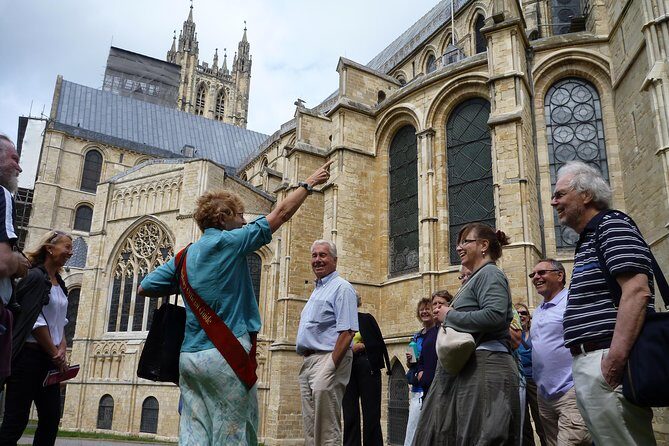
London’s oddest legends start underground. This 3-hour time-traveling history walk threads together Roman cult spaces, old churches, and darker London stories, all guided at street level where details matter. I especially like the focus on lesser-known sites that many first-timers skip, and I like that it’s built for you to get undivided attention from your private guide as you move on foot.
One thing to plan for: not every stop includes admission. A couple of locations list tickets as not included, so your final out-of-pocket cost may be a bit higher depending on how you want to handle entrances.
In This Review
- Key highlights worth showing up for
- A 3-hour time-travel route from Bleeding Heart Yard to Monument
- London Mithraeum at Bloomberg SPACE: Mithras, underground rooms, and bull myth
- St. Mary Woolnoth: Roman and pagan traces under a working church
- Cornhill House’s devilish terracotta: revenge, mocking, and modern office-block London
- St. Bartholomew the Great: surviving 1666 and what that teaches you
- Smithfield Market: executions, Bloody Mary, and the city’s darker edge
- Price and value: what you pay for in a private 3-hour walk
- Who this suits best (and who should temper expectations)
- Should you book this London witchcraft, cults, and MI15 spy secrets tour?
- FAQ
- FAQ
- How long is the tour?
- When does the tour start?
- Where does the tour start and end?
- Is this a private tour?
- What’s included in the price?
- Are there free stops?
- Are tickets required at every stop?
- Is a mobile ticket provided?
- Can I bring a service animal?
- What is the cancellation policy?
Key highlights worth showing up for
- Roman Mithras under the city at the London Mithraeum within Bloomberg SPACE
- Layered sacred sites, with signs of older worship under newer church foundations
- Gothic-to-graffiti energy at Cornhill House with those devilish terracotta figures
- A medieval survivor at St. Bartholomew the Great, one of the few churches to make it through 1666
- Bloody Mary and executions at Smithfield Market, with admission included
- A private group feel that helps the guide slow down for the right questions
A 3-hour time-travel route from Bleeding Heart Yard to Monument
This is a walking tour built for momentum and close-up seeing. It runs about 3 hours, starts at Bleeding Heart Yard (EC1N), and ends next to Monument Station on King William St. The timing matters: a fixed start time of 12:00 pm keeps the day tight, which is great if you already plan to hit other sights later.
You also get a format that feels more tailored than the usual hop-on-hop-off vibe. It’s a private tour, meaning it’s only your group. That matters most when the subject jumps across centuries, because you can ask follow-ups without feeling like you’re competing with 30 other people.
Logistically, it’s designed to be easy to use the day-of. You’ll get a mobile ticket, it’s near public transportation, and service animals are allowed. If you’re the type who likes to get oriented fast and then zoom in on specifics, this structure fits well.
You can also read our reviews of more tours and experiences in London.


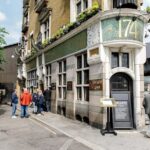
London Mithraeum at Bloomberg SPACE: Mithras, underground rooms, and bull myth
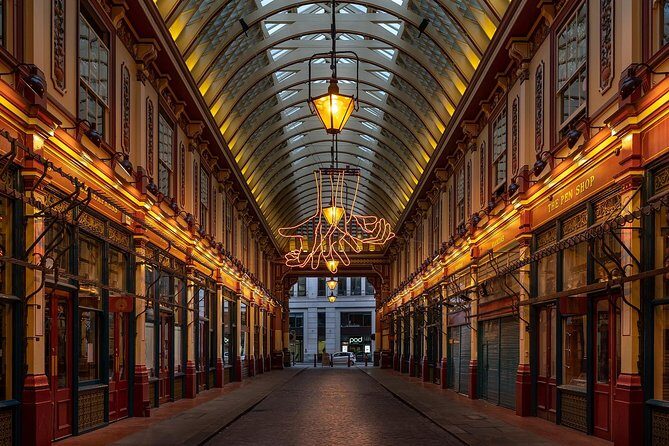
Your first stop is the London Mithraeum at Bloomberg SPACE. The tour frames this spot as a long-standing center of London going back “a couple of thousand years,” and then links it to the Roman world—especially the cult of Mithras. The story starts in Rome in the 1st century AD, then spreads across the empire over the next 300 years, with followers drawn from merchants, soldiers, and imperial administrators.
What I’d call the emotional core here is the setting the tour highlights: these temples were often below ground, dark, and windowless. That alone helps you understand why the cult feels mysterious on paper and more intense in person. It’s not just symbols on a wall; it’s the idea of secrecy and controlled atmosphere.
At the center is the myth the guide points to: the scene of Mithras killing a bull in a cave, known as the tauroctony. The tour keeps it honest by noting that its full meaning is still open to speculation. That approach is a good sign. It means you get to enjoy the symbolism without being forced into one too-perfect theory.
Practical note: admission at this stop is listed as not included, and the time on site is short (about 10 minutes). If you’re the kind of person who could spend an hour studying a single scene, you’ll want to pair this with extra time on your own later—because this tour is designed to move.
St. Mary Woolnoth: Roman and pagan traces under a working church

Next you’re at St. Mary Woolnoth Church. This stop is free, and the tour’s hook is what sits underneath it. The church’s site has been used for worship for at least 2,000 years, and traces of Roman and pagan religious buildings have been found under the present church’s foundations.
That’s a powerful concept for London, because the city doesn’t replace its spiritual life as often as it adds layers. You’re standing in one place while the story changes underneath you. Even if you don’t consider yourself a church person, the point is clear: London keeps building on the same spiritual real estate.
The quick stop time (again, about 10 minutes) works here because the tour’s payoff is the idea of continuity. You’re not trying to memorize every detail of architecture; you’re learning how long the site has carried religious meaning.
Cornhill House’s devilish terracotta: revenge, mocking, and modern office-block London
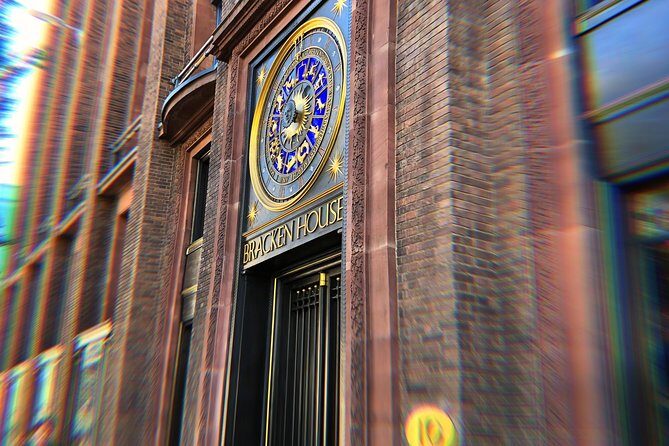
At Cornhill House, the tour shifts into something more pointed and slightly theatrical. The highlight is the presence of three devilish terracotta figures. The tour explains them as an unusual example of long-lasting revenge: they were meant to mock worshippers next door at St Peter upon Cornhill.
Here’s where it gets extra interesting for modern visitors. The tour notes that St Peter upon Cornhill is now virtually submerged at street level by office blocks. So you get a neat contrast: the city’s oldest religious space still shapes the story, even when you can’t see it the way people once did.
This stop is a reminder that London’s past isn’t always polite. It can be petty, political, and personal—then it gets covered up by development, and later a guide points out the evidence. Expect about 10 minutes, and admission is listed as not included for this stop.
If you like photos, this is also the kind of place where careful framing helps. The lesson isn’t just what the figures represent, but how they sit in their surroundings—how art, architecture, and spite share a wall.
St. Bartholomew the Great: surviving 1666 and what that teaches you
Then it’s the Church of St. Bartholomew the Great. The tour positions it as one of the few medieval churches to survive the Great fire in 1666, and it’s a free stop.
For me, that kind of survival matters more than it sounds. When a site makes it through a major historical break, it becomes a living bridge. You’re not just hearing about the medieval era; you’re standing near something that stayed when so much didn’t.
Also, a tour like this helps you avoid “date fatigue.” You’re not memorizing a timeline; you’re seeing how one landmark acted like a survivor-capsule for an older London.
Time on site is about 10 minutes, so don’t expect a full architectural lecture. But if you want a quick, meaningful stop that anchors the medieval period in real stone, this is the one.






Smithfield Market: executions, Bloody Mary, and the city’s darker edge
The final stop is Smithfield Market. This is where the tour leans into the darker end of the London story: you’ll see places of execution and learn a story tied to Bloody Mary. Admission is listed as included, and you get about 10 minutes.
Market spaces are especially good for this kind of history. They tend to keep moving, even when the stories around them get grim. So you can feel how an event-focused past can live right next to everyday life—workdays, shopping, deliveries—without the setting announcing the content.
This is also where the tour title’s promise starts to make sense. Even though the stops you walk to are spread across ancient cults and medieval churches, the thread is London’s ability to keep secrets and stories simmering. The tour name includes witchcraft and MI15 spy secrets, so the guide’s job is connecting how later intrigue can sit on the same streets as ancient religious symbolism. This stop is the most direct “darker lore” moment based on what’s specified.
Because the time is short, this is a stop where your guide’s storytelling style becomes the main attraction. You’ll want to ask questions if something clicks with you—execution history and Bloody Mary stories are the kind of topics people can carry beyond a 10-minute mention if the guide pulls the right detail.
Price and value: what you pay for in a private 3-hour walk
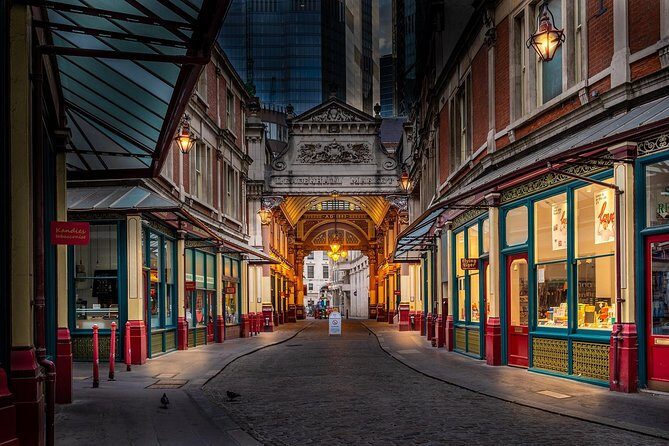
At $371.59 per person, this is not a budget tour. But it’s also not priced like a museum ticket day. You’re paying mainly for the professional guide and the time—plus the private format, which is the big differentiator for many visitors.
Here’s where the value math gets practical. The tour runs about 3 hours, and several key stops are free (St. Mary Woolnoth; St. Bartholomew the Great). Others list admission as not included (the London Mithraeum and Cornhill House). Smithfield Market lists admission as included. So your total spend may shift slightly depending on the paid admissions you encounter.
It helps too that the tour offers group discounts and uses a mobile ticket, both of which can reduce friction. And if you’re booking around the usual rhythm—this one averages 54 days in advance—you’re more likely to get the date you want without last-minute scramble.
The real question isn’t just cost; it’s whether this format matches your London style. If you’ve already checked off the headline sights and you want a second layer—streets where the story is stranger, older, and more layered—this can feel like a smart upgrade.
If you’re hoping for a long, slow deep study at one site, the short stop times (about 10 minutes each) may feel brisk.
Who this suits best (and who should temper expectations)
This tour fits best if you want London with edges. The tour’s theme is witchcraft and MI15 spy secrets wrapped around ancient cults, plus medieval survivals and market-era darkness. Even if you land more on one topic than the others, the walk format keeps the city from turning into a textbook.
It’s also ideal if you’ve already done the most obvious attractions. The highlights basically tell you the purpose: see a different side of London, hit sites you might otherwise miss, and get finer details with a guide who can focus on you.
The main limitation is pacing. With multiple stops and about 10 minutes at each, this isn’t for people who need long, quiet time in one place. It’s for people who like to learn fast, ask questions, and keep moving.
On participation, the info says most travelers can participate, and it allows service animals. That suggests the walk and stop style is meant to be accessible for a wide range of visitors, but it still makes sense to wear comfortable shoes since you’re out on foot.
Should you book this London witchcraft, cults, and MI15 spy secrets tour?
I’d book it if you:
- Like your London history with a darker streak and real-world locations behind the stories
- Want a guided connection across Roman, medieval, and later intrigue themes
- Prefer private attention over crowded group chaos
- Have already done the big sights and want the city’s stranger side
I’d think twice if you:
- Need long time inside fewer stops (this tour keeps each stop brief)
- Don’t want to deal with entrance fees at locations where tickets aren’t included
- Prefer pure archaeology or pure church architecture with no genre-hopping
FAQ
FAQ
How long is the tour?
The tour runs for about 3 hours.
When does the tour start?
The start time listed is 12:00 pm.
Where does the tour start and end?
It starts at Bleeding Heart Yard, London EC1N, UK, and it ends next to Monument Station at King William St, London EC4R 9AA, UK.
Is this a private tour?
Yes. It’s described as a private tour/activity where only your group will participate.
What’s included in the price?
A professional guide is included. At least one stop lists admission as included, while others list admission as not included.
Are there free stops?
Yes. St. Mary Woolnoth Church and the Church of St. Bartholomew the Great are listed as free.
Are tickets required at every stop?
No. Some locations note admission ticket not included, while Smithfield Market lists admission ticket included.
Is a mobile ticket provided?
Yes, the tour includes a mobile ticket.
Can I bring a service animal?
Yes, service animals are allowed.
What is the cancellation policy?
You can cancel for free up to 24 hours in advance for a full refund. If you cancel less than 24 hours before the start time, the amount paid won’t be refunded. If the minimum traveler requirement isn’t met, you’ll be offered a different date/experience or a full refund.