REVIEW · LONDON
Highlights of Old London Town: Walking Tour of the Square Mile
Book on Viator →Operated by Square Mile Secrets · Bookable on Viator
Roman ruins hide in plain sight. This Old London Town walking tour in the City of London mixes Roman origins, story-filled streets, and quick peeks at places you’d miss on your own, with stops that include the Roman wall of Londonium and Leadenhall Market. I especially like how the route turns everyday lanes and squares into something you can actually picture, and I like that the guide talks history with energy rather than dates you’ll forget the moment you leave.
The main thing to consider is simple: it’s a 1.5-hour walking tour, and it does not include entry into St. Paul’s Cathedral. If you’re not great with steady walking or want lots of indoor time, plan accordingly (and note that snacks are not included).
In This Review
- Key points before you go
- First step at Tower Hill: starting where London’s story begins
- Roman wall of Londonium: the origin story you can stand in
- Hidden ruins and secret-feeling streets in the Square Mile
- Leadenhall Market: the movie-famous arcade that still feels real
- The final look toward St. Paul’s Cathedral (without going inside)
- What the guides do well: Catherine, Susannah, and Suzanne
- Timing and pacing: morning vs afternoon and how long you’ll actually walk
- Price and value: what $27.28 buys you in the City of London
- Who should book this Old London Town Square Mile walk
- Should you book? My call for the right traveler
- FAQ
- How long is the Walking Tour of the Square Mile?
- Where does the tour start and end?
- Is this tour offered in the morning or afternoon?
- What language is the tour in?
- Do I need to buy tickets for the stops?
- Are snacks included?
- Will we go inside St. Paul’s Cathedral?
- Is the tour suitable for people with service animals?
Key points before you go
- Small group size (max 15): easier to hear the guide and keep the pace comfortable.
- Roman wall start at Tower Hill: you begin with London’s earliest layers, then keep building the story.
- Leadenhall Market stop: a film-famous covered market that still feels like a working place.
- Old church ruins in a quiet pocket: you’ll see how history can sit behind street-level hustle.
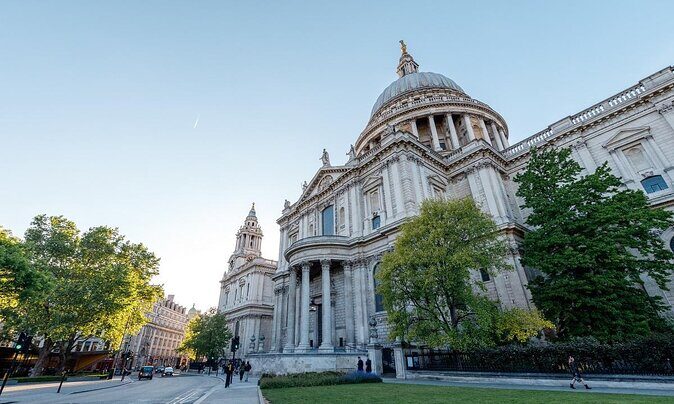
- Ends by St. Paul’s Cathedral: big views and easy transit nearby, without paying for interior time.
- English-only tour with mobile ticket: straightforward planning, no complicated paperwork.
First step at Tower Hill: starting where London’s story begins
The tour begins at Tower Hill (London EC3N 4DJ), which is a smart choice. You’re at the eastern edge of the City of London, where it makes sense to start with early London rather than jumping straight into medieval or modern big-name sights.
From there, the whole experience is built around getting you to see the Square Mile differently. Yes, you’ll spot modern skyscrapers, but the guide keeps steering your attention to older traces: walls, street layouts, and little corners that feel like they don’t belong in a business district.
If you’re short on time in London and want one walk that covers a lot of eras, this is that kind of tour. It’s only about 1 hour 30 minutes, but the focus isn’t “see everything.” It’s “get the context so the place makes sense.”
You can also read our reviews of more walking tours in London



Roman wall of Londonium: the origin story you can stand in
Stop 1 is the Roman wall of Londonium, with admission listed as free. This is the part I love most about this tour conceptually: you don’t just hear that London has Roman roots. You start there, on the ground where the Roman story still shows itself.
Roman London matters because it explains why the City of London feels like a place with layers. The guide’s job is to connect what you’re looking at to how the area functioned long ago, so you’re not staring at a “historic wall” without understanding why it matters.
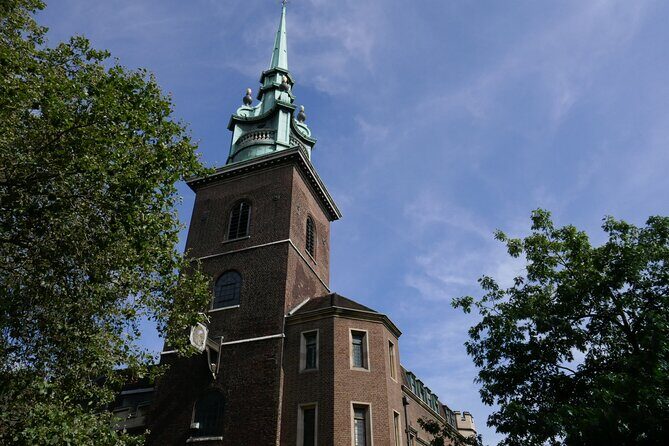
You’ll also be guided toward the idea of the oldest church in the area (presented as part of this opening stop). Even if you’re not religious, it’s worth paying attention. These oldest institutions often survive because the location kept working—trade routes, community gravity, and the way the city redevelops without erasing everything.
Practical note: this is early in the route, so if you’re the type who likes photos, you’re doing it while your energy is still high.
Hidden ruins and secret-feeling streets in the Square Mile
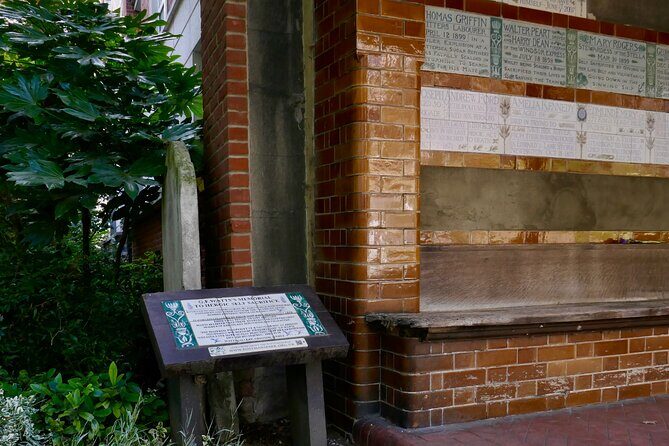
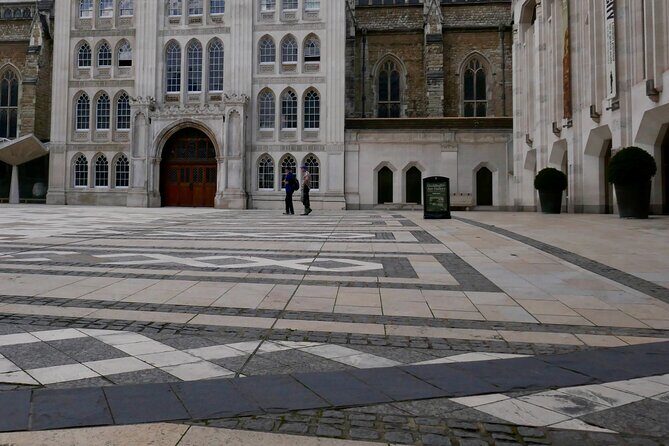
After the Roman start, the tour shifts into “the Square Mile you don’t usually notice.” In the City, you can spend hours walking past tall buildings and never realize how many odd little spaces sit behind them: quiet squares, remnants tucked beside offices, and pockets where the street sounds change.
This is where the guide’s storytelling style becomes important. If you like history that feels like a movie set, you’ll likely enjoy the way the tour blends architecture and time periods. The route is designed to show how old and new sit next to each other—sometimes in the same view.
You’ll also get a feel for what makes the City of London distinct from other parts of London. Outside the City, people tend to treat London like one big theme park. Here, the City works more like a living archive: tight streets, layers of rebuilding, and the sense that people have always come here for work, governance, and commerce.
Leadenhall Market: the movie-famous arcade that still feels real
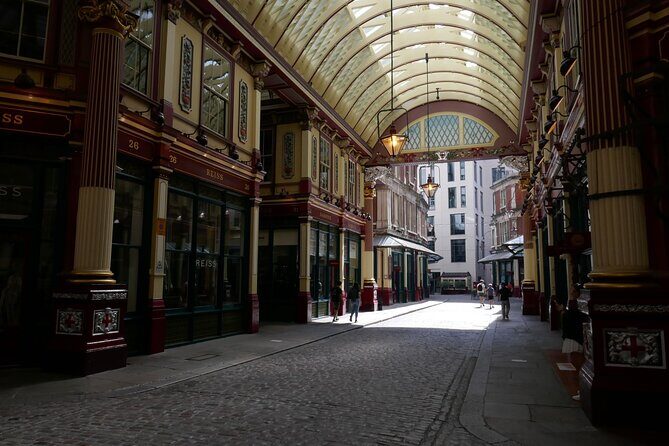
Stop 2 is Leadenhall Market, again listed with admission as free. This is the part of the tour that most often gives people that wow, I recognize this space feeling—because Leadenhall Market has appeared in films and TV, and the covered arcade structure makes it easy for filmmakers to use.
What you’ll get on the ground is the sense of a real market rather than a museum. The guide connects the market’s older identity (it began as a poultry market centuries ago) to what it is today: a bright, covered corridor where you still understand how people move through stalls.
And yes, it’s a very “London” stop for photos. You’re under a roof, walking through a historic-feeling arcade, but with modern energy around you. It’s also the kind of pause that breaks up the city-walking stress—less open-wind, more sheltered strolling.
Seasonal bonus: one of the tour’s memorable details in past experiences is the Christmas tree display with dragons on the top. You shouldn’t plan your whole trip around holiday decorations, but if your dates overlap, it’s the kind of visual detail that makes the market feel extra special.
The final look toward St. Paul’s Cathedral (without going inside)
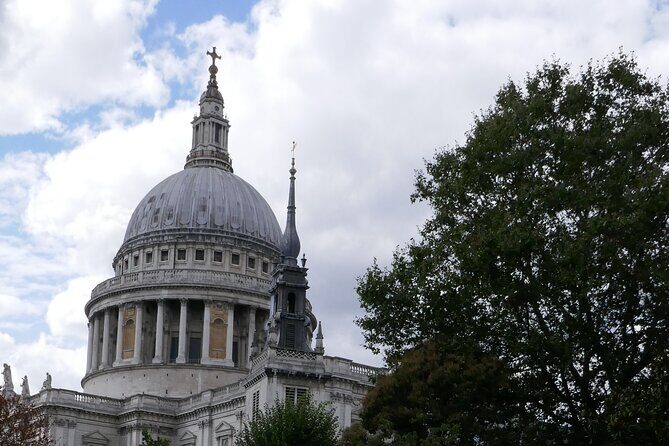
The tour ends with a view of St. Paul’s Cathedral, finishing at St. Paul’s Churchyard (London EC4M 8AD). The schedule notes that you will pass by St. Paul’s Cathedral but will not go inside, so set expectations early.
This end is practical. St. Paul’s is not just iconic—it’s also a major transport hub area, so you can easily continue your day after the tour. If your priority is getting the big landmarks on a timed walk rather than adding entry tickets, this works well.
You’re also done just close enough to keep your plans flexible. You can head off for nearby coffee, museums, or just keep wandering along the river direction if that’s your style.
If you specifically want inside views and paid-entry moments, you’ll need a separate plan. But for a 1.5-hour “Square Mile context” walk, ending by St. Paul’s is a satisfying finish.






What the guides do well: Catherine, Susannah, and Suzanne
A lot of history tours live or die on the guide. Here, the guide names you might run into include Catherine, Susannah, and Suzanne—and the consistent theme is that they keep things friendly and clear, with humor and practical explanations.
In a place like the City of London, it’s easy to get overwhelmed by scale and money—skyscrapers, headquarters, fast sidewalks. A good guide slows you down just enough to notice the older stuff: the Roman beginnings, the quieter corners, and how the City’s identity evolved.
If you learn best by story, you’ll likely enjoy the way the tour ties locations to authors and popular culture. That doesn’t replace serious history, but it helps the setting stick in your brain.
Timing and pacing: morning vs afternoon and how long you’ll actually walk
You can choose a morning or afternoon tour, which is a big deal in London. If your mornings are better for walking (and museums later), pick accordingly. If you prefer late-day sightseeing with lighter crowds, the afternoon slot helps you pace your day.
The tour is listed at about 1 hour 30 minutes, with a note that the remaining time is for the walking. That tells you most of your time is movement plus short stops. It’s not a sit-down lecture tour, so bring the right energy and shoes.
Also: there’s a limit of 15 travelers max, so you’re not trapped in a giant group. Smaller groups usually mean fewer delays at each stop, and you’re more likely to get the guide’s attention.
Price and value: what $27.28 buys you in the City of London
At $27.28 per person, this is positioned as an affordable history walk compared with many attraction-ticket combos in London. And importantly, the tour includes all fees and taxes.
The value comes from two things:
- You’re paying for interpretation—how to understand the Square Mile’s Roman start, hidden church/ruin feel, and market history.
- You’re using a time-efficient route that ends by St. Paul’s, keeping the day easy to extend.
It’s not a “snack-and-a-show” tour. Snacks are not included, so if you’ll get hungry, plan a quick purchase before or after. But for the sights you cover in just 90 minutes, the pricing makes sense—especially if you’re trying to see more than one era without buying lots of entry tickets.
Who should book this Old London Town Square Mile walk
This tour is a great fit if you want:
- A guided introduction to the City of London that explains why it feels different from the rest of London
- Roman context without needing to be a Roman history specialist
- A market stop that’s historic and practical, not just a photo stop
- A small-group feel in a tight urban area
It may be less ideal if you:
- Want interior access to major landmarks (St. Paul’s is viewed from outside on this route)
- Don’t do well with continuous walking for about 1.5 hours
- Need snack-included pacing
If you’re traveling as a pair and want one “core” experience that anchors your Square Mile day, this is a strong choice. It also works well for locals who want a different angle on the area beyond work commutes and quick errands.
Should you book? My call for the right traveler
Book this tour if you want to turn the Square Mile from an office district into a place with a storyline. The Roman start at the Roman wall of Londonium, the stop at Leadenhall Market, and the finish near St. Paul’s Cathedral create a clear arc: origins, evolution, and the modern icon standing at the end of it.
Skip it (or pair it with something else) if your priority is interior access or you’re looking for long stops and rest breaks. This is a walking history experience with a firm time window, so bring good shoes and expect movement.
Overall, for the price, the guided context, and the mix of Roman and market-era London, this is a smart way to spend 90 minutes in the City.
FAQ
How long is the Walking Tour of the Square Mile?
It runs for about 1 hour 30 minutes.
Where does the tour start and end?
The tour starts at Tower Hill, London EC3N 4DJ and ends at St. Paul’s Churchyard, London EC4M 8AD near St. Paul’s Cathedral.
Is this tour offered in the morning or afternoon?
Yes. You can choose either a morning or an afternoon tour.
What language is the tour in?
The tour is offered in English.
Do I need to buy tickets for the stops?
Admission tickets for the Roman wall of Londonium and Leadenhall Market are listed as free, and all fees and taxes are included.
Are snacks included?
No. Snacks are not included.
Will we go inside St. Paul’s Cathedral?
No. You will pass by St. Paul’s Cathedral, but you will not go inside.
Is the tour suitable for people with service animals?
Yes. Service animals are allowed, and the tour is near public transportation.