REVIEW · LONDON
Roman Ruins to Blitz Bombings: A Walking Tour of London’s Fiery History
Book on Viator →Operated by Historic London Tours · Bookable on Viator
London has scars you can still walk. This small-group tour connects Roman-era clues, royal authority, the Great Fire, and WWII destruction, guided by Tom. You’re not just seeing sights—you’re learning how London got remade again and again.
I especially like how the stops mix big, famous monuments with quick, meaningful pauses, including free moments like St Dunstan in the East and London Stone. I also like the pace: Tom keeps the info clear, and he’s easy to ask questions when something catches your eye.
One real drawback to plan for: it’s a fairly active walk, and several major stops have admissions not included. If you need lots of step-free breaks, this may feel like too much time on your feet.
In This Review
- Key points at a glance
- Walking Through London’s Bad-Days Timeline
- Price and Time: What $27.78 Buys You in Real Terms
- Meeting at Trinity Square and Finishing on Fleet Street
- Tower of London, St Dunstan in the East, and the Monument to the Great Fire
- Stop 1: Tower of London
- Stop 2: St Dunstan in the East
- Stop 3: The Monument to the Great Fire of London
- London Stone, Bank of England Museum, Guildhall, and St Paul’s Cathedral
- Stop 4: London Stone
- Stop 5: Bank of England Museum
- Stop 6: Guildhall
- Stop 7: St Paul’s Cathedral
- What You’ll Actually Get From Tom (and What to Bring)
- Who Should Book This Walking History Tour
- FAQ
- How long is the tour?
- What’s the price?
- Is it a small group?
- What language is the tour in?
- Where does the tour start and end?
- Is a mobile ticket used?
- Are admissions included for the stops?
- Can I bring a service animal?
- What’s the cancellation window?
- Should You Book Roman Ruins to Blitz Bombings?
Key points at a glance
- Tom’s storytelling style keeps the walk lively and question-friendly
- Small group (max 15) means you won’t feel lost in the crowd
- Several stops are free (like St Dunstan in the East and London Stone)
- Big landmarks, short stops: about five minutes at each main stop
- Not all entries are included: plan for separate tickets at major sites
- Central City route works well if you want a fast history hit in ~2 hours
Walking Through London’s Bad-Days Timeline
This tour is built like a street-level timeline. You move from the kind of power that controlled London—palaces and civic authority—to the kinds of disasters that reshaped it: fire and wartime bombing. Even when the sights change, the theme stays the same: London keeps rebuilding.
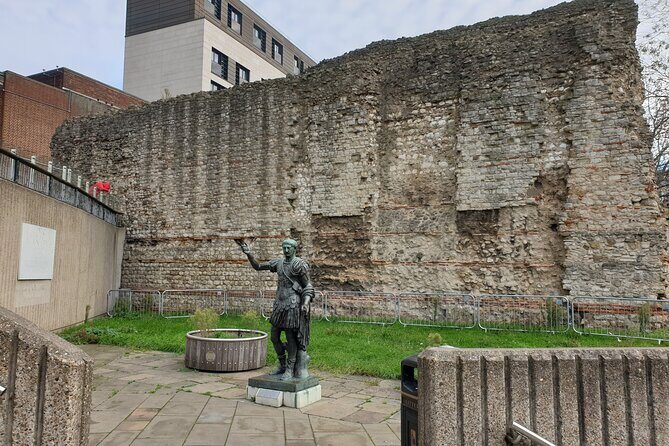
What makes it work for history lovers is that the guide also spots Roman-era hints and points you toward nearby spots with Roman ruins and artifacts. Those moments don’t take over the whole route, but they give you a satisfying thread—long before the Tower, London already had layers.
And you’ll get the kind of context that helps the buildings make sense. Instead of random trivia, Tom ties each stop to the city’s bigger story, so you leave with a map in your head, not just a camera roll.
You can also read our reviews of more walking tours in London



Price and Time: What $27.78 Buys You in Real Terms
At $27.78 per person for about 2 hours, you’re paying mainly for guiding, route design, and the way the stops connect. It’s not a ticket bundle, so don’t expect admissions to be included across the board—several of the big names on the route require separate entry.
The good news: that’s also why the value is strong for the right people. If you enjoy understanding what you’re looking at, a great guide can do more than an entrance ticket ever will. Tom’s approach also keeps the flow manageable, so you’re not stuck listening while you’re bored.
One more practical note: this tour averages about 37 days ahead when people reserve, which suggests it fills in busy stretches. If your dates are fixed, I’d treat it as something to grab sooner rather than later.
Meeting at Trinity Square and Finishing on Fleet Street
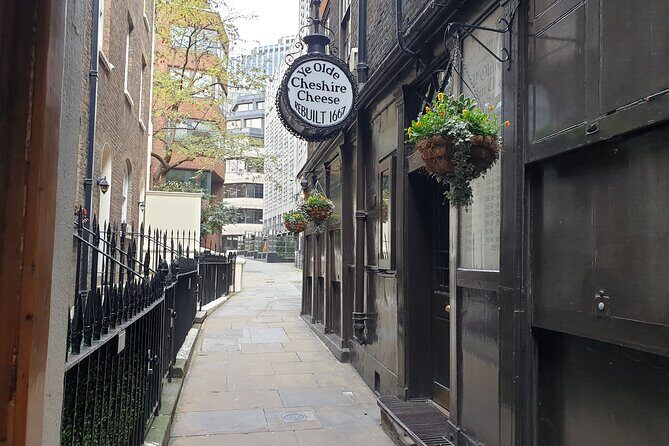
You start at 38 Trinity Square, London EC3N 4DJ. The tour ends at Ye Olde Cheshire Cheese, 145 Fleet St, London EC4A 2BP, near Blackfriars Station, outside the pub.
That start-to-finish flow matters. It lets you stitch the tour into a day already planned around central London—especially if you’re also planning a meal or a museum stop after. A lot of walking tours dump you back where they started. This one lets you drift toward a classic Fleet Street hangout instead.
You’ll also appreciate the mobile ticket format. Less paper, fewer logistics headaches, more time spent watching the city instead of hunting for check-in details.
Tower of London, St Dunstan in the East, and the Monument to the Great Fire
This first stretch is where the tour’s theme clicks: authority first, then the marks left by catastrophe. You spend about five minutes at each main stop, so your job is simple—show up ready to look up and listen for the story.
Stop 1: Tower of London
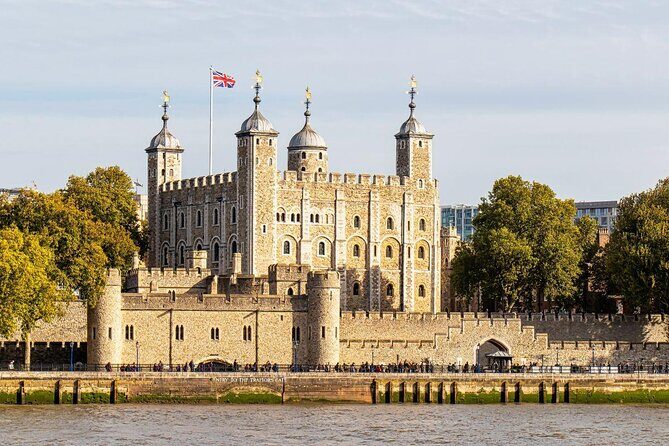
You’ll spend around five minutes at the Tower of London, described as Europe’s oldest surviving royal palace. Even if you don’t enter (admission isn’t included), the Tower works as a mental anchor for London’s power era.
What I like about starting here is that it sets expectations. As you walk, you’ll hear how this part of the city influenced control, identity, and the way London thought about itself before later shocks.
You can also read our reviews of more historical tours in London






Stop 2: St Dunstan in the East
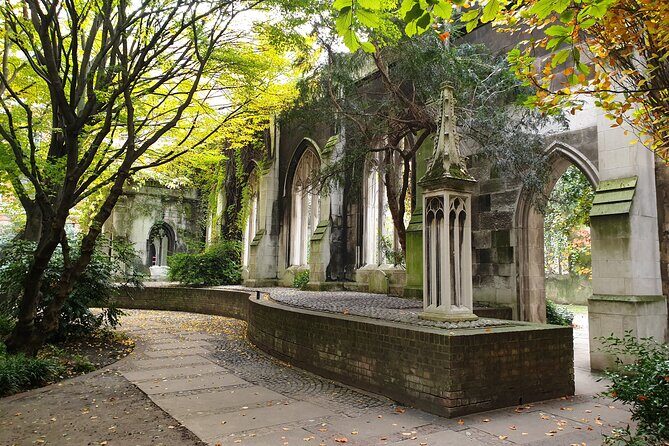
Next is St Dunstan in the East, with time for the gardens of a medieval church that was destroyed in the Second World War. Admission is free here, which is nice because it gives you a low-pressure stop right in the middle of the heavier history.
This is also one of the best “slow down” moments on the route. The WWII connection turns the tour title from marketing into something you can feel—especially when you’re standing in a space shaped by destruction.
Stop 3: The Monument to the Great Fire of London
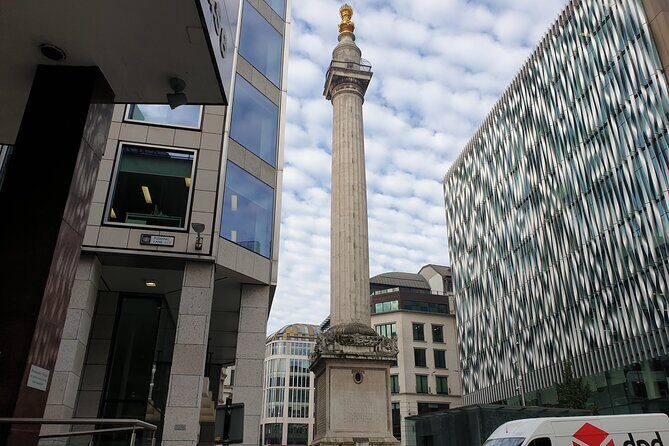
Then you reach the Monument to the Great Fire of London, tied to 1666. Admission isn’t included for this stop, but even without entry, the site matters because it commemorates a turning point that rewrote how the city rebuilt.
This is a strong pairing with St Dunstan in the East. Fire and bombing aren’t the same event, but they rhyme. Both show how quickly daily life can be reset—and how long the results can last.
London Stone, Bank of England Museum, Guildhall, and St Paul’s Cathedral
This second half shifts from disaster memory to civic order and architectural comeback. You’ll still get short stops (again, about five minutes each), but these are the places where London’s systems and identity feel especially visible.
Stop 4: London Stone
You’ll hit London Stone, a stone with legends attributed to it, and this stop is free. With a place like this, the value comes from hearing the “why” behind the lore—what people believed, and why that belief stuck around.
It’s also a nice palate cleanser after the fire and WWII stops. Instead of just destruction, you get the odd mix of myth and meaning that makes old-city London feel alive.
Stop 5: Bank of England Museum
Next is the Bank of England Museum, tied to the UK’s central bank. Admission isn’t included here, but even a quick stop gives you a sense of how power evolved—from royal palaces to modern financial authority.
If you’re a person who likes seeing how institutions grow, this is a helpful bridge. You start thinking about who rebuilt London, who funded it, and what kinds of power followed the disasters.
Stop 6: Guildhall
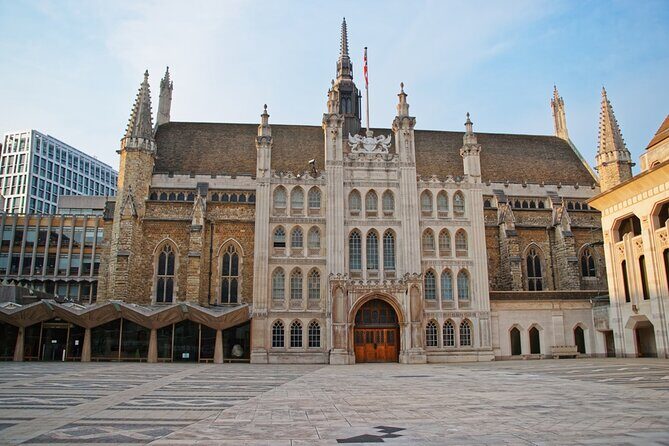
Then you’ll walk by Guildhall, a 15th-century hall that’s home to the Corporation of London. Admission isn’t included, but the age of the building makes the civic theme land fast.
This is a good stop if you want the city to feel more than a postcard. London’s governance and community identity aren’t abstract here—they’re written into the architecture and the civic role of the space.
Stop 7: St Paul’s Cathedral
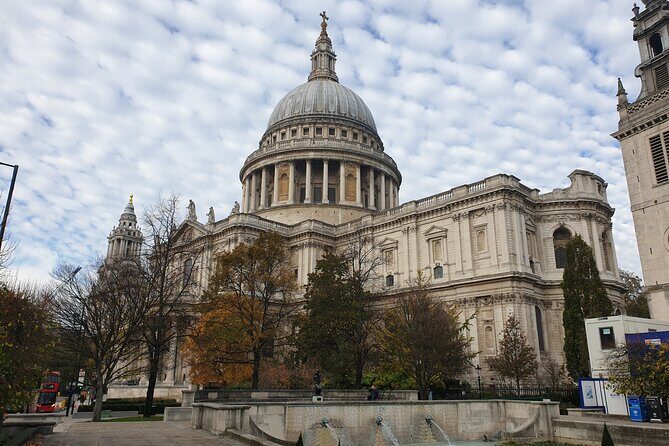
Finally, you’ll reach St Paul’s Cathedral, connected to Christopher Wren’s 17th-century design. Admission isn’t included, so plan to enjoy it from the outside as part of the walk.
This end point works well because it feels like closure without being too neat. After the Tower, fire, war damage, and civic power, you finish with an iconic statement of rebuilding and design intent.
What You’ll Actually Get From Tom (and What to Bring)
The standout element is the human one: Tom’s teaching style. People who enjoy tours tend to like that he’s friendly and approachable, and he answers questions with real enthusiasm rather than brushing them off. He also tends to point out side areas—like nearby free places where you can see Roman ruins and artifacts—so the tour can turn into a bigger day on your own.
On the practical side, wear comfortable shoes. The itinerary may list short time at each stop, but you’ll still be doing lots of city walking over roughly two hours. If you’re prone to fatigue, plan to rest afterward, not during the tour.
If you want the most out of the history, keep your phone accessible for directions, but also look away from the screen. London gives you better clues when you pause and actually study the streetscape.
Who Should Book This Walking History Tour
This tour is a great match if you want a guided, organized history route in a short time. With a maximum of 15 people, you get more personal attention than you will on huge group tours, and it’s easier to ask questions without competing for the guide’s time.
It’s also good if you like variety. You get royal power, civic institutions, and two disaster markers—the Great Fire (1666) and a WWII-destroyed church site—plus a legendary local curiosity in London Stone.
The main reason to think twice is mobility. It’s still a walking tour, and one clear caution is that it’s long on foot for anyone who has mobility limits. Also, remember admissions aren’t included for several big stops, so you’ll want to decide in advance which ones you truly want to enter.
FAQ
How long is the tour?
The tour is about 2 hours.
What’s the price?
It costs $27.78 per person.
Is it a small group?
Yes. The maximum group size is 15 travelers.
What language is the tour in?
The tour is offered in English.
Where does the tour start and end?
It starts at 38 Trinity Square, London EC3N 4DJ and ends at Ye Olde Cheshire Cheese, 145 Fleet St, London EC4A 2BP.
Is a mobile ticket used?
Yes, you get a mobile ticket.
Are admissions included for the stops?
No. Tower of London, the Monument, Bank of England Museum, Guildhall, and St Paul’s Cathedral are listed as not included. St Dunstan in the East and London Stone are listed as free.
Can I bring a service animal?
Yes. Service animals are allowed.
What’s the cancellation window?
Free cancellation is available up to 24 hours in advance for a full refund.
Should You Book Roman Ruins to Blitz Bombings?
If you want a guided walk that links London’s power, fire, and WWII scars into one easy route, this is a strong pick—especially with a small group and a guide like Tom who makes questions feel welcome. Just be realistic about the walking time and the fact that several major entries are not included, so you may pay extra if you choose to go inside. If you want history in two hours and you’re ready for plenty of on-foot city time, book it. If mobility is a concern, consider a different format.