REVIEW · LONDON
Royal Tour of St James’, Parks, Palaces and Royal intrigue
Book on Viator →Operated by Hobnob Tours · Bookable on Viator
London royalty, on foot and in small doses. This private St James tour links Green Park, St James’s Palace, and the Whitehall royal zone in one easy loop, with a local guide turning famous buildings into understandable stories instead of vague sightseeing stops.
I like the way the pace leaves room for questions and quick context—Sandy (accredited by the Institute of Tourist Guiding and the University of Westminster) sticks to a focused area of London so you get detail without info overload. One thing to plan around: the Changing of the Guard is not guaranteed and can be canceled at the last moment, so avoid stacking other tight plans for that morning.
In This Review
- Key Things to Know Before You Go
- Where the Tour Starts: Le Deli Robuchon and Why the St James Loop Works
- Price Made Simple: $199 Per Group (So Bring Friends)
- Green Park: The Charles II Flower Story (And How Legends Get Stickier)
- St James’s Palace: Henry VIII, Anne Boleyn, and the Palace That Can’t Stop Changing
- The Changing of the Guard: Your Best Chance, Your Only Real Variable
- Clarence House and Lancaster House: Where Royals Live (and Where Stories Stand In)
- Buckingham Palace (Outside): A Working Palace With a Real-Life Timeline
- Wellington Barracks, St James’s Park, and Horse Guards Parade at Whitehall
- St James’s Square and the “Royal Side Quests”: Garden, Food, Perfume, Hamper Culture
- Paxton & Whitfield: Over 90 Artisan Cheeses
- Floris: A Perfume Shop With a Long Memory
- Fortnum & Mason: Why Hampers Matter
- Pace, Comfort, and Who This Walk Fits Best
- Is It Really About Royal Intrigue, or Just Photo Stops?
- Should You Book This St James Royal Tour?
- FAQ
- How long is the Royal Tour of St James’, Parks, Palaces and Royal intrigue?
- Is this tour private, and how many people are in a group?
- Where does the tour start and end?
- Do I need to pay admission at the stops?
- Will I definitely see the Changing of the Guard?
- What should I wear or bring?
Key Things to Know Before You Go
- Small group, up to 5 people means you can actually hear the guide and ask questions while you walk.
- A tight 2-mile route covers major royal landmarks in about 2.5–3 hours.
- Changing of the Guard is schedule-dependent and viewing is from several spots, with some fast moving.
- Most stops are free to view from the outside (Buckingham Palace is the one item marked as not included).
- You get “royal intrigue” context tied to real locations, not just names and dates.
- Comfort matters: the tour runs rain or shine and you’ll want decent shoes.
Where the Tour Starts: Le Deli Robuchon and Why the St James Loop Works
You begin at Le Deli Robuchon Piccadilly, 82 Piccadilly (meeting point is close to public transportation). From there, the route is built like a guided walk through the core of royal London: parks, palaces, and ceremonial squares are close enough that you can see a lot without spending the whole day riding buses or hunting taxis.
This is a helpful setup for first-timers. You get a concentrated view of how power and pageantry sit side-by-side here—Henry VIII-era foundations, today’s working monarchy, and the parade logic of Whitehall are all in walking distance. And because it’s small-group private, you’re not fighting for a spot at each curb.
The other quiet win: the tour is designed as a loop that ends back at the starting area. That’s a simple way to avoid the “now where do we go?” feeling at the end of a busy sightseeing day.
You can also read our reviews of more tours and experiences in London.



Price Made Simple: $199 Per Group (So Bring Friends)
The price is $199 per group, up to five people. For a family or a small group, that math can be surprisingly fair. If you bring the full group of five, you’re effectively looking at about $40 per person for a focused guided route through heavyweight landmarks.
You should also notice what’s included versus extra. The tour includes your guide time and the walk. Most stops are marked as free for admission during the sightseeing portion. The one major item flagged as not included is Buckingham Palace. So if Buckingham is your must-see, check what your ideal visit looks like—viewing from the outside is part of the day, while going inside may cost extra.
Timing-wise, the tour typically runs 2 hours 30 minutes to about 3 hours, depending on walking pace, how many questions you ask, and—big one—whether the Changing of the Guard is happening.
Green Park: The Charles II Flower Story (And How Legends Get Stickier)
The first stop is Green Park, and it starts with a legend: Charles II’s wife, Catherine de Braganza, supposedly had the park flowers removed so the space would remain green. Whether you treat it as fact or story, it works as a great way to open the walk—this is how London royal history often feels: half architecture, half myth, all tied to a real place.
What I like about this kind of start is that it gives you a mental hook. Before you even reach major palaces, you’re learning how to read the landscape. A park isn’t just a break; it’s part of the royal backdrop that leaders and ceremonial routines share.
Also, Green Park is a good “warm-up” location. Even if you’re arriving a little stiff from travel, the early minutes here keep things easy and help your group settle into the rhythm of moving and listening.
St James’s Palace: Henry VIII, Anne Boleyn, and the Palace That Can’t Stop Changing
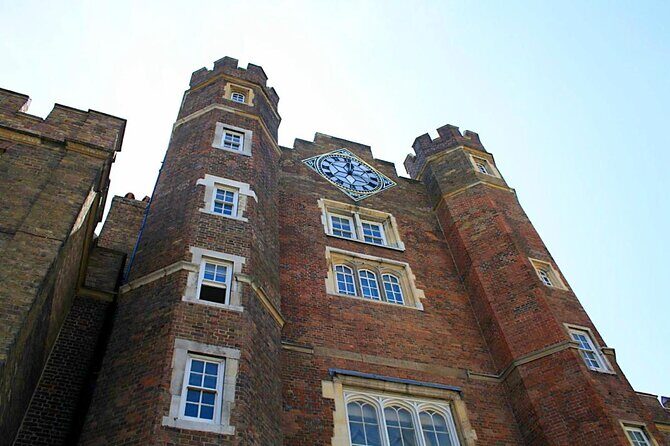
Next up is St James’s Palace, built by Henry VIII on a site that was originally a women’s leper hospital. That detail matters because it makes the palace feel less like a postcard and more like a place with layered uses over time.
The story keeps going: the palace was originally built for the son promised by Henry VIII’s second wife, Anne Boleyn—and things didn’t go as planned. That kind of correction is a theme in royal London. Plans shift. Names change. Buildings remain, but their purposes and meanings evolve.
From a practical point of view, this stop is also a quick win. It’s close to your next “big moment” in the ceremonial zone, so you get a strong history hit without long walking gaps.
The Changing of the Guard: Your Best Chance, Your Only Real Variable
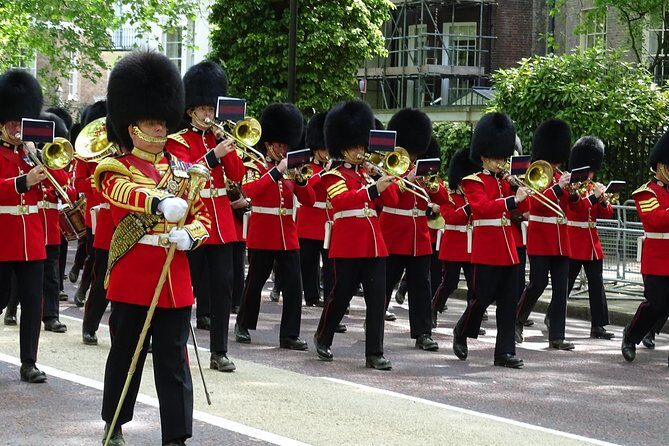
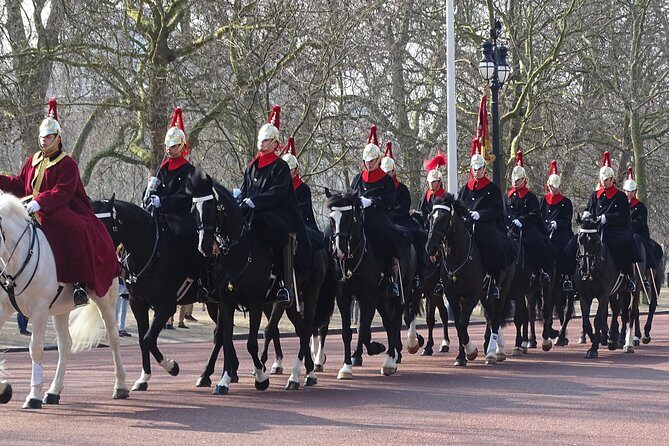
Then comes the centerpiece: the Changing of the Guard. Two things are crucial here.
First, it does not run every day. Your guide will need to check whether it’s scheduled for your specific morning.
Second, even if it’s scheduled, it still can be canceled at the last moment. That means there’s no guarantee you’ll see it.
If it does happen, plan for a fast-moving strategy. The tour uses multiple viewpoints—your group views different parts of the ceremony from three different places. That’s fun, but it also means you’ll want to stay alert and move quickly when your guide signals.
If you’re the type who hates uncertainty, this is the only part of the tour that can feel frustrating. But if you’re flexible, it’s also the reason people book this in the first place: the chance to see London’s classic ceremonial pageantry in a guided, structured way.






Clarence House and Lancaster House: Where Royals Live (and Where Stories Stand In)
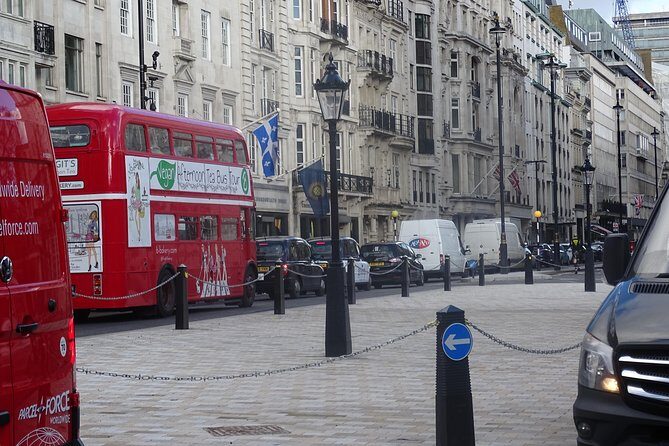
A few short stops later, you get a glance at two homes tied to the modern monarchy.
Clarence House is where King Charles III and Queen Camilla call home. The tour keeps it quick—think of it as a “look, place, context” moment. The value here is not that you’re lingering; it’s that your guide connects the building to the people and to the bigger map of royal residences.
Then you reach Lancaster House, built from beautiful Bath stone. It also has a cinematic reputation: it stood in for Buckingham Palace during Downton Abbey, The Crown, and The King’s Speech. That’s useful because it helps you connect what you’ve seen on screen with what you’re looking at in real life. TV and film can make places feel familiar—your guide helps you translate that familiarity into accurate location context.
These two stops are the kind that work well for people who like their sightseeing to include small “aha” moments rather than only big set pieces.
Buckingham Palace (Outside): A Working Palace With a Real-Life Timeline
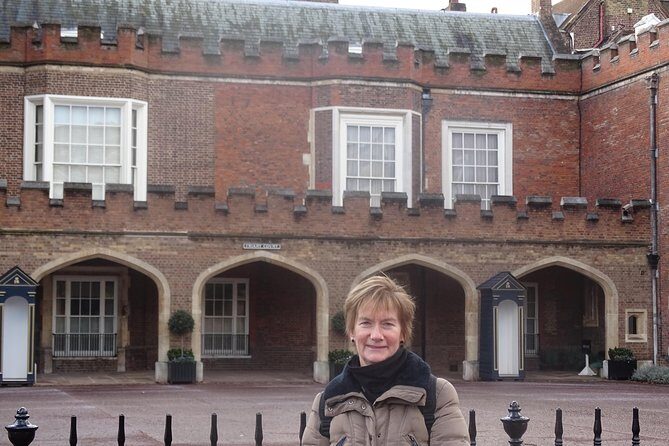
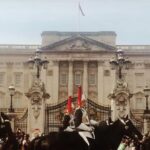
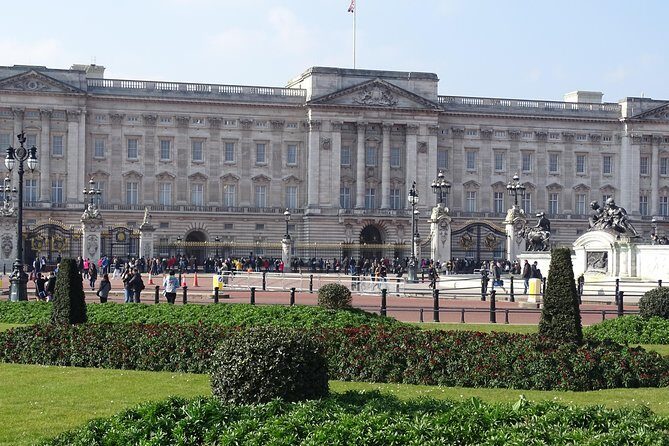
Buckingham Palace is the iconic highlight, and the tour frames it in a practical way: it’s the office of the monarchy and one of the few working palaces in the world.
There’s also a note of current reality. Queen Elizabeth II lived there Monday to Friday, while Charles has yet to decide where he will live. The palace is also undergoing extensive refurbishment, so the day you visit may look different than what you remember from older photos.
The stop is marked as admission ticket not included, so the expectation is that you’ll experience Buckingham from the viewpoint experience rather than a paid interior visit.
I like that the guide doesn’t pretend the palace is frozen in time. A working palace is a living system—changes happen, and scaffolding and repairs are part of the truth of visiting now, not something to ignore.
Wellington Barracks, St James’s Park, and Horse Guards Parade at Whitehall
Now you move from palaces to the machinery of security and ceremony.
At Wellington Barracks, you’re seeing Queens’ Life Guards, with responsibility for monarch security since 1660. This is the kind of detail that makes the area feel purposeful. It’s not just scenery—it’s the back-up engine for the front-stage pageantry.
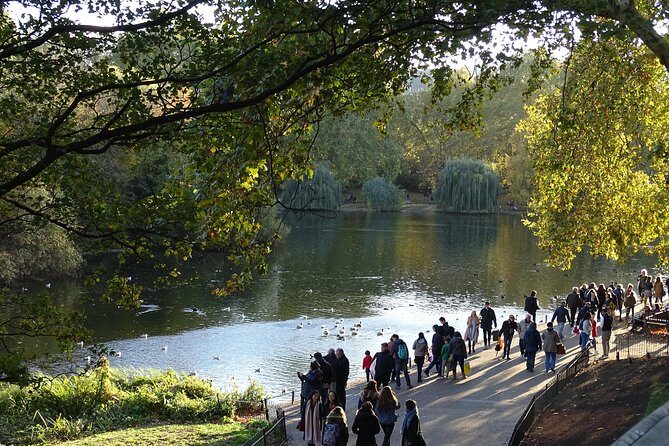
From there, you head into St James’s Park, often considered one of London’s prettiest royal parks. You’ll hear how George IV shaped it into what it is today, plus the contributions of other monarchs before him. If you enjoy parks with a story, this is where the tour slows down a touch. The park has an ornamental lake and plenty of wildlife, so you’re not only learning—you’re getting a visual reset.
Then you reach Horse Guards Parade at Whitehall. It originally used to be for jousting in Tudor times, and now it’s tied to two ancient ceremonies dating back to the 1600s: Changing of the Guard and Trooping the Colour.
There’s a fun extra angle here: the parade ring was also used during the London Olympics in 2012. Your guide asks you to think about what sport took place there—part education, part interactive moment, and an easy way to keep attention during a walk day.
St James’s Square and the “Royal Side Quests”: Garden, Food, Perfume, Hamper Culture
Not every great London day is only marble and metal. Some of the best value comes from pairing landmarks with everyday classics nearby.
At St James’s Square, you’ll see a historic garden at the center of what used to be an aristocratic housing estate. It’s the sort of quiet place that helps you understand how power has always lived close to private space, not only in grand public displays.
Then the route turns into three short, high-payoff shopping/story stops.
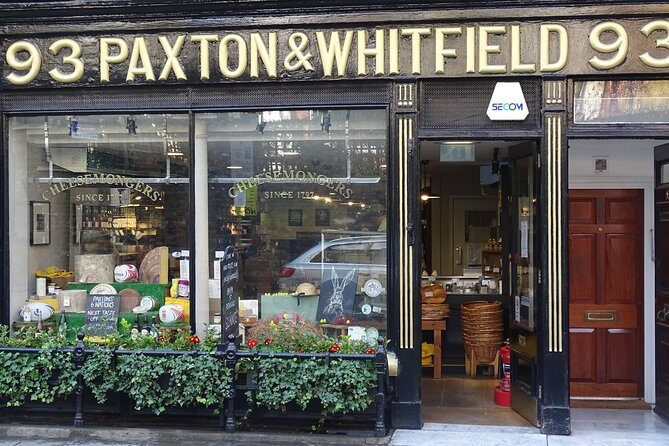
Paxton & Whitfield: Over 90 Artisan Cheeses
Paxton & Whitfield began centuries ago as a market stall and now displays over 90 artisan cheeses from across Europe. This is a small stop, but it’s genuinely fun if you like food details. Instead of treating this like a random storefront, your guide connects the old market role to the modern specialty approach.
Floris: A Perfume Shop With a Long Memory
Floris started as a barber’s and then changed into a perfumery. It’s still producing scents tied to its early days, including lily of the valley perfume. Your guide encourages you to sniff and compare instead of just staring at bottles. Even if you don’t buy, it makes the stop feel alive.
Fortnum & Mason: Why Hampers Matter
At Fortnum & Mason, you get a mini walk through the ground floor and learn where the hamper tradition fits into the store’s story. There’s also a mystery element: your guide points out an unusual roof feature and explains a competition connected to the store. I like stops like this because they turn a famous department store into something you understand, instead of something you just pass.
Pace, Comfort, and Who This Walk Fits Best
This is roughly 2 miles of walking. The tour lasts up to 3 hours, and timing can shift with the number of questions you ask and how the Changing of the Guard situation plays out.
Because of the distances and the speed you may need between ceremony viewing points, it’s not recommended for people with walking difficulties. You’re going to be on your feet for stretches, and the walk is structured around timing.
Also, it runs rain or shine. Bring comfortable shoes and, if needed, waterproofs and an umbrella.
One more practical note: there are no food or drink inclusions. Food sampling is also not included. If you need lunch after, plan for it. If your group wants a quick break, your guide says you can stop midway if needed.
Is It Really About Royal Intrigue, or Just Photo Stops?
For me, this tour hits the right balance. It’s not only “stand here and take a picture.” It gives you a reason to care about each place.
- Legends (like the Green Park flower story) help you remember the location.
- Power shifts (Henry VIII and Anne Boleyn’s unresolved plans) explain why royal buildings have complicated origins.
- Ceremony logic (multiple Changing of the Guard viewpoints, when it’s scheduled, and why it might cancel) makes pageantry feel like a system, not magic.
- Modern context (refurbishment at Buckingham, current residences) keeps it current.
That matters because London royal sightseeing can get repetitive fast. With the right guide structure, you end up understanding why these landmarks sit where they do and how the British monarchy keeps using the same physical stage across centuries.
Should You Book This St James Royal Tour?
Book it if you fall into one of these groups:
- You’re a British royal fan and want a focused route with stories that connect people, places, and ceremonies.
- You want a private group experience for up to five people where you can ask questions without yelling over crowds.
- You’re okay with one big variable—the Changing of the Guard—because you see it as part of the fun of planning a London morning.
Skip it if:
- You need guaranteed access to the Changing of the Guard. It’s not assured and can be canceled last minute.
- You have limited mobility or struggle with walking at a pace that may require quick movement between viewpoints.
If you want one practical recommendation: try to book a date where you’re not rushed afterward. Even with a tight route, timing can shift based on ceremony conditions, and you’ll enjoy it more if your day still has breathing room.
FAQ
How long is the Royal Tour of St James’, Parks, Palaces and Royal intrigue?
The tour typically lasts about 2 hours 30 minutes to 3 hours, depending on walking pace, questions, and whether the Changing of the Guard ceremony is going ahead.
Is this tour private, and how many people are in a group?
Yes, it’s private. It’s designed for small groups of up to 5 people.
Where does the tour start and end?
The tour starts at Le Deli Robuchon Piccadilly, 82 Piccadilly, London W1J 8JA, and it ends back at the same meeting point.
Do I need to pay admission at the stops?
Most stops are marked as admission ticket free. Buckingham Palace is marked as admission ticket not included, so you may need to budget extra if you plan to include paid access.
Will I definitely see the Changing of the Guard?
No. The ceremony does not happen every day, and even when it’s scheduled, it can be canceled at the last moment.
What should I wear or bring?
Wear comfortable shoes and clothing suited to walking. The tour goes ahead rain or shine, so bring waterproofs and an umbrella if you think you’ll need them.