REVIEW · MILTON KEYNES
Day Entry Ticket
Book on Viator →Operated by The National Museum of Computing · Bookable on Viator
That WWII computer story has real machines, not just photos. The National Museum of Computing is where you can follow the evolution from wartime codebreakers to today’s screens, all in one visitor-friendly stop in Milton Keynes. I like the working collection and the way the exhibits connect major milestones in computing history without turning it into a lecture.
Two things I really like: you get to see a world’s largest collection of working historic computers, including famous systems rebuilt for visitors to understand; and the museum makes the subject fun with hands-on gaming and more playful tech moments alongside the serious history. It’s a strong pick if you care about how ideas become machines.
One thing to watch: this ticket is for the National Museum of Computing, a separate museum on the Bletchley Park site. If you’re expecting the broader Bletchley Park attractions, double-check the confirmation before you arrive.
In This Review
- Key things to know before you go
- National Museum of Computing: why this place feels different
- The “skip-the-line” ticket: what you’re really paying for
- The only stop: World War II to the internet, all inside TNMOC
- WWII machines you’ll want to prioritize
- Mainframes and big systems: where the story changes pace
- Personal computers, retro games, and mobile computing
- Duration and timing: how to plan 2 to 6 hours without rushing
- Location and opening hours: when you can actually fit it in
- Food, breaks, and staying comfortable
- Accessibility and sensory support that actually helps
- Don’t mix it up: TNMOC vs Bletchley Park tickets
- Who this is best for (and who should think twice)
- The value check: is $20.83 a good deal?
- Should you book this TNMOC day entry ticket?
- FAQ
- What is included with the day entry ticket?
- How long should I plan to spend at the museum?
- Is the ticket in English?
- Are mobile tickets supported?
- Are there any sensory support materials?
- Is there a cafe on site?
- What are the opening hours?
- Is it easy to reach without a car?
- What is the cancellation policy?
Key things to know before you go
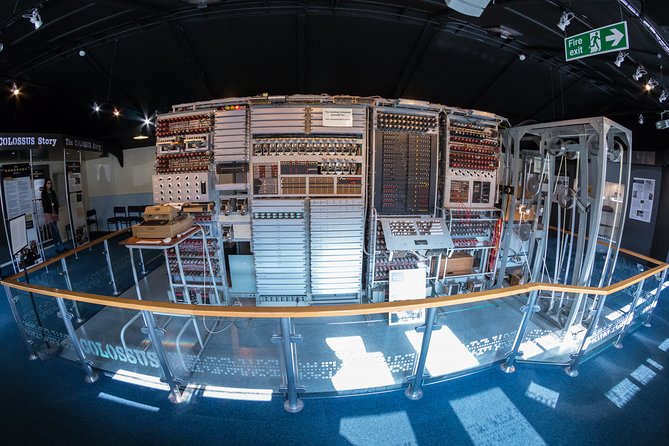
- Working historic computers: you’re not just reading placards—you’re seeing computers operate.
- WWII machines you can track: the timeline includes the Turing-Welchman Bombe, Enigma, Lorenz, and Colossus.
- Built for different kinds of visitors: history buffs and tech geeks both have plenty to chew on.
- A practical on-site break: a cafe for light refreshments plus outside seating.
- Sensory maps available: helpful if you want extra guidance for navigating the museum.
National Museum of Computing: why this place feels different
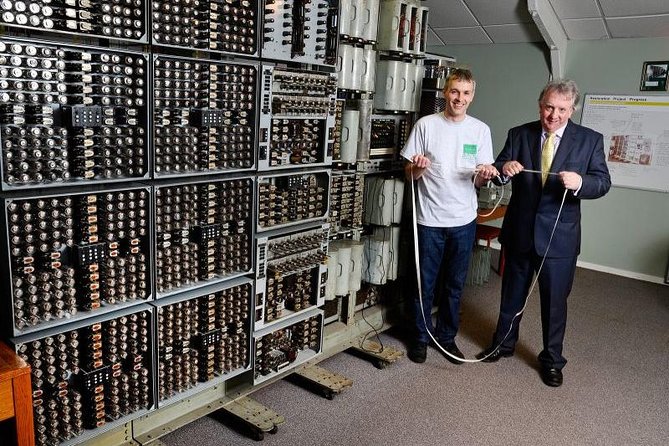
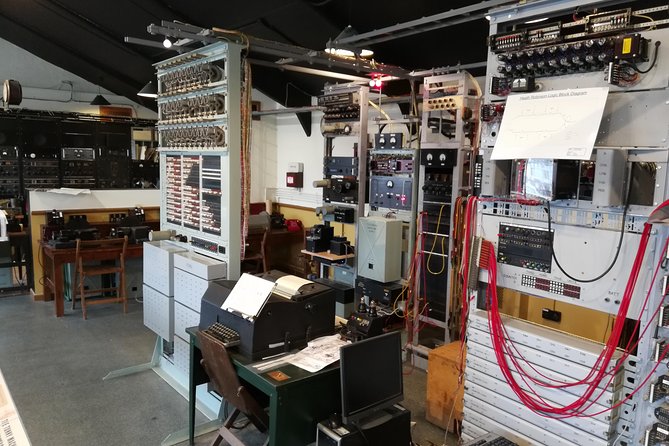
Most computer history museums show you the “what” and leave you to imagine the “how.” The National Museum of Computing (TNMOC) leans the other way. You come expecting to see machines in motion, and the museum’s whole identity is built around that working, operational angle.
That matters for you because it changes the pace of your visit. When a historic computer runs, your brain has something concrete to latch onto. You can point at parts, follow signals, and start connecting the dots between logic, code, and real-world constraints. If you’re even mildly curious about how computation works, you’ll likely enjoy the experience.
TNMOC also does something smart: it doesn’t treat computing as one straight line. You start with WWII-era breakthroughs, then move through the large systems and mainframes of later decades, and then shift into personal computing, retro games, and mobile computing and the internet. It’s a long arc, but it’s presented as a story you can walk through with your feet.
You can also read our reviews of more tours and experiences in Milton Keynes.
The “skip-the-line” ticket: what you’re really paying for
This is a day entry ticket at $20.83 per person, and the big value isn’t just the price. It’s the idea of reducing time wasted at the front door. In a popular museum area, that matters because it keeps your day from turning into a queue day.
It also comes as a mobile ticket and is offered in English, which is practical if you’re coordinating multiple stops. Your planning gets easier when you’re not hunting for printed tickets or figuring out last-minute wording at the ticket counter.
Booking timing is another small clue: this experience is often booked around 18 days in advance on average. That suggests it’s in demand enough that you should pick your day early, especially if you’re visiting during peak travel periods.
The only stop: World War II to the internet, all inside TNMOC
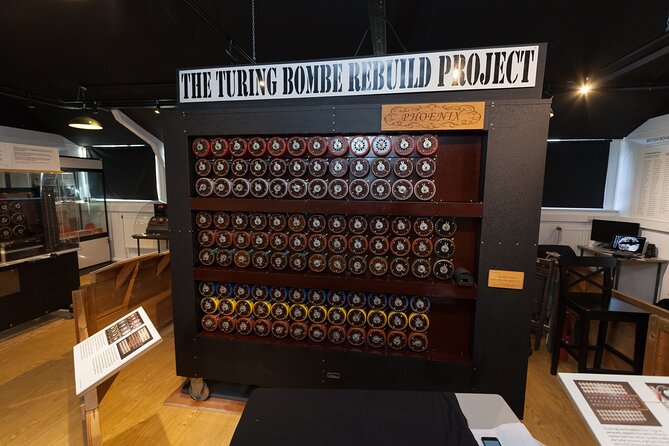
Your visit is centered on one main stop: The National Museum of Computing. In practice, that’s good news. You don’t need to “run” between multiple locations. You can settle into the museum rhythm and spend time where your curiosity pulls you.
The museum lays out computing development like a guided path:
- the Turing-Welchman Bombe era
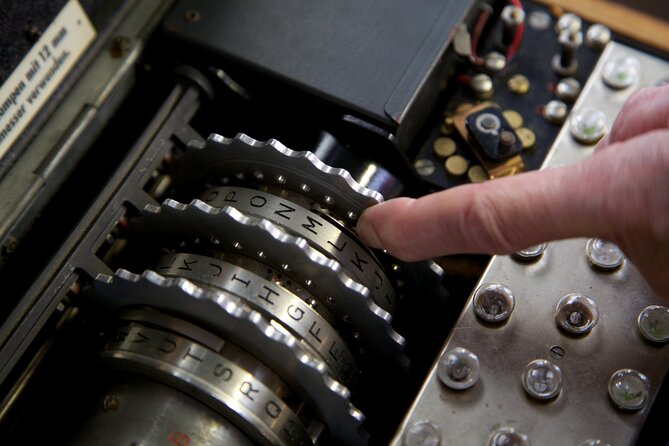
- the world of Enigma and other WWII codebreaking systems
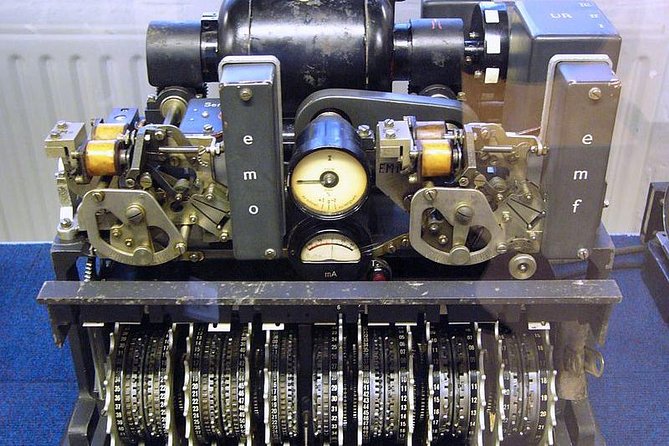
- the Lorenz and Colossus story
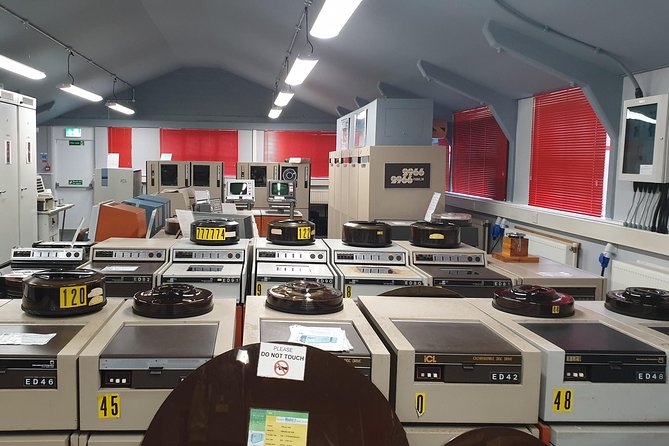
- the move into large systems and mainframes from the 1950s through the 1970s
- the shift toward personal computing
- then retro games and the rise of mobile computing and the internet
That sequence is valuable because it helps you understand why later systems looked the way they did. WWII machines weren’t “computing for computing’s sake.” They were built to solve specific problems at a specific moment, under tough constraints. Once you see that starting point, later designs feel less random.
WWII machines you’ll want to prioritize
The highlights here are the WWII-era rebuilt machines and their supporting stories. If you like this period, plan your first pass with intention. Start with the early breakthroughs—especially the Bombe and Colossus—because once you’ve seen them operating, the rest of the timeline clicks into place.
Based on the way people talk about the experience, the museum’s strength is showing the scale of effort and the engineering behind it. One of the most praised parts of visits is watching rebuilt machines and learning through demonstrations, not just reading about them.
Even if WWII isn’t your main interest, this section gives you a solid foundation: it’s where you can grasp the jump from clever ideas to repeatable machine processes.
Mainframes and big systems: where the story changes pace
After the WWII section, the museum moves into later decades, when computing grows bigger, more complex, and more system-driven. This is the era where you can start thinking about how computers became part of institutions—running workflows, supporting organizations, and turning computation into infrastructure.
If you’re the kind of traveler who likes structure, this part of the museum tends to reward you. You get to see how the focus shifts from individual wartime machines to broader computing platforms.
Personal computers, retro games, and mobile computing
Then the museum does a nice balancing act: it ties the old to the familiar. When you reach personal computing and retro games, it stops feeling like history is sealed behind glass. You can feel the continuity of ideas—smaller machines, more access, and entertainment driven by the same basic logic that powered earlier work.
The museum even adds in mobile computing and the internet, which is a smart closing move. It gives modern visitors a place to stand before they leave, so your last memory isn’t a “freeze frame” of the past.
Duration and timing: how to plan 2 to 6 hours without rushing
The ticket duration is listed as 2 to 6 hours (approx.), and that’s a wide window for a reason. TNMOC isn’t a quick stop. It rewards you if you slow down and watch machines rather than just glance.
If you’re traveling with mixed interests—say, someone who wants to read more placards and someone who wants to watch operating machines—2 to 4 hours often works well. If you love tech history and you want more time around the biggest exhibits, aim closer to 4 to 6.
For best flow:
- start with the early computing section (WWII and the rebuilt machines)
- then move through mainframes and later systems
- save the game and modern-computing portions for when you’re mentally ready to switch gears
You’ll get more out of it if you don’t treat the entire museum like one giant checklist.
Location and opening hours: when you can actually fit it in

TNMOC is in Milton Keynes, England and is near public transportation, so getting there without a car is realistic.
Opening hours provided for the period 11/01/2023 – 03/02/2027 show Tuesday: 10:30 AM – 5:00 PM. If you’re planning around a specific day, confirm your schedule against the exact date you’ll visit so you don’t build your trip around the wrong hour.
Food, breaks, and staying comfortable
A museum day can turn into a snack hunt if you’re not paying attention. TNMOC has a cafe for light refreshments plus outside seating. That combo is useful because you can take a breather without fully leaving the site.
If you’re sensitive to long indoor stretches (or you simply don’t want to spend your energy standing), the outside seating option is a real quality-of-life perk.
Accessibility and sensory support that actually helps
This experience includes sensory maps, which can make navigation easier if you want more predictability. Service animals are allowed, and the experience says most travelers can participate.
That’s all you need to know to plan confidently. If you rely on these supports, you’ll likely appreciate that they’re explicitly mentioned rather than left to guesswork.
Don’t mix it up: TNMOC vs Bletchley Park tickets
Here’s the practical warning that matters most: TNMOC is a separate museum from Bletchley Park. The area is closely connected in story terms, but they’re not the same entry.
One low rating centered on confusion—arriving with tickets that didn’t match what was expected for the broader Bletchley Park side—and it became an annoying, extra-payment situation. You can avoid that by doing one simple step before you go: read your booking confirmation carefully and confirm you’re purchasing entry to The National Museum of Computing for your chosen date.
If you’re aiming to cover both the National Museum of Computing and Bletchley Park in a single day, treat them like two distinct stops that require the right tickets for each.
Who this is best for (and who should think twice)
This museum is a strong match if you:
- love WWII history and want the technical side, not just battlefield context
- enjoy how computers evolved from huge, specialized systems into personal devices
- like hands-on elements, including retro games
- want a museum visit that feels both educational and practical
You might think twice if:
- you only want the wider Bletchley Park experience and expect this ticket to include it (it won’t)
- you prefer purely interpretive exhibits with no operational machines (TNMOC’s identity is working systems)
The value check: is $20.83 a good deal?
At $20.83 per person, the price is reasonable for a day entry ticket to a museum built around operational, working historic computers. The value comes from three things:
1) You’re paying for access to a specific museum with a strong focus on working systems.
2) The ticket structure is designed to reduce friction at arrival via mobile entry.
3) The exhibit arc covers multiple eras of computing without you needing multiple admissions.
If you accidentally buy the wrong museum entry for the Bletchley Park side you wanted, the value can collapse fast—so ticket clarity is part of the deal. When you get the right museum, the experience tends to feel worth the time.
Should you book this TNMOC day entry ticket?
Yes—book it if your goal is computing history you can see in action, especially WWII-era machines like the Bombe and Colossus story. This is a good day-trip choice for anyone who likes technology, history, or both.
Skip booking only if you’re trying to cover the broader Bletchley Park attractions with one ticket and you don’t want to manage separate admissions. In that case, you’ll need a clearer plan and the correct tickets for each site.
If you do book, spend a little time before you go confirming your date and that your ticket matches the National Museum of Computing. Then plan on enough time—likely a few hours—to let the working exhibits do their job.
FAQ
What is included with the day entry ticket?
The ticket includes admission to The National Museum of Computing, with a mobile ticket format and entry for the selected time/day.
How long should I plan to spend at the museum?
Plan for about 2 to 6 hours depending on how much time you want around the exhibits.
Is the ticket in English?
Yes, the experience is offered in English.
Are mobile tickets supported?
Yes, the ticket is listed as a mobile ticket.
Are there any sensory support materials?
Yes, sensory maps are available.
Is there a cafe on site?
Yes. There is a cafe for light refreshments, plus outside seating.
What are the opening hours?
Provided opening hours show Tuesday: 10:30 AM – 5:00 PM for the date range 11/01/2023 – 03/02/2027.
Is it easy to reach without a car?
The info says it’s near public transportation.
What is the cancellation policy?
There is free cancellation. You can cancel up to 24 hours in advance for a full refund, and changes within 24 hours aren’t accepted.