REVIEW · LIVERPOOL
Best Of Liverpool Heritage, History & Culture Guided Walking Tour
Book on Viator →Operated by Liverpool Famous Walking Tours · Bookable on Viator
Liverpool can feel big. This walk makes it clear.
This Best Of Liverpool guided tour gives you a smart, on-foot overview of the city center and docks, with Beatles flavor along the way. I especially liked how you move efficiently (no wasted time stuck in traffic) and how each stop adds context you can actually use while you’re sightseeing later. One thing to keep in mind: it’s a walking tour through cobbles and uneven surfaces, so comfortable no-slip shoes matter.
A big win for me is the way the guide links famous landmarks to everyday Liverpool life—maritime work, dock development, and civic buildings all show up in the same story. I also loved the local energy from guides like Mike, Carl, Pam, and Roy, who kept the pace friendly and the explanations fun without turning into a lecture. The only drawback is that timing and access can vary a bit, like when a statue stop is restricted or the route shifts for operational reasons.
In This Review
- Key Highlights You’ll Feel Right Away
- Getting Your Bearings in Liverpool’s City Center, Plus the Docks
- Starting at the Bluecoat: Old Liverpool Meets a Modern Welcome
- Sailors Home Gateway and the Golden Liver Bird Moment
- Ropewalks on Henry Street: Why the City’s Streets Have Jobs
- Campbell Square and the Bridewell: A Victorian Gaol You Might See Inside
- Thomas Steers Way: Dry Dock History and the Seasonal Liverpool Selfie Sign
- Royal Albert Dock: Where the Titanic Story Lives Alongside the Present
- Beatles Statue and a Photo Moment with the Fab Four
- The Three Graces: Cunard, Port of Liverpool, and the Liver Building
- Castle Street and the Medieval Echo in a Modern City
- Liverpool Town Hall: Grade I Civic Power and a 1500s Backstory
- Exchange Flags and Nelson Monument: Courtyard History with WWII Links
- Derby Square: Liverpool Castle History and Queen Victoria’s Monument
- Finishing at Mathew Street: Your Game Plan After the Tour
- What You’re Really Paying For (and Why It Works at This Price)
- How the Group Size and Guide Style Affects Your Experience
- Weather, Surfaces, and Who This Tour Suits Best
- Should You Book This Liverpool Walking Tour?
- FAQ
- How long is the Best Of Liverpool Heritage, History & Culture Guided Walking Tour?
- Where does the tour start and end?
- Is food or drink included?
- Is the tour mostly walking, and is it hard?
- Will I get a mobile ticket?
- What if the weather is bad?
Key Highlights You’ll Feel Right Away
- First-time friendly route: City center, Ropewalks, docks, and Beatles stops in one guided flow
- Local guide storytelling: You’ll get names, timelines, and behind-the-scenes-style anecdotes
- Good pace for a 2h15 walk: No hills or stairs, but you will step over cobbles
- Photo stops built into the plan: Golden Liver bird moment, Bill Fury shrine area, Beatles Statue selfie chance
- Maritime + music overlap: Titanic-era links at Royal Albert Dock plus Beatles landmarks later on
- Small group feel: Max 20 people, so you’re not just lost in a crowd
Getting Your Bearings in Liverpool’s City Center, Plus the Docks
If you only have a day or two in Liverpool, this tour is a practical way to get your bearings fast. You’re not waiting in traffic or doing lots of trial-and-error navigation. Instead, you’re walking a loop that stitches together the places most visitors want to see, with just enough side context to make it stick.
The guide experience is the real engine here. In the feedback, I kept seeing the same pattern: guides were passionate, funny in a Scouse way, and good at answering questions on the move. People specifically mentioned Mike, Carl, Roy, Allan, Pam, Colleen, Chris, Rob, Paul, Mathew, and Michael as standouts, and that matters because a tour like this lives or dies by the guide’s ability to turn landmarks into stories.
You’ll also appreciate the structure: stops are short and focused, so you don’t feel trapped in any one place too long. That’s perfect if you plan to keep exploring on your own after the tour ends near Mathew Street.
You can also read our reviews of more walking tours in Liverpool


Starting at the Bluecoat: Old Liverpool Meets a Modern Welcome
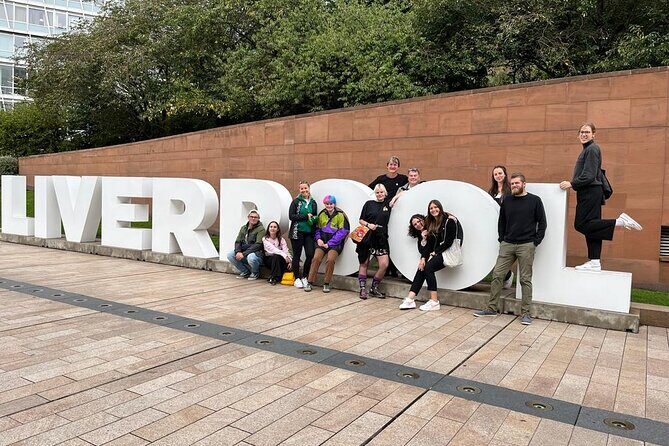
You begin at the Bluecoat gates on School Lane (Liverpool L1 3BX). This is a strong starting point because it sets the tone: Liverpool isn’t only about docks and Beatles posters. It’s also about institutions, education, and the city’s ongoing reinvention.
You’ll spend about five minutes here, which is brief, but that’s the point. Think of it as a warm-up stop that gives you a foothold before you start moving through heavier historic areas.
If you like tours that set context early, this beginning works well. And since you’re walking from here, you’ll feel the city’s layout gradually come into focus rather than all at once.
Sailors Home Gateway and the Golden Liver Bird Moment
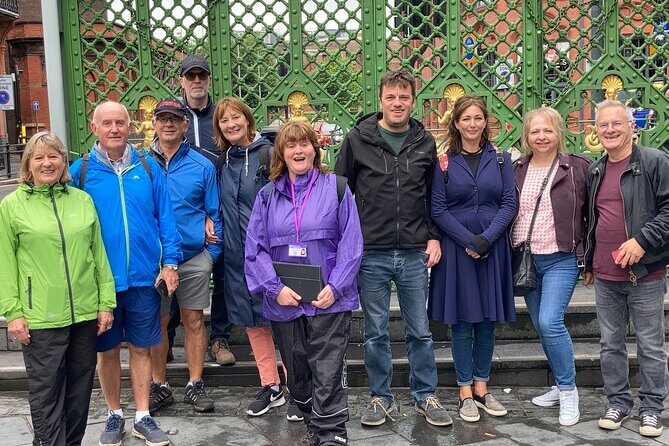
Next is the Liverpool Sailors Home Gateway monument. You’ll pause for about five minutes and get a chance for photos with the golden Liver bird.
This is one of those stops that helps you understand what Liverpool valued beyond entertainment. Maritime communities and seafaring support were a huge part of the city’s identity, and the monument gives you a clear visual anchor.
In a short time, you’re already learning two things at once: Liverpool’s symbolism (the Liver bird) and the city’s maritime backbone. For a first overview, that’s a smart pairing.
Ropewalks on Henry Street: Why the City’s Streets Have Jobs
Then you walk into Henry Street, tied to an area called the Ropewalks. The tour explains the name because it was historically where rope-making for sailing ships took place.
You’ll spend around 15 minutes here. That’s long enough to absorb the idea: Liverpool’s street geography often reflects labor and industry, not just architecture. When you look at streets after a stop like this, you’ll start noticing patterns—long lines, practical layouts, and the way the city was built to support work.
A drawback to note, and it’s not the tour’s fault: this part includes uneven ground and busy areas. The guidance is to wear comfortable no-slip shoes, and I agree. You’re trying to enjoy the stories, not fight your footing.
Campbell Square and the Bridewell: A Victorian Gaol You Might See Inside
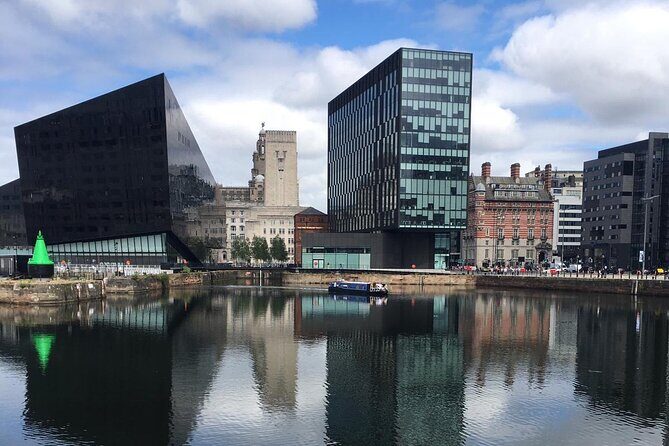
Campbell Square is close to the Ropewalk district, and it connects you to one of the city’s more dramatic conversions: The Bridewell, a converted Victorian prison.
You’ll spend about 10 minutes. The best part here is the possibility of seeing inside one of the original cells. That makes the tour feel more real than “pass and glance” sightseeing.
This stop also helps you understand Liverpool as a city with social history—how order and punishment were built into the urban landscape. Even if you don’t get inside, you’ll still get that angle of Liverpool life beyond the famous postcard views.
You can also read our reviews of more guided tours in Liverpool





Thomas Steers Way: Dry Dock History and the Seasonal Liverpool Selfie Sign
Next is Thomas Steers Way, located on the site of Liverpool’s first dry dock. Here, the story shifts into maritime engineering and how the city adapted to shipbuilding needs.
You’ll spend about 10 minutes, and you get two memorable visuals:
- A large water fountain that captures maritime history
- A quick look down through a port hole
You’ll also see the oversized Liverpool selfie sign. Its colors can change by season or events, which makes this stop feel like something you can revisit and still get a different vibe.
Practical tip: if you care about photos, this is one of the stops where you should slow down. The sign and port-hole view are quick, but you’ll want a clean shot without rushing.
Royal Albert Dock: Where the Titanic Story Lives Alongside the Present
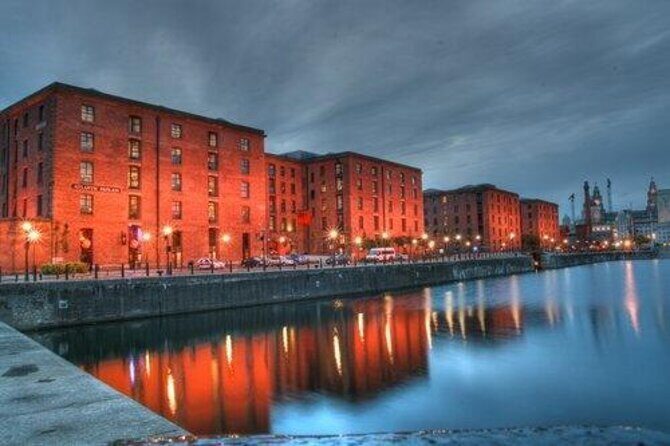
At the Royal Albert Dock, you’ll spend around 20 minutes. This is one of the big-ticket sections because it connects Liverpool’s past to something globally famous: the Titanic story.
The tour explains how that Titanic connection became part of Liverpool’s maritime identity, and it also discusses the docks’ role in the city’s development. You’ll also notice architecture here—old and new—so it doesn’t feel like an outdoor museum with zero today.
Along the way, you’ll see the bronze statue to Bill Fury. The plan notes this has become a fan shrine. Even if you’re not a lifelong Liverpool music person, that kind of tribute shows you how the city’s culture keeps reshaping itself around iconic figures.
This is also where your walk becomes most “wide open” compared with tight city streets. If you enjoy waterfront air and big views, you’ll probably perk up here.
One note: on days when access is restricted or operations require changes, the waterfront experience can shift. The tour set-up is built to keep things moving, but it’s still worth knowing that exact stop access isn’t always guaranteed.
Beatles Statue and a Photo Moment with the Fab Four
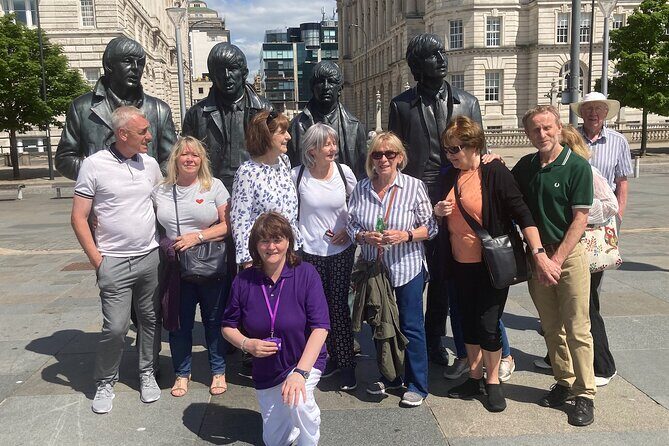
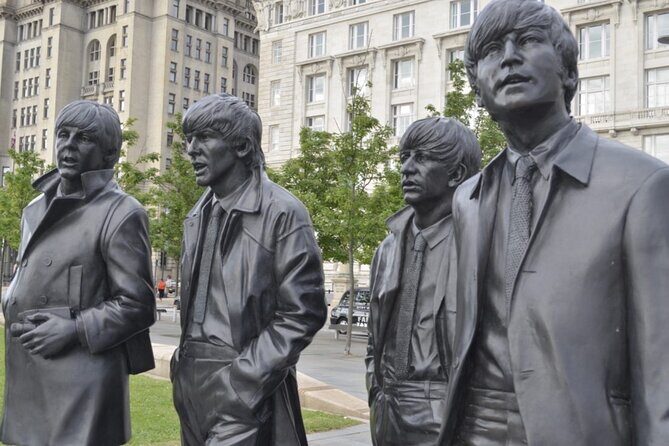
For Beatles fans, the tour offers a chance to grab a selfie with the Beatles Statue as you pass it. This sculpted stop is credited to Andrew Edwards, and you’ll spend about 10 minutes here.
The key practical detail: access to the statue can be restricted on occasion. When that happens, the tour visits alternative statues instead. That’s helpful because it means you’re not left with nothing if you arrive on a day with barriers.
If you’re trying to balance Beatles time with broader Liverpool context, this is a nice midpoint. You’ll get your Fab Four moment without turning the entire walk into only music.
The Three Graces: Cunard, Port of Liverpool, and the Liver Building
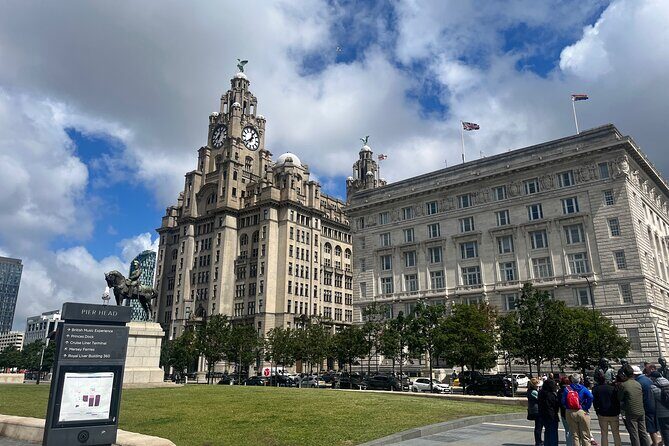
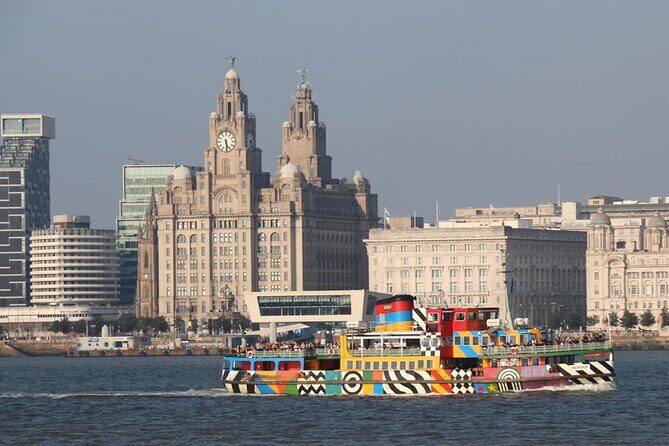
Next comes the Three Graces: the Cunard Building, the Port of Liverpool Building, and the Liver Building. You’ll spend about 15 minutes learning how each contributes to the city’s heritage.
This trio is a classic Liverpool skyline set-up. What I liked about this stop is that it’s not only about looking up at big buildings—it’s about understanding what they represent. These structures tie together shipping, global reach, and local identity in a way that makes the waterfront story feel complete.
If you’re a photography person, this is a solid time to pause and take in the shapes. The tour approach here is mostly about meaning, but you’ll come away with photos that actually relate to what you heard.
Castle Street and the Medieval Echo in a Modern City
From there, you walk along Castle Street, with a focus on the city’s medieval connection and architecture framing the route. You’ll spend about 10 minutes.
This stop is a good break from the heavier dock focus. It reminds you that Liverpool’s story layers on top of itself. Even when a building looks modern-ish or commercial, there can be older links under the surface of the street plan.
If you like walking through cities and spotting how time changes form, this part helps you “read” the streets rather than just moving through them.
Liverpool Town Hall: Grade I Civic Power and a 1500s Backstory
You’ll move toward the Liverpool Town Hall area, around 10 minutes. The Town Hall is described as Grade I listed and among the finest surviving 18th-century town halls in England.
The tour also points to older predecessors dating back to the 1500s. This is a strong moment for two reasons:
1) It shows Liverpool’s civic ambitions
2) It anchors the city’s development in long timelines, not just recent eras
I like these stops because they help you see Liverpool as a whole city, not just a set of famous attractions.
Exchange Flags and Nelson Monument: Courtyard History with WWII Links
Then comes Exchange Flags, a Grade II listed area with buildings that form a courtyard facing the Town Hall. You’ll spend around 10 minutes here and hear about an important Second World War role tied to the space.
You’ll also see the Nelson Monument and a large bronze monument to Nelson dating to the early 1800s. It’s another maritime name—so it fits the theme even as you move away from the docks.
This is the kind of stop that works well when you want context for why certain monuments show up where they do. Courtyards and memorial spaces often feel random until a guide gives you the reason.
Derby Square: Liverpool Castle History and Queen Victoria’s Monument
On to Derby Square, about 10 minutes. Here you’ll hear history of Liverpool Castle that once stood there. Today it’s associated with an imposing monument to Queen Victoria.
This stop helps close the loop: earlier you saw medieval echoes and civic power. Now you’re in a square that connects “lost” structures to present-day landmarks you can still visit.
Even if you don’t spend long here, it adds another layer to how Liverpool evolved and how people chose to mark that evolution in stone.
Finishing at Mathew Street: Your Game Plan After the Tour
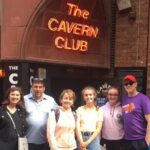
The tour ends at Mathew Street, at a convenient city-center entrance. From there, you can explore Mathew Street and the Cavern quarter on your own.
This is a smart way to design your time. By the time you finish, you’ll know the shape of the area and what to look for, so your self-guided exploring feels less like wandering and more like choosing your next move.
If you want extra Beatles-focused walking, there’s an option to book a separate Beatles walking tour. That’s useful if your priorities are heavier on music than on maritime and civic history.
What You’re Really Paying For (and Why It Works at This Price)
At $31.90 per person for about 2 hours 15 minutes, this is one of those tours that can feel like good value if you treat it as an orientation tool. You’re paying for:
- A guided walking format that reduces guesswork
- Local context that helps you understand what you see after the tour
- A route that covers multiple major areas without needing a vehicle
The “no food or drink included” part is normal for this kind of city walk. What you should bring is a bottle of water, and good shoes. The rest is about paying attention and enjoying the pace.
If you’re traveling solo with limited time, this style also makes it easier to decide what you’ll revisit later. The tour gives you a shortlist.
How the Group Size and Guide Style Affects Your Experience
The group size is capped at 20 people. That matters because it usually keeps the walk conversational. In the feedback, people talked about small group and even near-private moments, which can be a big deal if you have questions.
You’ll also notice the guide style tends to be active: frequent humor, quick answers, and recommendations for what to do next in Liverpool. Some people highlighted guides who timed photo stops well, even offering to take pictures often.
One caution from real-world experience: in a few cases, not every listed stop may get fully covered, depending on the day and how the group moves. If you’re visiting with tight timing, I’d treat it as a best-effort overview rather than a rigid checklist.
Weather, Surfaces, and Who This Tour Suits Best
This experience requires good weather. If it’s canceled due to poor weather, you’ll be offered a different date or a full refund. Plan for wind and rain in Liverpool seasons, and bring a layer.
On the physical side, the tour is described as having no hills or stairs, which is a big plus. Still, the surfaces can be uneven, including cobbles. That means you’ll want no-slip shoes, even if you’re generally comfortable walking.
This tour fits best if you:
- Are first-time visitors and want a fast overview
- Like history and culture, but don’t want museum fatigue
- Want Beatles landmarks without losing the bigger Liverpool story
- Prefer a small group walking pace
If you’re someone who hates walking or can’t manage cobblestones, you’ll likely feel frustrated. The route is designed for moderate fitness, but it still involves steady street walking.
Should You Book This Liverpool Walking Tour?
Yes, I think it’s a smart booking if you want a quick, story-driven orientation to Liverpool. The strongest reason: you get a balanced mix of maritime identity, civic architecture, and Beatles-era culture, all in a compact 2h15 walking format.
Book it if:
- You want a local guide to explain what you’re seeing as you go
- You enjoy humor and named details (and you’ll catch photos along the way)
- You’re setting up the rest of your trip and need context
Skip it (or choose a different style) if:
- You can’t handle cobbled, uneven surfaces
- You only want one theme, like strictly Beatles or strictly maritime
- You’re expecting every single stop to be accessible with no changes
FAQ
How long is the Best Of Liverpool Heritage, History & Culture Guided Walking Tour?
It runs for about 2 hours 15 minutes.
Where does the tour start and end?
It starts at the Bluecoat on School Lane (Liverpool L1 3BX) and ends at Mathew Street in the city center.
Is food or drink included?
No. The tour does not include food or drink.
Is the tour mostly walking, and is it hard?
It’s a guided walking tour with no hills or stairs, but you will pass through areas with uneven surfaces like cobbles. It’s recommended for people with moderate physical fitness, and you should wear comfortable no-slip shoes.
Will I get a mobile ticket?
Yes, the tour includes a mobile ticket.
What if the weather is bad?
The experience requires good weather. If it’s canceled due to poor weather, you’ll be offered a different date or a full refund.
If you want, tell me your dates and what you care about most (Beatles, docks, architecture, or just fast orientation). I’ll help you plan the best order for what to do before and after the walk.