REVIEW · LIVERPOOL
A Walk Through Time: History of Liverpool Walking Tour
Book on Viator →Operated by Global City Experience · Bookable on Viator
Liverpool’s story runs on foot and tide.
This A Walk Through Time tour strings together the city’s big moments, from the Three Graces at Pier Head to the docks and modern Liverpool ONE. I especially liked how the guide turns landmark after landmark into one clear timeline, and how you get the “why” behind Liverpool’s rise as a global port.
Two things I love: first, the waterfront start gives you instant context and top photo angles; second, the tour doesn’t sugarcoat trade, including the darker side of Atlantic commerce. One consideration: it’s an outdoor walking route on streets near the river, so wind and cold can hit hard, and the pace is brisk if you’re not used to walking in city weather.
In This Review
- Key highlights at a glance
- Starting at the Three Graces: why the walk begins at Pier Head
- St Nicholas’ Church Gardens and Liverpool’s medieval beginnings
- Old Hall Street and the cotton trade: how Liverpool powered the Atlantic
- Liverpool Town Hall (1749): Georgian architecture with a commerce lens
- Castle Street to Queen Victoria Monument: a street-level time machine
- Liverpool ONE: when old trade routes meet modern shopping
- The Old Dock site (1715): the engineering behind Liverpool’s boom
- Royal Albert Dock (1846) and the 19th-century port era
- Ending with a final Three Graces moment by the waterfront
- Price and value for a 1h50 historian-led overview
- Who should book this walk, and who might want a different style
- Should you book A Walk Through Time? My honest take
- FAQ
- Where does the tour start and end?
- How long is the walk?
- What does it cost?
- What language is the tour offered in?
- Do I get a mobile ticket?
- Is there a group size limit?
- Is the tour dependent on weather?
- Is free cancellation available?
- What’s the policy on late cancellation?
- Are service animals allowed and is it near public transportation?
- Is confirmation provided after booking?
Key highlights at a glance
- Historian-led storytelling with guides including John (and Julio on at least some runs) who stay engaged and easy to follow
- Medieval Liverpool clues at the old St Nicholas’ Church site, tied to early origins dating to 1207
- Big trade chapters on Old Hall Street and around the cotton trade world that helped Liverpool outgrow London
- Major architectural stops including Liverpool Town Hall (1749) and a look at how streets evolved over centuries
- Dockside engineering meets global power, from the first commercial wet dock (1715) to Royal Albert Dock (1846)
- A finish you can use, ending at the Queen Victoria Monument for easy onward exploring
Starting at the Three Graces: why the walk begins at Pier Head
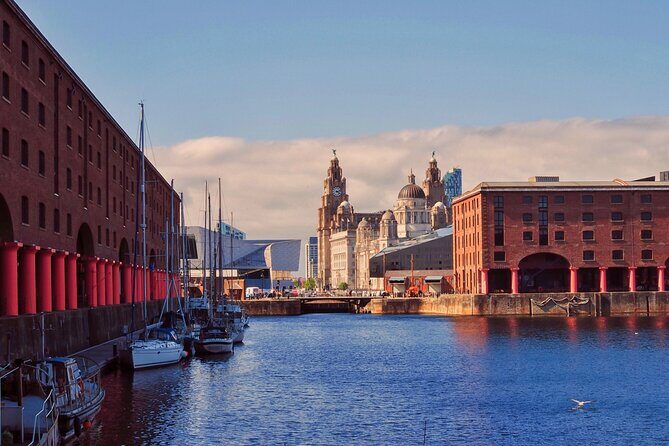
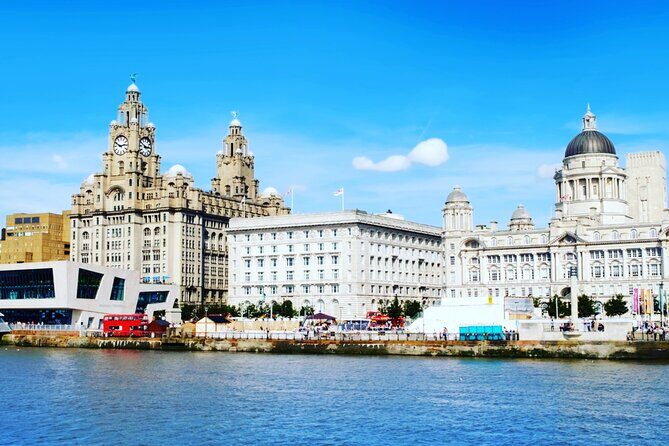
You start at the Royal Liver Building at Pier Head, right at the cluster locals call the Three Graces. Even before you hear a single fact, the buildings make sense of Liverpool’s relationship with the river: this is a city built facing outward.
The guide gives you the tour intro here, then you move as a group along the waterfront orbit. It’s a smart move. You’re not wandering blindly. You’re learning what you’re looking at—why these landmarks mattered, and how they connect to the next centuries of change.
Expect about 10 minutes at the opening point. That’s short, but it’s enough to set your mental map and get you tuned into the stories to come. And yes, you’ll probably want a couple of photos, because the view from this area is one of Liverpool’s most recognizable scenes.
You can also read our reviews of more walking tours in Liverpool


St Nicholas’ Church Gardens and Liverpool’s medieval beginnings
Next you cross toward the Liverpool Strand and the area tied to the old St Nicholas’ Church. This is presented as the oldest building in Liverpool city centre, originally named after the Patron Saint of the Sea. That detail matters because it links the early town to the water from day one.
You get a focused history moment around Liverpool’s medieval origins, including early references dating back to 1207. The guide points you to primary evidence in the area, which is a helpful way to make “history” feel less abstract and more anchored in what’s still around you.
This stop is about 15 minutes, and it’s positioned as a breather before the tour shifts into “commerce and growth” mode. Admission is free here, so you’re not stuck planning around tickets—just show up ready to listen.
If you like your history practical (who built what, where, and why), this is one of the stops that will grab you fast.
Old Hall Street and the cotton trade: how Liverpool powered the Atlantic
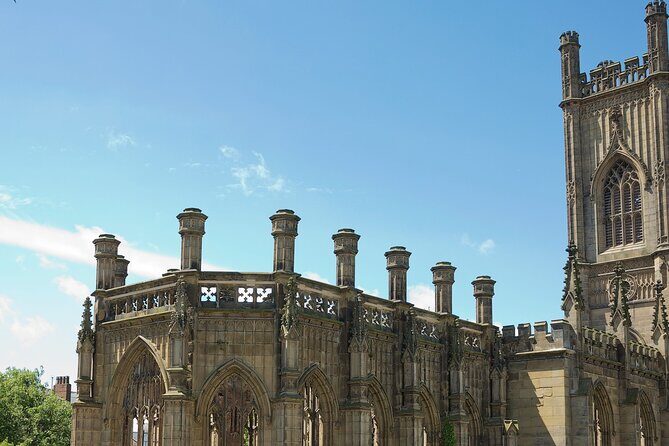
From the medieval origins, the tour moves into the 13th-century story thread down Old Hall Street. The area is tied to the old town hall and Liverpool’s early development after it received its town charter—so you’re seeing how governance and trade grew together.
You’ll walk past Grade I listed buildings and then around the Cotton Exchange area, described as a key location where global trade happened. The tour frames Liverpool’s growth as a global port in a direct way: by the late 18th century, the cotton trade helped Liverpool overtake London.
Here’s one of the big values of this walk: the guide connects economics to street-level geography. You’re not just reading about ships and warehouses. You’re standing in the districts where those networks formed.
Also, expect the tour to mention that Liverpool’s maritime story includes more than clean, celebratory success. One of the standout points from guide-led discussions is attention to the grim realities tied to Atlantic trade, including the transatlantic slave trade. If you want a “both sides” view, this stop is where that tone becomes clear.
The stop runs around 10 minutes, free, and it moves quickly—so keep your camera ready, but keep your ears even more ready.
Liverpool Town Hall (1749): Georgian architecture with a commerce lens
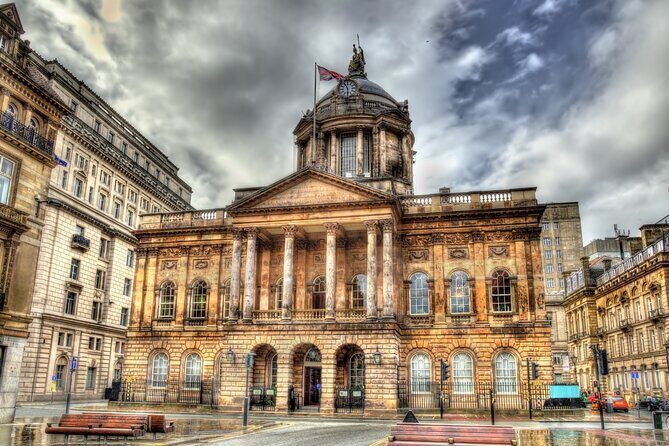
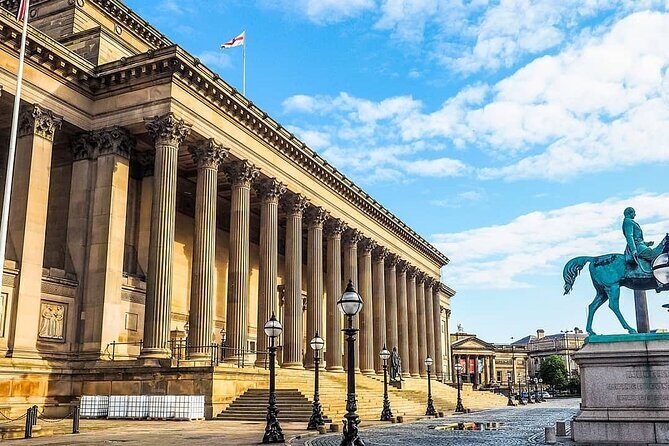
Then you reach Liverpool Town Hall, built in 1749 and described as the finest surviving Georgian building in the UK. It’s one of those landmarks that people walk past without context. This tour gives you the context.
The guide focuses on the building itself and on how the city became a global port and centre of commerce. That pairing works well. Town Hall isn’t just architecture; it’s a signal of confidence, money, and civic ambition. And in Liverpool, those ambitions are tightly connected to trade.
This stop is about 10 minutes, and the tour notes that admission ticket isn’t included. In practice, that usually means you’re getting the historical explanation without assuming you’re paying entry on the day. If you decide you want to go inside later, you’ll need separate access.
If you’re the type who likes buildings to come with a reason to exist, you’ll appreciate this stop. It also gives the walk variety: after docks and streets, you get a big civic landmark moment.
Castle Street to Queen Victoria Monument: a street-level time machine
From there, the walk leans into the 18th century with Castle Street. This is presented as a literal time walk, because the street’s architecture reflects Liverpool’s evolving past and development.
The tour includes the story of Liverpool Castle and why this stretch matters historically. Even if you don’t remember every detail, the feel of this part of town helps you understand how older Liverpool changed into a trading engine.
Castle Street is about 15 minutes, with no admission required during the stop. That makes it easy to concentrate on the guide’s explanations without worrying about ticket timing.
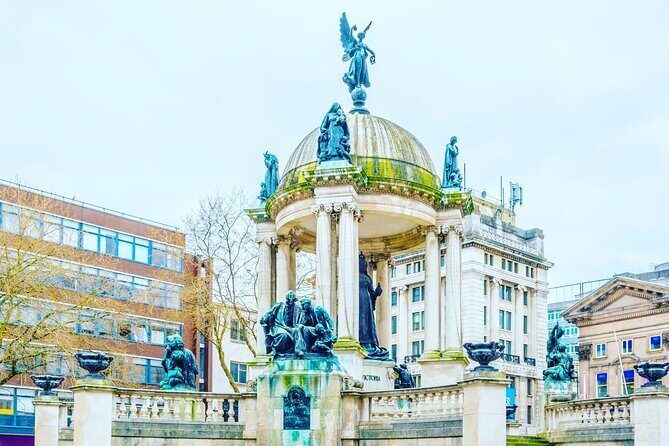
Then comes Queen Victoria Monument, about 10 minutes. The guide uses this area to tie together the importance of Liverpool Castle and Liverpool’s climb toward becoming the world’s largest port for global trade by 1800.
One practical tip: wear shoes that handle uneven pavement and a bit of street grit. This whole route relies on steady walking, and Castle Street is one more segment where it helps to stay comfortable.
You can also read our reviews of more historical tours in Liverpool



Liverpool ONE: when old trade routes meet modern shopping
After dockside and older streets, you’ll move into Liverpool ONE. This stop is shorter—around 10 minutes—and it’s a guided walk through the shopping destination and its shops and attractions.
So what’s the point of this modern section in a history walk? It’s the “what happened next” part. The guide uses the shift in setting to show that the city keeps reinventing itself, even as its waterfront identity stays in the frame.
If you’re thinking ahead for the rest of your day, this is useful. You end up in a central zone with plenty of options for food breaks and onward browsing. It’s also a nice reset if the earlier stops made you feel like you were constantly moving through centuries.
This stop is free in the sense that you’re not being asked to pay for the experience itself, though you’re still in a commercial area where you might choose to spend your own money.
The Old Dock site (1715): the engineering behind Liverpool’s boom
The tour then shifts into one of the most powerful “cause and effect” chapters: the Old Dock. The standout detail here is that the Old Dock was the first commercial wet dock on the planet, built in 1715.
This matters because it explains why Liverpool grew so fast. A wet dock can mean more reliable operations—ships can work without depending as much on tides and timing. The guide frames it as a key factor in catapulting Liverpool into becoming the most efficient port in the world and as a first of its kind.
This stop runs about 10 minutes, and it’s described as an exclusive guided history moment. The quick format is good here. You don’t need a long museum visit to understand the big idea: infrastructure made the city’s trade possible at scale.
If you like history that connects to real-world mechanics—design, logistics, and the “how”—this is one of your best stops.
Royal Albert Dock (1846) and the 19th-century port era
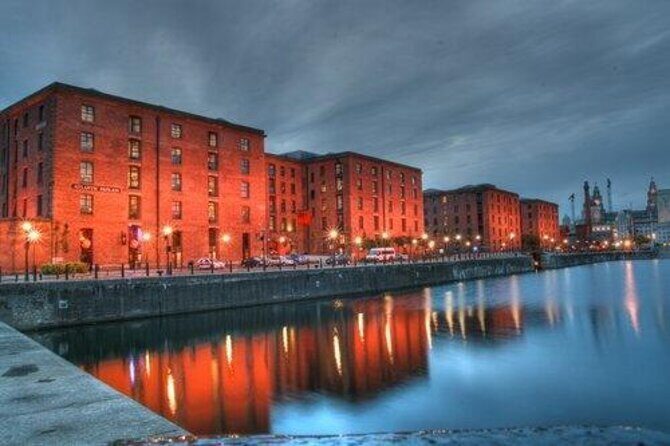
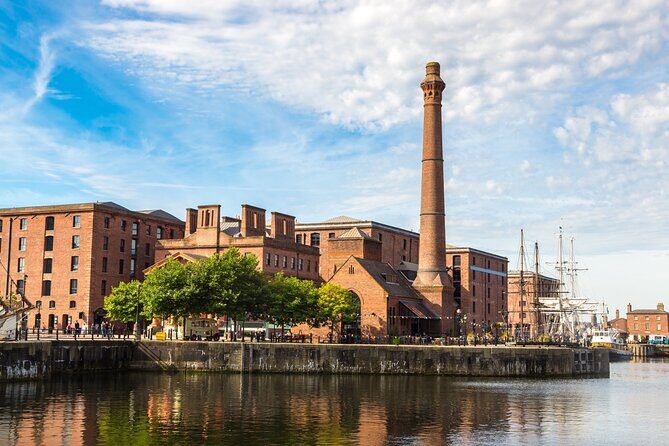
Next you reach Royal Albert Dock, built in 1846. Here the story moves into the 1800s and the role of docks in Liverpool’s commerce.
This stop also includes how Liverpool was involved in the First and Second World Wars. That part of the tour gives depth beyond trade as pure business. It positions the docks as part of a bigger national story.
The stop lasts around 10 minutes and is free in the tour context. In other words, you get the guided explanation without needing to purchase admission to the area during the walk.
This is also a chance to look at the city’s waterfront as more than scenery. The docks are physical evidence of how Liverpool worked: ship, warehouse, movement, repeat. Once you see it that way, the whole coastline reads differently.
Ending with a final Three Graces moment by the waterfront
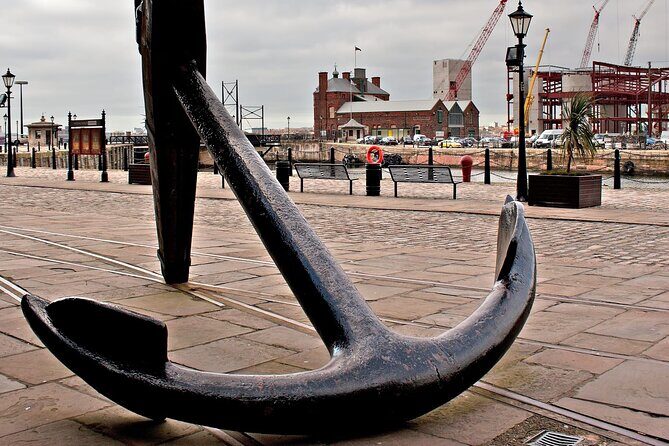
The tour finishes back at the Three Graces, with a final destination at the Royal Liver Building. This closing section is about 5 minutes, and it’s framed as a final walkthrough and wrap-up of the waterfront setting.
It’s a short finish, but it helps you leave with a clearer picture. You’re basically returning to the starting point after walking the timeline in between. That “start and end at the same place” trick is useful for your brain. It helps everything snap into place.
The tour ends at the Queen Victoria Monument area at the bottom of Castle Street, which is central for getting to other sights afterward.
If you’re planning your day, I like ending near this part of town because it keeps options open: you can continue wandering Old Liverpool, hop to nearby districts, or grab food without feeling trapped.
Price and value for a 1h50 historian-led overview
At $27.74 per person for about 1 hour 50 minutes, the value here comes from density. You’re covering a lot of major landmarks in a single walk: the Three Graces, medieval origins area, Old Hall Street and Cotton Exchange zone, Town Hall, Castle Street, Queen Victoria Monument, Liverpool ONE, Old Dock, and Royal Albert Dock.
The other value lever is the guide format. The group is capped at 40 people, and the guide is described across experiences as engaging, funny at times, and good at keeping people oriented—even in wind or street noise.
Also, most stops are free to view in the tour context. The walk notes admission ticket not included for the Royal Liver Building intro and for Liverpool Town Hall, but many other stops are presented as free moments you can enjoy without entry fees.
So if you want a fast way to understand Liverpool’s rise as a port city—without paying museum-by-museum—you’re likely to feel good about the price.
One practical point: the tour is listed as requiring good weather. If the forecast looks rough, you may want a flexible schedule that can handle a change.
Who should book this walk, and who might want a different style
This tour is a strong fit if you’re:
- visiting Liverpool for the first time and want a solid overview fast
- interested in maritime trade, docks, and how cities grow
- the type who likes stories tied to real places, not just dates on a page
- happy with walking outdoors and hearing a lot of detail in a short time
It may be less ideal if you:
- hate cold wind and long stretches of being outside
- want a slower pace with lots of independent exploring
- prefer a strictly museum-based day instead of streets and waterfront viewing
The group size cap at 40 is helpful for a guided format. It’s large enough to feel social, but small enough that the guide can keep attention.
And if you enjoy asking questions, this is the kind of tour where you can turn curiosity into extra context. One reason the walk gets high marks is the guide’s willingness to answer and keep the stories flowing.
Should you book A Walk Through Time? My honest take
If you want to understand Liverpool quickly—how medieval roots turn into global trade, and how docks shaped everything—this walk is a smart choice. I like that it doesn’t stop at pretty buildings. It explains the systems behind the skyline, including uncomfortable parts of Atlantic history.
The main reason to think twice is weather and pace. Come prepared for wind off the river, and wear comfortable shoes. If you can handle that, you’ll get a lot out of the 1h50 format.
One last “real-world” consideration: there are occasional cancellation stories tied to late changes or emergencies. That sounds rare, but still, if your itinerary is tight, keep one backup plan in mind for the same day. In general, cancellations due to poor weather are handled with a new date or a full refund.
Overall: I’d book this if you want an efficient, story-driven introduction that makes Liverpool’s waterfront and old trade districts feel understandable in a single outing.
FAQ
Where does the tour start and end?
The tour starts at Liver Building, Pier Head, Liverpool L3 1HU, UK. It ends at Queen Victoria Monument, One Derby Square, James St, Liverpool L2 1AB, UK.
How long is the walk?
The duration is about 1 hour 50 minutes.
What does it cost?
The price is $27.74 per person.
What language is the tour offered in?
It is offered in English.
Do I get a mobile ticket?
Yes, the tour includes a mobile ticket.
Is there a group size limit?
Yes. The maximum group size is 40 travelers.
Is the tour dependent on weather?
Yes. This experience requires good weather. If it’s canceled due to poor weather, you’ll be offered a different date or a full refund.
Is free cancellation available?
Yes. You can cancel up to 24 hours in advance for a full refund.
What’s the policy on late cancellation?
If you cancel less than 24 hours before the experience’s start time, the amount you paid will not be refunded.
Are service animals allowed and is it near public transportation?
Service animals are allowed, and the tour is near public transportation.
Is confirmation provided after booking?
Confirmation is received at the time of booking.