REVIEW · LONDON
Explore Bible Art at the National Gallery of London
Book on Viator →Bookable on Viator
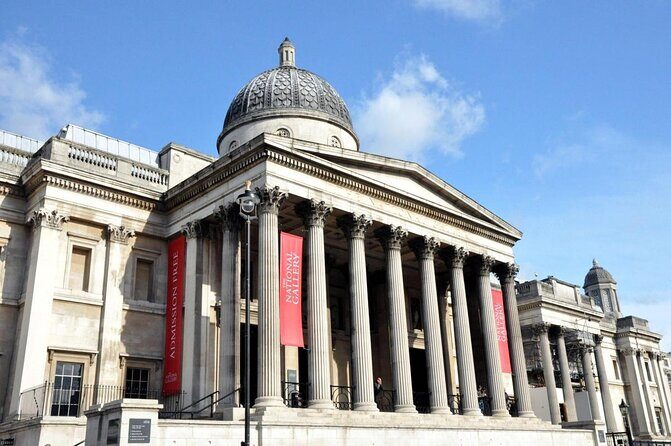
Religious art, explained without the fluff. This National Gallery visit uses Bible study as the lens, so the paintings feel less like history and more like conversation.
I love the way this tour ties major works by Leonardo da Vinci, Rembrandt, Caravaggio to moments from Jesus’ life and the Israelites. I also like the attention to apocryphal writings, including stories that show up in some Bibles and not others.
One thing to consider: paintings can rotate in and out of display, so your exact must-see might or might not be on the wall that day.
In This Review
- Key highlights I’d circle
- How this Bible-art format works inside the National Gallery
- Meeting at Trafalgar Square and staying on schedule
- Stop one: the National Gallery galleries as your Bible map
- Seeing the Israelites and Jesus as a connected story
- A realistic museum rhythm (paintings rotate)
- Apocrypha explained without making it confusing
- The master artists you’ll actually point to: Leonardo, Rembrandt, Caravaggio
- When time allows: Greek myths and other famous names
- Comfort and pacing: a short tour that doesn’t feel rushed
- Price and value: what $76.51 gets you (and what it doesn’t)
- Tickets, phones, and the stuff that can trip you up
- Who this tour suits best
- Should you book this Bible-art tour at the National Gallery?
- FAQ
- Where does the tour start?
- What time does the tour run?
- How many people are in the group?
- What language is the tour offered in?
- Do I need a museum entry ticket?
- Are folding stools available?
- Are service animals allowed?
- Can I cancel and get a full refund?
Key highlights I’d circle
- Small group (max 10) means you can ask questions and keep up with the pace.
- Bible-linked viewing connects births, miracles, death, and resurrection to what you actually see on the canvas.
- Apocrypha context helps you understand why certain scenes appear in some Bibles and not others.
- Representational art approach makes it easier to identify the figures without guesswork.
- Request folding stools if you need extra comfort during your walk through the galleries.
- Optional detours may include Greek myths and well-known names like Van Gogh, Monet, and Michelangelo if time allows.
How this Bible-art format works inside the National Gallery
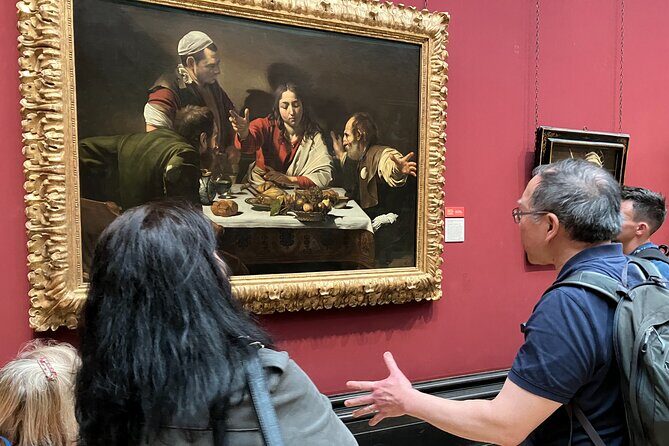
This isn’t a “look at the paintings and leave” museum trip. The guide uses the art as a springboard, moving step by step through scenes that readers often recognize—then slowing down just enough to connect the visual details to the Bible and related texts.
The sweet spot here is that you’re not asked to be a scholar. The tour leans on representational art, meaning the figures are clearly identifiable. That matters because it keeps your attention on meaning: what the artist is emphasizing, what story the scene is telling, and why Christians might read those images alongside scripture.
Also, it’s built for group discussion. You’ll spend time talking through themes, not just listening to facts. If you like asking questions—about theology, story differences, or symbolism—you’ll probably enjoy the back-and-forth.
You can also read our reviews of more museum experiences in London


Meeting at Trafalgar Square and staying on schedule
The tour meets at the Statue of George Washington, at 44 Trafalgar Sq (WC2N 5DN), starting 1:00 pm. It runs about 3 to 4 hours and ends back at the same meeting point.
That timing is practical. Starting mid-afternoon helps you dodge some morning museum rush, and you still get plenty of daylight for before-or-after time near Trafalgar Square.
Two logistics notes that actually help:
- You’ll get a mobile ticket, so set aside time to have your phone ready.
- If you use the Viator app, it can help you receive important messages in the right format.
Stop one: the National Gallery galleries as your Bible map
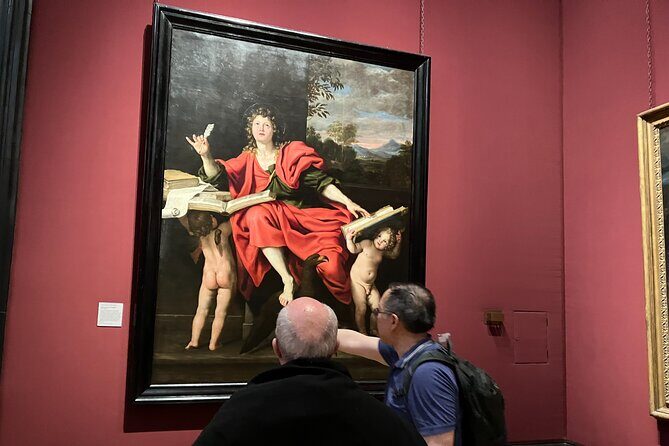
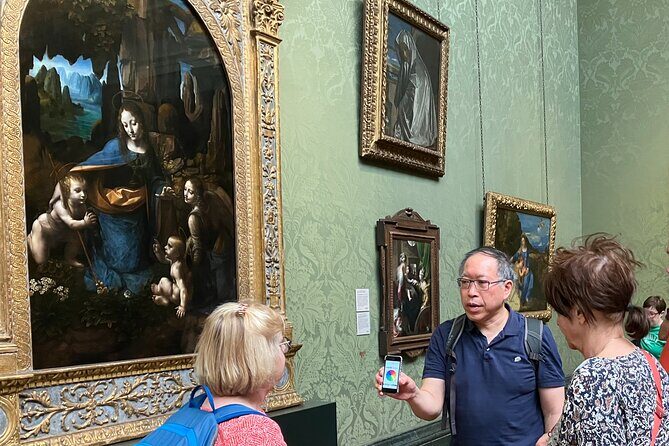
The entire experience centers on one long, guided walk through the museum’s galleries. You’ll see familiar themes in a very visual format—Jesus’ birth, miracles, death, and resurrection—plus many depictions of Israelites, from Joseph to Moses to David.
What makes this feel different from a standard museum tour is the way the guide treats paintings like story prompts. You’re not only spotting who’s in the scene; you’re asking what the scene is saying. That’s where theology enters naturally.
Seeing the Israelites and Jesus as a connected story
If you’ve ever read biblical accounts and thought, I know the names, but I can’t picture the moments—this style can help fix that. The paintings give you the imagery your brain needs. Once you’ve seen Joseph or Moses rendered in a specific artistic way, the Bible passages often start sticking faster.
It also helps that the guide uses clear scenes. With representational art, you’re not forced into guesswork about who is who. Instead, you can focus on things like:
- how the artist frames key figures,
- what emotions are emphasized,
- and which episode is being highlighted.
A realistic museum rhythm (paintings rotate)
Plan for one small reality check: paintings move around the museum and may be taken off display regularly. That means the guide is working with what’s available that day.
Practically, this is usually fine because the tour is built around themes, not a single fixed checklist. But if you have one “must see” artwork in mind, know that you might not get it every time the galleries are refreshed.






Apocrypha explained without making it confusing
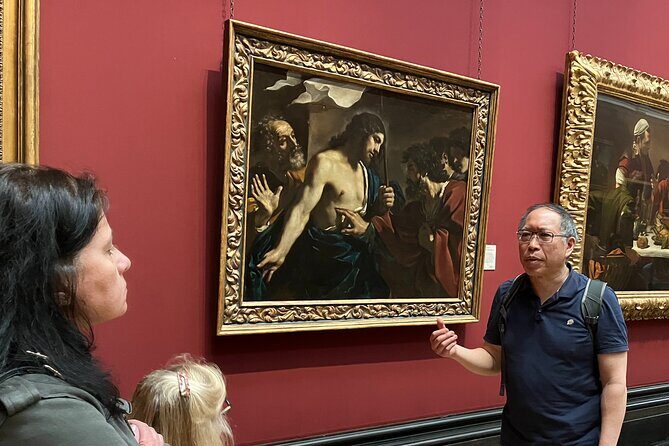
One of the most interesting parts of this experience is the attention to apocryphal writings—stories included in some Bible editions but left out of others.
This matters for a simple reason: when you see a scene that doesn’t show up in your Bible reading plan, you can feel lost fast. The tour helps you interpret those images without embarrassment. You’ll learn that certain depictions come from traditions tied to those texts, even if they aren’t part of every canon.
In plain terms, this tour helps you connect:
- what the painting shows,
- what story tradition it’s drawing from,
- and why your own Bible may handle the story differently.
If you want a faith-based museum experience that respects differences in Bible versions and traditions, this is a big strength.
The master artists you’ll actually point to: Leonardo, Rembrandt, Caravaggio
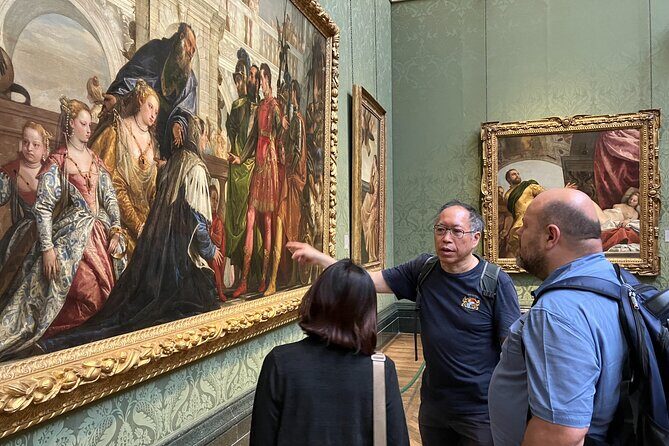
You’re not just looking at generic “religious art.” The tour aims at major names, including Leonardo da Vinci, Rembrandt, Caravaggio, and others.
Here’s why that’s valuable for you: when a famous artist paints a biblical scene, it’s not only religious storytelling—it’s also a historical statement about how that era understood faith, character, and moral drama. Different centuries highlight different things: emotion, light, posture, clothing, even the tone of the background.
The guide’s job here is to connect those art choices to the story itself—so you’re not just admiring technique. You’re learning how artists visually “argue” for meaning.
From the way this tour is described, David leads with energy and keeps the conversation moving. Expect a style that mixes clear explanation, humor, and questions back to the group, rather than a lecture where you tune out after 20 minutes.
When time allows: Greek myths and other famous names
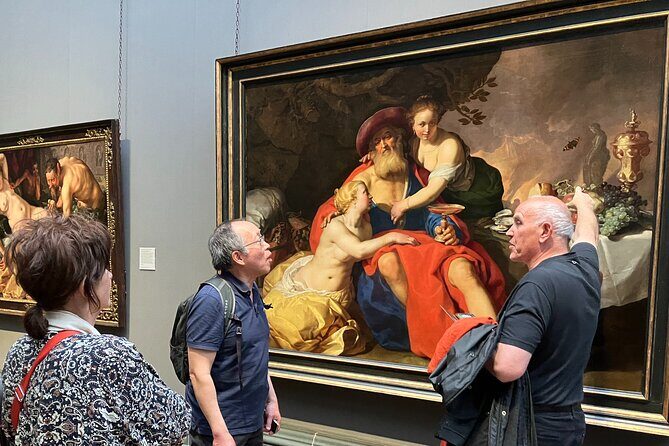
As time permits—and depending on what’s on display—you may also see famous Greek myths and work by recognizable artists like Van Gogh, Monet, and Michelangelo.
This isn’t random wandering. It’s the same idea applied broadly: artists draw from stories people already know, and those stories shape how viewers understand the world—sacred or not.
If you’re someone who likes museum tours that stay grounded but still let curiosity breathe, this optional component can be a nice payoff.
Comfort and pacing: a short tour that doesn’t feel rushed
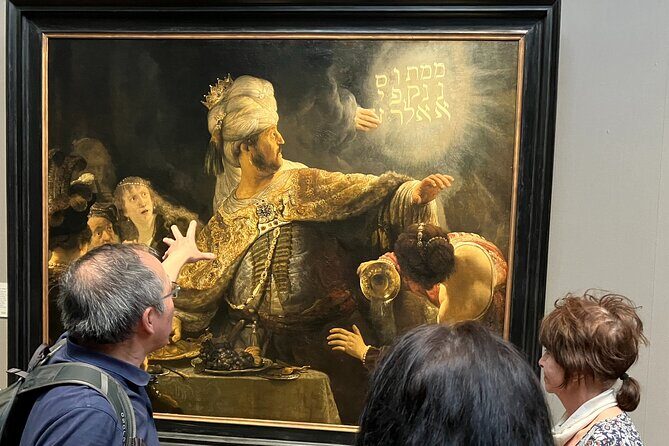
The tour lasts about 3 hours on average, though it’s listed as roughly 3 to 4 hours depending on interest and timing. The group size is capped at 10 travelers, which helps a lot with pacing.
Two practical comfort notes you’ll appreciate:
- Folding stools are available on request, which can make the experience easier if your legs need a break during slower conversations.
- The tour is built around stopping in place and walking in segments, not constant marching.
And because you’re spending time talking through ideas, you’ll likely go slower than you would on a self-guided visit. That’s a feature, not a flaw—especially if your goal is understanding, not speed.
Price and value: what $76.51 gets you (and what it doesn’t)
The price is $76.51 per person for a 3 to 4 hour small-group experience. Museum entrance can be free if you book it separately using the National Gallery’s entry ticket page, and you’re encouraged to get that free museum entry ticket (any time will suffice).
So what are you paying for?
- A guided walkthrough with faith-and-art discussion rather than solo browsing
- The ability to ask questions in a group capped at 10
- The guide’s framing: turning paintings into story prompts and theological conversation
Compared with doing this museum alone, the biggest value is time saved. You’re not trying to figure out what painting to see next or how to connect it to scripture themes. The guide makes those links for you, and that can be worth a lot when you only have a few hours in London.
If you’re already planning to visit the National Gallery that day anyway, you’re likely to feel the value most strongly.
Tickets, phones, and the stuff that can trip you up
This tour uses a mobile ticket, and you’ll want to keep an eye on messages via the Viator app. That’s not glamorous advice, but it’s the difference between a smooth start and a last-minute scramble.
You’ll also want to secure the free National Gallery entry ticket referenced by the official museum page so you’re not stuck figuring it out on the day. Since paintings can rotate, the museum visit is about what’s available—so having entry sorted matters.
One more note: service animals are allowed, and the tour says most travelers can participate. If you need the stool option, request folding stools ahead of time.
Who this tour suits best
This is a great fit if you:
- want to understand the Bible through art, not just read about it,
- enjoy discussion—questions included—during a guided museum visit,
- like seeing major artists such as Leonardo, Rembrandt, and Caravaggio in a story context,
- or want clarity on apocryphal material and why it appears in some Bible traditions.
It may feel less ideal if you mainly want a strict art-history lecture with no theology angle, or if you’re only interested in a single “must see” painting and can’t tolerate the reality that artwork display changes.
Should you book this Bible-art tour at the National Gallery?
If you want your National Gallery time to feel more purposeful than browsing, I’d book it. The combination of small group size, Bible-linked themes, and help interpreting apocryphal stories makes it more than a standard gallery walk.
I’d also consider it especially if you’re returning to London and want a tour that makes the museum feel readable: one where the guide helps you connect what you’re seeing to what you know from scripture—and what you might not.
If that’s your style, this one is a strong yes.
FAQ
Where does the tour start?
It starts at the Statue of George Washington, 44 Trafalgar Sq, London WC2N 5DN, UK.
What time does the tour run?
The start time is 1:00 pm, and the tour lasts about 3 to 4 hours.
How many people are in the group?
The tour has a maximum of 10 travelers.
What language is the tour offered in?
The tour is offered in English.
Do I need a museum entry ticket?
Yes. You’re asked to book a free museum entry ticket from the National Gallery website. The tour itself is separate from the museum entry.
Are folding stools available?
Yes. Folding stools are available on request.
Are service animals allowed?
Yes, service animals are allowed.
Can I cancel and get a full refund?
Yes. You can cancel up to 24 hours in advance for a full refund. Canceling less than 24 hours before the start time won’t be refunded.