London keeps secrets under your feet. This Hidden London tour takes you into Aldwych, a former Piccadilly line terminus now closed to the public, where you’ll walk the spaces that once served commuters and later became a film set. It’s guided all the way, with access to areas you normally won’t see.
I love the guided navigation. You don’t have to worry about where to go, because the guide leads you through the station’s connected corridors and down the route. I also love the off-limits access. This isn’t just a quick look from a single viewpoint; you get to experience multiple parts of the station, including features that are rarely shown.
The one drawback to plan around is physical and mental comfort. Expect stairs, uneven ground, low lighting, and tight areas with no elevator, so it’s not a fit if claustrophobia is an issue.
In This Review
- Key things you’ll notice on the Aldwych tour
- Why Aldwych feels like London’s under-the-radar theater
- Price and what you really get for $61.84
- Meeting at Hidden London: finding the start without stress
- Entering the ticket hall: where the station story starts
- The original lifts and the power of seeing real infrastructure
- Abandoned platforms and tunnels: rare access you can feel
- The Blitz shelter to 1994 closure: history you can connect to
- Movie and TV sets: Aldwych on screen (and how the tour frames it)
- Comfort, lighting, and stairs: what to know before you go
- Practical rules that make the experience smoother
- Who this tour is best for (and who should skip it)
- Should you book the Hidden Tube Walking Tour of Aldwych Disused Station?
- FAQ
- Where does the tour start?
- How long is the Hidden Tube Walking Tour of Aldwych?
- What language is the tour offered in?
- Do I need a mobile ticket?
- Is the tour suitable for children?
- Is the tour step-free or accessible by elevator?
- Is the tour suitable if I have claustrophobia?
- Are open-toed shoes allowed?
- Can I cancel for a full refund?
Key things you’ll notice on the Aldwych tour
- A guided route that prevents the get-lost feeling, even though you’re underground
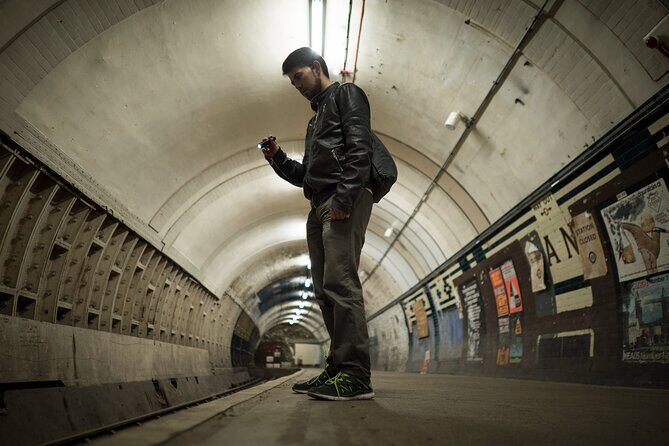
- Original lifts, ticket hall areas, and abandoned platforms and tunnels
- Inter-connecting walkways that link parts of the station you usually can’t access
- Film and TV stories tied to specific productions shot at Aldwych
- Clear rules like photo ID required and no open-toed shoes
- A small group cap (maximum 25) for a more controlled experience in tight spaces
Why Aldwych feels like London’s under-the-radar theater
Aldwych is the kind of London place that makes you look twice at a normal city street. This station opened in 1907 with big intentions, but it never became as heavily used as planners hoped. It later closed in 1994, and since then it’s lived multiple lives: shelter during the Blitz, and later a working backdrop for TV and film.
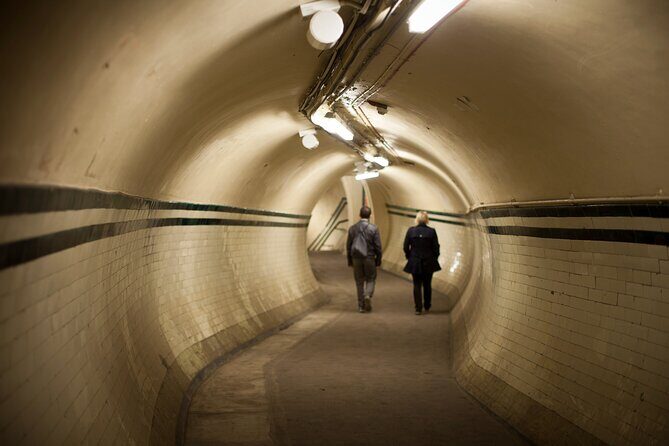
What makes the tour worthwhile is that you’re not just looking at old architecture. You’re walking through a space that has layers. You feel the practical design choices of a Tube terminus, then you see how those same spaces turned into set-friendly corridors, platforms, and tunnels.
You can also read our reviews of more walking tours in London

Price and what you really get for $61.84
At $61.84 per person, you’re paying for a guided visit that lasts about 1 hour 20 minutes total, with a 75-minute tour at the core. The ticket is included, and that matters because this is not a general public viewing time. It’s a guided, controlled access experience inside a disused station.
For me, value here is less about the headline price and more about the access. You’re seeing the ticket hall, original lifts, abandoned platforms and tunnels, and connected walkways that are typically out of bounds. Add in the fact that London’s history is folded directly into what you see, and the cost starts to feel reasonable for a unique one-off experience.
One more small planning note: the tour is often booked about 42 days in advance on average, so if you want a specific day, don’t wait until the last minute.
Meeting at Hidden London: finding the start without stress
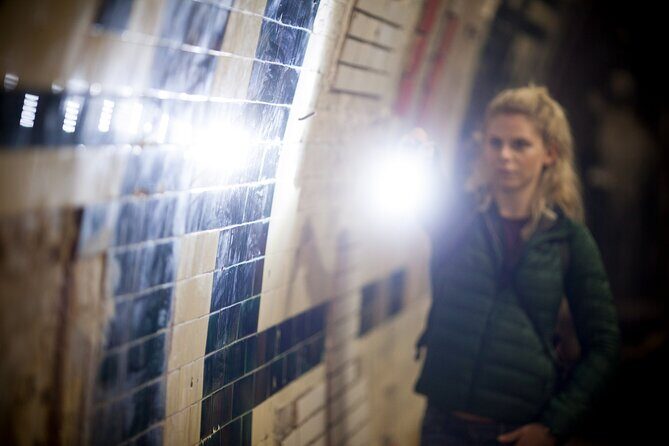
The tour starts at Hidden London – Aldwych Station, London WC2R 2ND, and it ends back at the same meeting point. It’s near public transportation, but the station itself is underground and the route can be easy to misinterpret if you arrive late or rush.
My advice is simple: show up a bit early and get your bearings at street level before you head in. There’s no cloakroom, and you shouldn’t be carrying luggage anyway, so arriving calm helps you get ready faster.
Also keep in mind the tour runs in English, and you’ll get a mobile ticket. Bring the photo ID you’re required to show for all guests.
Entering the ticket hall: where the station story starts
The tour’s first moments set the tone fast. You begin at Aldwych Tube Station, where you’ll get the station’s context before you move deeper. You learn that Aldwych was one of the former termini of the Piccadilly line, which helps you understand why certain areas exist the way they do.
The ticket hall is usually where you get your mental map. Even though the station is disused, the layout still reads like a working Tube station. You can sense how people once moved through the space and how staff would have handled passengers.
From there, the guide points out the station’s original infrastructure and what happened over time. This isn’t just trivia. Knowing that the station never reached the usage levels originally expected makes the later “abandoned” feel make more sense.
The original lifts and the power of seeing real infrastructure
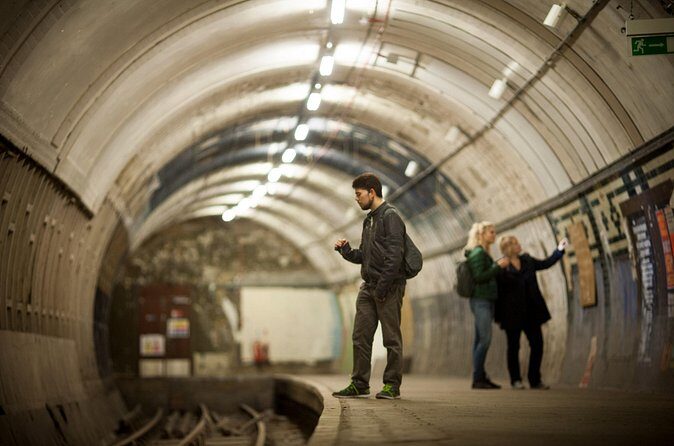
One of the tour’s major draws is the access to original lifts. This is the kind of detail you can’t fake with photos from street level. Standing near the remaining lift elements gives you a direct sense of how the station handled vertical movement—long before escalators and modern accessibility design shaped passenger expectations.
This is also where the guide’s job really matters. You’ll move with a group through connected areas, and the guide keeps you oriented. It’s practical, and it reduces the awkward moment of standing around underground trying to figure out which corridor goes where.
If you’re the kind of traveler who likes to understand systems—how places function—this part will land with you. It’s history you can physically picture.




Abandoned platforms and tunnels: rare access you can feel
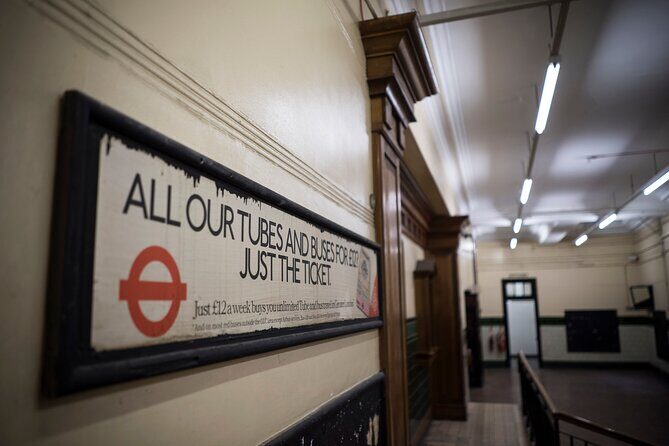
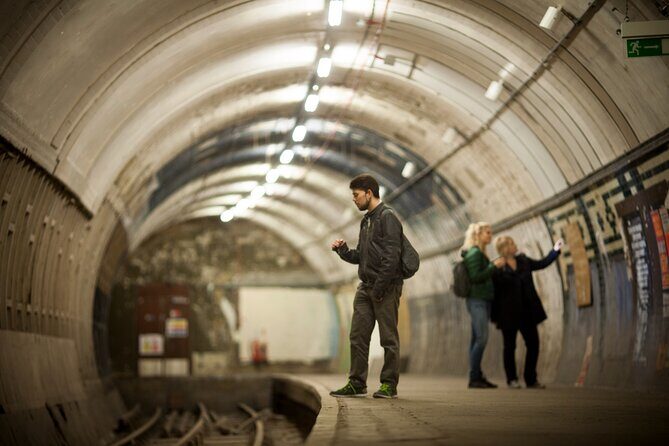
After the early orientation, the tour moves into the heart of what makes Aldwych special: abandoned platforms and tunnels plus inter-connecting walkways that connect sections of the station.
This is not a quick stroll through a single room. The route is designed to give you variety: wider spaces that read like platforms, and narrower zones that feel more tunnel-like. The walkways matter because they show how sections relate to each other, instead of treating the station as a set of disconnected exhibits.
A practical consideration: the tour involves a lot of walking, including uneven ground and low lighting. You’ll be moving at a pace that’s steady but not slow. If you want photos, watch your step first, then take pictures.
The Blitz shelter to 1994 closure: history you can connect to
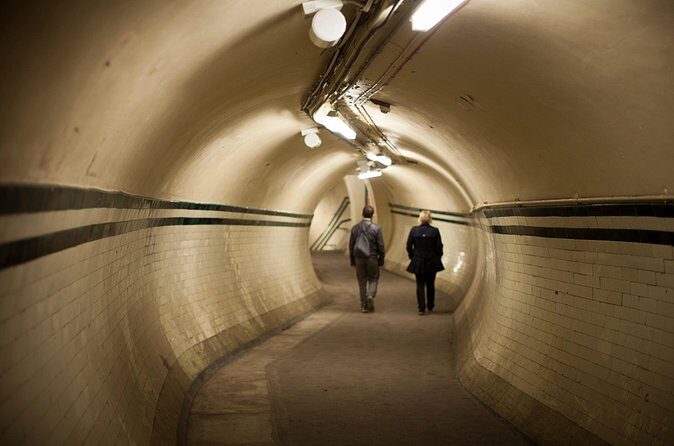
Aldwych has a reputation for myths and memories, but what stands out is how real events shaped its later role. During the Blitz, it provided shelter for Londoners. That historical use adds a weight to what you’re standing in. You aren’t only seeing a derelict station; you’re seeing a space that once served as protection.
Then you zoom out to the bigger timeline: opened in 1907, later closed in 1994 after almost a century of changing purpose. The tour helps you connect those dots without turning it into a lecture.
Why that matters for you: it changes how you interpret the station’s current condition. The emptiness isn’t random. It’s part of a sequence of shifts—use, adaptation, decline, and eventual closure.
Movie and TV sets: Aldwych on screen (and how the tour frames it)
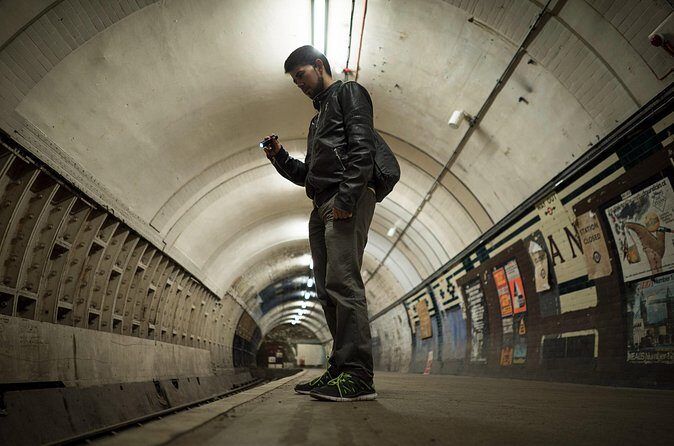
One of the most fun parts is learning about productions filmed at Aldwych. The station has been used for screen work including Atonement (2007), Sherlock (2014), Darkest Hour (2017), and The ABC Murders (2018).
What I like about the way this tour frames those credits is that it links the screen versions to physical spaces you can stand in. When you see tunnels and platform areas up close, you start to understand why filmmakers like places with built-in drama: long sightlines, strong shadows, and the sense of depth that only a real underground site can provide.
It also makes the station feel less like a museum item and more like a working location from another era. You walk through, then you picture a camera crew moving through the same corridors.
Comfort, lighting, and stairs: what to know before you go
This tour is rated for moderate physical fitness, and you should take that seriously. There’s no elevator, and the tour is not step-free. Expect walking up and down flights of stairs, plus uneven ground and low lighting.
Also, tight underground areas mean this tour is not suitable for guests with claustrophobia. Even if you’re generally fine underground, you’ll want to think honestly about your comfort level in enclosed spaces before booking.
For your footwear: open-toed shoes aren’t allowed. Leave flip-flops and similar sandals at the hotel. Closed, supportive shoes are the safest choice because you’ll be moving over less-than-ideal surfaces.
Practical rules that make the experience smoother
A hidden station tour runs best when everyone follows the same simple setup. Here’s what you’ll want to plan around:
- No food or drinks allowed on the tour. If you need a snack, do it before or after, not mid-route.
- No luggage or large bags, because there’s no cloakroom. Travel light. A small day bag is usually easier than anything bulky.
- All guests must bring photo ID. Don’t count on a workaround at the start.
- Maximum group size is 25 travelers. That helps the guide manage movement in tight spaces.
One extra tip: wear clothing you don’t mind getting a little dusty. Underground stations can have a different feel and smell than street-level London, and you’ll appreciate being prepared.
Who this tour is best for (and who should skip it)
This is a smart pick if you like London history tied to physical places you can stand in. It also works well if you’re a film/TV fan who likes to connect screen locations to real-world architecture. The combination of Tube infrastructure and movie set stories is exactly what keeps the tour engaging.
It’s also a good fit for travelers who want a guided experience that solves navigation. You’re told where to go and when to move, so you’re not stuck decoding an underground maze.
Skip it if you need step-free access, rely on an elevator, or get anxious in tight enclosed spaces. And if you’re bringing kids: the tour is not suitable for children under 10, and there’s a limit of four children ages 10–15 per adult.
Should you book the Hidden Tube Walking Tour of Aldwych Disused Station?
If you want something genuinely different from the typical London checklist, I’d book it. The access is the selling point: ticket hall areas, original lifts, and abandoned platforms and tunnels connected by walkways, all in a guided route that keeps you oriented.
I’d also book if you’re the kind of traveler who enjoys details: the station’s role during the Blitz, its long life since opening in 1907, and the fact that it closed in 1994. Add in the screen credits for films like Sherlock and Darkest Hour, and you get a tour that feels both historical and surprisingly current.
Pass if your main priority is an easy, comfortable walk with lots of open space. This one involves stairs, low lighting, and tight areas. If that sounds stressful, choose a different London experience that fits your pace and comfort level.
FAQ
Where does the tour start?
The tour starts at Hidden London – Aldwych Station, London WC2R 2ND, UK, and it ends back at the same meeting point.
How long is the Hidden Tube Walking Tour of Aldwych?
The tour lasts about 1 hour 20 minutes. It includes a 75-minute guided tour.
What language is the tour offered in?
The tour is offered in English.
Do I need a mobile ticket?
Yes, the tour uses a mobile ticket.
Is the tour suitable for children?
It is not suitable for children under 10 years old. For children ages 10–15, there is a limit of four children per adult.
Is the tour step-free or accessible by elevator?
No. The tour is not step free, involves stairs, and there is no elevator.
Is the tour suitable if I have claustrophobia?
No. The tour is not suitable for guests with claustrophobia.
Are open-toed shoes allowed?
No. Open-toed shoes are not allowed.
Can I cancel for a full refund?
Yes. You can cancel for free up to 24 hours before the experience starts for a full refund. If you cancel less than 24 hours before, the amount paid is not refunded.