REVIEW · NOTTINGHAM
Lincoln Private Walking Tour
Book on Viator →Operated by Ye Olde England Tours · Bookable on Viator
Lincoln goes in layers, not straight lines. This private walking tour strings together Roman walls, medieval streets, and real power-brokers like Magna Carta—at a pace that still feels relaxed.
I especially like the way your guide brings Lincoln Cathedral and the castle complex to life, not just as big buildings, but as places with jobs to do, people to manage, and rules to enforce. I also love the mix of famous stops and fast side sights, so you keep learning without feeling trapped inside long museum rooms.
One thing to consider: you’ll do some walking uphill—particularly around Steep Hill—so plan for moderate fitness and comfy shoes.
In This Review
- Key moments that make this tour work
- Walking from Roman Lindum to Magna Carta in one smooth loop
- Meeting at St Mary’s Street: easy start, easy end
- George Boole to Brayford Pool: start with ideas, then water and Roman engineering
- High Bridge, Steep Hill, and Lincoln’s medieval street feel
- Jew’s House and St Paul in the Bail: where stories get heavier
- Mint Wall, Newport Arch, and East Bight: Roman Lincoln without the big museum step
- Lincoln Castle: Norman power, two mottes, and Magna Carta coming up fast
- David P J Ross Magna Carta Vault: seeing the original 1215 document
- Victorian Prison inside the castle: the separate system, up close
- Lincoln Cathedral (plus the spire story you’ll actually remember)
- Bishops’ Palace and the cathedral precinct: power, gardens, and a seasonal closure note
- Gates, arches, and the quiet Roman-to-Victorian mix around the city core
- The Roman city wall returns: East Gate north tower
- Price and value: what $183.29 buys you in real-world terms
- Who should book this Lincoln private walking tour?
- Should you book it?
- FAQ
- How long is the Lincoln Private Walking Tour?
- Is this a private tour or a group tour?
- What language is the tour offered in?
- Where does the tour start?
- Is pickup available?
- What kind of fitness level do I need?
- Which ticketed attractions are included in the price?
- Which stops have admission tickets not included?
- Do I need an internet connection for tickets?
- Can I cancel for a full refund?
Key moments that make this tour work
- Private-group attention from Stephen: clear explanations and a fun tone, even when the stories get heavy.
- Roman Lindum landmarks in daylight: quick stops that make ancient Lincoln feel close, not abstract.
- Magna Carta in the Magna Carta Vault: one of the original 1215 documents included as a highlight.
- Castle walls with legendary views: you’re not stuck looking at sights only from the pavement.
- Big indoor value packed in: Lincoln Castle, Magna Carta Vault, Victorian Prison, and Lincoln Cathedral include admission.
- Medieval streets that feel like the city’s spine: Steep Hill and the Cathedral precinct keep the story moving.
Walking from Roman Lindum to Magna Carta in one smooth loop
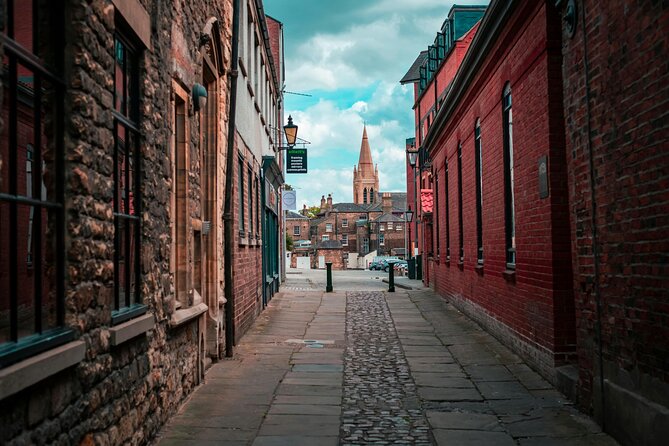
If you like your history in layers—Rome here, medieval Lincoln there—this tour fits your brain fast. You’ll start with people and ideas tied to Lincoln’s modern legacy, then shift into Roman engineering, then swing into the medieval and Norman power centres.
The good part is how it’s paced. Even when you hit major sites, the tour keeps a walking rhythm: you stop, you see, you learn, you move on. That means the city doesn’t feel like a checklist. It feels like a story you can follow on foot.
And because it’s a private tour, your group sets the tone. You can ask questions, slow down at a detail you care about, or just enjoy the views without worrying about other people holding you back.
You can also read our reviews of more tours and experiences in Nottingham.



Meeting at St Mary’s Street: easy start, easy end
You meet at 19 St Mary’s St, Lincoln LN5 7EW. If it’s easier for you, pickup is offered at a central Lincoln hotel or at Lincoln Railway Station.
The tour runs starting at 10:00 am and lasts about 5 hours. Ending back at the meeting point means you don’t have to figure out transport or directions after your last big stop.
This is also offered in English, and you’ll use a mobile ticket. If you want to keep the day simple, that’s a plus—no paper scramble, no last-minute ticket printing.
George Boole to Brayford Pool: start with ideas, then water and Roman engineering
The tour opens with the George Boole statue, a quick introduction to Lincoln’s link to the digital age. It’s tied to George Boole, born in Lincoln in 1815, who invented Boolean logic—the kind of AND/OR/NOT thinking that powers modern computing.
From there, you head to Brayford Pool, described as the first inland harbour in the UK built by the Romans and still in use. This stop matters because it shows you Roman Lincoln wasn’t just ruins—it was infrastructure. The pool is a real working waterway, so the Roman story feels grounded.
Both of these are short stops, but they do something important: they set up the pattern for the entire tour. Modern impact, Roman problem-solving, and medieval consequence.
High Bridge, Steep Hill, and Lincoln’s medieval street feel
Next up is High Bridge, often described as the oldest bridge in the UK that still has occupied buildings on it. It’s similar in spirit to the iconic London Bridge idea—except here you’re seeing how daily life and old engineering shared the same space.
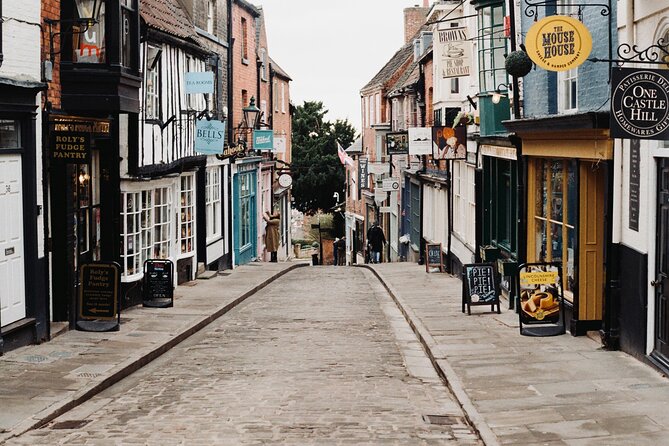
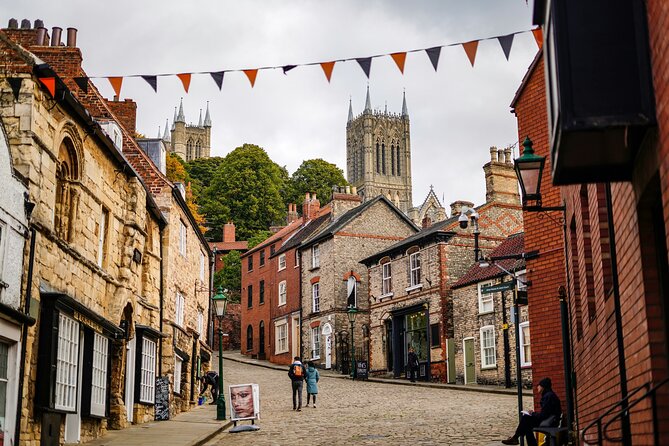
Then the tour turns toward Steep Hill, often considered the heart of medieval Lincoln. Yes, it’s a climb. But the payoff is that the street is lined with old shops and the views get better as you go. This is one of those parts where you stop just because the city opens up.
Practical advice: wear shoes with grip. The slope is real, and you don’t want to feel like you’re fighting the ground while trying to enjoy the architecture.
Jew’s House and St Paul in the Bail: where stories get heavier
You’ll pass through the area of Jew’s House, tied to a tragic chapter in medieval Lincoln’s history—persecution of Jews. This stop is a reminder that the Middle Ages weren’t only pageantry and stonework. There’s a human cost behind the buildings.
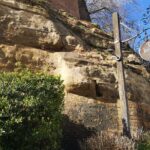
You’ll also visit The Well at St Paul in the Bail, where you can look through glass coverings at an old Roman wall that was used for perhaps 600 to 800 years. That long reuse is a big deal. It shows continuity, not just change—Roman construction, then later generations using and repurposing the same hard foundations.
This section works well if you like historical context. The guide’s job here is to connect brick and stone to events you might not know.



Mint Wall, Newport Arch, and East Bight: Roman Lincoln without the big museum step
Lincoln gets more Roman as you move along. You’ll see the Roman Mint Wall, a rare example in Britain of a non-defensive Roman wall. It’s described as originally about 9 meters high and roughly 1 meter thick, and it would have been part of the north outer wall of the basilica—the Roman town hall.
Then come the gateways. Newport Arch is the only remaining Roman arch you can drive through on a regular road network in Britain. There’s also a cute pedestrian tunnel involved, so you can experience the arch from a foot-level perspective without feeling like you’re just snapping a photo at speed.
Finally, East Bight offers a quieter view down a lane: part of the old Roman City Wall and the location of the Roman castellum aquae and ditch. This is one of those “small stop, big payoff” moments because it fills in the city’s practical Roman layout—where water-related functions fit into the broader plan.
Lincoln Castle: Norman power, two mottes, and Magna Carta coming up fast
The tour’s biggest anchor comes at Lincoln Castle. This Norman castle is built on an older Roman fortress, and it’s rare in one key way: it has two mottes.
You’re also here for Magna Carta. The castle is home to one of only four original copies of the Magna Carta from 1215, which sets up the next stop perfectly.
You’ll walk the castle walls for views over Lincoln and the surrounding countryside. This matters because Lincoln’s geography helps you understand the city’s importance. It’s easier to see why people wanted control of this spot when you can look out from the walls.
Lincoln Castle includes admission on this tour, so you’ll actually get inside rather than just circle the exterior.
David P J Ross Magna Carta Vault: seeing the original 1215 document
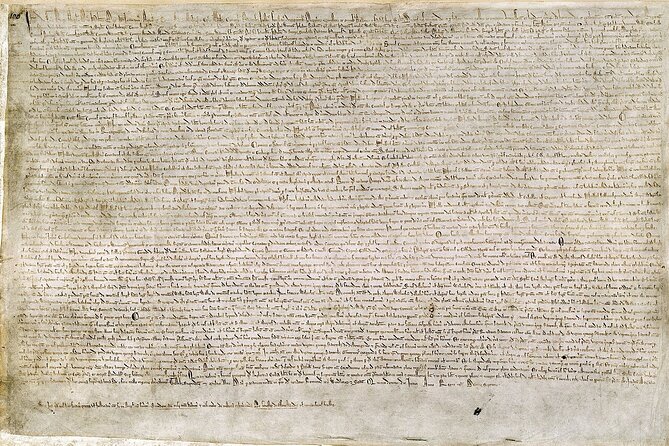
After the castle walls, you go to the David P J Ross Magna Carta Vault. Here you see an original Magna Carta document from 1215—an agreement that the barons forced King John to sign.
This is one of the reasons the tour feels worth it. It doesn’t stop at the slogan version of history. You can stand near the real paperwork that helped set off wider ideas about rights and governance that still echo today.
This admission stop is included, so you’re not paying extra at the desk and worrying about entry windows.
Victorian Prison inside the castle: the separate system, up close
The next included stop is the Victorian Prison. It was designed for the separate system, isolating prisoners from the corrupting influence of other prisoners (that was the Victorian logic).
You’ll hear the reasoning behind the setup: the belief that isolation would encourage reflection and repentance—and, more importantly, reform. It’s a hard story, and it’s also a good one to see with a guide, because the place explains itself but still needs the context to land.
The prison held men, women, and children as young as eight from 1848 to 1878, covering crimes ranging from stealing a waistcoat and Bible to highway robbery and murder.
Here’s the practical consideration: this is an emotionally heavier segment. If you prefer lighter history, I’d still recommend it—but pace yourself and give your brain a break with the outdoor viewpoints on the castle grounds when you can.
Admission is included as part of the castle complex on this tour.
Lincoln Cathedral (plus the spire story you’ll actually remember)
You’ll move from castle to faith-and-power at Lincoln Cathedral, with admission included. It was built on an older Saxon church and originally constructed around 1088.
One detail I think you’ll remember: for centuries, it was the tallest building in the world—until the central spire collapsed. It’s the kind of fact that turns “nice cathedral” into “how did they even…?”
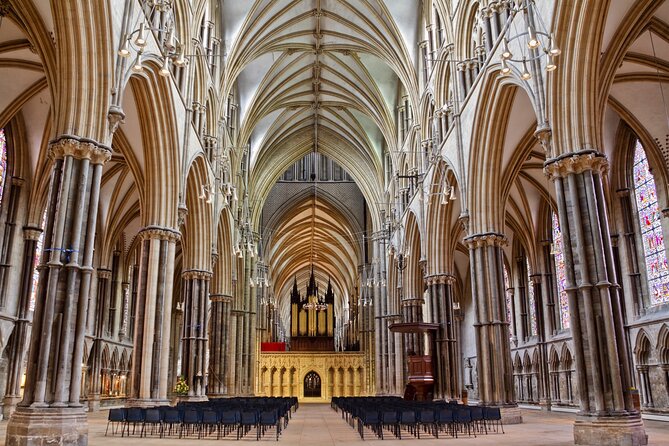
Inside and out, Lincoln Cathedral is described as one of the fantastic Gothic buildings in the world, and the tour includes time to go inside. This isn’t a quick glance at the door. You’ll get the chance to see the main interior impression.
Bishops’ Palace and the cathedral precinct: power, gardens, and a seasonal closure note
Just near the cathedral sits the Lincoln Medieval Bishops’ Palace, once among the most important buildings in the country. The tour frames it as the administrative centre of the largest diocese in medieval England, stretching from the Humber to the Thames.
You’ll explore buildings and ruins, including the undercrofted East Hall and chapel range and entrance tower connected to Bishop William Alnwick. The tour also highlights restored heritage gardens and vineyards.
One key logistics note from the tour details: The Old Bishops Palaces closes from early November to Spring. If your dates land in that window, confirm what you’ll do instead, since that stop may not be available.
Admission is included for this visit when open.
Gates, arches, and the quiet Roman-to-Victorian mix around the city core
After the big sites, the tour keeps orbiting the cathedral area and city gates.
You’ll see Exchequer Gate, described as the entrance to the Cathedral precinct. It’s a beautiful building with a fascinating history behind it, but it’s also a signpost: in Lincoln, the line between architecture and administration is thin.
Then there’s Priory Arch, a Victorian replacement for medieval gates on the site, assembled from original medieval materials. That means you’re not just looking at something old—you’re looking at something old repurposed, brick-by-brick, into a later statement.
Next comes Danesgate, where the gatehouse is medieval, but this was the favoured entry route for Viking friends. Even if you’re not a Viking expert, the guide’s job here is to connect the geography to the people who moved through it.
You’ll also spot the Tennyson Memorial Statue in the gardens behind the cathedral. It’s tied to the second most quoted writer in the English language, and it adds a literary beat right before you finish at the city’s outer layers.
The Roman city wall returns: East Gate north tower
To close, you’ll see the North Tower of the East Gate of the Wall of Roman Lindum Colonia. This gateway was once the main route into Lincoln.
It’s a strong finale because it brings the day full circle: you started with a modern inventor’s ideas, and you end with Roman movement and access—how a city welcomes you before you ever reach its core.
Most of the remaining stops here are quick, free moments, but they add up. You leave with a sense of Lincoln’s physical logic: gates, walls, streets, and power centres all linked together.
Price and value: what $183.29 buys you in real-world terms
At $183.29 per person for about 5 hours, this isn’t the cheapest way to see Lincoln. But it isn’t overpriced either, because multiple major admissions are included.
On this tour, admission is included for Lincoln Castle, the Magna Carta Vault, the Victorian Prison, Lincoln Cathedral, and the Lincoln Medieval Bishops’ Palace (when open). Those are not just decorative stops; they’re the core indoor experiences that most people would otherwise pay for separately.
Also, since it’s private, the time is spent where it matters. You’re not sharing your guide with strangers who might drag the pacing. Your guide can keep the story moving from one site to the next—Roman to Norman to medieval England—without you waiting around.
If you’re with friends, ask about the group discount option. The tour details mention it, and private tours sometimes offer better pricing for groups booking together.
Who should book this Lincoln private walking tour?
Book it if you want:
- A guided walk that connects Roman Lincoln, medieval streets, and major indoor sights without feeling rushed.
- A guide who can handle both inspiring stories and darker chapters, then keep the day enjoyable.
- A morning start that gives you time to see Lincoln’s key sites while the light is still nice for views from the castle walls and hills.
It may be less ideal if you dislike climbs, or you want a fully flat route. Steep Hill is part of the itinerary, and the tour only says moderate physical fitness is required.
Should you book it?
Yes—if you’re aiming to understand Lincoln in a single day and you care about seeing the Magna Carta Vault and the castle complex properly.
I’d say go for it especially if you like learning from someone who makes the city feel personal. The tour is run by Ye Olde England Tours, and the guide named Stephen stands out in past feedback for being both informed and genuinely fun. That combo matters on days like this, where you’re juggling Roman walls, Gothic architecture, and a Victorian prison in the same loop.
If your visit falls in the period when the Old Bishops Palaces is closed (early November through Spring), check in about what you’ll see instead so expectations match the day.
FAQ
How long is the Lincoln Private Walking Tour?
The tour is about 5 hours (approx.).
Is this a private tour or a group tour?
It is a private tour/activity, so only your group participates.
What language is the tour offered in?
The tour is offered in English.
Where does the tour start?
The meeting point is 19 St Mary’s St, Lincoln LN5 7EW, UK.
Is pickup available?
Yes. The tour offers pickup from a central Lincoln hotel or alternatively from Lincoln Railway Station.
What kind of fitness level do I need?
The tour calls for a moderate physical fitness level.
Which ticketed attractions are included in the price?
Admission is included for Lincoln Castle, the David P J Ross Magna Carta Vault, Lincoln Cathedral, Lincoln Medieval Bishops’ Palace, and the Victorian Prison. Some other stops are free, while a couple are listed as admission ticket not included.
Which stops have admission tickets not included?
Lincoln Guildhall and Jew’s House are listed as admission ticket not included.
Do I need an internet connection for tickets?
You’ll have a mobile ticket.
Can I cancel for a full refund?
Yes. There is free cancellation, and you can cancel up to 24 hours in advance for a full refund.