REVIEW · PLYMOUTH
Plymouth Pilgrims Self-Guided Walking Audio Tour
Book on Viator →Operated by Stories with Action · Bookable on Viator
Plymouth becomes a story when you walk. This self-guided audio route strings together landmark after landmark, with offline maps and hands-free narration that plays as you reach each point. It’s one of those setups where you can start when you like, pause for photos, and keep going at your own pace.
I like two things the most. First, you get lifetime access to the tour content, with no expiry, so you can reuse it on another trip. Second, the route covers the big-name sights (Mayflower II and Plymouth Rock) plus the quieter, local pieces like the Old Burial Ground and older houses along Summer Street and Court Street.
One thing to plan for: the app expects you to begin at the exact starting spot for automatic playback. If you start even slightly off, the audio may not trigger how you expect and you’ll have to manage the app manually.
In This Review
- Key Highlights to Know Before You Start
- How the Plymouth Pilgrims audio tour works (offline GPS, pacing, start/stop)
- Price and value: what $14.99 buys you in Plymouth
- Starting at 136 Water St and finishing near Plimoth Patuxet Museums
- Stop 1: Plymouth Visitor Information Center to Mayflower II
- Stop 2: Mayflower Society House and Plymouth Rock
- Stop 3: Massasoit Statue, Brewster Gardens, and the Pilgrim Maiden
- Stop 4: Old Burial Ground (Burial Hill) and the oldest houses
- Stop 5: Plimoth Grist Mill, Pilgrim Hall Museum, and the Forefathers Monument
- Finish: Long Beach Rock, the interpretive center, and Plimoth Plantation
- What to do if the audio starts late or the map feels off
- Who this Plymouth Pilgrims audio tour is best for
- Practical tips to get the most from the walk
- Should you book this self-guided Plymouth Pilgrims audio tour?
Key Highlights to Know Before You Start

- Download once, use forever: lifetime access with offline working after you download on strong wifi/cellular.
- Location-triggered stories: audio plays by your position, so you’re not stuck tapping your way through the walk.
- A well-known core route plus depth: Mayflower II and Plymouth Rock sit alongside burial sites, historic houses, and a working grist mill.
- Good pacing built in: it’s about a 1–2 hour recommended walk (with more time if you linger), over 1 mile total.
- Ends at Plimoth Patuxet Museums: you finish near another big anchor, so you can continue exploring without scrambling across town.
How the Plymouth Pilgrims audio tour works (offline GPS, pacing, start/stop)
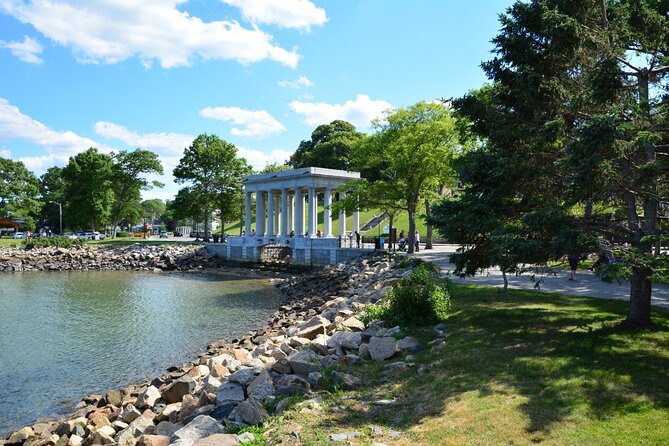
This is a classic self-guided concept, but with a useful twist: the audio isn’t just a list. It plays based on where you are, so your job is basically to walk, look, and listen when the next story kicks in.
Your biggest advantage is the offline setup. The tour app is designed to work without cellular or wifi after you’ve downloaded it. That matters in Plymouth because you may not want to burn battery or hunt for a signal while you’re outside and moving.
In terms of pacing, the route is about 1 mile long with more than 24 audio stories, and the recommended time is around 1 hour—though the overall experience often runs 2 to 3 hours if you stop often. Each stop is roughly timed to let you take in the site and the narration without feeling rushed.
You can also read our reviews of more tours and experiences in Plymouth.



Price and value: what $14.99 buys you in Plymouth
At $14.99 per person, you’re not paying for entry tickets. You’re paying for the guided narration and route logic that helps you connect the dots across multiple landmarks.
That price can feel very fair if you’ll actually listen to the stories and treat this as your main “guide.” It also pairs well with the reality of Plymouth: some places are outside and free to view, and when museums are closed, the audio can still give meaning to what you’re seeing.
The value drops a bit if you mainly want the sights and you don’t care about the context. This walk works best when you’re the type who likes turning a stroll into a story you can follow.
Starting at 136 Water St and finishing near Plimoth Patuxet Museums

You start at 136 Water St, Plymouth, MA 02360. No one meets you at the start—your tour begins when you open the app and start the correct tour version on-site.
You end at Plimoth Patuxet Museums, 137 Warren Ave, Plymouth, MA 02360. Ending near a major cluster is a smart move. If you decide you want to go further after the last audio stop, you’re already in the right neighborhood.
The walk runs through a mix of sidewalks, historic streets, and at least some uphill sections. A key example: the Mayflower Society House is up the hill from Plymouth Rock, so plan your effort accordingly, especially if you’re traveling with seniors or anyone who prefers flatter routes.
Stop 1: Plymouth Visitor Information Center to Mayflower II
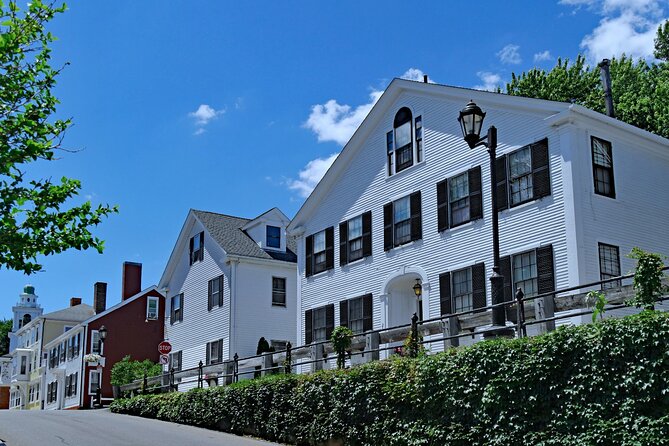
The tour begins at the Plymouth Visitor Information Center. It’s a major hub for travelers coming in from Boston, Cape Cod, and across New England, so it’s a natural place to get your bearings before you dive into the Pilgrim landmarks.
After that, you’ll move into the Mayflower story with Mayflower II. This ship is a well-known reproduction of the 17th-century Mayflower, built in Devon, England in 1955–1956 through collaboration involving Warwick Charlton and Plimoth Plantation. Even if you’ve seen photos before, standing near Mayflower II is different: you start thinking about distance, timing, and how big an event the crossing really was.
What I like here is the sequencing. You start with a visitor context, then hit the most famous visual symbol of the Mayflower voyage.
Stop 2: Mayflower Society House and Plymouth Rock

Across the street and up the hill from Plymouth Rock is the Mayflower Society House, originally built by Edward Winslow. The audio gives you the kind of details that turn a historic building into a timeline: the Winslow family faced shifting fortunes over the centuries, from Revolutionary-era Loyalist associations to later civic and preservation chapters.
You’ll also hear about specific moments tied to the building, including a wedding between Ralph Waldo Emerson and Lydia Jackson. The house also connects to major restoration work in 1898 by architect Joseph Everett Chandler, and later use as a Red Cross headquarters during World War II.
Then comes Plymouth Rock. The audio frames it as the traditional disembarkation site of William Bradford and the Mayflower Pilgrims who founded Plymouth Colony in December 1620.
A quick, practical thought: Plymouth Rock is a magnet, so it can feel crowded depending on the day. The audio helps you slow down and see the moment through the bigger story, rather than just taking the photo and moving on.






Stop 3: Massasoit Statue, Brewster Gardens, and the Pilgrim Maiden

From Plymouth Rock, the walk continues into a set of outdoor stops that feel like they’re marking how Plymouth remembers itself.
First, you’ll reach the Massasoit Statue by Cyrus Edwin Dallin, completed in 1921 to mark the 300th anniversary of the Pilgrims’ landing. The sculpture is meant to represent Pokanoket leader Massasoit welcoming the Pilgrims on the occasion of the first Thanksgiving.
Next is Brewster Gardens, named for William Brewster, one of the original Mayflower passengers. Then you’ll hit the Pilgrim Maiden Statue, a bronze work by Henry Hudson Kitson from 1922, plus a stainless steel sculpture honoring Plymouth’s immigrant settlers from 1700 to 2000. The Pilgrim Maiden focuses on English women whose courage and devotion helped shape the future of the nation.
This section is powerful because it doesn’t just say Pilgrims and ships. It puts faces and names (and leadership) into your walk, so the story feels less like a single moment and more like a long chain of people and decisions.
Stop 4: Old Burial Ground (Burial Hill) and the oldest houses

The Old Burial Ground sits at Burial Hill on School Street. It’s a 17th-century burying ground and the burial site of several Pilgrims. It was listed on the National Register of Historic Places in 2013, which you’ll feel as you move through it: this is one of those stops where the audio timing and your pace matter.
Then the route turns toward older domestic Plymouth, starting with the Richard Sparrow House at 42 Summer Street. This one is described as the oldest surviving house in Plymouth, built around 1640 by Richard Sparrow, who arrived in Plymouth in 1636. If you like history you can touch—or at least stand close to—this is a good stop.
The tour also includes the Hedge House, described as the Plymouth Antiquarian House. It was built in 1809 for William Hammatt, a sea captain. The Hedges bought it in 1830 and lived there until 1919. Again, the story here is about continuity: Plymouth isn’t only 1620. It’s also the centuries that came after.
You’ll also pass the Jabez Howland House at 33 Sandwich Street. The oldest portion was built by Jacob Mitchell in 1667, and later purchased by Jabez Howland, son of Mayflower passengers John Howland and Elizabeth Tilley Howland.
This cluster works best if you pay attention to the small shift from public monuments (like Plymouth Rock) to private survival and family legacy. The audio helps you connect those dots without needing a guide standing beside you.
Stop 5: Plimoth Grist Mill, Pilgrim Hall Museum, and the Forefathers Monument

Now you pivot from homes and burial sites into institutions and public monuments.
Plimoth Grist Mill is a working mill reconstruction on the site of the original Jenney Grist Mill. The idea is practical history: what daily work looked like, and how milling tied into feeding a settlement.
Nearby is the Pilgrim Hall Museum. It’s described as the oldest public museum in the United States in continuous operation, opening in 1824. If you’re the type who likes how artifacts and documents make the stories more concrete, this is a meaningful stop in the route.
Then you’ll see the National Monument to the Forefathers, formerly known as the Pilgrim Monument. It commemorates the Mayflower Pilgrims and was dedicated on August 1, 1889. The audio frames it as the world’s largest solid granite monument.
At this point, a practical note: the tour itself doesn’t include attraction entry tickets. The route may take you past buildings and monuments you can view externally, but if you want to go inside museums like Pilgrim Hall Museum or explore Plimoth Plantation fully, you’ll likely need separate admission. Plan for that if indoor time matters to you.
Finish: Long Beach Rock, the interpretive center, and Plimoth Plantation
The last stretch moves out toward the coast. Long Beach Rock sits on Long Beach, described as a barrier beach—a peninsula separating open ocean from mainland coast. This is a good breather stop. The audio gives context while the scenery does the rest.
From there, you reach Plimoth Plantation, a living history museum founded in 1947 that aims to replicate the original Plymouth Colony settlement established in the 17th century by English colonists known as the Pilgrims. The tour also notes exhibits in an Interpretive Centre focusing on Pilgrims, their faith and values, and connections to abolitionists and slavery, plus the family as a cornerstone of society.
This ending is valuable because it offers a choice. If you’re ready to keep exploring, you’re in the right place. If you’re ready to call it a day, you still walk away with a narrative that connects the shoreline to the colony story.
What to do if the audio starts late or the map feels off
This tour is set up so stories start automatically when you reach the designated points. The downside is also simple: location-based playback depends on your starting accuracy and the GPS signal on that particular day.
So here’s how I’d protect your experience:
- Begin at the starting point and give the app a moment to lock in.
- If audio doesn’t begin when expected, check that you launched the tour version matching your start and direction.
- Keep headphones handy so you don’t miss the cues while you’re walking between stops.
Also remember: you must download the tour while you have strong wifi/cellular. If you only try to download when signal is weak, you can end up with a tour app that can’t access the content when you need it.
Who this Plymouth Pilgrims audio tour is best for
I’d recommend this for you if you want a budget-friendly way to learn the story behind Plymouth’s headline sites without booking a timed guided tour.
It also fits well if you like flexibility. You can pause for snacks, linger at monuments, and then jump back into the next story when you’re ready.
If you have limited mobility, hills are worth considering. This route is over 1 mile and includes uphill sections such as the move from Plymouth Rock toward the Mayflower Society House. If walking pace is a concern, you may want to take breaks often and plan for slower movement.
Practical tips to get the most from the walk
- Bring headphones/earbuds. Audio is the whole point here.
- Download the app on strong wifi/cellular before you start, so the offline experience actually works.
- If you’re traveling as a couple, you can split the tour by sharing one device and splitting headphones, which helps stretch the value.
- Plan for museums separately. The tour doesn’t include attraction admission, so decide ahead of time whether indoor time matters.
Should you book this self-guided Plymouth Pilgrims audio tour?
Book it if you want one ticket that turns a self-paced stroll into a guided narrative, especially if you plan to spend time at Mayflower II, Plymouth Rock, Burial Hill, and the historic houses along the route. The offline design and lifetime access make it easy to fit into real travel days, including off-season visits when you might not be able to rely on attractions being open.
Skip it if you’re hoping the ticket covers museum entry, or if you prefer a strictly easy, flat walk. And if you know you get frustrated with GPS-based apps, you’ll want to be extra careful about starting at the exact first story point and managing playback from the app.
If you do book, you’re basically buying a story map for Plymouth. You’ll get a lot more out of Plymouth when you don’t just look at the landmarks—you follow the names, the dates, and the connections as you walk between them.