REVIEW · NEWQUAY
Private Family / Small-Group Surf Lesson (max. 4) in Newquay.
Book on Viator →Bookable on Viator
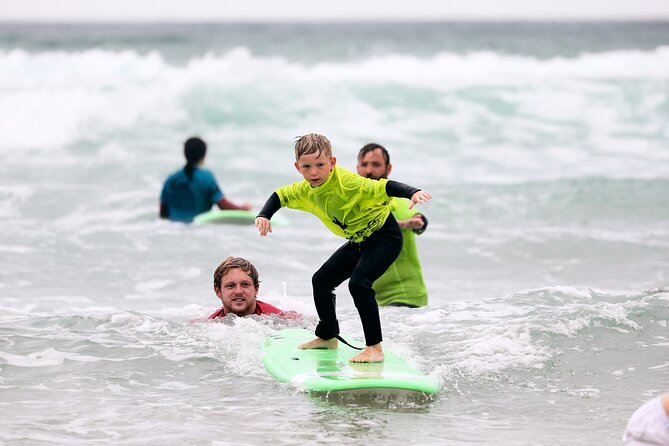
Surfing lessons are better when you’re not queuing. This private max-4 family surf lesson in Newquay focuses on hands-on coaching and a pace that fits your group, with an approach that gets first-timers standing quickly. I like the mix of beach instruction (around 20 minutes) and then lots of time in the water, plus the fact that you can have a proper conversation with your coach instead of watching someone else wait their turn.
For me, the standout is the instruction style: in beginner sessions, coaches use a method that has you holding the tail of the board while you learn how to get up to your feet. You’ll also get the included comfort stuff that makes the post-surf part less miserable: hot showers and access to the surf school’s changing rooms. The main thing to consider is that timing depends on tides, and surfing is subject to favourable conditions, so you’ll want a little flexibility in your day.
In This Review
- Key things I’d plan around
- Why a max-4 private surf lesson feels different in Newquay
- Getting kitted out at Escape Surf School by Belushi’s
- A tide-timed, ~2-hour session that keeps momentum
- Stop 1: Towan Beach and the skills foundation
- Stop 2: Newquay Beach for more wave attempts
- Coaching style: calm, encouraging, and very hands-on
- What you’ll learn: control, safety, and progression in one session
- Value for money: $301.64 per group up to 4
- Where it fits best: who this lesson is for
- Should you book this Newquay private family lesson?
Key things I’d plan around
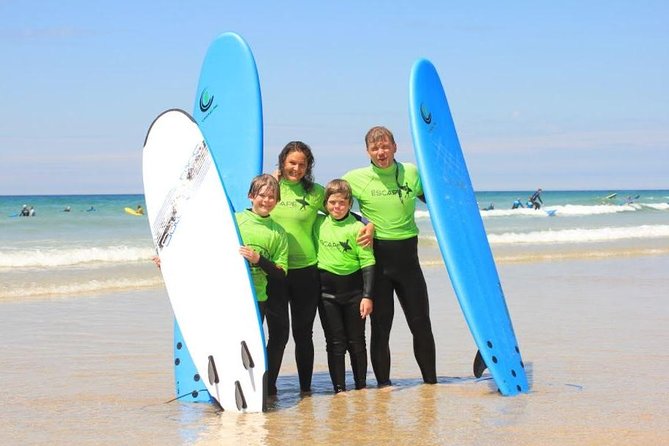
- Max 4 people means more wave attempts and more direct feedback in the water
- 20 minutes on the beach first, then coaching shifts to hands-on wave time
- Beginner-friendly board setup helps you get to standing faster
- Tide-timed start means your exact start time is confirmed after booking
- Hot showers and changing rooms keep the whole experience comfortable
Why a max-4 private surf lesson feels different in Newquay
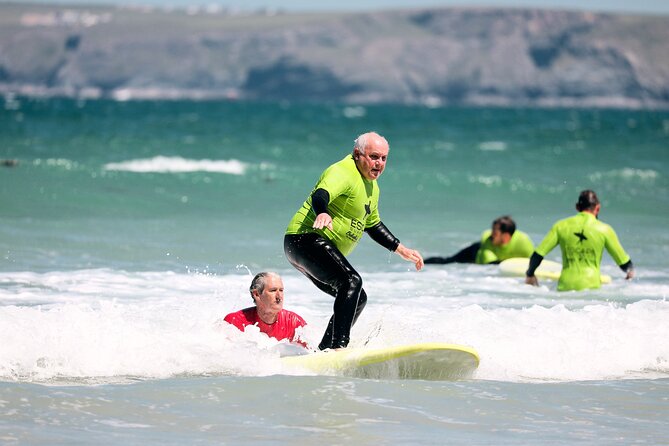
Newquay has a reputation for surf, which is great… and also means you can see plenty of people trying to learn at the same time. With a private family/small-group lesson limited to four, you avoid the circus feeling. Instead, your coach can watch what you are doing and fix one thing at a time.
That matters because surfing looks simple until you’re actually balancing on a moving board. With a small group, you’re not stuck waiting while someone else borrows the coach’s attention. Your session stays active, and you’ll get feedback quickly enough to actually use it on the next wave.
This setup also helps families. Kids often learn best when they feel the lesson is theirs, not a shared “group rhythm.” And with adults in the mix, the coach can adjust explanations so everyone understands what matters: safety, control, and how to read what the ocean is offering.
You can also read our reviews of more tours and experiences in Newquay.

Getting kitted out at Escape Surf School by Belushi’s
The meeting point is Escape Surf School on the Seaview Terrace at Belushi’s, 35 Fore St, Newquay (TR7 1HD). The advantage of meeting at a built-up, easy-to-find location is simple: you can get your bearings fast, and you don’t have to hunt down changing space before you start.
The lesson includes key gear:
- a surfboard and a wetsuit
- boots/gloves if required
- access to hot showers and changing rooms
So you’re not arriving trying to figure out rental sizes or where to warm up after. You can also keep your focus where it belongs: learning, not logistics.
Also, it’s an English-led experience and you’ll have a mobile ticket. If your group includes kids, this kind of simple check-in usually makes the first 10 minutes less stressful.
A tide-timed, ~2-hour session that keeps momentum
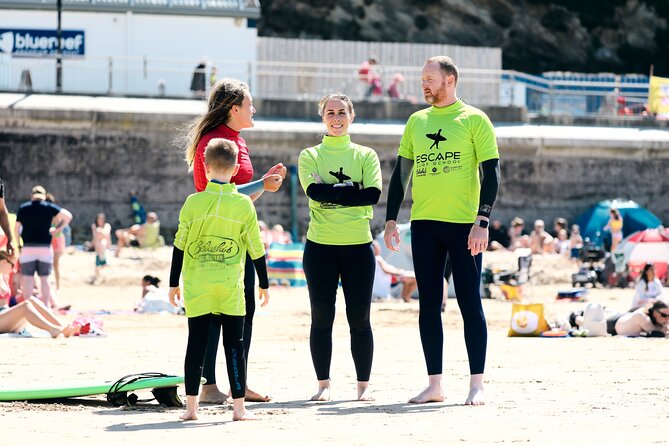
The session runs for about two hours, with the exact start time confirmed after booking based on tide times. That’s not just a scheduling detail; it affects the whole lesson.
Surfing conditions change with the tide, and a coach will choose timing so you spend more of the lesson actually catching waves. In other words, the tide-based start helps the lesson stay productive instead of turning into a long wait for the sea to cooperate.
Here’s the structure you can expect:
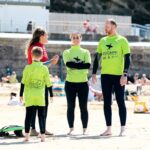
- around 20 minutes of beach time for technique, skills, and safety
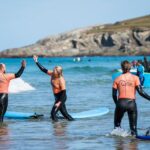
- the rest of the session in the ocean with close coaching from your own surf coach
When you book this kind of lesson, you’re buying back time and attention. Instead of bouncing around, you get a plan that moves from basics to doing, with coaching that follows you into the water.
Weather matters too. If conditions are poor, you’ll get an option to choose an alternative date or receive a full refund. That’s important in coastal spots where wind, swell, or visibility can change quickly.
Stop 1: Towan Beach and the skills foundation
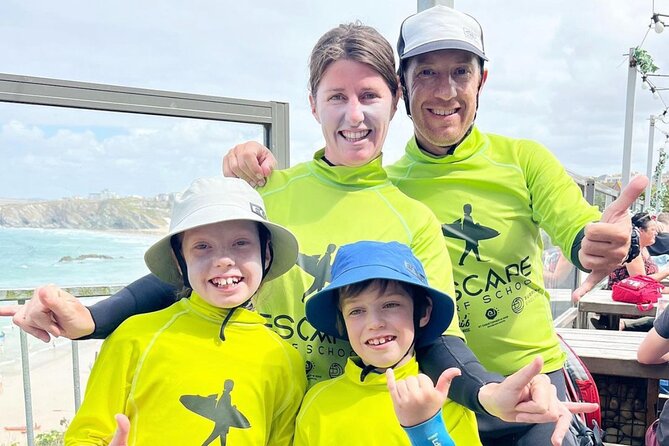
Your lesson starts at Towan Beach. Even if you’re brand new, expect the coach to use this early part to set the basics so you can actually stand up safely and with control.
Beach time is where the coach helps you understand the fundamentals without overwhelming you. For beginners, that usually means:
- how to handle the board in water
- what body position helps you balance
- and how to move from lying/small paddling motions to a controlled stand
One detail I really like from how this school teaches beginners is the board method. Coaches use a technique that involves holding the tail of the board while you learn how to get to your feet. The logic is straightforward: it gives you a stable reference point while you figure out the stand, so you’re not flailing for long stretches.
If you’re an already-riding surfer, the beach segment can focus more on refining technique and safety cues. Either way, Towan Beach sets the tone: you’re not thrown straight into the ocean without a plan.
A small consideration: beach instruction also means you’ll experience the typical coastal weather—wind, spray, or chill—while you wait for the right moment to get out. Bring layers you can control, since you’ll be moving from warm-up to wetsuit to ocean conditions.
Stop 2: Newquay Beach for more wave attempts
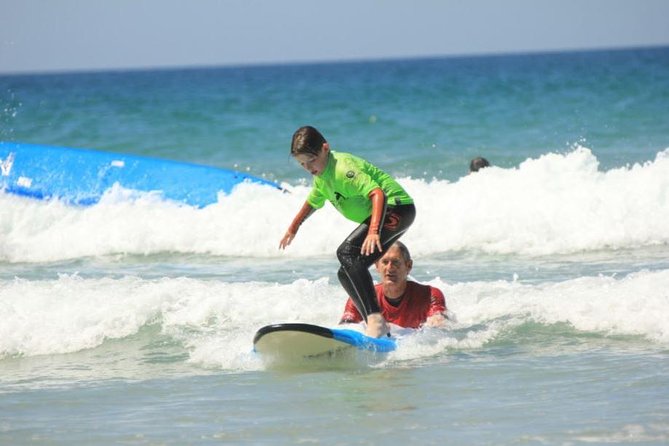
After Towan Beach, the session continues at Newquay Beach. This is where you put the lesson into action with additional attempts in the water.
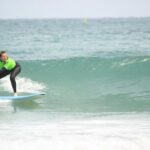
For first-timers, the goal is usually simple and satisfying: get you catching waves enough to feel like surfing is real, not theoretical. With max-4 coaching, you often get repeated chances to try the same skill with short, specific corrections—then the coach nudges you toward the next step.
For experienced surfers, the coaching focus shifts toward the stuff that separates “I stood up” from “I can ride on purpose.” The session can include:
- improving paddling
- practicing turning
- and learning how to read the ocean for better wave choices
One reason I think this matters for families and mixed-skill groups is that the coach can tailor feedback without turning the lesson into a compromise. Kids can work on standing and basic control, while an older teen or adult can get pointed at paddling and turning improvements.
You’ll also get support if things get wobbly. In the instructors I’ve seen highlighted—people like Mike and Jack—there’s a consistent theme: calm reassurance when something goes wrong, plus practical help getting back up and back to surfing quickly. That kind of “keep going” coaching can change the whole mood of a session.
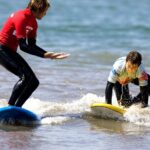

Coaching style: calm, encouraging, and very hands-on
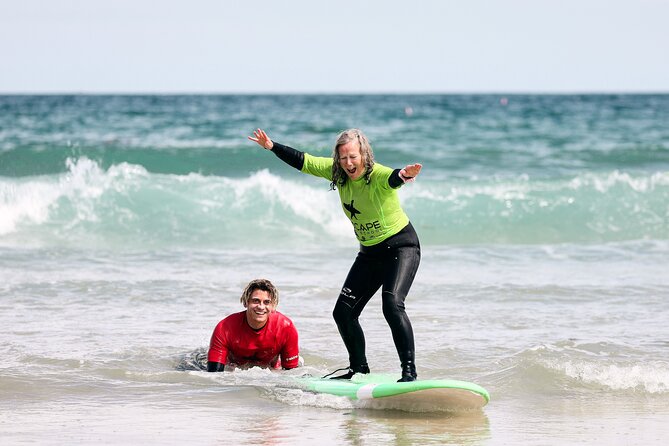
The instructors are a big part of why this lesson lands so well. Names that come up repeatedly include Mike, Jack, Henry, Lindsay, Richard, and Sam. While coaching styles vary by person, the pattern is consistent: clear explanations, patience, and encouragement that doesn’t feel forced.
Here’s what that means for you in real terms:
- If you freeze when a wave arrives, the coach can reset you step-by-step.
- If you’re too tense, the coach can help you relax into better balance.
- If you’re progressing faster than expected, the coach can adjust so you don’t get stuck doing the same drill for too long.
One small but meaningful detail: because it’s a private group, you can ask questions as you go. Instead of saving questions for the end, you can clarify what the coach means in the moment—then apply it straight away.
And when you have kids in the group, safety coaching isn’t a lecture. It becomes part of how the session runs, so the experience feels controlled even when it’s messy and fun.
What you’ll learn: control, safety, and progression in one session
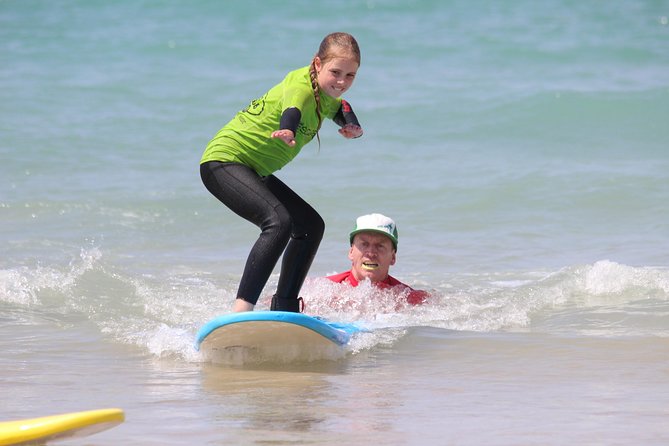
Most surf lessons have a goal like stand up once. This lesson is built around control and getting you to the point where you can do more than a single accidental ride.
For first-timers, you should expect to learn the core skills needed to surf with control and safety. Then the water time is where you practice the steps until they feel more natural.
For returning surfers, the lesson can focus on improving:
- paddling efficiency (so you’re not stuck out the back)
- turning technique (so you can shape your ride)
- reading the ocean (so you choose better waves)
The real advantage of a well-structured private lesson is that your coach can correct small issues that block progress. A tiny adjustment—stance, timing, paddling angle—can make you feel like you’ve unlocked the session. And because you’re in the water for most of the two hours, you get enough repetitions to actually absorb the changes.
Value for money: $301.64 per group up to 4
The price is listed at $301.64 per group, up to four people, for an approximate two-hour lesson. That pricing is a big deal because it’s not per person. If you fill all four spots, the cost per head drops a lot compared with individual lessons.
It’s best value when you’re a:
- family (parents + one or two kids)
- small friend group who can actually travel together
- multi-generation group where not everyone surfs at the same level
Also consider what you’re getting for the money: board and wetsuit included, plus hot showers and changing rooms. Those “small” extras matter because they reduce the hassle after you’re cold, wet, and tired. Souvenir photos aren’t included, but that’s optional rather than a mandatory upsell.
One more practical note: this kind of session is often booked ahead. The average booking window is around 62 days in advance, so if you’re aiming for a specific week, early booking helps you lock in the timing that works with tides.
Where it fits best: who this lesson is for
This surf lesson is designed for children from age 8 and up, and it asks that kids can swim at least 50 metres. Children must be accompanied by an adult, which makes sense for safety and support in and out of the water.
There’s also a moderate physical fitness requirement, which usually means: you don’t need to be an athlete, but you should be comfortable enough to handle wetsuit time, paddling, and getting up repeatedly over the session.
If your group includes someone who can swim and someone who is still learning, the coach can adapt the experience—so you’re not stuck picking between total beginner and total advanced.
If your group includes non-swimmers or younger kids who can’t meet the swim requirement, this probably isn’t the right fit. In that case, you’d want a different type of lesson that matches your group’s comfort and ability level.
Should you book this Newquay private family lesson?
Book it if you want a surf session that feels personal: max-4 coaching, lots of time in the water, and a plan built around getting you standing and progressing. It’s especially appealing for families because it combines coaching with practical comfort (hot showers, changing rooms) and keeps the group moving instead of waiting around.
Skip it only if your group can’t meet the swim requirement or you truly can’t be flexible about start times based on tide and conditions. Surf is weather-driven, and this lesson follows that reality.
If you do meet the requirements, you’re buying a high-focus experience in a place where learning to surf can otherwise feel crowded. And when the instructor keeps things calm—whether it’s Mike, Jack, Henry, or another coach in the team—that calm atmosphere is often what turns a first attempt into an I-can’t-believe-I-did-that moment.