REVIEW · SOUTHAMPTON
Private Walking Tour of Southampton
Book on Viator →Operated by Travelusion Tours · Bookable on Viator
Southampton can feel big, but this walk makes it personal.
You get a private route led by a Ph.D. historian or expert guide, with history tied to what you still see today. Two things I really like: the itinerary links Tudor, Mayflower, and Titanic into one clear story, and the guides bring a friendly, question-friendly pace that works even if you want to slow down. One possible drawback: parts of the tour depend on good weather, so if skies are rough you’ll want a bit of flexibility.
The stops are short and well-chosen, so you’re not forced to rush through major landmarks. I also like that the tour respects the tone of memorial sites while still giving practical, human explanations of why Southampton mattered. If you’re expecting a long, exhaustive tour, this one is more focused and time-efficient than that.
You start at Bargate on High Street and finish at East Park above Bar St, which is a very tidy way to sample central Southampton. Expect a walk that’s easy to follow, with plenty of chances to ask about dates, buildings, and connections between centuries. If you want to max out time in the city, it helps to pair this with a second activity right after, since the guided portion is built around brief stop times.
In This Review
- Key Highlights You’ll Actually Feel on the Ground
- Starting At Bargate: A Simple Way to Get Your Bearings Fast
- How a Ph.D.-Led Private Guide Changes the Whole Experience
- Tudor House and Garden to Town Quay: The Port City Before the Famous Voyages
- Holyrood Church Remains and the Dolphin Hotel: Seeing Georgian Southampton in Plain Sight
- Titanic Engineers and the WW1 Cenotaph: Memorials With Meaning, Not Just Photos
- Andrews East Park and Isaac Watts: A Calm Finish That Lingers
- Price and Value: What $30.53 Per Person Buys You Here
- What to Expect From the Timing and Walking Pace
- Who This Private Southampton Walk Is Best For
- Should You Book This Private Walking Tour of Southampton?
- FAQ
- How long is the private walking tour?
- Is this tour really private?
- What language is the tour offered in?
- Where do we start and end the tour?
- Do I need to pay for entry tickets at any stops?
- What is included with the booking?
- Does the tour run in bad weather?
- Can I cancel for a refund?
- Is the meeting point near public transportation?
- Are service animals allowed?
Key Highlights You’ll Actually Feel on the Ground
- Ph.D. historian or expert guide: You get a guide who can explain the why behind the what.
- A private route for just your group: No merging, no waiting for strangers to catch up.
- Seven short stops with a clear theme: Tudor to Mayflower to Titanic to WW1, all tied together.
- Memorial-focused, respectful storytelling: Expect tone and context at the engineers memorial and the Cenotaph.
- Mostly free sights with one paid exception: Tudor House and Garden admission ticket is not included.
- Ends in a calm spot for your next move: East Park is a natural finish near the high street.
Starting At Bargate: A Simple Way to Get Your Bearings Fast
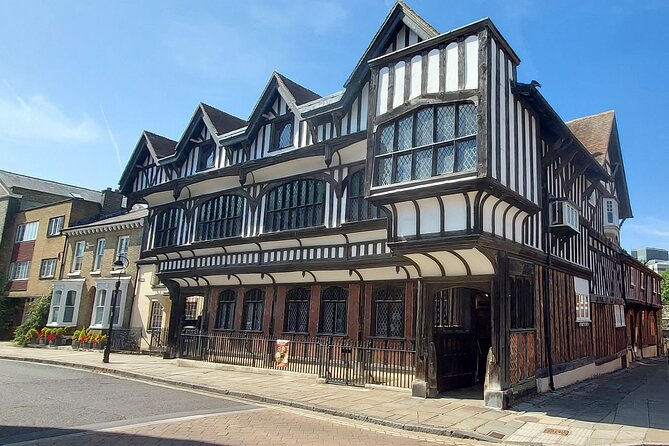
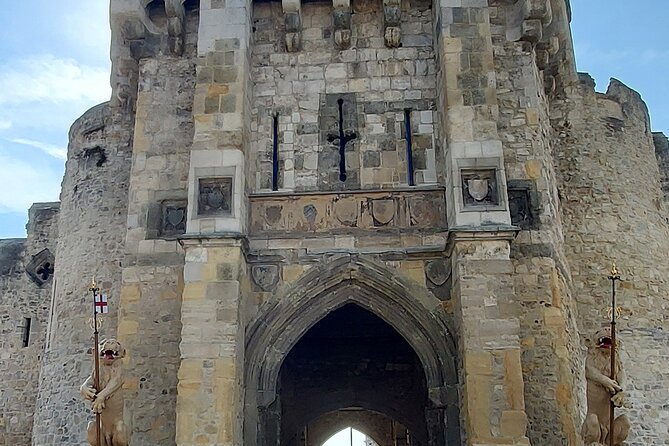
You begin on High Street at Bargate (SO14 2DJ), and you end at East Park just a couple of minutes from the high street (SO14 7DW). That matters more than it sounds. When a tour wraps up close to where you entered the area, you lose less time to wandering and more time to enjoying your day.
This is also a mobile-ticket tour in English, so you should be able to sort it out quickly before you head out. It runs near public transportation, which is useful if you’re arriving from a cruise terminal, the train station, or central Southampton by bus.
What I like about the start-and-finish pattern is that it naturally turns into an easy plan: use the tour to understand the city, then spend the rest of your day doing what you care about most. If you’re the type who wants to know what you’re looking at before you take photos, this format fits.
And yes, you’ll walk. The stop times are short, but you’re moving through central areas where the stories change as the streets change. Wear shoes you’d actually walk in, not just shoes you’d pose in.
You can also read our reviews of more tours and experiences in Southampton.



How a Ph.D.-Led Private Guide Changes the Whole Experience
On paper, this is a walking tour of Southampton’s key sites. In practice, the guide is the main attraction. This tour is led by a Ph.D. historian or other expert guide, and that shows in the way the story connects across centuries.
I’ve noticed a repeat theme in the guide styles associated with this tour: people describe their guides as personable, friendly, and able to answer questions on the fly. Names that have led tours include Sam, Michelle, James, Lillian, Lilly, and Sam. Different personalities, same result: you get an overview that doesn’t feel scripted.
One small detail that pops up in the feedback: some guides match the pace to the group, including for people who request a slower walk. I like that. Southampton’s old core can be compact, but it still takes energy to stand and look at buildings for long stretches. If you need breaks, it helps that the tour can be adjusted.
You’ll also notice how the guide handles memorial sites. The Titanic Engineer Officers Memorial and the original Cenotaph aren’t treated like quick photo stops. The tone shifts to context and meaning, and you walk through those places with the kind of respect that keeps the history from turning into trivia.
If you’re a cruise passenger with limited time in port, this “expert-led, private pace” matters even more. You don’t waste hours trying to stitch together stories yourself, and you’re not dependent on whatever the city sounds like on your own day.
Tudor House and Garden to Town Quay: The Port City Before the Famous Voyages
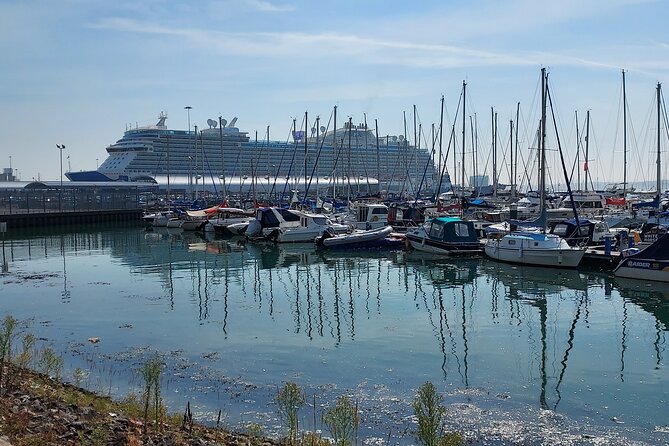
The tour starts with Tudor House and Garden, where you’ll hear about the Tudor house and the importance of its legacy in Southampton. The key practical note: admission is not included for this stop. So if you want to go inside, you should plan for that extra step.
Why this stop works: it grounds you in a period that sets up the rest of the itinerary. Southampton didn’t become famous overnight. You’re seeing an earlier layer of the city’s story, which makes later stops feel more connected than random landmarks.
Next comes the Mayflower Memorial. This one is free to view, and it focuses on why the voyage matters for Southampton and for the wider world. This is one of those spots where a good guide makes a big difference. The memorial is a physical anchor, but the meaning comes from explanation—who left, why it mattered, and how Southampton fits into a much larger historical picture.
Then you move to Town Quay, where you’ll talk about the history of the port and harbour and the importance of Southampton as a cruise capital of the world. This stop is free, and it gives the tour a very modern hinge. You’re not just learning about the past; you’re seeing how the city’s geography and infrastructure helped shape its present-day role.
If you’re the kind of person who likes “then and now” comparisons, Town Quay is where that clicks. You can stand there and feel how a port stays a port, even as ships, industries, and passenger dreams change.
Holyrood Church Remains and the Dolphin Hotel: Seeing Georgian Southampton in Plain Sight
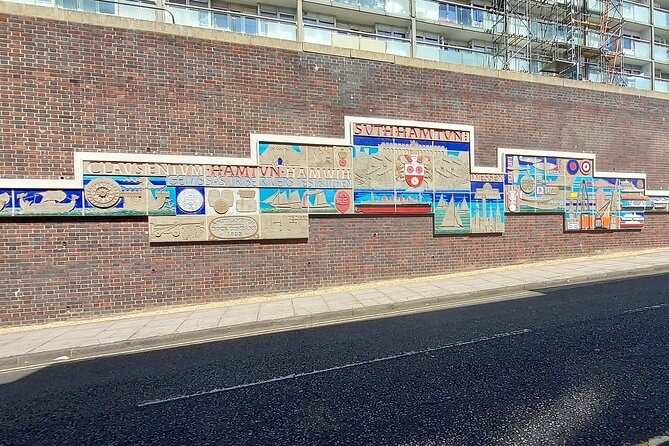
Stop four is a two-part city-layer moment. You’ll see Holyrood Church and its remains, then you’ll look at the exterior of the Dolphin Hotel, described as one of the best examples of Georgian architecture in the city.
This is a smart pairing because it forces you to notice time. Church remains tell you where the city once stood spiritually and socially. The Dolphin Hotel’s Georgian exterior tells you where tastes, wealth, and design shifted afterward.
This stop is free, and it’s also the kind that helps you understand Southampton’s “look.” The city doesn’t only have one era. You’re walking through a set of overlaps—old structures, surviving fragments, and newer statements of style.
One consideration: exterior-focused stops can feel slower if you’re expecting lots of indoor rooms. But if you’re into architecture and urban history, this is a strong use of time. The guide’s job here is to translate what you see into what it meant when it was new, and that’s where the expert format helps.
Titanic Engineers and the WW1 Cenotaph: Memorials With Meaning, Not Just Photos
Stop five brings you to the Titanic Engineer Officers Memorial. It’s free to view, and you’ll learn how the Titanic connects back to Southampton and why that connection matters.
Then stop six takes you to the original Cenotaph in Southampton. You’ll see it and learn how it served as a blueprint for many more to come. This stop also includes WW1 history and its implications for the city.
Together, these stops are the emotional spine of the route. The Titanic memorial doesn’t just point to disaster; it points to Southampton’s role in shipbuilding and maritime life. The Cenotaph doesn’t just commemorate loss; it connects to how remembrance shaped public space, national memory, and later monuments.
I like that this tour doesn’t rush these sections. Memorable tours don’t treat tragedy like a checkbox. You should expect the guide to slow down the story, explain context, and help you understand why these locations are still important today.
Practical tip for these stops: bring a respectful mindset. If you’re the type who likes to talk while walking, save the loud energy for later. Here, the best experience comes from pausing long enough to read what you can and let the guide’s context do its job.






Andrews East Park and Isaac Watts: A Calm Finish That Lingers
You end at Andrews East Park, where you’ll see the statue of Isaac Watts, described as the father of the English hymn. This final stop is free, and it’s a gentle ending that shifts away from ships and wars toward a cultural figure.
Why I think this ending is good: after memorial-heavy points, Isaac Watts gives you something steadier and human-scale. It’s also a satisfying way to round out a city identity story. Southampton is port history and global connections, but it’s also people, ideas, and the kind of everyday culture that persists even when the headline events change.
The tour finishes close to the high street, so you’re not stuck at a dead end. You can keep walking, grab food, or connect to your next plan right away.
And since this is a private format, the guide can tailor the closing moment to your interests. Some guides have offered restaurant and activity suggestions, including pointing people toward a historic pub and a good lunch recommendation. If you’re wondering what to do next, this is the moment to ask while everything is fresh in your head.
Price and Value: What $30.53 Per Person Buys You Here
At $30.53 per person, the tour sits in a range that can feel reasonable—especially because it’s private. When you split the cost across a small group, you’re basically paying for a tailored, expert-led walk instead of paying for a standard group ticket and hoping the guide answers your exact questions.
Here’s what you get for that money, in a concrete way:
- A private guide with a Ph.D. historian or expert background
- A route that hits Tudor, Mayflower, port history, Georgian architecture, Titanic, and WW1 remembrance
- Short stops that keep momentum without turning the day into a slog
- A mix of free sights plus one paid exception
That last point matters. Everything is described as free to view except Tudor House and Garden, where the admission ticket is not included. So your final “all-in” cost depends on whether you want to go inside that Tudor site. Even if you don’t, the rest of the route is built around free-to-view stops.
For value, the big question is not the price itself. It’s whether you’ll use the guide’s context. If you love dates, buildings, and the way global events tie back to one city, you’ll feel the value quickly. If you just want quick photos with minimal explanations, you might prefer a self-guided walk and spend that money on lunch instead.
What to Expect From the Timing and Walking Pace

The route is structured in seven short segments: Tudor House and Garden, Mayflower Memorial, Town Quay, Holyrood Church and the Dolphin Hotel exterior, Titanic Engineer Officers Memorial, the original Cenotaph, and Andrews East Park for Isaac Watts.
Based on the stop times given, the guided segments add up to roughly 55 minutes, with extra walking time between locations. In other words, it’s not a slow, half-day stroll. It’s a focused route designed to deliver meaning fast.
That fits well for:
- cruise stops with limited time
- first-time orientation to central Southampton
- visitors who want a story-driven walk rather than a checklist
It can also work for people who need a calmer pace. One of the strongest pieces of feedback mentioned a guide matching a slower walk request, including getting in many points of interest. If you have mobility needs, you should still plan smart: wear good shoes, keep water handy, and let the guide know what pace works for you at the start.
Who This Private Southampton Walk Is Best For
I’d book this tour if any of these sound like you:
- You’re a history fan, especially maritime and wartime history
- You want one guide to connect Tudor Southampton to Mayflower departures to Titanic legacy
- You like architecture explanations, not just old stones for photos
- You’re traveling with a small group and want the private feel
- You prefer a guide who can answer questions without turning the walk into a lecture
It’s also a great fit for first-timers. Southampton’s old core can be easy to walk, but it’s harder to interpret. A Ph.D.-led explanation turns random buildings into a story you can remember later.
And because guides have described themselves as friendly and personable, it can feel like being shown around by someone who cares about the city, not someone reading from a script. That’s exactly what makes a private walking tour worth it.
Should You Book This Private Walking Tour of Southampton?
Yes, if you want a short, story-driven walk through Southampton’s most meaningful layers—Tudor foundations, Mayflower connections, port power, Georgian architecture, Titanic memory, and WW1 remembrance—told with a guide who can handle details and questions.
I’d say skip or consider something else if you’re looking for a long, museum-heavy day, or if you hate walking outside. This experience depends on weather, and it’s designed as an efficient guided route, not an all-day tour.
If you’re on a tight schedule in Southampton, this private format is a smart use of time. You’ll leave with a clearer sense of how Southampton became what it is—then and now—and you’ll have a much easier time deciding what to explore next on your own.
FAQ
How long is the private walking tour?
The route is made of several short stops, totaling about 55 minutes of guided time based on the segment times provided. Expect a little extra time walking between locations.
Is this tour really private?
Yes. It’s a private tour/activity, meaning only your group participates.
What language is the tour offered in?
The tour is offered in English.
Where do we start and end the tour?
You start at Bargate on High Street, Southampton (SO14 2DJ) and end at East Park above Bar St, Southampton (SO14 7DW).
Do I need to pay for entry tickets at any stops?
Tudor House and Garden requires an admission ticket that is not included. The other listed stops are described as free to visit.
What is included with the booking?
You’ll receive a mobile ticket, and confirmation is received at the time of booking.
Does the tour run in bad weather?
The experience requires good weather. If it’s canceled due to poor weather, you’ll be offered a different date or a full refund.
Can I cancel for a refund?
Yes. There is free cancellation, and you can cancel up to 24 hours in advance for a full refund.
Is the meeting point near public transportation?
Yes, the meeting area is near public transportation.
Are service animals allowed?
Yes, service animals are allowed on this tour.