REVIEW · LONDON
Secrets of the London Underground Small Group Walking Tour
Book on Viator →Operated by Evan Evans Tours · Bookable on Viator
London’s Tube has secrets on foot. This small-group walking tour gives you a smarter, stranger lens on the Underground, turning familiar stations into real stories about design, politics, and tech. I especially like the original-station start and the way guides connect how the system was built with what you see today. One possible downside: it’s a step-heavy walk, so if weather is rough or your legs need breaks, plan carefully.
I also like that the experience feels more intimate than a big “hit the highlights” tour. You’ll cover a tight stretch of central London, with plenty of time to hear station-specific details while you move. The price feels fair for what you get, but you’ll still need to handle your own Tube travel on the day since travel cards aren’t provided.
In This Review
- Key reasons this Tube walk works
- Tube-Themed Views from Baker Street to Westminster
- Price and What You Pay for on the Day
- The Best Part: A Guide Can Turn Stations into Stories
- Stop 1: Baker Street Station and the Metropolitan Railway Origins
- Stop 2: Oxford Street and the Victoria Line’s Cross-Platform Plan
- Stop 3: Green Park and Down Street’s “Opened, Then Gone” Story
- Stop 4: Piccadilly Circus Station and How Two Railway Companies Layered the Plan
- Stop 5: Victoria Embankment Station and the Thames Land-Grab Backstory
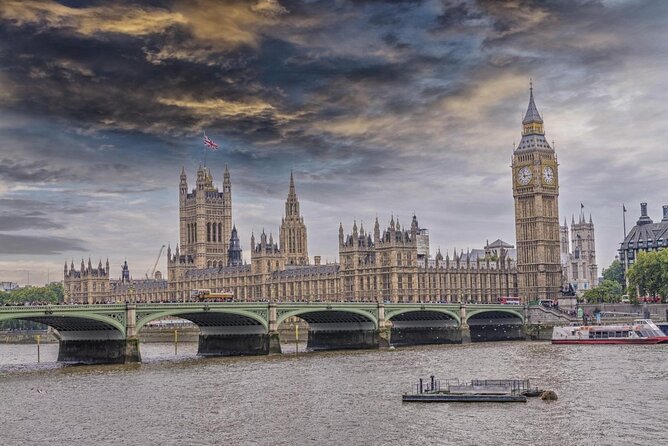
- Stop 6: Westminster Station and the Westminster Bridge Opening
- Haunted, Disused Stations, and Other Roles the Tube Played
- Walking Comfort, Weather Reality, and Who This Tour Fits
- Timing, Small-Group Size, and How to Make It Smooth
- Should You Book This London Underground Walking Tour?
- FAQ
- How long is the Secrets of the London Underground walking tour?
- What does the tour cost?
- Where do I meet the guide, and where does the tour end?
- What day/time does it run?
- Is English the only language offered?
- Do I need a travel card or Oyster/contactless for the Tube?
- Is admission to stations included?
- Is the tour suitable for people with mobility issues?
- How big is the group?
- Can I cancel for a refund?
Key reasons this Tube walk works
- Baker Street’s Underground origins right at the start, including the Metropolitan Railway link
- Stop-by-stop station facts that explain why each place looks the way it does
- Down Street and other closures bring the network’s forgotten layers into focus
- Guide-led storytelling that can include WWII-era context and photos (when led by guides like Angela)
- Small group size (max 25) helps you follow the route without getting swallowed
Tube-Themed Views from Baker Street to Westminster
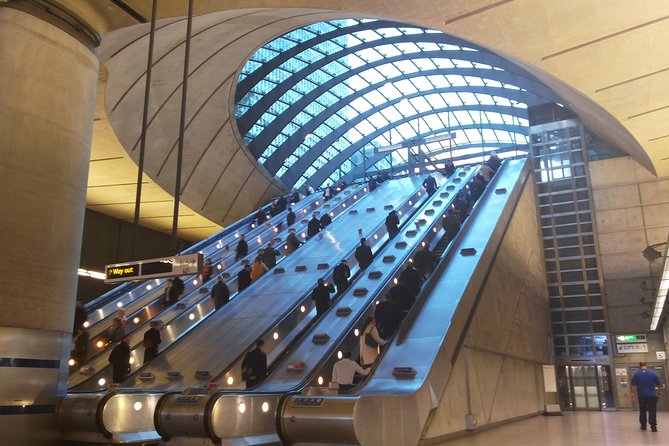
This is a walking tour that treats the Tube like a living museum. You’re not just moving through London—you’re training your eyes to notice things like platform logic, station design choices, and the way different railway lines overlapped over time.
The route is built around famous stations, but the payoff is in the “why.” Baker Street isn’t just a Tube stop—it’s tied to the Underground’s earliest eras. Piccadilly Circus isn’t just a busy interchange—it’s connected to the way multiple railway companies built parallel plans. Even if you’ve used the Tube for years, the tour nudges you to see the system as an engineering project with personalities and deadlines, not just a convenient commute.
Group size matters here. With a maximum of 25 people, it’s easier to stay together, hear the guide over the noise, and actually look at what’s pointed out—rather than constantly craning your neck toward someone twenty paces ahead.
You can also read our reviews of more tours and experiences in London.



Price and What You Pay for on the Day
At $41.13 per person, this is priced like a budget-friendly guided walk. The value comes from two things you can’t easily DIY: a guided “station story” path and the extra context about how the Underground evolved (including abandoned/disused stops and the system’s changing roles).
But you should budget realistically. The tour doesn’t provide travel cards, and the info also flags that contactless or Oyster/Travel Cards valid for Zone 1 are required. If you’re thinking of using a day pass, the tour notes that you should purchase one (Zones 1–2). So treat the ticket cost as the guide + tour experience, not as a full “everything included for your whole day” package.
Also, a few stops are marked as admission not included (while Westminster is marked free). Practically, that means don’t expect separate attractions with pre-booked entry for every stop. You’re here for station architecture and guided interpretation as you walk.
The Best Part: A Guide Can Turn Stations into Stories
You’ll only get so far reading station plaques. What makes this tour click is how the guide shapes the details into a narrative you can remember.
In feedback, guides like John are praised for being enthusiastic and clearly connecting Tube history to the engineering behind it. Peter is singled out for a good sense of humour and historical anecdotes that keep things moving. And Angela is praised for adding depth with photos and specific context like WWII-related experiences tied to the network.
Even if your guide’s style is different that day, the goal is consistent: you should leave with a changed mental map of the Underground—one where each station has a reason it exists, and a clue about what people were planning at the time.
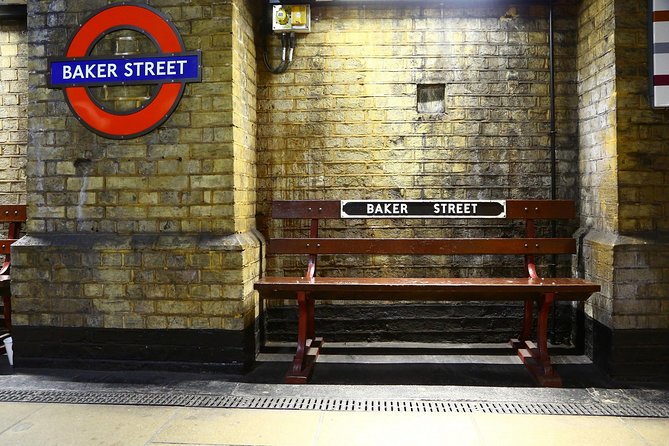
Stop 1: Baker Street Station and the Metropolitan Railway Origins
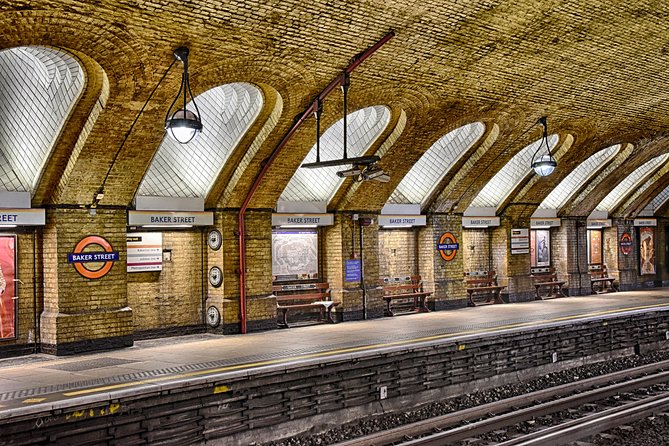
You start at Baker Street Underground Station, at an address on Marylebone Road near the Underground’s central bustle. This is a strong starting move because it anchors everything in the Underground’s earliest story.
Here’s the key idea the tour builds: Baker Street Station connects to the Metropolitan Railway, described as the world’s first underground railway. That matters because you’re not just learning names of stations—you’re learning the Underground as an early civil engineering gamble: build underground, connect neighborhoods, and make it work in real tunnels and real cities.
What to watch for while the group pauses: don’t treat the station like a single hallway. Station environments often show layers of development—older sections beside later upgrades. Even if you can’t see everything from street level, this is the kind of place where the guide’s context helps you “read” the space instead of just passing through it.
Practical note: you’ll likely be adjusting to the pace right away. If you’re someone who likes photos, this is a good early stop because people often aren’t fully warmed up to the route yet.
Stop 2: Oxford Street and the Victoria Line’s Cross-Platform Plan
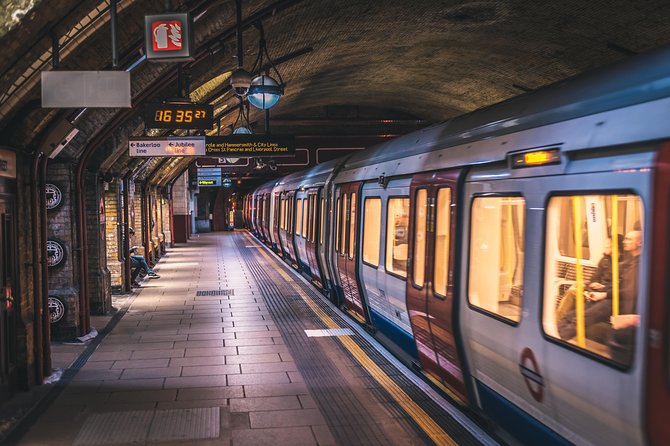
Next up is Oxford Street in the Underground world: Oxford Circus Station. The tour focuses on the line-planning logic behind the station, which is the sort of thing most visitors never think about when they’re just transferring quickly.
You’ll hear how construction began in 1962 on the initial Walthamstow to Victoria section. The story includes that cross-platform interchange was expected at Oxford Circus, and then the Victoria line platforms opened on 7 March 1969. The station’s evolution is framed as an extension sequence from Warren Street to Victoria, which helps explain why this area became such a major junction.
Why this stop is worth your attention: junctions like Oxford Circus feel chaotic when you’re moving through them. But the tour shows that much of the complexity is planned—shaped by interchange goals and expansion decisions. That gives you a new way to understand why crowds flow the way they do.
If you’re short on patience for crowds, this is the place to keep your expectations realistic. It’s a central interchange, and you’ll be sharing space with everyone else using the Tube.






Stop 3: Green Park and Down Street’s “Opened, Then Gone” Story

Then the tour heads to Green Park, focusing on Down Street Station—a station with a start, a serving role, and an eventual closure that’s easy to overlook unless someone points it out.
The key facts you’ll hear are specific: Down Street was opened in 1907 by the Great Northern, Piccadilly and Brompton Railway. It was served by what later became the Piccadilly line, positioned between what’s now Green Park (formerly Dover Street) and Hyde Park Corner. And it closed in 1932 due to a lack of patronage, plus its proximity to other stations.
This is the kind of stop that flips a common assumption. You might think the Tube network only grows by adding stations. But stations also disappear when they don’t fit the demand patterns. Learning why a stop shuts down helps you see the network as a system that gets redesigned by real-world usage—not just by map-makers.
In a tour like this, Down Street works because it adds texture. It’s not all famous “forever” landmarks. You get the network’s second life: what gets built, what gets used briefly, and what gets left behind.
Stop 4: Piccadilly Circus Station and How Two Railway Companies Layered the Plan
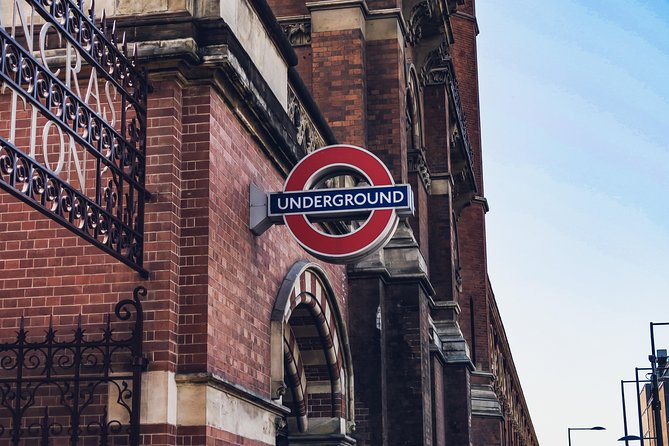
Piccadilly Circus Station is another big-name stop, but the tour uses it for a different lesson: how overlapping railway lines created a layered station identity.
You’ll hear that the station was opened on 10 March 1906 by the Baker Street and Waterloo Railway (now the Bakerloo line). Then the platforms of the Great Northern, Piccadilly and Brompton Railway (now the Piccadilly line) opened later, on 15 December 1906. That staggered timeline shows how multiple groups built and connected in phases.
What I like about this stop is that it turns the station from a place you enter into a place you understand. Once you know there are different construction timelines and different operators behind what you see, the station starts to make more sense—even when it feels crowded or confusing.
The main “drawback” here is sensory: Piccadilly Circus can be loud and busy. Keep your focus on what your guide is indicating, rather than trying to absorb everything at once.
Stop 5: Victoria Embankment Station and the Thames Land-Grab Backstory
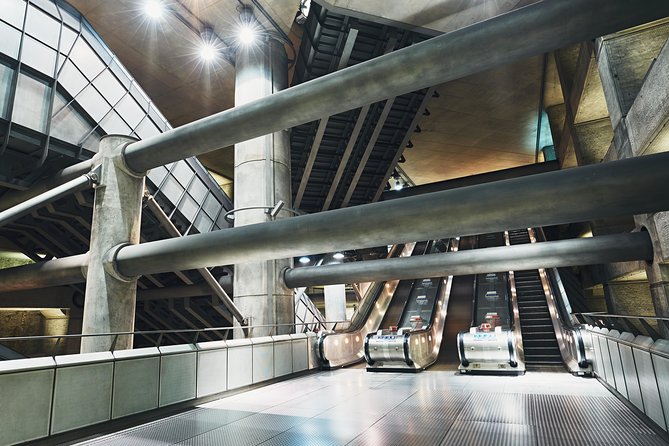
Next is Victoria Embankment / the Embankment Station area. The story shifts away from platforms and into the geography that made the Underground possible.
You’ll hear that Embankment runs along the north bank of the River Thames, from the City of Westminster up to the City of London. The tour frames it as a 19th-century development that reclaimed marshy land along the river.
Why this matters on a walking tour: it gives you context for why certain routes and station locations “make sense” in hindsight. Urban rail doesn’t just get built under streets—it gets built according to what the land allows, what engineers can reclaim or stabilize, and what the city is willing to reshape.
This stop also makes the Underground feel less like a sealed world. It links the Tube to the broader story of London reshaping itself around the Thames.
If you’re the type who loves when history connects to real streets and real boundaries, this is a satisfying moment.
Stop 6: Westminster Station and the Westminster Bridge Opening
The tour ends at Westminster Station, which is the perfect finale because it connects rail history to an older “Westminster Bridge” identity.
The details you’ll hear: Westminster was opened as Westminster Bridge on 24 December 1868 by the steam-operated District Railway (now the District line). Access is described as coming via a passageway from Bridge Street and a pedestrian subway under the road.
This stop feels like closure. You’ve spent the walk learning how the network grew through early underground ventures, mid-century expansion, and even lost stations. Ending at a station with a clear opening-era origin story helps tie the theme together: the Tube is a sequence of decisions made across decades.
If you want an “after” moment, Westminster is a good area to linger a bit once the tour ends. Even without turning it into a whole sightseeing block, you’ll likely appreciate the wider city context more because the station history is still fresh in your mind.
Haunted, Disused Stations, and Other Roles the Tube Played
One of the tour’s included promises is that you’ll hear about haunted and disused stations left abandoned on the network. Even when you don’t take the spooky side literally, it’s a smart angle for history because it spotlights the stations that fell out of use—or were repurposed—and the tension between what the system planned and what it needed.
You’ll also learn about the Underground’s variety of roles. The exact examples your guide uses can vary, but the point stays the same: the Tube wasn’t only a transit tool. It was part of how London operated, adapted, and responded as the city changed.
This is where a good guide really pays off. In feedback, Angela was praised for connecting history to specific periods and even sharing photos, including WWII-related context. That kind of added detail makes the “roles” idea feel more concrete than a generic history lecture.
Walking Comfort, Weather Reality, and Who This Tour Fits
This is a walking tour with many steps and a moderate physical fitness level requirement. That matters because the value here depends on you being able to stop, listen, and move without constantly rushing to catch up.
Plan for the weather. On days when London is wet, your “station photography” turns into “try not to slip” mode fast. One review also mentioned rain as a disappointment when the walking focus felt heavier than expected. So if you book for a rainy season day, bring what you need: a compact umbrella or rain layer and shoes with decent grip.
Who it suits best:
- History buffs who like infrastructure, not just famous monuments
- Tube regulars who want a new perspective on stations they already use
- First-time visitors who want to understand how London’s transport shaped the city
Who might skip:
- Anyone with reduced mobility, since it’s not suitable for that category per the tour note
- People expecting a “mostly inside station highlights” tour with minimal walking
Timing, Small-Group Size, and How to Make It Smooth
It runs for about 2 hours 30 minutes and starts at 1:00 pm. With a max of 25 people, you’ll get better flow than you would on a large group day—especially in central hubs like Oxford Circus and Piccadilly Circus.
Also, on average it’s booked about 49 days in advance, which is a hint to plan ahead if you’re traveling during peak months or want a specific day. The tour operates Tuesdays, Thursdays, and Sundays from April to March, excluding 24–26 December and 1 January.
Finally, you’ll want your transit payment sorted before you start. The tour requires contactless/Oyster/Travel Cards valid for Zone 1, and it doesn’t provide travel cards. That’s the easiest way to avoid a stressful start at Baker Street.
Should You Book This London Underground Walking Tour?
I’d book it if you want a guided way to understand London’s Underground beyond route maps. The biggest wins are the original Underground connection at Baker Street, the station-specific stories at Oxford Circus and Piccadilly Circus, and the more emotional pull of learning about closed/disused stations.
You should think twice if you’re mainly looking for a deep, seated station-by-station museum style experience with minimal walking. This tour is very much about moving through the city while listening, and weather can shift how comfortable that feels.
If you’re the kind of traveler who enjoys engineering facts, station architecture, and the story behind why places exist, this one delivers real perspective for the money—and it changes how you’ll notice the Tube the rest of your trip.
FAQ
How long is the Secrets of the London Underground walking tour?
It’s listed as about 2 hours 30 minutes.
What does the tour cost?
The price is $41.13 per person.
Where do I meet the guide, and where does the tour end?
Meet at Baker Street Underground Station (Underground Ltd, Marylebone Rd, London NW1 5LJ). The tour ends at Westminster Station area (Underground Ltd, Bridge St, London SW1A 2JR).
What day/time does it run?
It operates Tuesdays, Thursdays, and Sundays (April to March), with closures on 24–26 December and 1 January. Start time is 1:00 pm.
Is English the only language offered?
Yes, it’s offered in English.
Do I need a travel card or Oyster/contactless for the Tube?
Yes. You need contactless/Oyster/Travel Cards valid for Zone 1, and travel cards are not provided.
Is admission to stations included?
Admission is marked as not included for most stops. Westminster is marked free.
Is the tour suitable for people with mobility issues?
No. It includes many steps and isn’t suitable for guests with reduced mobility. It also requires moderate physical fitness.
How big is the group?
Maximum group size is 25 travelers.
Can I cancel for a refund?
Yes. You can cancel for a full refund up to 24 hours before the experience starts. If you cancel less than 24 hours before, the amount paid is not refunded.