REVIEW · LONDON
Sir Winston Churchill Private Walking Tour & War Rooms
Book on Viator →Operated by Ye Olde England Tours · Bookable on Viator
Churchill on your feet. This private walk links West End showpieces to the underground bunker where he ran the war. You also get entry to the Churchill War Rooms built into the plan, so you are not scrambling for tickets later.
I especially like the customizable private pace. You can match the walk to your interests while your guide threads Churchill’s life through Mayfair, St James, and Whitehall. The other big win is that War Rooms time is included—1 hour inside the preserved command bunker.
One thing to consider: a few stop-ins are storefront or time-sensitive. Henry Poole & Co, Spencer House, Lock & Co, and James J. Fox & Robert Lewis aren’t included for admission, and Turnbull & Asser and James J. Fox & Robert Lewis can be closed on Sundays and some public holidays.
In This Review
- Key highlights worth getting excited about
- Why this Churchill walk beats the usual sightseeing circuit
- Meeting point, pickup, and how the War Rooms timing works
- Piccadilly to Mayfair: where the day warms up (and turns into WWII clues)
- Savile Row stories, Churchill’s childhood home, and the “day-to-day” stops
- St James to Parliament Square: memorials, royals, and the politics of wartime London
- Whitehall and the Mall: where the war was managed above ground
- Horse Guards, Downing Street, and the Cenotaph chain of remembrance
- Parliament Square and the final drop underground at the War Rooms
- Price and value: what $263.90 buys in real time
- Tips to get the most out of this private day
- Who should book (and who might feel it is not for them)
- Should you book this Churchill private tour?
- FAQ
- Is this tour private or a shared group?
- How long is the tour, and how much time is spent at the Churchill War Rooms?
- What’s included in the price?
- Does the tour offer hotel pickup?
- Where do we start and where does the tour end?
- What language is the tour offered in?
- When will I enter the Churchill War Rooms?
- Are any shops on the route closed on certain days?
- Is free cancellation available?
Key highlights worth getting excited about
- Private, customizable routing through Churchill’s London, not a fixed group script
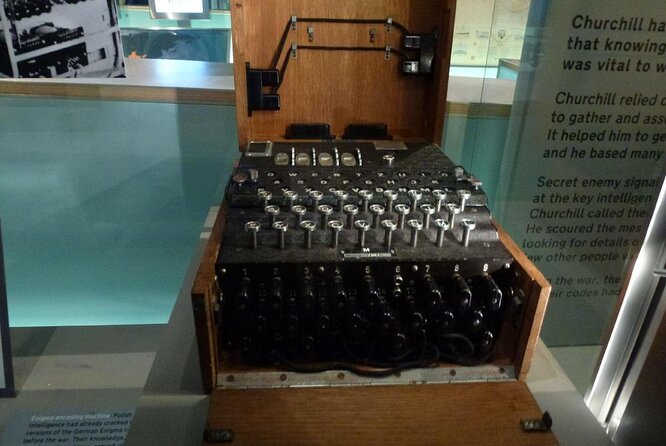
- Churchill War Rooms entry included, with audio/video-style guidance during your visit
- Savile Row stops tied to Churchill-related tailoring stories
- WWII memorials and statues along Whitehall, the Mall, and Parliament Square
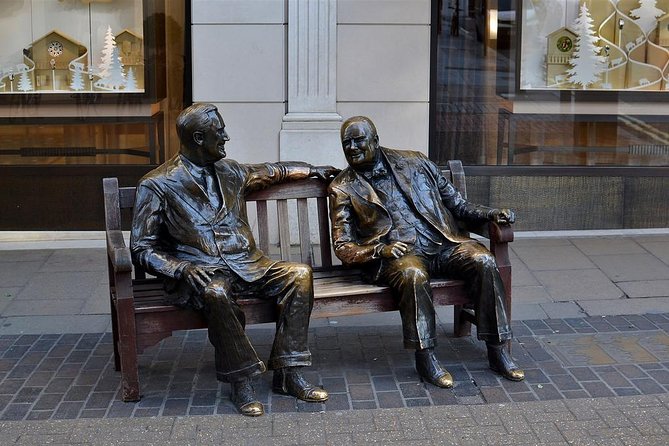
- Photo moments like the Churchill and Roosevelt Allies sculpture at a high-end landmark
- A brisk, walking-first format that helps you connect neighborhoods quickly
Why this Churchill walk beats the usual sightseeing circuit
This is one of those tours that turns geography into story. Instead of bouncing between far-apart sites, you walk a meaningful line—West End glamour down to Whitehall power—so Churchill’s world starts to feel connected.
I like that it is private. That matters for pace, questions, and how long you linger at each place. It also helps if your group wants more context (WWII strategy, London’s wartime mood, or even Churchill’s daily habits) without feeling rushed.
And because it ends at the Churchill War Rooms, the day has a strong arc. You start with surfaces—streets, statues, clubs, and shops—then drop underground to see the machinery of wartime leadership.
You can also read our reviews of more tours and experiences in London.



Meeting point, pickup, and how the War Rooms timing works
You start at the Criterion Theatre at 218–223 Piccadilly, London W1J 9HR. If you prefer pickup, you can meet at a central London hotel, then travel by Underground to the start point.
The tour ends just outside the Churchill War Rooms at King Charles St, London SW1A 2AQ. Your War Rooms entry is generally scheduled between 12:45–1:45, depending on hotel location and walking speed. In plain terms: plan lunch after the War Rooms, or eat early if you are sensitive to timed museum entry.
Because the War Rooms visit is the big indoor anchor, I suggest you wear shoes you can walk in for a few hours. This is built to keep moving—getting active is part of the appeal.
Piccadilly to Mayfair: where the day warms up (and turns into WWII clues)
The walk begins in the heart of the West End at Piccadilly Circus. From there you quickly work through tiny landmarks that carry big symbolism, like the statue of Eros (Anteros) in the center of the circle—an easy stop that still sets the tone.
Next comes Regent Street, followed by the parade of Savile Row and its world-famous tailoring reputation. This is not random sightseeing. The route uses these streets to show how London’s identity—style, status, and culture—still mattered during wartime.
At Savile Row, Henry Poole & Co is on the path. Admission there is not included, but the stop is used to tell a Churchill-flavored story tied to the tailoring world. You also pass an iconic “photo between leaders” moment: the Churchill and Roosevelt Allies sculpture at a high-end destination, with admission included for the stop.
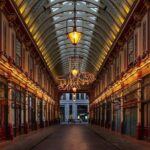
Burlington Arcade follows, with tickets included. This is the kind of place that makes London feel old-world: pass-through galleries, shopfronts, and a connection to Churchill’s tastes as described on the walk.
Finally, Turnbull & Asser enters the story. The highlight here is the mention of a surviving Siren suit connected to Churchill’s WWII era wardrobe. Admission is free for the stop, but remember: the shop is closed on Sundays and some public holidays, so you might only get the exterior unless it is open.
Savile Row stories, Churchill’s childhood home, and the “day-to-day” stops
Once you leave Mayfair’s tailoring corridor, the tour pivots toward Churchill as a person, not just a wartime figure.
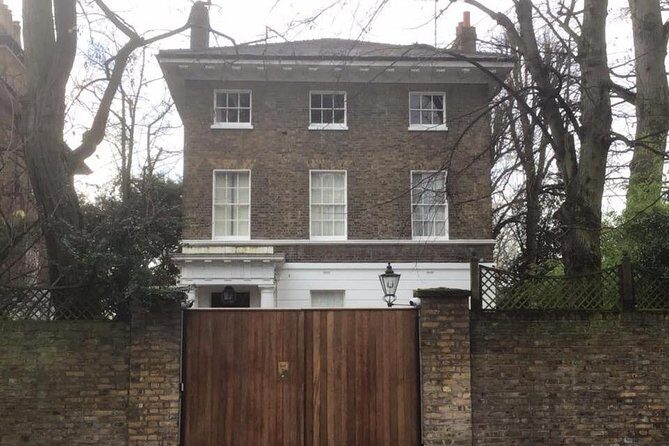
Spencer House is a key pause on the route: it is described as Churchill’s childhood home. Admission is not included, so treat this as a street-level historical stop rather than an add-on museum visit.
Then you move to Lock & Co. Hatters, one of London’s oldest hat shops. The stop is focused on the company’s long list of famous customers, including Churchill, and it even ties into James Bond trivia through Oddjob’s head-cutting silliness.
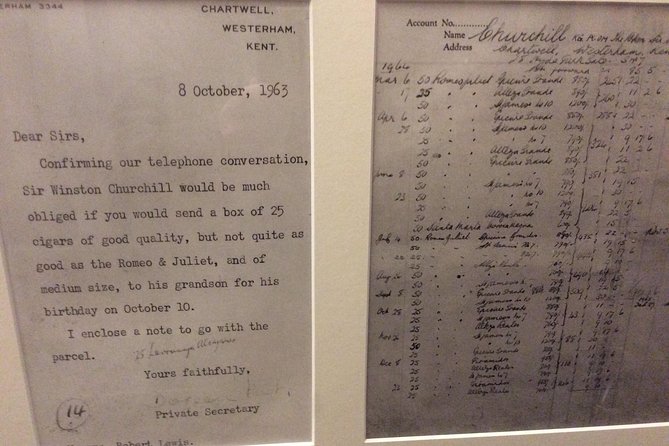
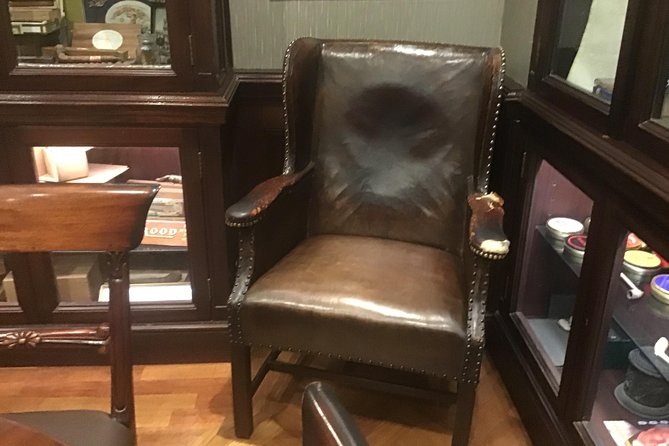
James J. Fox & Robert Lewis rounds out the “personal items” theme, with admission free for the stop. This is where Churchill’s cigars come into play, and the shop notes that you may be able to sit in Churchill’s smoking chair if the room is open. As with other retail stops, the shop can be closed on Sundays and some public holidays, so check what day you’re touring.
St James to Parliament Square: memorials, royals, and the politics of wartime London
After the shopping and fashion stretch, the walk slides into royal and political territory.
You see St. James’s Palace, described as the senior Royal Palace (above even Buckingham Palace) and where Prince Charles lives today. Admission is free here, and the point is to connect Churchill’s London to the ruling institutions he had to work alongside.
Next is the King George VI & Queen Elizabeth Memorial. Admission is included, and the walk frames it as a WWII-linked tribute with a bronze that helps you read London’s wartime story in public art form.
From there you encounter the Charles De Gaulle statue and learn how Churchill reportedly viewed him and why the statue is placed where it is. It is a short stop, but these quick “argument in bronze” moments keep the day from becoming just a list of buildings.
The route then includes the Reform Club, where you learn about Churchill’s time at the club. Admission is not included, so you are getting the history through the outside viewing and your guide’s commentary.
At Carlton House Terrace, the tour brings in Battle of Britain commemoration and an especially odd fact: the only Nazi memorial in Britain. Admission is free for the stop, and the guide’s job is to explain how that unusual situation ended up there—because it is not obvious just by looking.
You also stop at the Sir Keith Park Memorial, with the walk crediting him for major contributions tied to winning the Battle of Britain. Then there is Giro the German Ambassador’s Dog, another short but unforgettable story-based memorial tied to that same “only Nazi memorial” theme.
The day keeps moving with the Duke of York Column, a stop that is brief but memorable because of the plain marching joke—10,000 men up and down the hill.





Whitehall and the Mall: where the war was managed above ground
At the Mall, you pass London’s premier ceremonial road and see a WWII remnant described as still a military site today. It is the kind of stop that feels easy to miss if you are walking it unguided, which is exactly why a guide helps.
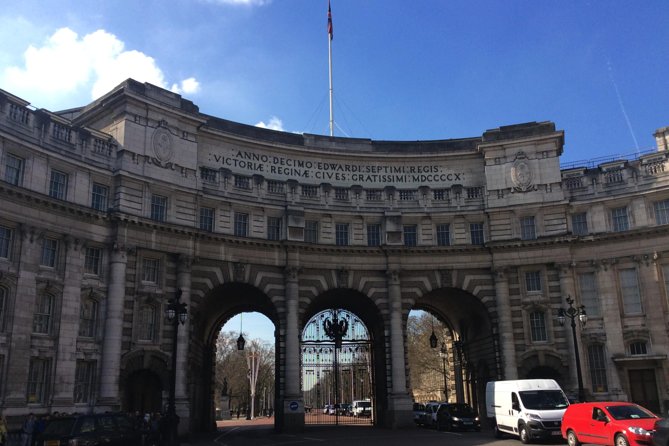
Then comes Admiralty Arch, where the walk points to the offices where Churchill worked during WWI. Admission is not included, so this is about location awareness: you start connecting the dots between WWI experience and the WWII command years that follow.
Trafalgar Square appears next, with Nelson’s memorial and the feeling of “London’s living room.” You get a breather moment here, but the tour keeps the thread: public monuments as signals of national memory.
The Ministry of Defence stop is another important marker. Admission is not included, but the explanation ties together the old War Office and the uneasy relationship described between Monty and Churchill. Even if you are not a military-history nerd, these stories make the buildings feel like actors in a bigger drama.
Horse Guards, Downing Street, and the Cenotaph chain of remembrance
You reach Horse Guards Parade at Whitehall and learn what the Citadel area from WWII was for and why Churchill was said to hate it. Admission is included for the stop, which makes sense: this is not just a photo-op, it is tied to how power functions on the ground.
The Women of World War II Memorial adds a different lens. This stop focuses on the Women’s Cenotaph and the meaning behind carvings on the memorial, so you get representation beyond the usual headline figures.
Then it is straight to the gate view: 10 Downing Street. Admission is not included, and you simply stand outside to connect Churchill’s prime-ministerial legacy to the building’s role through different eras.
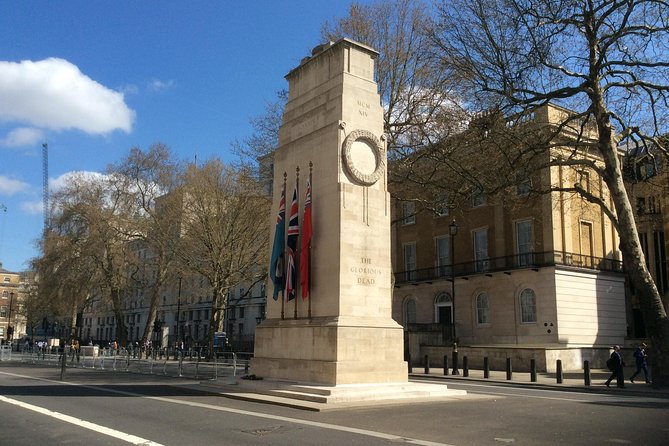
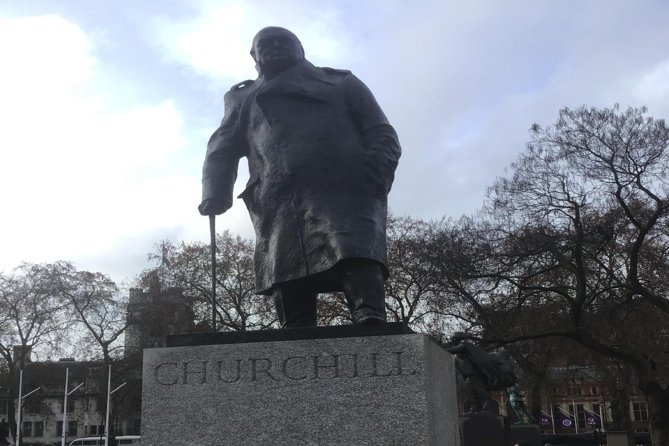
The Cenotaph follows as the primary monument to remember fallen from the Great War onwards. After that, you stop at the Winston Churchill statue and hear the story behind it—an ending-style moment that feels both respectful and surprisingly personal.
Parliament Square and the final drop underground at the War Rooms
Parliament Square is next, with a walk through its political symbolism. The route also references the church where Winston and Clemmie got married.
You then see Houses of Parliament and Saint Margaret’s Church on Parliament Square. Admission is not included for these stops, but the tour’s use of them matters: it frames Churchill’s place in governance and public life, not just wartime command.
Finally: the Churchill War Rooms. This is the core reason the day works. You explore the underground bunker from where Churchill ran the war while London above was being bombed, and it is described as perfectly preserved as it was in 1945.
You spend about 1 hour inside. The War Rooms entry uses audio/video guides for your experience. One practical note from the broader tour feedback: the audio setup can feel a bit clunky for some people, so if you dislike headsets or screens, consider bringing a small amount of patience and going with the flow.
Price and value: what $263.90 buys in real time
At $263.90 per person for about 4 hours, the price is not just “a guide standing near a plaque.” It is a private walking route plus the included ticket to a major WWII site.
You get local and professional guidance, and that matters on a Churchill-themed walk because so many stops are easy to misread without context. You also get hotel pickup, and a built-in plan to get you to the start point with Underground travel. On top of that, your War Rooms tickets are included, and that is a big chunk of the value.
There are also a few “hidden efficiency wins” you feel immediately: the route helps you cover multiple neighborhoods you might otherwise struggle to stitch together, and the private format means you can slow down for the topics you actually care about—tailoring details, memorial meaning, WWII command, or the political story arcs.
Tips to get the most out of this private day
If you want this tour to feel tailored, ask your guide early to focus on your top two interests. For example, you can put one priority on WWII command and the War Rooms, and the other on the street-level Churchill details like Savile Row tailoring stories, the hatters, or the cigar shop tradition.
Bring a compact layer. London weather changes fast, and this is a walking-heavy route. Also, keep an eye on shop closures: Turnbull & Asser and James J. Fox & Robert Lewis can be closed on Sundays and some public holidays, so plan your expectations around exterior viewing if you are on one of those days.
Lastly, treat the War Rooms as the moment to slow down. The walking portion gives context; the bunker is where the scale clicks.
Who should book (and who might feel it is not for them)
This is ideal if you:
- care about Churchill and WWII and want more than surface-level facts
- like walking and want a route that links neighborhoods into one story
- want a private pace with real conversation time
If you are short on time and only want one landmark, you might prefer a simpler single-attraction plan. But if you enjoy how London looks and feels as you move through it—Piccadilly to Parliament Square—this route does that job well.
Should you book this Churchill private tour?
Yes, if you want Churchill’s London to feel like one connected storyline. The value comes from the private pace, the walking route that strings together West End, royal sites, memorials, and Whitehall, and the included Churchill War Rooms entry.
Book it especially if the War Rooms are your priority. You’ll arrive at the end of a context-building walk, then spend about an hour underground with the audio/video guide setup.
If you hate walking or you strongly dislike museum-style headsets/screens, consider whether your tolerance for the War Rooms audio system is a good match for your style. Otherwise, this is a strong choice for a focused WWII day with a guide who can turn “buildings you recognize” into a narrative you will remember.
FAQ
Is this tour private or a shared group?
This is a private tour/activity, and only your group participates.
How long is the tour, and how much time is spent at the Churchill War Rooms?
The tour is about 4 hours. You spend about 1 hour at the Churchill War Rooms.
What’s included in the price?
Included features are a local guide, a professional guide, hotel pickup, a private tour, and entry tickets to the Churchill War Rooms.
Does the tour offer hotel pickup?
Yes. You can meet your guide at any central London hotel, and then travel by Underground to the starting point.
Where do we start and where does the tour end?
You start outside the Criterion Theatre at 218–223 Piccadilly (W1J 9HR). The tour ends just outside the Churchill War Rooms at King Charles St (SW1A 2AQ).
What language is the tour offered in?
The tour is offered in English.
When will I enter the Churchill War Rooms?
Entry is generally scheduled between 12:45 and 1:45, depending on hotel location and walking speed.
Are any shops on the route closed on certain days?
Yes. Turnbull & Asser and James J. Fox & Robert Lewis are closed on Sundays and some public holidays. Admission isn’t included for some shop visits either.
Is free cancellation available?
Yes. You can cancel for a full refund up to 24 hours in advance of the experience start time.