REVIEW · LONDON
Twinings 2-Hour Tea Tasting Masterclass in London
Book on Viator →Operated by R Twinings Ltd. · Bookable on Viator
Tea tasting in London can be surprisingly hands-on. This 2-hour Twinings masterclass turns tea history and production into something you can smell, sip, and compare, with a pro-style approach to evaluating flavor. You’ll also get a real sense of why tea culture is such a big deal in Britain, not just a cute souvenir stop.
I love the setup: a maximum group size of 5 means you get time for questions and back-and-forth instead of a lecture you can’t hear. I also love the practical payoff: you taste six tea categories (White, Yellow, Green, Oolong, Black, Pu’erh) and learn how professionals assess tea. The only drawback to consider is that it’s a structured experience—if you just want to browse for 2 hours without tasting or discussion, this may feel more lesson-focused than shop-focused.
In This Review
- Key things to know before you go
- Finding Twinings on Strand: getting there without stress
- What you’re really learning: tea from plant to cup
- Your six-tea flight: White through Pu’erh
- How the pros slurp: describing aroma, flavor, and mouthfeel
- Instructor-led story time: London tea history you can taste
- Value check: is $69.45 worth two hours in London?
- Who should book this masterclass (and who might not)
- Tips to get more out of the class
- Should you book Twinings 2-Hour Tea Tasting in London?
- FAQ
- How long is the Twinings Tea Tasting Masterclass in London?
- Where does the masterclass meet?
- How big is the group?
- What language is the masterclass offered in?
- What teas will I taste during the class?
- Do I get a mobile ticket?
- Is confirmation provided after I book?
Key things to know before you go
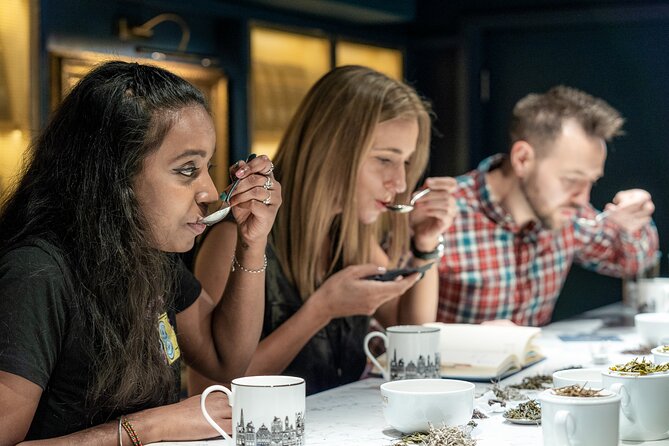
- Small group (up to 5 people): more interaction, less waiting your turn
- Six tea categories in one session: White, Yellow, Green, Oolong, Black, and Pu’erh
- Tea evaluation skills: you learn how pros judge tea and how to describe what you taste
- Hands-on sensory work: you smell and taste, then rate/compare using guidance
- Twinings shop atmosphere nearby: you can connect what you learned to what you’ll see in-store
Finding Twinings on Strand: getting there without stress
The meeting point is at 216 Strand, Temple, London WC2R 1AP. This is a convenient area for a tea-focused stop because you’re in the center of London’s “walk it off” zone, and the tour is noted as being near public transportation. You’ll get a mobile ticket, so it’s one less thing to manage once you’re out and about.
The experience is capped at a maximum of 5 people, and that shapes the whole vibe. You don’t feel like you’re joining a big group tour that runs you past stations. Instead, you can expect a calm pace where conversation actually happens.
One detail worth knowing: the masterclass space is described as being in a basement area of a chic, clean bar. That can be a plus on hot or busy days, and some participants specifically called out the comfort level (like air conditioning).
Finally, the session ends back at the meeting point. That matters more than it sounds. You can plan your day knowing you won’t have to add another transit step afterward just to get back to sightseeing.
You can also read our reviews of more tours and experiences in London.



What you’re really learning: tea from plant to cup
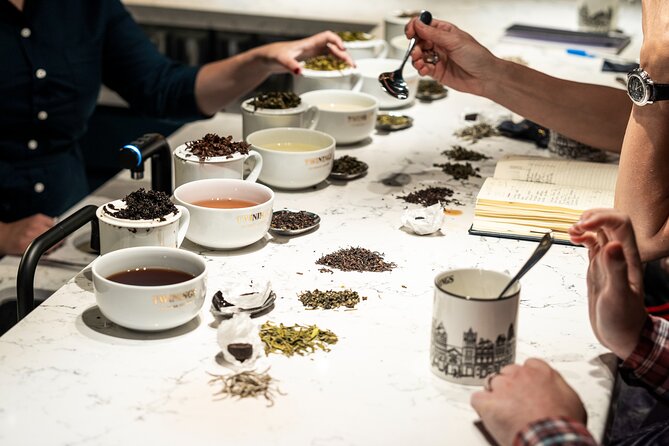
This is a 2-hour tea tasting masterclass that promises more than “try a few samples.” You’ll cover where tea comes from and how it traveled to Britain, plus the basics of what makes a quality tea. The goal is to connect the story of tea with the sensory experience of drinking it.
Expect the guide to walk you through the tea plant’s journey from bud to cup. That’s the kind of explanation that changes how you taste, because you stop treating flavor as a mystery. You start noticing clues—like aroma and the way a tea feels in your mouth—because you’ve been given a framework for what to look for.
London’s tea culture isn’t just name-dropped here. The session is designed to place tea in its British context, so you understand why tea became part of daily life rather than only a beverage you order when the weather turns.
You’ll also spend time on how professionals evaluate tea. Participants specifically mention that you learn how the pros “slurp”—which is a fun way of saying you’re taught a method, not just a tasting ritual. If you like learning systems (even tiny ones), you’ll appreciate that.
Your six-tea flight: White through Pu’erh
The tasting lineup is clearly set: White, Yellow, Green, Oolong, Black and Pu’erh. That’s six categories in one compact session, and it’s a big part of why this masterclass works.
Instead of sampling random cups that all taste the same to a beginner, this takes you through categories that are different enough that you can start picking up patterns. And because the categories are named up front, you know exactly what you’re getting.
A big practical detail: you’re not just handed tea and left to guess. You’ll be guided through how to approach tasting so you can compare teas in a consistent way. That includes noticing more than just flavor.
Some participants pointed out that the experience teaches you to pay attention to the appearance, aroma, flavour, mouthfeel, and aftertaste. That’s the difference between sip-and-smile tasting and tasting that actually teaches you something you can use later.
You’ll also be asked to describe what you’re tasting. More than one person mentioned that you get example words for describing tea. If your vocabulary ends at sweet, bitter, or strong, this helps you move past that fast.
How the pros slurp: describing aroma, flavor, and mouthfeel
The masterclass gives you a method for tasting, and that’s where it becomes genuinely useful. You don’t need to be a tea expert to participate. In fact, multiple participants said they arrived with little or no tea knowledge and still left understanding what they were experiencing.
During the session, you’ll learn how tea professionals evaluate tea. That includes using the classic slurp technique, which helps spread tea across the palate so you can better catch aroma and texture. It also makes the tasting more “active,” not passive.
Then comes the comparison step. People described rating the teas in multiple categories and discussing what they noticed. The big benefit of this approach is that you’ll stop thinking of tea as one thing. You’ll start thinking in distinctions: aroma versus mouthfeel, flavor versus aftertaste, and how those traits change across tea categories.
Expect the guide to encourage discussion as you taste. Several participants highlighted that the session stayed lively and never felt like a long lecture. Even when the topic turns historical, the tasting anchors it so you have a reason to listen and a chance to test what you just learned.
Instructor-led story time: London tea history you can taste
The history part is not treated like trivia. The guide tells tea’s story in a way that supports what you’re tasting, starting with how tea arrived in Britain and why it became embedded in daily life.
The tone is often described as funny, engaging, and very interactive. Named instructors that stood out include Alessandra, Liam, Rachel, Rosie, and Angelo. While you can’t choose your instructor from the information provided here, the consistent thread is that the teaching style is approachable and question-friendly.
One of my favorite types of learning is when someone tells a story but still connects it to details you’ll recognize later. Here, the storytelling is paired with production explanations and evaluation tips. The result is that tea history becomes something you can recall because it links to smell, flavor, and technique.
If you’re the kind of person who likes hearing how a product is made, this is a strong fit. If you mainly want tea as a hobby, the same teaching style also gives you a “why” behind what you enjoy.






Value check: is $69.45 worth two hours in London?
At $69.45 per person for about 2 hours, this isn’t the cheapest thing in London. But it also isn’t trying to be. You’re paying for a guided, small-group tasting with instruction, not a generic attraction entry.
Here’s what makes the price feel more reasonable:
- Up to 5 participants: you’re not competing for attention
- Six tea categories included: that’s the core “product” of the experience
- How to evaluate tea like a pro: not just what to drink, but how to judge it
- A structured learning flow: history + production + tasting method
- Potential in-store incentive: one participant noted getting a discount on products after the class, which can turn the tasting into an immediate shopping win if you’re interested in buying tea
Also, note the booking pattern. This tends to sell, with an average booking window of about 28 days in advance. If you’re traveling in peak season or on a busy weekend, planning ahead matters more than you might expect.
So is it “worth it”? If you want a scripted, sensory lesson that ends with clearer taste preferences and better buying instincts, the value is strong. If you’re hoping for a casual, purely social tea stop, you may feel the structure more than you like.
Who should book this masterclass (and who might not)
This fits best if you like one (or more) of these:
- You enjoy hands-on experiences where you taste and compare
- You’re curious about tea production and how tea became part of British culture
- You want a beginner-friendly introduction to tasting terms and evaluation
- You’re traveling with another person who enjoys food, drink, or learning
More than one participant described doing this across generations, including a mix of adult and family members. That tells me it’s not only for hardcore tea people. It also works for “I don’t drink tea much” types because the experience is explained clearly and becomes sensory rather than technical.
It might be less ideal if your priority is purely sightseeing and you hate sitting through any structured talk. This is an event with a clear agenda: history, production, and a tasting flight with guidance. You should go in expecting that.
Tips to get more out of the class
If you want the session to be extra rewarding, show up with curiosity, not pressure. You’re going to taste six categories and describe what you notice, so it helps to keep an open mind even if a tea surprises you.
A few practical ideas:
- Bring your questions early. With a maximum group size of 5, you’ll likely get better answers when you ask during the flow.
- Pay attention to aroma and mouthfeel, not just flavor. That’s where the guided vocabulary helps.
- Don’t overthink your ratings. The point is learning a framework for comparison, not chasing a perfect score.
Also, if you plan to buy tea afterward, think of this as a tasting lesson that helps you shop. One person specifically said they needed more shopping time after the class because they felt more confident buying the right products.
Should you book Twinings 2-Hour Tea Tasting in London?
Book it if you want a compact, small-group London experience that teaches you how to taste tea—not just what tea to drink. With six categories, a guided evaluation method, and instructors who are repeatedly praised for keeping things engaging, it’s a smart use of two hours.
Skip it (or consider a different option) if you’re only looking for casual tea tasting with no structured instruction. This masterclass is a lesson with samples, history, and technique.
If you do book, plan to treat it like your “tea reset” for the trip. You’ll leave with better tasting instincts and a more confident way to choose tea back in your hotel or at home.
FAQ
How long is the Twinings Tea Tasting Masterclass in London?
The masterclass lasts about 2 hours.
Where does the masterclass meet?
You meet at 216 Strand, Temple, London WC2R 1AP, UK, and the experience ends back at the meeting point.
How big is the group?
The experience has a maximum of 5 travelers.
What language is the masterclass offered in?
It’s offered in English.
What teas will I taste during the class?
The tasting covers six categories: White, Yellow, Green, Oolong, Black, and Pu’erh.
Do I get a mobile ticket?
Yes, it includes a mobile ticket.
Is confirmation provided after I book?
Yes, confirmation will be received at the time of booking.