REVIEW · LONDON
Visit the Birthplace of The Rolling Stones – Private Tour
Book on Viator →Operated by Swinging 60s London · Bookable on Viator
One sentence can change how you see London. This private Rolling Stones tour strings together early band history with real street-level stops you rarely get on a normal day. You’ll roll through the neighborhoods where the sound was forming, not just the famous stadium moments.
I especially like the comfort: an air-conditioned minivan and a guide who keeps the drive from turning into a boring commute. I also like that the route mixes “iconic name” places with smaller, specific addresses—like the flat tied to when they got their band name and the studio where big streaks of records were made.
One thing to consider: this is a curbside, outside-looking-around style tour. If you’re hoping for lots of interior museum time or ticketed attractions at each stop, you may find it a bit lighter than that.
In This Review
- Key points to know before you go
- Rolling Stones London, end-to-end: the private minivan run from Earl’s Court to Richmond
- What you’ll feel during the drive
- The main tradeoff: mostly outside stops
- The earliest legend stops: Wetherby Pub and the flat at 102 Edith Grove
- Why this stop works (even if you’re not a deep-dive fan)
- Photo tip
- Cheyne Walk and Swinging London: where style and power met music
- What you’ll learn here
- Consideration
- Putney’s Half Moon and Olympic Studios: live gigs to album streaks
- Why Olympic matters for your understanding
- Quick timing, big content
- Richmond’s Crawdaddy roots at All Bar One: first residency and Decca day
- Why this location is such good value
- Real-world note
- Terrace Gardens, Richmond Hill: writing songs, famous neighbors, and that eye-watering £15M
- The honest tradeoff
- Ormond Road and Sandover Hall: 1962–1963 performances at the local level
- Why I like this type of stop
- The Crawdaddy Club sequence: Yardbirds replace The Stones and the festival moves to Reading
- Why ending here feels right
- Price and logistics: what $575.86 per group really buys you
- What you’re paying for
- What’s not included
- How far in advance should you book?
- Best fit: who this tour will feel made for
- Should you book the Birthplace of The Rolling Stones private tour?
- FAQ
- How long is the Birthplace of The Rolling Stones private tour?
- What does the tour cost, and how many people can go?
- Where does the tour start and where does it end?
- Is this tour private?
- What’s included in the price?
- Are admissions or tickets needed for the stops?
- What is the minimum age?
- Quick logistics note
Key points to know before you go
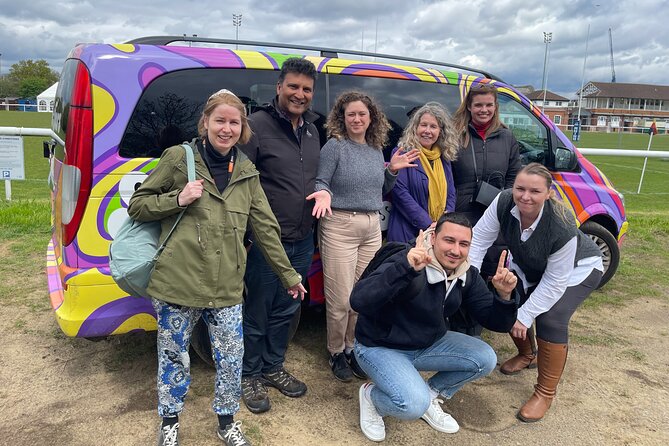
- Private group (up to 6) makes the stories feel personal and the pace feel right.
- Air-conditioned minivan keeps the day comfortable even when London weather is unpredictable.
- Short, high-impact stops mean you see a lot of places without feeling stuck in long lines.
- Real addresses and venue locations connect the band to everyday London streets.
- Richmond at the end gives you an easy way to keep exploring after the tour ends at the station.
Rolling Stones London, end-to-end: the private minivan run from Earl’s Court to Richmond
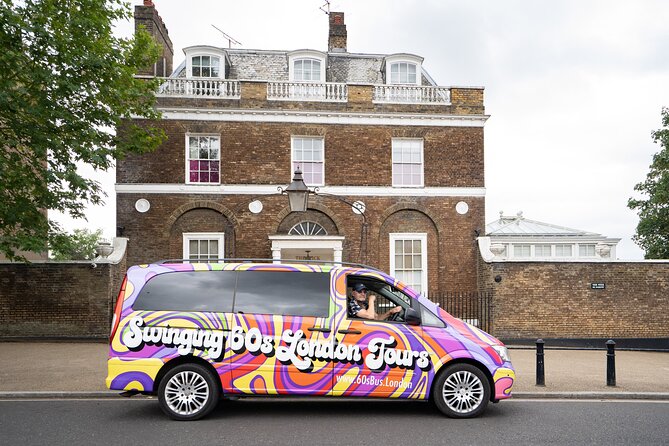
This tour is designed like a smooth, story-driven loop rather than a frantic checklist. You start at Earl’s Court Police Box 232, and you finish in Richmond Station, which is a gift if you want dinner, a river walk, or more wandering after the 3-hour window.
The private format matters more than people think. With only your group aboard, you can ask follow-ups instead of waiting for a big group to catch up. It also helps the guide keep the tone friendly and energetic; the stops are short, so you want someone steering it well.
Comfort is built in. The tour uses an air-conditioned vehicle, which is a big deal in London when you’re doing multiple micro-stops and standing around for photos. Plus, the tour provides a mobile ticket, so you’re not juggling paper confirmations in a busy station area.
You can also read our reviews of more tours and experiences in London.

What you’ll feel during the drive
You’re not just touring locations—you’re getting the “how it all connected” version of London. The route links early audition stories, early local gigs, studio sessions, and the later-famous neighborhoods where members bought homes. It’s a storyline told through street corners.
The main tradeoff: mostly outside stops
Many stops are listed as quick stops with outside viewing and free admissions. That’s great for photos and for people who want movement. But if you want interiors, guided museum-type time, or lots of ticketed entry, you’ll want to set expectations.
The earliest legend stops: Wetherby Pub and the flat at 102 Edith Grove
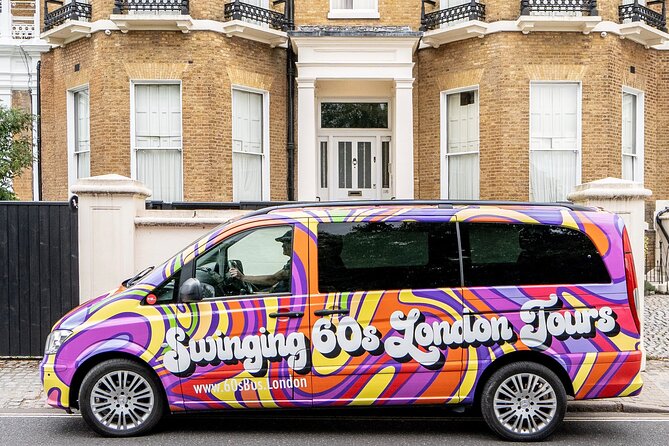
The tour begins with the kind of detail that makes a band story feel real. After passing the Wetherby Pub, there’s a moment tied to Bill Wyman’s audition and how the band rehearsed there. Even if you don’t know every member’s timeline yet, this kind of lead-in tells you what London sounded like when it was still forming.
Then you stop at 102 Edith Grove for a quick look outside the flat where Brian, Mick, and Keith shared space between 1962 and 1963. This is where the tour gets especially fun if you like the meeting-of-the-scene part of music history: they invited The Beatles to the flat after first meeting them in Richmond.
Why this stop works (even if you’re not a deep-dive fan)
A lot of music tours jump straight to the biggest headlines. This one starts with the practical stuff: the places where bands actually met, practiced, and hosted each other. A shared flat also gives you a clearer sense of the early stakes—this wasn’t some distant myth. It was people, rooms, and timing.
Photo tip
You’re outside with a short window. So if you want clean photos, plan to snap quickly and step aside when needed. A guide moving the group efficiently helps you get shots without turning into a traffic jam.
Cheyne Walk and Swinging London: where style and power met music
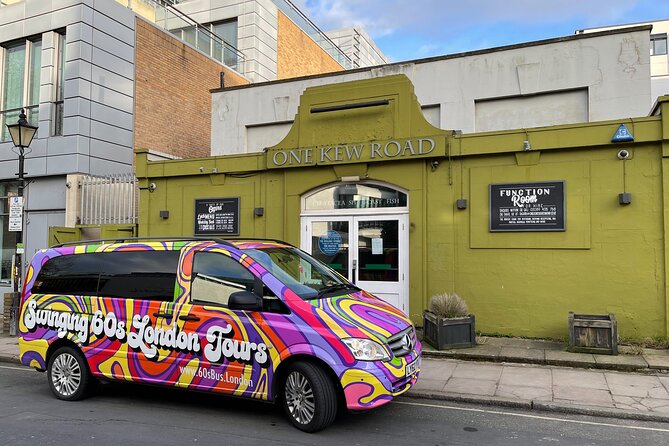
Next comes a look at Cheyne Walk, where Mick and Keith purchased houses in 1968. The stop is brief, but Cheyne Walk isn’t brief on style or setting. It’s the kind of London street where you can almost feel the shift from hungry beginnings to established celebrity.
Then you pass through the beating heart of Swinging London. The tour highlights the area around the Chelsea Drugstore location and the broader cluster of fashion and music venues that helped define the era’s look and mood.
What you’ll learn here
This part isn’t only about where famous people lived. It’s about how their world changed. When Stones members were buying property and becoming a mainstream name, London wasn’t just their stage—it was shaping their identity too. Streets like these reflect that transition.
Consideration
Because the stops are short and focused on viewing, you may not get a long time to linger. Think of it as “orientation with flavor”—you’re getting grounded in geography so the bigger stories later make sense.
Putney’s Half Moon and Olympic Studios: live gigs to album streaks
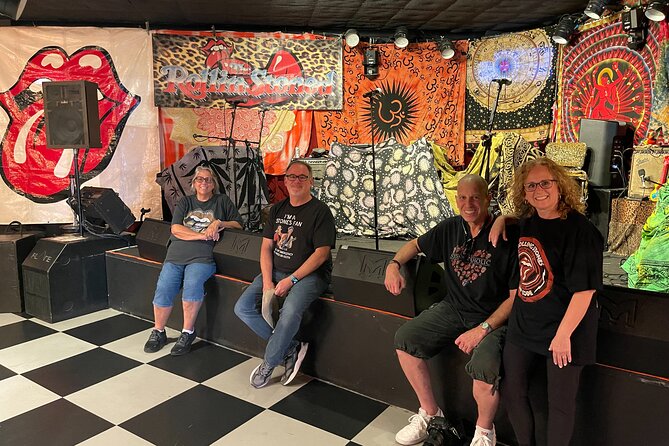
In Putney, the tour stops at The Half Moon for a quick look at a venue where The Stones performed at a private party as recently as 2000. It’s a neat reminder that famous bands don’t only live in one year. Places like this keep working across decades.
Then you head to Olympic Studios – Cinema. This is one of the most music-nerdy stops on the route, and I like it because it turns “legend talk” into studio reality. The Stones recorded six consecutive albums here between 1966 and 1972, with Chris Kimsey and Glyn Johns. Even more concrete: their first hit, Come On (released in 1963), was recorded at Olympic’s previous location off Baker Street.
Why Olympic matters for your understanding
If you only associate The Stones with performances, you miss how records were built. Olympic Studios represents the machine behind the myth: producers, engineers, and the working rhythm of consecutive album sessions. It’s the difference between hearing a legend and understanding the craft.
Quick timing, big content
You get around 10 minutes here. That’s short, but the guide can pack in a lot when you’re standing at the right spot. If you’re the kind of person who loves names like Glyn Johns and Chris Kimsey, you’ll likely enjoy this stop a lot.
Richmond’s Crawdaddy roots at All Bar One: first residency and Decca day
Now the tour leans into Richmond, which is where the story starts to feel grounded and local, not just global. You stop at All Bar One Richmond, which was previously the Station Hotel and is tied to the original Crawdaddy Club.
This stop covers several milestone beats:
- Their first residency on Sunday 24 February 1963
- A first meeting with The Beatles
- And the moment they signed for Decca Records
Why this location is such good value
If you want the most “wow, that’s where it happened” moment, this is a strong candidate. It links multiple turning points in one place: regular gigs (residency), cross-scene interaction (Beatles), and a major label step (Decca).
It also gives you a better feel for how London music careers actually progressed in the early 1960s. Not by magic. By playing, networking, and proving it night after night.
Real-world note
This stop is listed as free admission, and it’s 10 minutes, so it’s paced like a story stop, not like a hard schedule trap. You’ll have enough time to take photos and still move on.
Terrace Gardens, Richmond Hill: writing songs, famous neighbors, and that eye-watering £15M
The tour’s “celebrity neighborhood” stop is Terrace Gardens – Richmond Hill. This is where the story turns toward homes and later-life details:
- Mick and Jerry lived here in the early 1990s
- The note says Jerry still lives there with her new husband Rupert Murdoch
- Ronnie Wood lived there from 1971
- It’s Only Rock and Roll But I Like It was written here in 1973
- The house is owned by Pete Townsend and is currently listed for sale at £15M
That’s a lot of famous names packed into one short window, and it’s exactly the kind of contrast I like on a music tour. You see the same London that once held small beginnings, now viewed through the lens of wealth and permanence.
The honest tradeoff
Because the focus is on the location and not interiors, you won’t be touring homes. The value here is the context the guide gives you and the way the neighborhood reframes what these songs and years meant.
If you’re imagining a dramatic “step inside the songwriter’s room” experience, adjust expectations. Think of this as placing the songs on a map you can actually picture.
Ormond Road and Sandover Hall: 1962–1963 performances at the local level
Next you visit Ormond Road, tied to the Sandover Hall location in Richmond where The Stones performed between 1962 and 1963.
This part is like the tour’s backbone. Big studio legends and major-label milestones are great, but local performance venues are where bands kept themselves alive. This stop helps you connect the early touring period to a specific Richmond corner.
Why I like this type of stop
It’s easy to treat music history as a straight line from one headline to the next. Stops like Sandover Hall make you remember there’s usually a middle stage: local gigs, regular shows, and refining the act.
Even if you’re not a trivia collector, these are the moments that make the whole route feel consistent.
The Crawdaddy Club sequence: Yardbirds replace The Stones and the festival moves to Reading
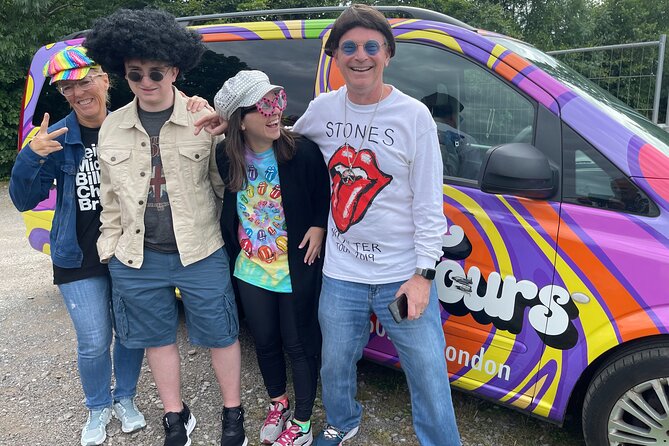
The final stop is the Crawdaddy Club, the second location of the club in 1963. Here’s where the story adds an interesting twist: The Yardbirds replaced The Stones as the resident band.
Then the stop connects to a broader scene beyond rock. The site was also the location for Harold Pendleton’s National Jazz and Blues Festival (1961–1965). After a few years in different locations, the festival finally moved to Reading, described here as the longest-running pop festival in the world.
Why ending here feels right
The tour began with an early audition and a naming moment. It ends with a venue that tracks the scene’s evolution. When you see who replaced who, and how jazz and blues festivals shifted over time, you get a fuller picture of how London’s music culture kept mutating.
Also, Crawdaddy-related history pairs nicely with the tour’s ending location in Richmond. You’re not dropped in the middle of nowhere; you’re set up to keep exploring the area.
Price and logistics: what $575.86 per group really buys you
The price is $575.86 per group for up to 6 people, for a tour of about 3 hours in English. Taxes, fees, and handling charges are included, and you get a professional guide plus an air-conditioned vehicle.
So here’s the practical value math: if you’re a pair, you’ll pay a higher per-person share than a larger group. If you’re booking with friends or family and fill closer to 6, the cost per person becomes much more reasonable—especially because this is private, not a shared group bus.
What you’re paying for
- A private routing that hits multiple specific, story-rich locations
- A guide-led narrative, not just a map and silence
- Comfort and time savings from using a vehicle
- A finish in Richmond Station, so you can plan an easy next step
What’s not included
Public transportation is listed as £5.00 per person, and snacks are not included. If you’re the type to plan ahead, bring water and a small snack so you’re not hunting for food right after the tour ends.
How far in advance should you book?
The tour is, on average, booked 93 days in advance. That’s a strong sign it sells out or tightens up. If The Rolling Stones are your thing, I’d lock it in sooner rather than waiting for a last-minute idea.
Best fit: who this tour will feel made for
This is a great match if you want:
- A guided story at a comfortable pace (not a fast self-guided walk)
- Place-based history with specific addresses and venues
- A private setting so you can ask questions
- A route that ends in a fun area to keep exploring
It may feel less perfect if you want:
- Lots of ticketed museum time
- Long stays at each stop
- Interior access at every venue
Should you book the Birthplace of The Rolling Stones private tour?
If you like your music history tied to real streets, this is an easy yes. The strongest reasons to book are the private minivan comfort, the tight storytelling, and the way the route moves from early formation stories to studio sessions and then into Richmond’s performance culture.
One final practical tip: plan to spend a little time after you finish at Richmond Station. Richmond is well set up for an easy walk along the river, and it also has Richmond Park, known for roaming deer and a lot of history—so your Stones day doesn’t have to end when the tour ends.
FAQ
How long is the Birthplace of The Rolling Stones private tour?
It lasts about 3 hours.
What does the tour cost, and how many people can go?
The price is $575.86 per group, for up to 6 people.
Where does the tour start and where does it end?
It starts at Earl’s Court Police Box232 Earls Ct Rd, London SW5 9RD, and ends at Richmond Station (Stop C), Richmond TW9 1DJ.
Is this tour private?
Yes. It’s a private tour/activity, and only your group participates.
What’s included in the price?
Included are a professional guide, an air-conditioned vehicle, and all taxes, fees and handling charges.
Are admissions or tickets needed for the stops?
Some stops are marked Admission Ticket Free, while others are marked Admission Ticket Not Included. The tour still runs as a guided route with quick stop times.
What is the minimum age?
The minimum age is 9 years.
Quick logistics note
The tour runs in English and uses a mobile ticket. The meeting point is near public transportation, and most people can participate, but it’s always smart to check what kind of walking and standing you’re comfortable with for the short stop windows.