REVIEW · LONDON
Walking Tour around Spitalfields in the East End of London
Book on Viator →Operated by The Gentle Author's Tours · Bookable on Viator
Spitalfields has layers you can walk through. This small-group walk turns the East End into a readable story: Nicholas Hawksmoor’s English Baroque sets the tone, and you get close attention in a group of five plus a tea-and-cakes finish that’s included in the price. The main drawback is practical: you cover about two hours on foot, so it’s not for you if standing and walking that long is hard.
I like that the pace is built for details, not for rushing. You start at Christ Church Spitalfields on Commercial Street and end back there, with the last stretch in a historic townhouse drawing room overlooking Christ Church Spitalfields.
In This Review
- Key highlights at a glance
- Spitalfields on foot: what makes this East End walk worth your time
- Starting at Christ Church Spitalfields and Nicholas Hawksmoor’s English Baroque
- Jewish East European immigration and the neighborhood’s institutions
- The ancient market: learning the story behind a medieval survival
- Priory of St Mary Spital: where the old faith left its footprint
- Two women, a brewery, and working lives you can picture
- A famous thoroughfare and the controversy over its future
- From Huguenot chapel to synagogue to mosque: one building’s changing life
- Fine eighteenth-century houses: spotting what shaped everyday street life
- Nicholas Culpeper’s 17th-century herb garden: a calmer turn
- The 18th-century drawing room tea: how the tour ends where it began
- Price and value: what $90.28 buys you in Spitalfields
- Who this tour suits best (and who should skip it)
- Should you book the Spitalfields walking tour with The Gentle Author’s Tours?
- FAQ
- FAQ
- How long is the Spitalfields walking tour?
- What time does the tour start?
- How much does it cost?
- How many people are in the group?
- Where do I meet the tour?
- Where does the tour end?
- Is the tour language English?
- Is tea and something to eat included?
- Does the tour run in bad weather?
- What if I have trouble standing or walking for two hours?
Key highlights at a glance
- Group size capped at 5 means you can ask questions and actually hear the answers.
- Nicholas Hawksmoor’s English Baroque gives you a dramatic starting point in plain sight.
- Jewish East European stories connect buildings to the people who needed them.
- A chapel’s change of faith shows Spitalfields transformation from one building to another.
- Nicholas Culpeper’s herb garden brings a quieter, hands-on moment into the walk.
- Tea and cakes baked to a recipe from 1720 close the tour with a real period touch.
Spitalfields on foot: what makes this East End walk worth your time

Spitalfields is not the kind of place you fully get from a quick photo stop. This tour works because it treats the neighborhood like a puzzle with living pieces: churches, chapels, markets, and even a garden all have a “why” behind them, not just a date.
The structure is also smart for people who like history with texture. Instead of hitting every landmark under the sun, you focus on a smaller set and the guide links them together—often by telling you who lived through the changes, and what those changes meant day to day.
And yes, the included break matters. Ending with tea and cakes in an 18th-century drawing room is not just a nice perk; it’s a way to slow down and let the neighborhood settle in your mind.
You can also read our reviews of more tours and experiences in London.



Starting at Christ Church Spitalfields and Nicholas Hawksmoor’s English Baroque
You begin at Christ Church Spitalfields on Commercial Street in the East End of London. This is a strong start because the church itself is tied to Nicholas Hawksmoor’s English Baroque style, which you’ll be spotting right away rather than saving for later.
What I like about beginning here is that it gives you a visual anchor. Even if you only remember a few details from the walk, you’ll still have that baroque feel as your baseline for everything that follows—then you can notice how the neighborhood’s architecture and community life keep changing over time.
Plan for a short orientation. Once you’re moving, the tour shifts from the big “what” of the building to the personal “who” behind the story around it—especially the people who used the area when their lives were shaped by migration and religious need.
Jewish East European immigration and the neighborhood’s institutions
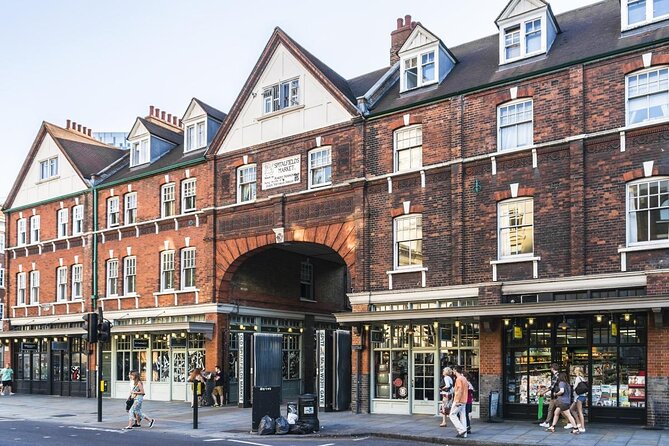
One of the most compelling parts of the tour is how it connects Spitalfields to the needs of Jewish immigrants from East Europe—part of what the area is now associated with as Ukraine. You’re not just told that communities arrived; you’re guided through what they needed and how local institutions responded.
That makes the stop feel grounded. When you understand why particular services and spaces existed, you stop treating old buildings like museum props. You start seeing them as tools people relied on—places where community members could find care, support, and belonging.
This is also where the small-group size pays off. In a group of five, it’s easier to ask follow-up questions as the story shifts between architecture, religion, and daily life.
The ancient market: learning the story behind a medieval survival
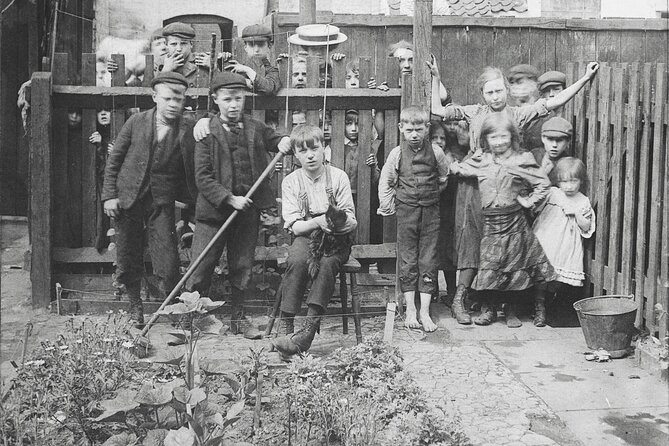
Spitalfields is famous for its markets and its long memory. During this walk, you learn about an ancient market—how it formed, what it became, and why it still matters.
Then comes a more specific idea: the tour points out an “astonishing medieval survival,” and you’re helped understand the purpose behind it. That phrasing can sound dramatic, but the practical payoff is real. You start to recognize that some things are still here for a reason—because they kept working for the people who lived around them.
If you like history that explains function, this is a good stop for you. You’ll have less interest in memorizing dates and more interest in understanding why a layout, a structure, or a tradition didn’t disappear.
Priory of St Mary Spital: where the old faith left its footprint
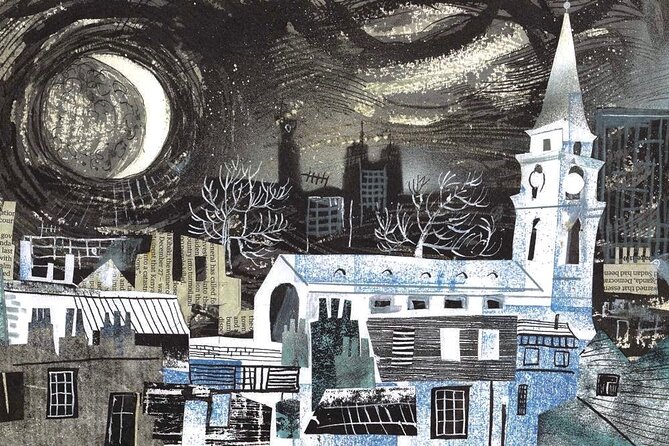
Next, you visit the site of the Priory of St Mary Spital. This is one of those moments where being on foot is essential, because you’re seeing a location that carries forward the weight of what used to be there.
The value here is context. Priories can feel distant because you often only see remnants in photos. In this tour setting, you’re given enough background to make the site feel logical: what the priory represented and why it fits into Spitalfields’ bigger timeline.
Don’t rush this stop. Give yourself a minute to look around the surrounding streets too, because the tour’s whole approach is to make you notice how old and new share the same ground.






Two women, a brewery, and working lives you can picture
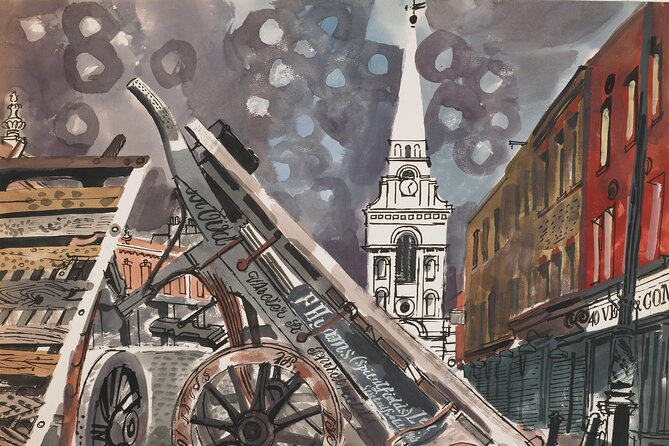
The tour then shifts into a more human scale with the story of a brewery. Instead of telling the story as a faceless business, you’re guided through the lives of two women who worked there.
I really like this approach. You end up understanding the brewery as a workplace and an engine for livelihoods, not just as a historical label. When you hear the story through two specific people, it becomes easier to imagine what daily shifts, skills, and routines might have looked like.
This kind of stop also helps the earlier religious and market stories “click.” Spitalfields isn’t only spiritual or commercial; it’s also labor—people earning rent, feeding families, and building community ties through work.
A famous thoroughfare and the controversy over its future
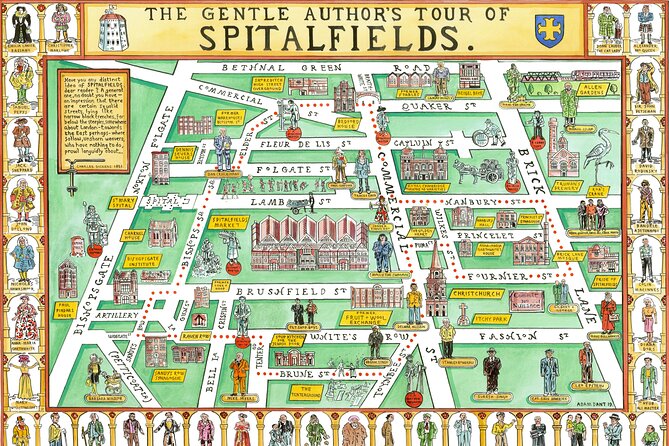
You’ll also spend time on a famous thoroughfare in the area and the ongoing controversy over its future. This part works best if you’re the type who likes civic stories: how neighborhoods change, why people argue about change, and what gets weighed when plans are debated.
I appreciated that the tour doesn’t treat the street as a simple backdrop. It shows how a single road can become a symbol—about identity, development, and what residents think matters most.
If you’re hoping for a fully neutral “everything is great” view, you might find this section more thought-provoking than comfortable. But that’s exactly why it’s useful: you leave with better instincts for reading a neighborhood’s current debates, not just its past.
From Huguenot chapel to synagogue to mosque: one building’s changing life

One of the most memorable stops is the story of a single building that embodies Spitalfields’ layered faith journey. You learn about a Huguenot Chapel that became a Synagogue and later became a Mosque.
This is the kind of change that’s easy to miss if you’re just walking by. But in the tour context, you’re taught to look at transformation as something meaningful rather than confusing. The building becomes a marker of how communities adapt and how religious spaces can carry forward spiritual needs even when the people and traditions evolve.
This stop is also emotionally resonant for many people because it connects migration, identity, and survival. It’s not only architecture; it’s continuity and change all at once.
Fine eighteenth-century houses: spotting what shaped everyday street life
Then you turn attention to fine eighteenth-century houses. This isn’t a “pretty facades” lecture. Instead, you’re guided to understand what those houses say about the area’s wealth, its trades, and who had the means to build and live there.
This is a good moment for you if you like architecture but don’t want to get stuck in jargon. The tour helps you read the streets like a written document: what the design suggests about status, what the timing implies, and how the neighborhood’s social story connects back to earlier themes like migration and work.
Look up as you walk. The details get your attention right away once you know what to watch for.
Nicholas Culpeper’s 17th-century herb garden: a calmer turn
After the busier history stops, the tour slows down at the herb garden of the 17th-century herbalist, Nicholas Culpeper. Even though Culpeper is the headline name, the best part for me is the change in pace and topic—from faith changes and markets to plants and practice.
This is a practical kind of history. You’re nudged to think about what herbs meant in everyday life: medicine, remedies, knowledge, and the local expertise tied to growing things.
This garden moment also balances the tour. It gives your brain a break from the heavier stories, while still keeping the theme of Spitalfields as a place where ordinary life and specialized knowledge met.
The 18th-century drawing room tea: how the tour ends where it began
The final segment is in a townhouse drawing room where you put your feet up—overlooking Christ Church Spitalfields. It runs about 30 minutes and includes tea and cakes baked to a recipe of 1720.
I love endings like this because they make the history feel lived-in, not just delivered. Sitting in a period-style room while you taste something tied to an old recipe is an easy way to make the past tangible without needing special museum access.
Also, this is a smart way to close a walking tour. Your legs rest, you get a final chance to ask questions, and you leave with one last sensory memory from the neighborhood. For a lot of people, that’s what turns a tour into something you remember later when you pass through again.
Price and value: what $90.28 buys you in Spitalfields
At $90.28 per person for about two hours, this is not a bargain stroll. You’re paying for a small-group experience capped at five people, plus the included tea and cakes stop at the end.
Here’s how I’d think about value for you. If you want a standard city-walk where the guide rushes through facts and you barely get time to ask questions, this price might feel steep. If you care about storytelling that ties multiple layers of Spitalfields together—faith, migration, markets, work, and street change—then the format justifies itself.
The included tea and cakes baked to a 1720 recipe also matters. It’s not just a snack; it’s part of the experience design, and it gets built into the tour schedule rather than being an optional extra.
If you’re booking ahead, you’ll also want to note that this tour is commonly booked about 36 days in advance on average. That means demand can be real, so decide sooner rather than later.
Who this tour suits best (and who should skip it)
This is a great fit if you:
- enjoy walking tours where you actually get context and reasoning, not just a list of sites
- like neighborhood history that links people to places
- want a small group for better conversation and fewer distractions
- appreciate an ending with tea, cakes, and a moment to sit
You might want to skip it if:
- you can’t stand and walk for about two hours
- you prefer long routes where you barely sit or stop (this one includes a sit-down finish)
Should you book the Spitalfields walking tour with The Gentle Author’s Tours?
Yes, I’d book it if you want an East End experience that feels specific, personal, and grounded in real neighborhood layers. Starting at Christ Church Spitalfields, moving through the market and priory sites, then tracking faith changes through a building that became a chapel, synagogue, and mosque—this is the kind of storyline you don’t get from a rushed highlight tour.
One more reason: the small-group cap makes it easy to connect with the guide’s explanation style and ask questions as the story shifts. And the tea and cakes in the townhouse at the end is a genuinely good way to close the loop.
If you’re short on time or hate walking, don’t force it. But if you can handle two hours on foot, this tour is a strong use of an afternoon in London that helps you see Spitalfields as more than a place between bigger attractions.
FAQ
FAQ
How long is the Spitalfields walking tour?
It runs for about 2 hours, with a final tea-and-cakes stop that lasts around 30 minutes.
What time does the tour start?
The start time shown is 2:00 pm.
How much does it cost?
The price is listed as $90.28 per person.
How many people are in the group?
The group is limited to a maximum of 5 travelers.
Where do I meet the tour?
You meet at Christ Church Spitalfields, Commercial St, London E1 6LY, UK.
Where does the tour end?
The activity ends back at the meeting point.
Is the tour language English?
Yes, it’s offered in English.
Is tea and something to eat included?
Yes. The tour includes tea and cakes baked to a recipe of 1720 during the final stop.
Does the tour run in bad weather?
It requires good weather. If it’s canceled due to poor weather, you’ll be offered a different date or a full refund.
What if I have trouble standing or walking for two hours?
It’s not recommended for travelers who cannot stand and walk for two hours. Service animals are allowed, and the tour is near public transportation.