REVIEW · LONDON
West End and South Bank Theatre Walking Tour in London
Book on Viator →Operated by Charlie Tantam · Bookable on Viator
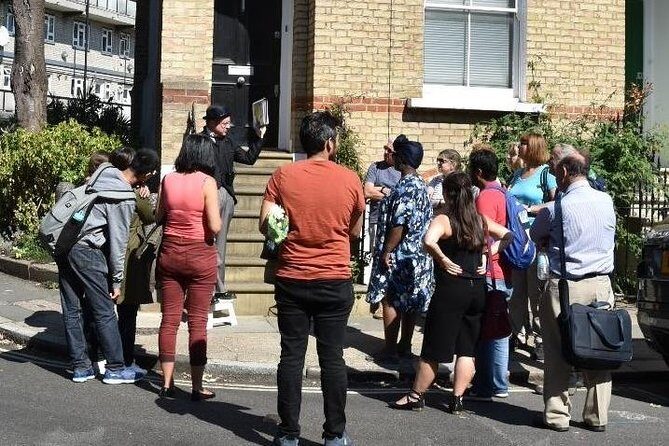
London theaters have a voice, and this walk listens. I like how small-group it is (max 12), which makes the guide’s stories feel personal. I also love that you get theater facts tied to real places, from grand opera houses to playhouses you’d miss on your own.
The main thing to plan for is the walking. It’s about 3 hours 30 minutes, with a lot of stops close together, so comfortable shoes matter, and good weather helps the whole route feel easy.
In This Review
- Quick highlights before you go
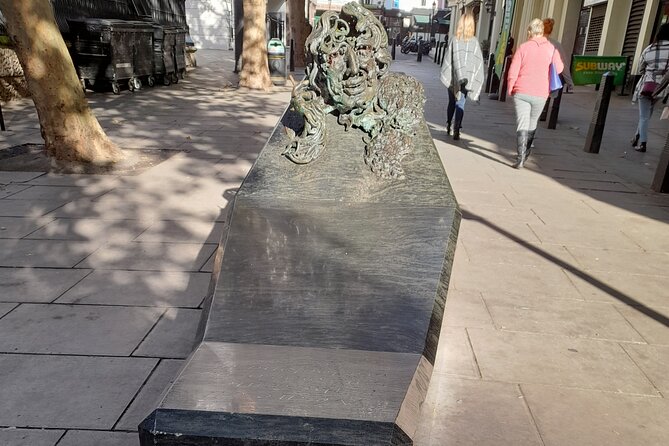
- Starting at Oscar Wilde’s statue: how the walk sets you up
- Price and value: is $38.39 a good deal?
- Your guide: what Charlie Tantam does well
- The West End sweep: from London Coliseum to Duke of York
- Leicester Square and the Haymarket stretch: where the stories get fun
- Prince of Wales and Shaftesbury Avenue: the theater corridor effect
- Palace Theatre and a few smaller stops you might skip
- Covent Garden and the Royal Opera House: performance beyond West End
- Fortune Theatre and Drury Lane: the big names of the play world
- National Theatre and Shakespeare’s Globe: finishing on South Bank
- What you’ll actually see during each pause
- Who this tour fits best
- Should you book this West End and South Bank Theatre walking tour?
- FAQ
- How long is the West End and South Bank Theatre Walking Tour?
- How much does the tour cost?
- What time does the tour start?
- Where does the tour start and end?
- Is this a large group tour?
- What language is the tour offered in?
- Is a mobile ticket used?
- Are admission tickets included for the theaters?
- Is the tour affected by weather?
- Is free cancellation available?
Quick highlights before you go
- Max 12 people: you actually hear and track the details without a crush.
- Charlie Tantam runs it: tight, professional storytelling with lots of stage history.
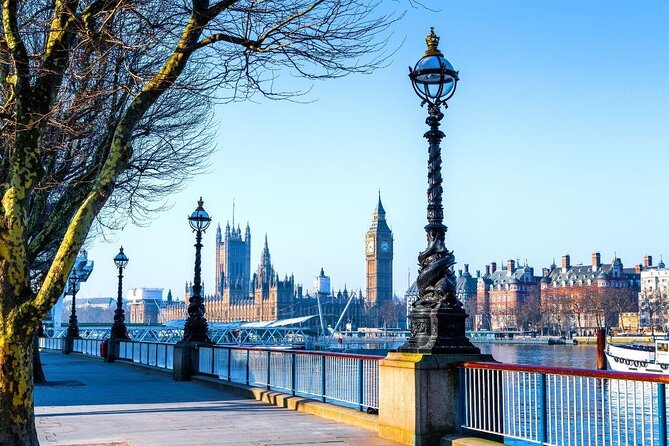
- West End to South Bank in one loop: theaters, markets, and major performance landmarks, not just one neighborhood.
- Most stops are ticket-free: you’re not paying to enter again and again during the walk.
- Globe finale: you finish at Shakespeare’s Globe, including the reconstruction and a final surprise location the guide keeps for the end.
Starting at Oscar Wilde’s statue: how the walk sets you up
Your tour starts at the Oscar Wilde Statue on Adelaide Street, right in central London (3 Adelaide St, WC2N 4HZ). This is a smart spot because you can reach it easily by public transport, and you’ll also find plenty of places to grab coffee or something light nearby before the 10:30 am start.
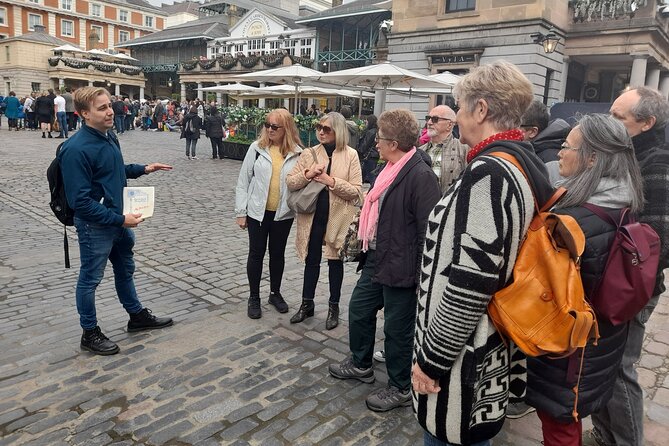
From there, you work your way through the West End theater belt and then keep going across to the South Bank. The route is built around pauses at famous venues, with the guide putting each one in context—what kind of performances it became known for, and how it fit into London’s acting and production world.
You can also read our reviews of more tours and experiences in London.

Price and value: is $38.39 a good deal?
At $38.39 per person for about 3 hours 30 minutes, this tour isn’t about buying a bunch of separate attractions. The value is that you’re paying for a human guide, a walking route that links dozens of famous sites, and a steady stream of stories you can’t easily piece together by yourself.
Most stops are marked as admission ticket free, which matters because it keeps the day from turning into a lineup of paid entries. There is one exception later on (Palace Theatre), where admission is not included—so if you plan to go inside there, you’ll want to budget for that separately.
For the kind of day you’re getting—25+ theater landmarks, compact storytelling at each pause, and an end at Shakespeare’s Globe—this is a solid value if you like stage history, famous productions, or even just the idea of walking through London with purpose.
Your guide: what Charlie Tantam does well
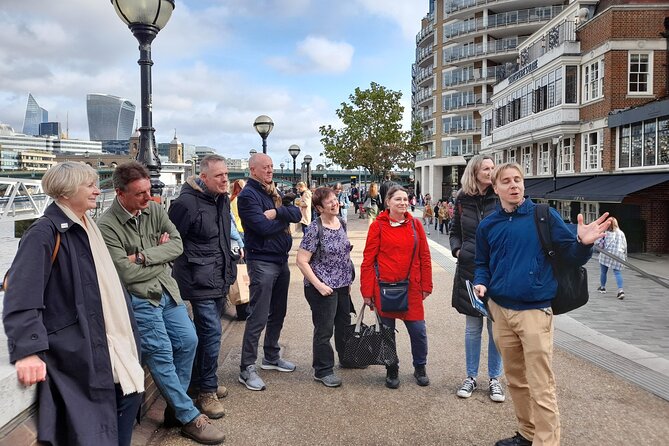
You’ll spend the day with Charlie Tantam, and the tone is practical and focused. The pacing feels built for understanding: you hear the key facts, you see the building, and you move on while it’s still fresh.
The guide’s strengths show up in small ways. He explains why each theater matters, not just what it’s called. He also uses names tied to debuts, long-running shows, and headline productions, so the places connect to careers and eras—not trivia lists.
The result is a walk that feels local rather than just a parade of sightseeing stops.
The West End sweep: from London Coliseum to Duke of York
Stop 1: London Coliseum
You begin with the London Coliseum, described as the largest theatre in the West End. The point here isn’t just size—it’s how a major West End venue shaped the area’s identity and its draw for big productions.
Stop 2: Duke of York Theatre
Next is the Duke of York, where you get stories about stars making their debuts. One example tied to the tour is Peter Pan, which helps you picture the theatre’s role as a launchpad, not only a stage for established names.
Stop 3: Noel Coward Theatre
At Noel Coward, you hear about famous productions of the past and an unusual claim: it’s the only theatre where two significant theatre giants shared a stage. That kind of detail is exactly why this tour works—you remember the buildings because you remember the unusual stories attached to them.
Stop 4: Wyndham’s Theatre
Wyndham’s Theatre gets special attention for its Shakespeare bust on the front, described as the only one of its kind in the West End. If you like looking at facades, this is a great pause to train your eyes for small details you’d otherwise walk past.
Leicester Square and the Haymarket stretch: where the stories get fun
Stop 5: Leicester Square
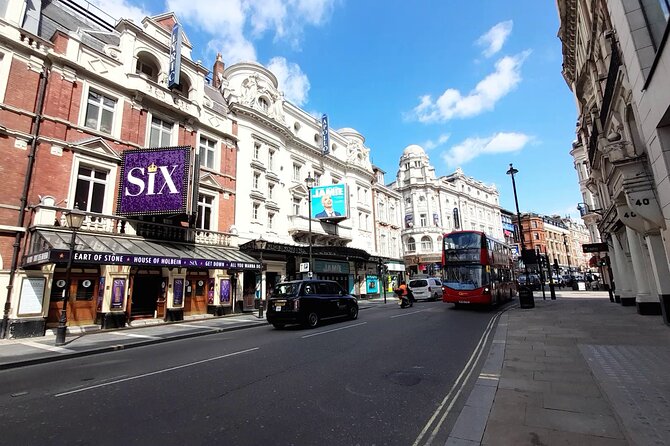
You’ll stop near the area’s famous theater energy, including a discount ticket booth concept. The value for you here is practical: it’s the kind of place to think about when you want great seats without paying top prices the moment you arrive.
You also hear about older music hall spots nearby, with references to historic venues like The Alhambra and The Empire. It’s a reminder that this area has been feeding London’s stage appetite for a long time.
Stop 6: Haymarket Theatre Royal
Haymarket is tied to big-name British acting history—explicitly linked to Sir Ian McKellen and Dame Judi Dench—and it also comes with a haunting rumor. Even if you’re not a horror person, these legend-style bits make the street feel alive instead of purely historical.
Stop 7: His Majesty’s Theatre London
At His Majesty’s Theatre, you get the theme of age and endurance. It’s described as the second-oldest active theatre site in London, and it’s also connected to the second-longest running musical, Phantom of the Opera. That gives you a sense of how the same stage can evolve while still staying a top London destination.
Stop 8: Harold Pinter Theatre
Harold Pinter Theatre is described as opening in 1881, making it one of the oldest playhouses in the West End. The guide links it to sensations and star power, including a mention of Marilyn Monroe, which helps you connect the building to the cultural moments that brought crowds in.




Prince of Wales and Shaftesbury Avenue: the theater corridor effect
Stop 9: Prince of Wales Theatre
This is where modern West End energy meets layered theatrical past. The tour notes that it’s now home to The Book of Mormon, while previously hosting comedy and musical spectacles. You’ll also hear a list of famous performers associated with the space, including The Beatles and Barbara Streisand.
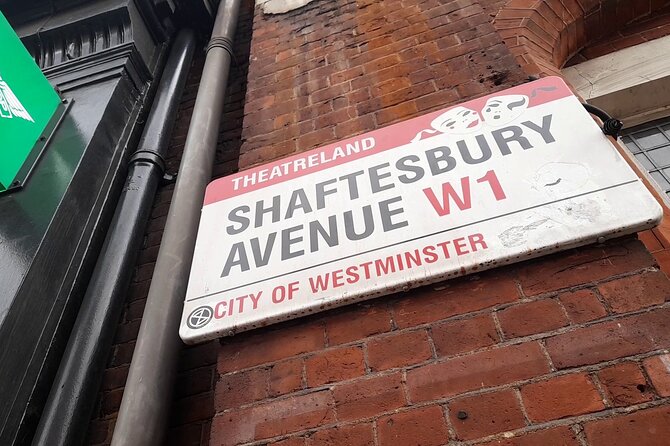
Stop 10: Shaftesbury Avenue
Then you step into Shaftesbury Avenue, often described as the road with more theatres than any other. The guide uses it like a map: Lyric, Apollo, Gielgud, Sondheim, and the Palace are highlighted as key names along the stretch.
Stop 11: Lyric Theatre
The Lyric Theatre is described as the oldest surviving theatre on Shaftesbury Avenue. It’s also linked to a tragic death of a British comedy icon, which gives the building a human, emotional context rather than just a glowing postcard label.
Stop 12: Apollo Theatre
Apollo Theatre gets the Edwardian angle, described as the first Edwardian Theatre, opening in 1901. You’ll also hear that it once hosted a legendary production, so you understand it not only as architecture but as a platform for big cultural moments.
Stop 13: Gielgud Theatre
At Gielgud, the name matters: it’s now named after Sir John. The tour mentions West End debuts tied to famous figures, including Harry Potter himself. The practical takeaway for you is that the guide keeps connecting stage legends to the physical places you can still see today.
Stop 14: Sondheim Theatre
Sondheim is used to explain how long-running musicals shape the West End ecosystem. You’ll hear about Les Miserables as the world’s longest-running musical, plus mention of famous faces who debuted here in the 1980s.
Palace Theatre and a few smaller stops you might skip
Stop 15: Palace Theatre (ticket not included)
This is a key turning point because the tour notes the admission ticket is not included here. The Palace is now home to Harry Potter and the Cursed Child, and you’re told the origin of the phrase bring the house down. Even if you don’t go inside, the outside stop plus the story makes it feel purposeful.
Stop 16: Ambassadors Theatre
Ambassadors is described as unremarkable on the outside, but with a big history behind it. The guide ties it to notable debuts, including Vivien Leigh and Paul Robeson. For me, this is one of the tour’s best lessons: London’s famous stage story isn’t only about the grandest buildings.
Stop 17: St. Martins Theatre
St. Martins is famous for The Mousetrap, described as the world’s longest-running play. The point of the stop is the “unlikely hit” angle—how a story can run so long it becomes part of the city’s routine.
Stop 18: The Arts Theatre
The Arts Theatre is described as the West End’s smallest theatre. It’s also tied to a moment of controversy from a past play. That’s a neat counterweight to the big glamour theaters—this is a space where audience reactions and risk matter.
Covent Garden and the Royal Opera House: performance beyond West End
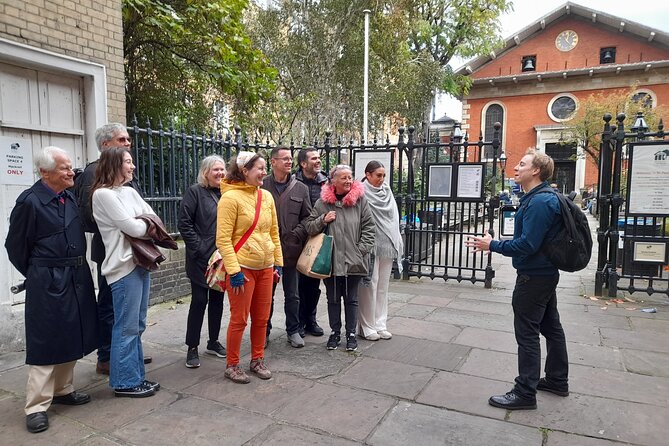
Stop 19: Covent Garden
You pause around Covent Garden Market, with mentions of street theatre spots and the Actors Church. You also hear that two of the oldest theatre sites in London are connected with this area. For you, the value is that the tour expands your thinking: stage life in London isn’t trapped inside ticketed venues.
Stop 20: Royal Opera House
At the Royal Opera House, the tour highlights its age—established in 1732—and its current role for Royal Opera and Royal Ballet. The key shift here is genre. You’re moving from West End playhouse and musical energy into high culture performance with deep roots.
Fortune Theatre and Drury Lane: the big names of the play world
Stop 21: Fortune Theatre
Fortune Theatre is tied to The Woman in Black, described as the longest-running horror play ever. You also get spooky stories associated with its 30+ year history. Even if you’re not planning to see the show, it’s a fun way to understand how theater fandom can become tradition.
Stop 22: Theatre Royal Drury Lane
This stop is described as the oldest active theatre spot in the West End. The guide focuses on legends of the past tied to its legendary stage. If you like the idea of theatre as a living institution, this is a strong anchor stop.
Stop 23: Lyceum Theatre
Lyceum Theatre is tied to The Lion King since 1999 and described as a hot ticket. You’ll also hear about Victorian-era stage power through Sir Henry Irving and Dame Ellen Terry, plus the genesis of a famous gothic horror creation. The tour makes it feel like London theater history repeats itself—new shows, old influence.
National Theatre and Shakespeare’s Globe: finishing on South Bank
Stop 24: National Theatre
The National Theatre stop gives you a lesson in big-picture cultural planning. You hear about the National’s history, and you’re told that Laurence Olivier, a founder of the National, said the opposite of what you might assume. That kind of detail matters because it shows how institutions can be shaped by debate and vision, not just money and momentum.
Stop 25: Shakespeare’s Globe
Your final stop is Shakespeare’s Globe at 21 New Globe Walk (close to London Bridge and Blackfriars for transport). The guide points out the reconstruction of Shakespeare’s Globe, plus a final top-secret theatre location saved for the end.
This finish is more than a nice photo stop. It’s the historical thread: from West End commercial success and long-running shows all the way back to the stage world tied to Shakespeare and the shape of English theater itself.
What you’ll actually see during each pause
This isn’t a “run inside every building” tour. Instead, you get a fast, focused pattern: you stop at the venue, the guide explains what’s special about that specific place, and you move on.
That approach works well because it keeps you from feeling bogged down in queues. It also keeps the day coherent: after a few stops, you start recognizing themes—debuts, long-running shows, distinctive facades, and street-level theater culture around areas like Leicester Square and Covent Garden.
And since most stops are marked as admission ticket free, the day stays predictable: your biggest variable is how your feet hold up.
Who this tour fits best
You’ll likely enjoy this most if:
- You love theater and want context that makes shows easier to understand.
- You like walking tours but want a clear theme and strong structure.
- You’re curious about how London’s stage scene evolved, from playhouses to opera and back to Shakespeare.
If your idea of sightseeing is mostly open spaces and museums with long indoor time, this might feel like too many stops. But if you want a theater-focused day with strong storytelling, it hits the mark.
Should you book this West End and South Bank Theatre walking tour?
I’d book it if you want a day that’s built around real performance landmarks and guided stories that make each one feel specific. The combination of a small group size capped at 12, a proven guide (Charlie Tantam), and the West End-to-South Bank finish at Shakespeare’s Globe is a great mix of “see the buildings” and “understand the stage world.”
Hold off if you know you struggle with long walking days. It’s not extreme, but it is steady, and you’ll feel it after several hours of theater-hopping.
If you do book, bring comfortable shoes, dress for the weather, and give yourself time at the end to linger near the Globe—because once you finish, you’ll want to keep talking about what you learned.
FAQ
How long is the West End and South Bank Theatre Walking Tour?
The tour is approximately 3 hours 30 minutes.
How much does the tour cost?
The price is $38.39 per person.
What time does the tour start?
The start time is 10:30 am.
Where does the tour start and end?
It starts at the Oscar Wilde Statue, 3 Adelaide St, London WC2N 4HZ, and ends at Shakespeare’s Globe, 21 New Globe Walk, London SE1 9DT.
Is this a large group tour?
No. It has a maximum of 12 travelers, keeping it small-group.
What language is the tour offered in?
The tour is offered in English.
Is a mobile ticket used?
Yes, you’ll receive a mobile ticket.
Are admission tickets included for the theaters?
For most stops, the admission ticket is listed as free. Palace Theatre is noted as admission ticket not included.
Is the tour affected by weather?
Yes. The tour requires good weather, and if it’s canceled due to poor weather, you’ll be offered a different date or a full refund.
Is free cancellation available?
Yes. Free cancellation is available up to 24 hours in advance for a full refund.