REVIEW · LONDON
Buckingham Palace: Admission ticket to The Royal Mews
Book on Viator →Operated by The Royal Collection Trust · Bookable on Viator
A few steps from the palace crowds, this visit feels calmer. The Royal Mews lets you see a working royal stable and the coaches that carry the monarchy’s road transport legacy, including the Gold State Coach.
I especially like the up-close access to historic carriages, where the details go way beyond postcards. I also like that the visit is built around a multimedia guide and a tight time window, so you can fit it into a full London day without chaos. The one drawback to plan for: you might not get a full show of horses at every moment—views can be limited compared with what some people hope for.
If you do it right, the mews gives you a different side of monarchy: not just pageantry, but logistics and craft. The Royal Mews has been tied to royal travel since the 1700s, yet it still functions today for the King and other royals’ road transport. My advice is to show up with realistic expectations for the horse element, but with curiosity for the coaches and the stable itself.
In This Review
- Key things to know before you go
- Royal Mews: a working royal stable, not just a museum stop
- Timing and group size: how the 45 minutes actually works
- What you’ll see: state coaches, ceremonial vehicles, and the Gold State Coach
- Horse viewing reality: when you might spot Windsor Grey’s and Cleveland Bays
- Multimedia guide and live guidance: getting the most from the Royal Mews
- Price and value for a Royal Collection Trust ticket
- Logistics: where the Royal Mews is and how to fit it into London days
- Should you book the Royal Mews admission ticket?
- FAQ
- How much does the Buckingham Palace Royal Mews ticket cost?
- About how long is the visit?
- What’s included with admission?
- Is the experience offered in English?
- Do I receive a mobile ticket?
- When is the last admission time?
- Can I cancel for a full refund?
Key things to know before you go
- A working royal stable: this is not a dead museum set aside for photos only
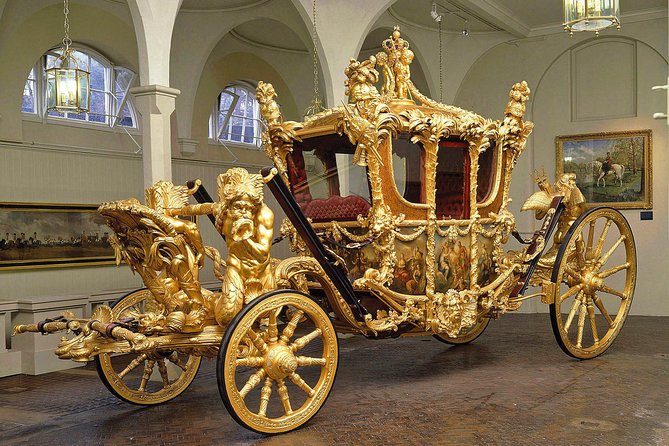
- Gold State Coach spotlight: one of the most famous ceremonial coaches in the collection
- Historic continuity since 1760: royal road transport has been based here for centuries
- Windsor Grey’s and Cleveland Bays: the horses used for carriage pulling
- Small groups (up to 15): the pace stays manageable for a 45-minute visit
- Free multimedia guide included: you’ll have your own narration route through the displays
Royal Mews: a working royal stable, not just a museum stop
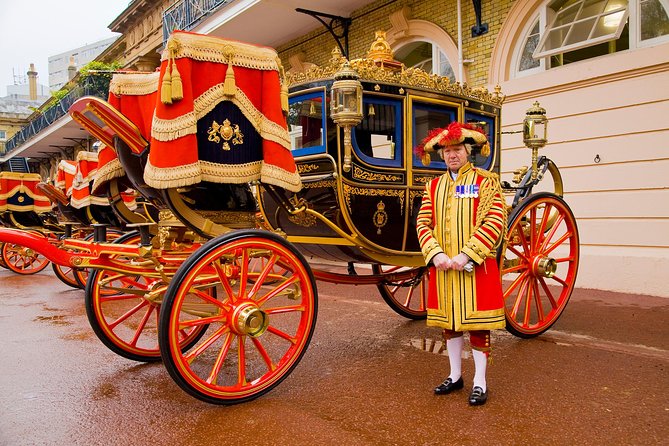
This is one of the best kinds of London experiences: close to the palace, but not drowning in palace-style lines. The Royal Mews is one of the world’s finest working stables, and it’s still tied to royal life. That matters because you’re looking at objects designed for use—then updated over time—rather than a collection frozen behind glass.
The stable is home to the royal collection of historic coaches and carriages. You’ll also see the horses that pull them—Windsor Grey’s and Cleveland Bays—which keeps the focus grounded in the real job of carriage transport. And here’s a detail I love for context: the mews is responsible for royal road travel arrangements for His Majesty The King and other members of the Royal Family.
There’s also a strong sense of continuity. In 1760, George III moved his carriage collection closer to his new home at Buckingham Palace. Since then, the stables have been updated by different monarchs to match changing transport needs. So when you look at the coaches, you’re not just looking at old art—you’re looking at how royal travel evolved.
You can also read our reviews of more tours and experiences in London.



Timing and group size: how the 45 minutes actually works
The visit is about 45 minutes, which is perfect when you want a meaningful stop without losing an entire half day. The experience caps at a maximum of 15 travelers, so it’s usually not an endless crowd shuffle. If your London schedule is tight, this kind of duration is a gift.
Expect the pace to be structured around seeing key vehicles and getting the story behind them. The mews isn’t trying to stretch you out for hours. It’s more like: walk in, follow the displays, learn the meaning of the collection, then you’re done with plenty of time left in your day.
One planning note: last admission is 1 hour before closing time. That’s the kind of detail that can save you from a last-minute disappointment when you’re juggling multiple sights.
What you’ll see: state coaches, ceremonial vehicles, and the Gold State Coach
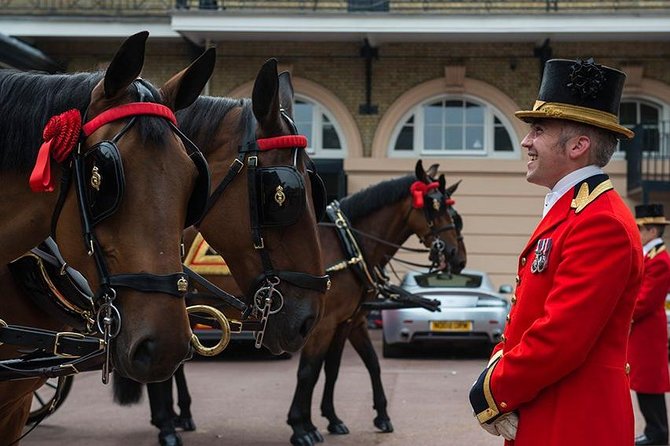
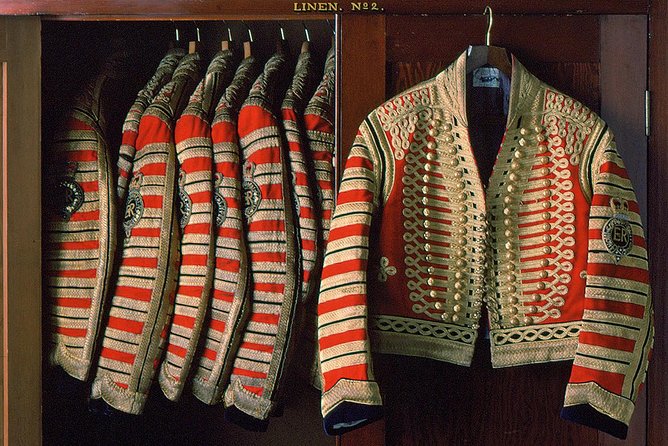
The heart of the experience is the lineup of historic coaches and carriages—some of the most visually dramatic vehicles in the royal orbit. The Royal Mews presentation is designed so you can appreciate craftsmanship up close. If you like details—ornate surfaces, scale, and how things are built—you’ll get more out of this than you would from distant viewing.
One highlight is the Diamond Jubilee State Coach. It’s part of the display of spectacular coaches that represent ceremonial moments and royal tradition. You’ll also see the Gold State Coach, a coach associated with coronations. This is the “star” moment for many visitors because it’s so unmistakably grand. Even if you don’t care about royal details, you can still appreciate the size, materials, and the sheer visual weight of gold leaf and design.
What makes these vehicles feel special is their purpose. These aren’t just decorative props. They were built to move people in formal processions, and they represent real transport technology and ceremonial planning. That gives the mews a smart balance: it’s part history lesson, part engineering and design lesson.
There’s also an advantage to the way the mews is laid out. Being in a real stable environment helps the scale make sense. You’re not looking at the coaches in a vacuum—you’re seeing them as part of a working site that still does its job.
Horse viewing reality: when you might spot Windsor Grey’s and Cleveland Bays
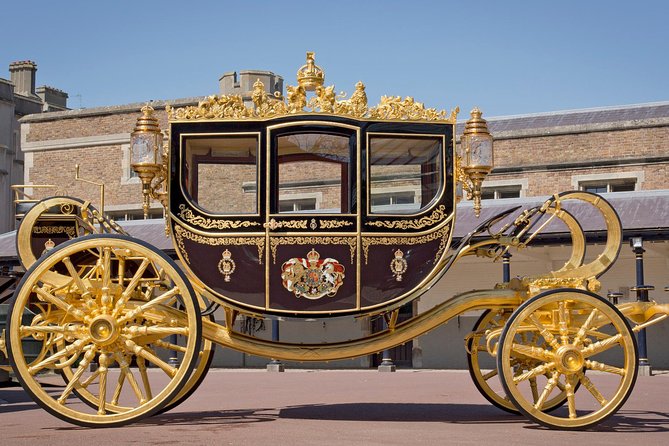
Let’s talk horses honestly. The Royal Mews is connected to carriage pulling, and the stables house the horses used for royal road transport. That’s the promise.
In practice, horse sightings can vary. A number of visitors come away wanting more horse time. You may see horses in stalls or catch only a limited number during your visit. Sometimes they might be easier to spot than others, and your view can depend on timing and the horses’ position and behavior.
So if horses are your main goal, go in with a flexible mindset. You’re still very likely to learn a lot about the working stable side of royal transport, even if the number of horses you spot feels smaller than expected. The good news is that the coaching and stable context help you understand why the horses matter—even when you don’t get a constant stream of action.
Multimedia guide and live guidance: getting the most from the Royal Mews
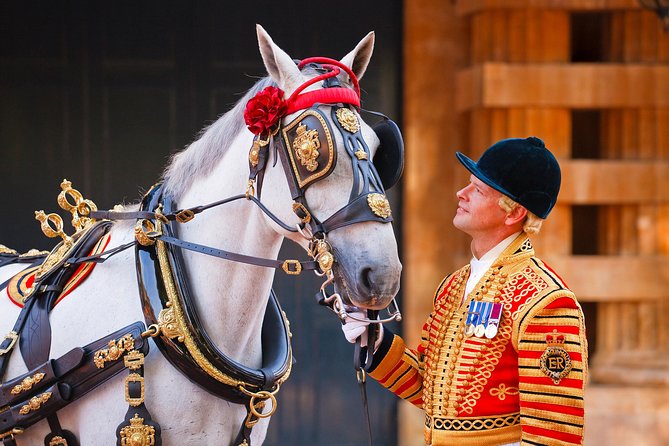
The ticket includes a multimedia guide, which is a major part of how the visit works. That matters because you can control the pace. If you like reading every label and pausing to look, you can. If you prefer to keep moving, you can still get the core story without waiting for everything to be spoken aloud.
The Royal Mews can also offer regular guided tours where you can hear the history and the association with the British monarchy. On guided days, the experience can feel more personal—especially when a guide brings personality and clarity.
Two guide names come up from visitor feedback: Jeremy and Isabelle. If you’re lucky enough to catch Jeremy, expect a guide who’s described as funny and easy to hang out with while still covering plenty of history. If Isabelle is the guide, you may get an enthusiastic, detailed walkthrough that makes the coaches and stable feel instantly more meaningful.
Even if your visit ends up being more self-paced, the multimedia guide keeps you from feeling like you’re standing in a room full of expensive objects with no thread to follow. It’s a practical setup for a short 45-minute visit.






Price and value for a Royal Collection Trust ticket
At $24.80 per person for about 45 minutes, this ticket isn’t trying to compete with bargain museum entry. But it also isn’t a half-day or full-day commitment with complicated add-ons.
I see this as good value for three reasons:
- You’re getting access to a working royal site, not just a collection behind walls. That working-stable angle is rare.
- You get the right kind of focus: a compact visit centered on vehicles, horses, and the transport story.
- The multimedia guide is included, so you’re not paying extra to understand what you’re seeing.
So the question becomes: what do you want most from your royal outing? If you want pictures from afar, you could be satisfied with other palace viewpoints. If you want to understand how royal travel is organized and appreciate ceremonial coaches at close range, the price starts to make sense fast.
One note on expectations: this is a short visit. That’s a strength for many people, but if you want hours of horse action and repeated demonstrations, you may feel like it ends quickly.
Logistics: where the Royal Mews is and how to fit it into London days
The meeting point is Royal Mews, London SW1W 0PP, UK. The location is near public transportation, which is great because London can be unpredictable with crowds and walking routes.
This is also a smart stop to pair with a bigger palace plan. The mews visit can act like a palate cleanser: you get historical grandeur, but you’re also grounded in the everyday reality of royal transport.
Because the last admission is 1 hour before closing, plan this as an anchor on your schedule rather than something you toss in at the end. If you’re bouncing between nearby attractions, pick a time that doesn’t force you to sprint.
Finally, there’s a moderate physical fitness note. The visit is manageable, but you should be prepared for some walking and standing as you move through the stable areas.
Should you book the Royal Mews admission ticket?
Yes, you should book if you want a short, high-impact royal experience focused on coaches, stables, and the real mechanics of ceremonial transport. It’s a strong choice for families who can handle a 45-minute visit (children must be accompanied by an adult), and it works well when you want a smaller-scale experience near the palace.
Skip or adjust expectations if you’re mainly chasing horse excitement. The mews is absolutely about horses and carriage pulling, but your chance to see multiple horses up close can be limited. In that case, you might still enjoy the coaches immensely, but plan your day with flexibility around animal viewing.
If you like details, like craftsmanship, and want to see icons like the Gold State Coach in a working stable setting, this ticket is a very solid use of time in London.
FAQ
How much does the Buckingham Palace Royal Mews ticket cost?
The price is $24.80 per person.
About how long is the visit?
The experience runs about 45 minutes.
What’s included with admission?
Your ticket includes a multimedia guide.
Is the experience offered in English?
Yes, it is offered in English.
Do I receive a mobile ticket?
Yes, the ticket is described as a mobile ticket.
When is the last admission time?
Last admission is 1 hour before closing time.
Can I cancel for a full refund?
Yes. You can cancel for free up to 24 hours in advance for a full refund.