REVIEW · LONDON
Buckingham Palace, St James Palace & Tea at Kensington Palace
Book on Viator →Operated by Top Tasting Tours · Bookable on Viator
A royal day with tea built in. This 2-hour London walk links Buckingham Palace area stops with calmer back streets—and finishes with included High Tea at Kensington Palace. Two things I love: the small groups (often 4–6) and the way the guide turns street-level details into stories you’d miss wandering solo. One consideration: it’s still a walking route, so plan comfortable shoes and be ready for the pace.
I also like that the itinerary is packed, but not frantic: you’re not stuck in a big crowd, and you get breaks baked into the stop style. The Tea portion matters too, because you’re not just grabbing pastries—you get sandwiches, scones, and cakes in a real royal setting at the Orangery. If you’re dreaming of getting inside every palace, note the fine print: palaces are mostly viewed from the outside unless you select a state rooms option at checkout.
Guides in past outings have included names like Simon Taylor, David, and Tom, and the common thread is clear: the storytelling is the point, and it works for adults and families. For planning, you’ll want a contactless or Oyster card for local bus fare, since transport is not included.
In This Review
- Key Highlights You’ll Actually Feel
- How This Royal Walking Route Fits a Tight London Schedule
- Green Park Start: Finding Quiet Royal Perspective First
- St James’s Back Streets and Spencer House: Politics, Clubs, and a Famous Name
- The Mall, St James’s Palace, and Clarence House: Royal Sites You Can Appreciate Without Buying Tickets
- Buckingham Palace Area: More Than the Photo Spot
- Bomber Command Memorial: A Serious Pause in the Middle of Royal London
- Apsley House, Royal Albert Hall, and Albert Memorial: Architecture Landmarks in Order
- Kensington Palace High Tea at the Orangery: What You Get and Why It Works
- Price and Value: Is $173.45 a Smart Deal?
- Who This Tour Suits Best (and Who Might Feel Limited)
- Should You Book Buckingham Palace, St James’s, and Kensington Palace High Tea?
- FAQ
- How long is the Buckingham Palace, St James Palace & Tea at Kensington Palace tour?
- What’s included in the tour price?
- Do I get to enter the palaces during the walking tour?
- How big is the group?
- Are dietary needs accommodated for High Tea?
- Where do I meet and where does the tour end?
- Can I cancel and get a full refund?
Key Highlights You’ll Actually Feel
- Small groups (max 10, often 4–6) mean more attention and easier pacing.
- High Tea at Kensington Palace’s Orangery includes sandwiches, scones, and cakes.
- A guide-led royal history walk adds context at each stop, not just photos.
- Three royal palace-area landmarks in one day, great for short stays.
- Dietary options are available with prior request (gluten-free, vegetarian, vegan, halal).
How This Royal Walking Route Fits a Tight London Schedule
This is built for travelers who want a “royal London” day without spending half their vacation in ticket lines or marching in a huge herd. The tour runs about 2 hours, with a guided walk and scheduled pauses at major landmarks, ending at Kensington Palace for High Tea.
Because it’s maximum 10 people (typically 4–6), you can usually ask questions and hear answers. That changes the feel of places like St James’s and the Mall—when you’re not just passing by, the street layout makes more sense.
One practical note: it’s a walking tour. It shouldn’t feel like a workout, but you will move between sites. If you’re traveling with small kids, use the tour style as a “choose your day” moment: this one works best when you’re not also trying to cram in heavy sightseeing before or after.
You can also read our reviews of more tours and experiences in London.

Green Park Start: Finding Quiet Royal Perspective First
Your tour begins in Green Park, at the Green Park Underground area (Piccadilly). You start with a focus on getting your bearings and seeing the royal neighborhood from a calmer angle before the famous crowds.
Green Park is often treated as a shortcut by people who just want to get to the next landmark. Here, it’s the warm-up. The stop is short, but the guide’s job is to point you away from the main bustle toward lesser-used pathways and discreet passages that help the rest of the day click into place.
If you’re the type who likes understanding where you are before you take photos, this start helps a lot. You’ll also appreciate it later, because you’re walking a route that makes sense only once you get your orientation right.
St James’s Back Streets and Spencer House: Politics, Clubs, and a Famous Name
From Green Park, you move into St James’s, the aristocratic quarter where power, social life, and politics rubbed shoulders. The walk here centers on small streets and the kind of details you’d overlook on your own.
The tour frames the area with stories about chocolate houses and taverns evolving into prestigious clubs in the seventeenth century. That’s a big theme in this part of London: places that sound ordinary today were once social engines for the political class.
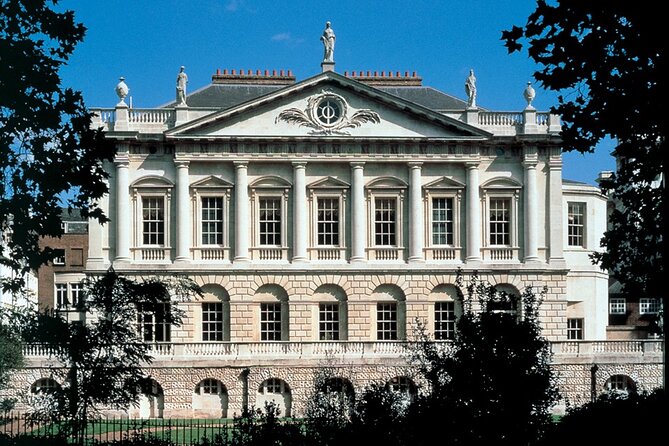
Then comes Spencer House, built between 1756 and 1766 for John, first Earl Spencer—an ancestor of Diana, Princess of Wales. Even though you don’t spend long here, the stop gives you a thread between the 18th-century aristocracy and the modern royal spotlight people recognize.
The upside of these short stops is efficiency. The tradeoff is that you’re getting highlights, not a full museum-style look. If you love deep architectural reading, you may want to add time later for independent exploration.
The Mall, St James’s Palace, and Clarence House: Royal Sites You Can Appreciate Without Buying Tickets
The day then shifts to the heart of the royal frontage. You pause near The Mall, with St James’s Palace discussed as an official royal palace that isn’t regularly open to visitors.
That matters because it sets expectations. You’re not promised constant interior access. Instead, you learn how and when public access happens—like Sunday services at the Chapel Royal and the Queen’s Chapel—so you understand what you’re seeing and what you might try on another day.
Next is Clarence House, designed by John Nash and built 1825–1827 for the Duke of Clarence (who became King William IV in 1830). The story here helps explain why Clarence House was favored over the adjacent St James’s Palace—St James’s had the reputation of being too cramped for comfort.
This segment is a good example of value in a guided walk: the point isn’t access to buildings every minute. It’s context for why these buildings are placed where they are, and what they meant to the people living and governing here.
Buckingham Palace Area: More Than the Photo Spot
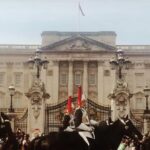
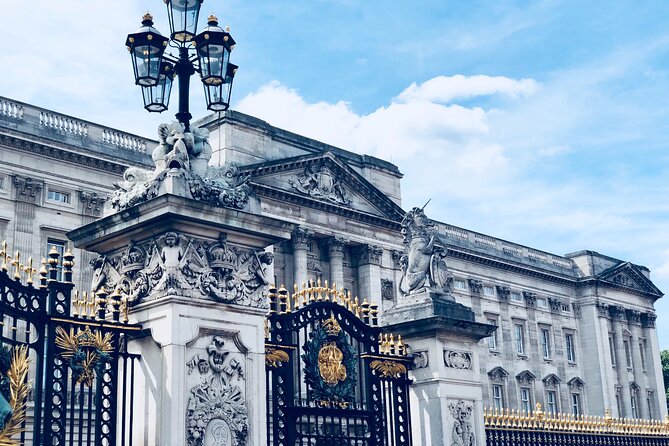
You finish the core royal “belt” of the walk with Buckingham Palace. Even at a stop that’s brief, you get a grounding story: the palace site links back to the Manor of Ebury and the marshy ground watered by the river Tyburn, which still runs below the courtyard and south wing.
There’s also the village name connection—Eye Cross at a fordable point (Cow Ford). Ownership shifts over time are mentioned, including Edward the Confessor and Edith of Wessex, then post-Conquest changes tied to Norman rule.
This kind of background is surprisingly useful when you’re standing in front of Buckingham. It stops the palace from being only a spectacle and turns it back into geography—something layered on top of earlier London.
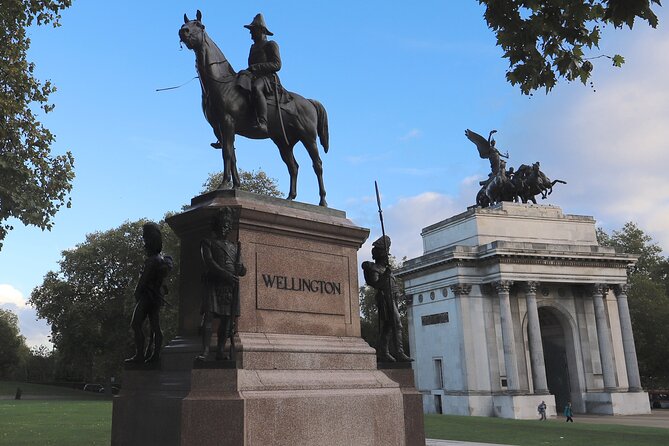
After Buckingham, you cross toward the Wellington Arch. You’ll see the four-horse chariot imagery and a figure of peace added in 1912. The tour also points out how the Central Passage was reserved for royalty—another reminder that these spaces were designed with hierarchy in mind.

Bomber Command Memorial: A Serious Pause in the Middle of Royal London
One of the most meaningful stops is the Bomber Command Memorial. It commemorates RAF Bomber Command crews who flew missions during World War II.
The details you’re given are heavy: 55,573 aircrew from Britain, Canada, Australia, New Zealand, Czechoslovakia, Poland, and other allied countries, plus civilians of all nations killed during raids. The memorial sits on the south side of Piccadilly, facing Hyde Park Corner.
This stop gives the tour balance. You’re not only learning about monarchy and architecture—you’re seeing how London remembers. If you’re sensitive to war themes, you might still appreciate it because it’s short, focused, and stays respectful.
Apsley House, Royal Albert Hall, and Albert Memorial: Architecture Landmarks in Order
As the walk transitions toward Kensington, you hit a string of major landmarks that help you understand why this part of London is considered a cultural zone.
At Apsley House, you learn it was built in red brick by Robert Adam between 1771 and 1778 for Lord Apsley. Some interiors still survive, including the Piccadilly Drawing Room with its apsidal end and Adam fireplace, plus the Portico Room behind the giant Corinthian portico added by Wellington.
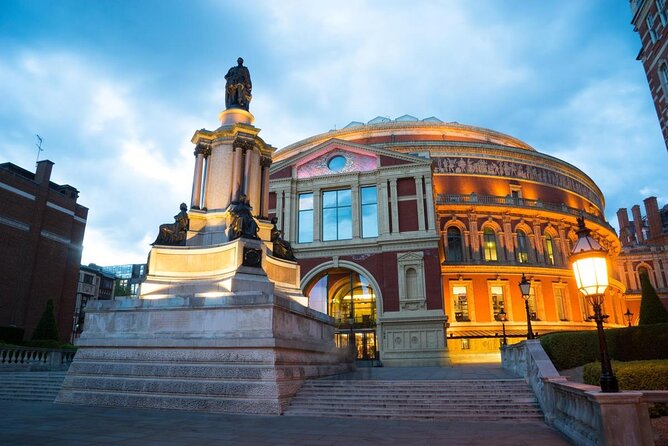
Then it’s Royal Albert Hall, a concert hall on the edge of South Kensington with a seating capacity of 5,272. The tour notes its opening by Queen Victoria in 1871, and that major artists across performance genres have appeared there.
Finally, you pause at the Albert Memorial in Kensington Gardens. It commemorates Prince Albert, who died of typhoid in 1861. This is a great stop if you like monuments that feel like storytelling in stone—ornate, symbolic, and meant to be seen slowly even if your time is limited.
Kensington Palace High Tea at the Orangery: What You Get and Why It Works
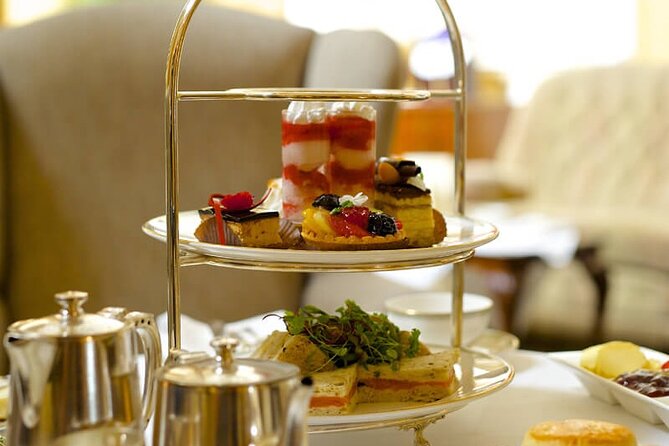
The walk ends at Kensington Palace, at the Orangery, where your included High Tea is hosted. The big win here is that you’re not just finishing with a snack. The tour builds in a food-and-story moment where you can rest, refuel, and let the day settle.
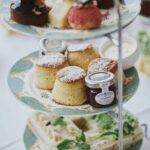
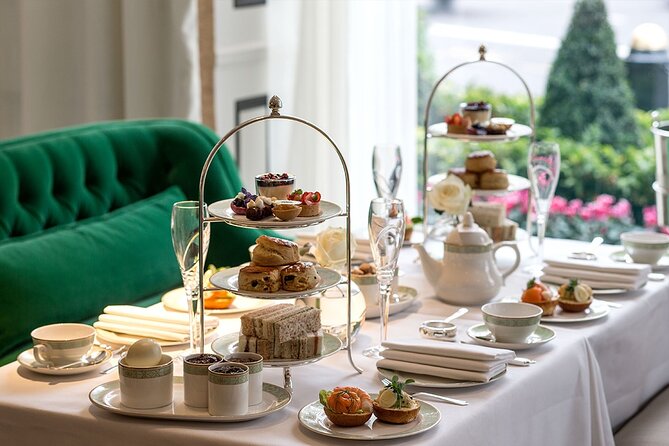
The tea service includes:
- Delicate finger sandwiches
- Welsh scones (with and without raisins), plus clotted cream and strawberry jam
- A Royal cake selection based on the time of year
There are also dietary supports if you request ahead: gluten-free, vegetarian, vegan, and halal options are available on prior request. The child tea is typically for 11 years and younger.
One detail I’d highlight for your planning: the tea is served at a private table at the venue. That’s a comfort upgrade in a place where people sometimes end up juggling their food while trying to angle for photos.
You also get a little education built in: the tour includes the history of tea drinking in England. That turns your scones from just good eating into part of the experience.
One more bonus from past guest comments: the tea has been described as served on Princess Diana’s royal China. Even if you don’t care about china details, it adds a special “you’re in the right place” feeling.
And if you want alcohol, it’s not included—but alcoholic beverages can be purchased during the tea service.
Price and Value: Is $173.45 a Smart Deal?
At $173.45 per person for about 2 hours, this tour looks pricey on the sticker. But you’re not just paying for walking scenery.
You’re paying for four tangible things:
- A guided royal history walk
- Included afternoon tea with sandwiches, scones, and cakes
- A small-group format (max 10, typically 4–6), plus a private table
- Optional state rooms entrance if you select it at checkout (the data notes entrance is not automatic unless selected)
What’s not included matters too. Private transport isn’t provided, and you’ll need to handle local movement yourself. The tour also notes bus fare is £1.75 per person if needed, using a contactless card or Oyster card.
So the value question becomes simple: if you want High Tea in Kensington Palace and you don’t want to plan it yourself (or you want the guide to make the route click), this price often makes sense. If you only want to take pictures of exteriors and you’d rather eat at a nearby café, you could likely do it cheaper on your own.
The reason this tour tends to score so well is that it bundles the two things people actually remember: the guided street-level context and the real sit-down tea experience.
Who This Tour Suits Best (and Who Might Feel Limited)
This works especially well if you:
- Are short on time and want major palace-area landmarks in one day
- Love learning how London’s power centers evolved across centuries
- Plan to end your sightseeing with a proper meal that’s included
- Prefer a small group where you’re not lost in the back
It may feel limited if you:
- Want long, in-depth time inside palaces
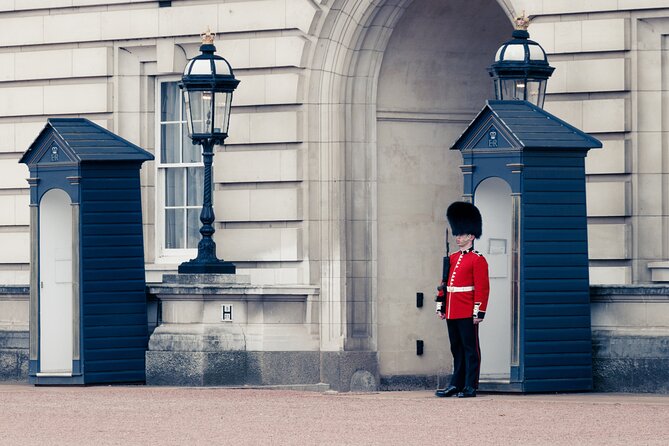
- Are hoping for a long, separate Changing of the Guard moment (your focus is the walking-and-tea structure)
- Are extremely sensitive to walking time, since the day is designed as a route with multiple stops
A fair way to think about it: this is a “guided highlights with tea” tour, not a full royal museum day.
Should You Book Buckingham Palace, St James’s, and Kensington Palace High Tea?
If you want an efficient, guided royal route that ends with a genuine High Tea setting, I think you should strongly consider booking. The small-group size, the included tea, and the guide’s ability to connect places like St James’s, Buckingham’s area, and Kensington Palace into one coherent day are the main reasons it works.
I’d skip it only if your priority is maximum palace interior time or you’re not interested in High Tea at all. In that case, you can build a DIY route—just know you’ll lose the storytelling glue and the included meal value.
If your ideal London day is: walk, learn a lot without feeling overwhelmed, then sit down with scones and cakes in a royal venue, this one fits.
FAQ
How long is the Buckingham Palace, St James Palace & Tea at Kensington Palace tour?
It’s approximately 2 hours.
What’s included in the tour price?
You get a knowledgeable guide and royal history walk, an afternoon tea (finger sandwiches, Welsh scones, and a royal cake selection), and the history of tea drinking in England. The tea is served at a private table. There’s also entrance to the state rooms if selected at check out.
Do I get to enter the palaces during the walking tour?
Palace entry isn’t automatically included. The tour notes there is no entrance to palaces/walking tour unless selected at check out. The state rooms entrance is available only if you choose it at checkout.
How big is the group?
The tour has a maximum of 10 travelers, and it’s typically 4–6.
Are dietary needs accommodated for High Tea?
Yes. You can request gluten-free, vegetarian, vegan, or halal options in advance.
Where do I meet and where does the tour end?
You start at Green Park Underground Ltd, Piccadilly, London W1J 9DZ, and the tour ends at Kensington Palace (Orangery), Kensington Gardens, London W8 4PX.
Can I cancel and get a full refund?
Yes. You can cancel up to 24 hours in advance for a full refund.