REVIEW · PORTSMOUTH
City Of Portsmouth Historic Bike Tour: Historic Sites + Landmarks
Book on Viator →Operated by PortCity Bike Tours · Bookable on Viator
Portsmouth history feels close when you pedal through it. This tour strings together the places that explain why the city looks the way it does, from preserved homes to big-name landmarks, all in a tight 1 hour 45 minutes. I like the small group size (up to 8), which keeps the pace human and the questions flowing, and I like that it mixes neighborhood stories with specific sites you can picture right away.
The one thing to keep in mind: this experience depends on good weather, so if it’s a washout, you’ll need to plan around rescheduling or a refund option.
In This Review
- Key points before you book
- Getting started at 43 Middle Street, with a pace that fits real life
- Portsmouth neighborhoods first: Little Italy, The Hill, South End, and Prescott Park
- 20 Deer St and Portsmouth’s urban renewal logic
- Strawbery Banke: how one argument about the past changed what survived
- Wentworth-Coolidge Mansion and Little Harbor: beauty with a purpose
- Brewery Lane and Frank Jones: the business story behind the buildings
- The Crick (North Mill Pond) and West End: where the tour adds real neighborhood texture
- Ending with the Endeavor Sculpture and Raleigh Way’s shipbuilding and paper mill sites
- What you get for $80: value that comes from the pacing and the included gear
- Who this bike tour suits best (and who might prefer something else)
- Practical tips to make the ride comfortable
- Should you book this Portsmouth historic bike tour?
- FAQ
- How long is the Portsmouth Historic Bike Tour
- How much does the tour cost
- Where do I meet for the tour
- What is included with the ticket
- Is there an admission fee at the stops
- What language is the tour offered in
- How many people are in each tour group
- What’s the weather policy
- Are tips included in the price
Key points before you book

- Up to 8 people means less waiting at stops and more time to actually talk with the guide.
- Bike and helmet included, so you can travel light and avoid rental headaches.
- Conservation stories everywhere: you’ll hear how preservation groups and citizens pushed back against demolition.
- Stop mix is practical: neighborhoods first, then landmark buildings like Strawbery Banke and the Wentworth-Coolidge Mansion.
- Great for first-timers who want a guided map of Portsmouth’s neighborhoods in one go.
Getting started at 43 Middle Street, with a pace that fits real life
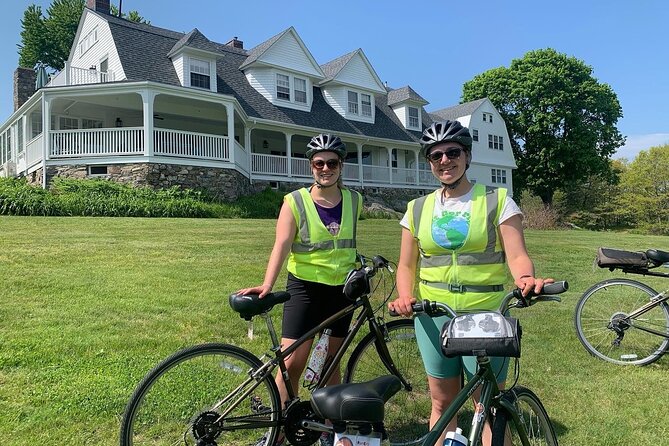
Meet at 43 Middle Street, Portsmouth, NH 03801, and plan on ending back at the same spot. The tour runs about 1 hour 45 minutes, which is long enough to connect the dots, but short enough that you won’t feel like you’ve been “on a tour” all day.
This is offered in English, and you’ll get a mobile ticket. It’s also near public transportation, which helps if you’re building a bigger day around walking, visiting museums, or heading to dinner afterward.
You can also read our reviews of more tours and experiences in Portsmouth.
Portsmouth neighborhoods first: Little Italy, The Hill, South End, and Prescott Park
The ride starts by working through the city’s “hidden neighborhoods,” with the guide pointing out what changed—and what didn’t. You’ll pass through areas tied to the former North End and the Italian community people often call Little Italy, then continue toward The Hill and the South End near Prescott Park.
One of the most useful parts is how the tour treats these places as living neighborhoods, not just dots on a map. You’ll see Strawbery Banke referenced early (as a major turning point later), and you’ll get a sense of how the waterfront and downtown link together for daily life.
Then you’ll spend time at Prescott Park, a waterfront park along the Piscataqua River. It’s more than a pretty stop: the land was purchased in the 1930s by sisters Josie and Sarah Prescott, who were public school teachers and used inheritance money to clear properties along the river.
Why this matters for you: if Portsmouth is your first stop on the coast, this kind of orientation helps your next day go smoother. You’ll know where neighborhoods “sit” relative to the harbor and downtown, instead of guessing.
20 Deer St and Portsmouth’s urban renewal logic
At 20 Deer St, the tour hits a chapter of American cities that’s uncomfortable but important. You’ll see colorful wooden houses pressed close to towering Marriott and Hilton buildings, and you’ll hear the story behind how this area got reshaped.
The concept (from the early 1970s) was that dilapidated buildings produced ragged people. After World War II, a lot of cities demolished thousands of so-called blighted areas across the U.S., replacing them with higher-density development like high-rise apartments, malls, and hotels. Portsmouth lost much of historic Vaughan Street, including a parking garage and open lots where the older fabric used to be.
But the tour doesn’t leave it at “then everything got worse.” You’ll be shown preserved historic homes saved through urban renewal efforts, and you’ll move into an area where preservation was prioritized.
Possible drawback to consider: these stops are story-heavy. If you’re the type who wants scenery only, you might feel like you’re listening for longer than expected at certain points.
Strawbery Banke: how one argument about the past changed what survived
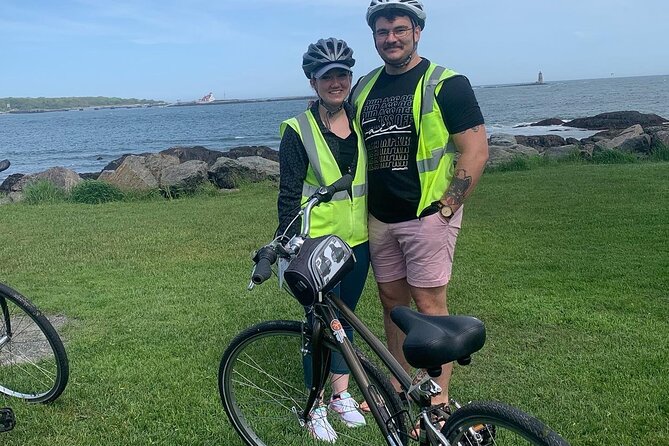
Strawbery Banke Museum is one of the tour’s anchor stops because it’s basically the origin story of preservation in Portsmouth. The museum began as a citizen effort after Puddle Dock—an area of dilapidated homes near the Piscataqua River—was targeted for urban renewal.
Here’s the key detail you’ll carry with you: some of those homes dated back to the 1600s. The plan was to tear down “substandard” buildings and replace them with modern ones, but a city librarian—Dorothy Vaughn—stepped in.
She spoke to the Portsmouth Rotary Club in 1957 and made the argument bluntly: each time an old house was torn down or Portsmouth antiques were shipped out of town, the city was losing its past. The Rotary Club got involved, and while the area did undergo urban renewal, much of what mattered was saved as a museum.
Why it’s valuable on a bike tour: you don’t just hear the dates. You learn what kind of places were at risk, so when you see preserved buildings later in the day (or later on your own), you understand why they were worth saving.
Wentworth-Coolidge Mansion and Little Harbor: beauty with a purpose
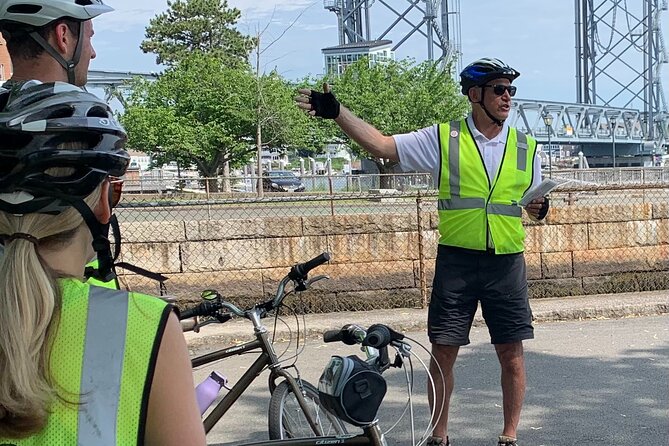
Next up is the Wentworth-Coolidge Mansion, a stop framed around the Little Harbor area. You’ll spend time taking in the setting, which helps break up the heavier preservation stories with a more visual “pause.”
This works well if you’re riding with family or mixed ages. Even if you don’t care about every detail of the background, the harbor viewpoint gives you something concrete to react to—light off the water, the sense of the coastal setting, and the way historic buildings sit near maritime life.
Admission at this stop is listed as free, so it’s a straightforward addition without adding cost pressure.






Brewery Lane and Frank Jones: the business story behind the buildings

The tour then turns to Frank Jones Brewery and the broader brewing-and-industry thread on Brewery Lane. You’ll hear an unusually detailed biography of Frank Jones—born in 1832 in Barrington, New Hampshire—and how his early work connected to Portsmouth’s growth.
Jones left home at 16, apprenticed in his brother Hiram’s stove store, and within three years had an interest. He took over the store completely by 1854. He wasn’t just stuck in one trade either: he was also a tin peddler and a rag picker before moving into the brewery world.
In 1858, he partnered with John Swindell, an Englishman who had moved to Portsmouth to start a brewery producing ale. That partnership is one of the links that helps you understand why industrial buildings matter in a history tour—not just because they’re old, but because they explain jobs, immigrant work, and community money flows.
Practical tip: if you like history that explains the economy (who made what, where, and why), you’ll probably enjoy this portion a lot. It turns “historic buildings” into stories about real people at work.
The Crick (North Mill Pond) and West End: where the tour adds real neighborhood texture
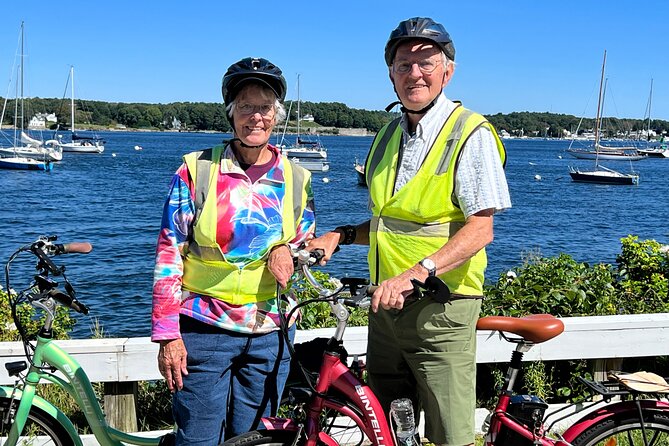
Back on the bike, the guide shifts to the Creek, pronounced Crick, which the tour describes as about 90% Irish Catholic. You’ll also hear that many “Crick natives” still live in the neighborhood.
From there, you’ll connect the North End and Christian Shore around North Mill Pond to downtown via Maplewood Avenue. The southern portion of the area includes major historic urban archaeological sites impacted by urban renewal, while the rest is described as a residential area below the Route 1 ByPass with older architectural character.
One of the standout nuggets here is the mention of the oldest house in New Hampshire, plus a cluster of Federal and Victorian buildings. You’ll also get the broader district framing: in 2010, the West End was added as a district, described as a 19th-century Frank Jones Brewery and Button Factory that also encompasses Islington Street.
Why it’s worth your time: this is where the tour becomes more than a list of stops. You start seeing how Portsmouth kept some neighborhood identity while still changing land use and building patterns in major ways.
Ending with the Endeavor Sculpture and Raleigh Way’s shipbuilding and paper mill sites
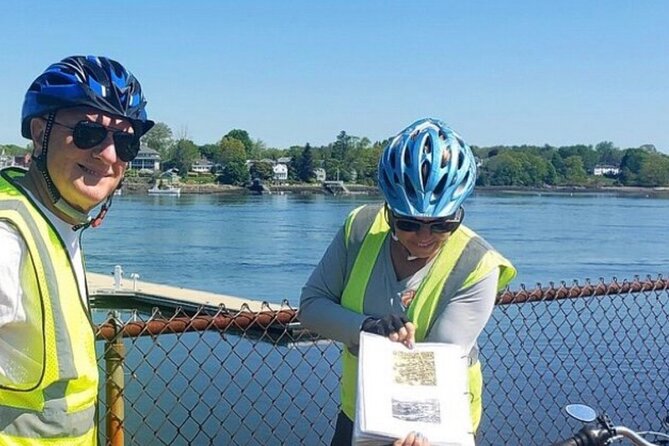
Near the finish, you’ll visit Bohenko Gateway Park and see the new Endeavor Sculpture, dedicated for Portsmouth’s 400th Anniversary. It’s a quick stop, but it’s a good reminder that history isn’t only what’s old—it’s also what a community chooses to mark for the future.
Then you ride to Raleigh Way, a longer 20-minute segment focused on ship building and a paper mill. Even without extra museum time, this kind of stop helps you understand Portsmouth as more than a sightseeing town. It’s tied to maritime labor and manufacturing, which is the backbone for how the city grew.
Admission tickets are listed as free for these stops too, so the tour stays cost-friendly once you’ve paid the base price.
What you get for $80: value that comes from the pacing and the included gear
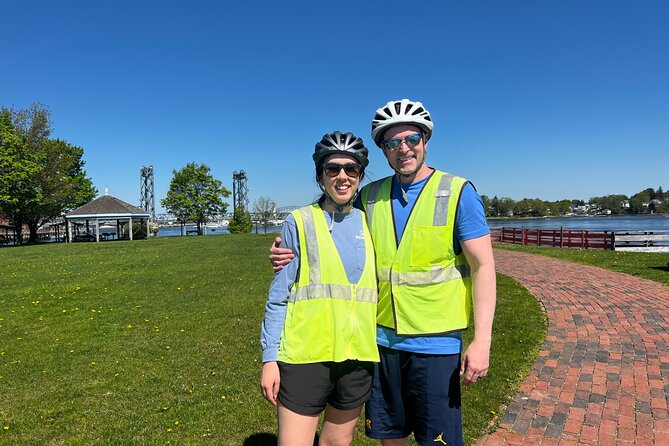
At $80 per person for about 1 hour 45 minutes, the best way to judge value is what you’re not paying for. The tour includes use of a bicycle and a helmet, and many stops are listed with admission ticket free.
That matters because it removes common “hidden costs” like bike rental fees, helmet rentals, and last-minute entry costs. It also keeps you focused on the ride itself rather than deciding what to skip to stay on budget.
It’s also scheduled frequently enough to be a practical addition to a day trip. The tour is commonly booked about 36 days in advance on average, which suggests people plan it deliberately rather than treating it as an afterthought.
If you want a guided overview that helps you explore independently later, this pricing tends to fit well. If you only care about one or two specific landmarks and you’re already confident navigating the city alone, you might compare it against doing a self-guided loop.
Who this bike tour suits best (and who might prefer something else)
This tour fits best if you:
- want a guided intro to Portsmouth neighborhoods without spending your whole day researching maps
- like history that includes preservation outcomes (not just dramatic events)
- prefer a small group setting where it’s easier to ask questions
It also helps if you’re traveling with someone who likes stories but still wants movement and short stops. The structure—neighborhoods, then landmark sites, then industry-focused ending—creates natural mental breaks.
Consider skipping or choosing a different style if you hate being in motion for long stretches or if you strongly dislike listening to context at each stop. Some parts are more narrative than visual.
Practical tips to make the ride comfortable
This is a city bike ride, so dress for real weather. The tour requires good weather, so check forecasts right before you go.
You’ll be on a bicycle you get through the operator, but you still want your basics right:
- wear comfortable shoes you can pedal in
- bring water and a light layer in case the breeze picks up near the harbor
- keep your phone accessible in case you use the mobile ticket
Also, the tour says most travelers can participate, but if you have concerns about biking comfort or balance, it’s worth thinking ahead and asking the operator before booking.
Should you book this Portsmouth historic bike tour?
Book it if you want the fastest path to understanding Portsmouth: how neighborhoods changed, what got saved, and why waterfront and industry shaped daily life. I especially think it’s a smart move for first-timers because the tour builds a mental map you can reuse later.
Skip it if your ideal day is only major landmarks with minimal storytelling. This ride is history-forward, and the value comes from connecting those stories across multiple stops.
If you’re ready for a well-paced overview with the bonus of bike and helmet included, this is a strong way to spend a block of time in Portsmouth.
FAQ
How long is the Portsmouth Historic Bike Tour
It runs for about 1 hour 45 minutes.
How much does the tour cost
The price is $80.00 per person.
Where do I meet for the tour
The meeting point is 43 Middle Street, Portsmouth, NH 03801, and the tour ends back at the meeting point.
What is included with the ticket
The tour includes use of a bicycle and a helmet.
Is there an admission fee at the stops
Admission tickets for the listed stops are marked as free.
What language is the tour offered in
The tour is offered in English.
How many people are in each tour group
The tour has a maximum of 8 travelers.
What’s the weather policy
The experience requires good weather, and if it’s canceled due to poor weather, you’ll be offered a different date or a full refund.
Are tips included in the price
Tips and gratuity are not included.