REVIEW · PORTSMOUTH
Portsmouth Naval History Private Guided Walking Tour
Book on Viator →Operated by Travelusion Tours · Bookable on Viator
Portsmouth has a way of making history feel close to your feet. This private guided walking tour strings together the city’s seafaring story through iconic WWII and WWI memorial points, smart exterior-only viewing, and a guide who turns facts into something you can picture. It’s the kind of tour where a stop-by-stop conversation keeps you moving, but never rushes you.
I really like two things here. First, the guidance is consistently praised as informative and personable, with guides such as Michelle and Lillian sharing stories in a way that makes questions easy. Second, you get a packed route—Southsea Castle, D-Day commemorations, the Naval Memorial, Portsmouth Cathedral, Gunwharf Quays, and a finish near Spinnaker Tower—without getting stuck in queues.
One thing to consider: most locations are viewed from outside, and Portsmouth Cathedral entry depends on service hours. If you’re hoping for lots of inside exploring, you’ll want to plan around that.
In This Review
- Key points to know before you book
- Southsea Castle start: the fortifications story begins here
- The D-Day Story stop: commemoration you can actually see
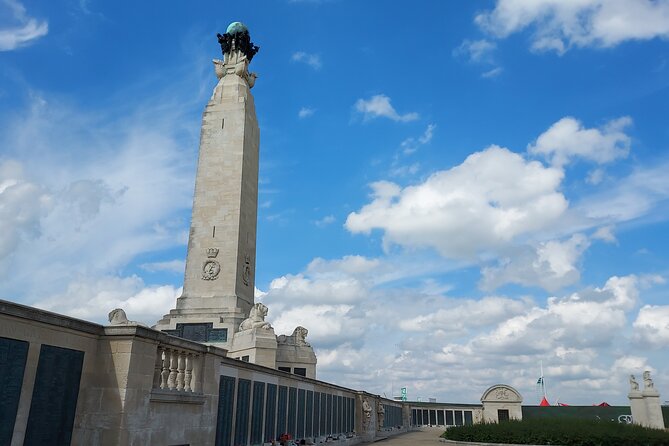
- Portsmouth Naval Memorial: WWI focus with a walking loop
- Portsmouth Cathedral: free entry, timing-dependent
- The Round Tower: Royal Navy viewpoint and Solent views
- Gunwharf Quays: modern harbor vibes with naval reminders
- Spinnaker Tower finish: end near the views, plus a possible HMS Victory add-on
- Price and value: paying for time with a guide, not just stops
- How long it really takes and how to pace yourself
- Best match: who should book this tour
- What makes the guides matter (and why reviews keep pointing to the same thing)
- Quick practical tips before you go
- Should you book the Portsmouth Naval History Private Guided Walking Tour?
- FAQ
- FAQ
- Where does the tour start?
- Where does the tour end?
- How long is the Portsmouth Naval History private walking tour?
- Is this tour private or shared?
- What language is the tour offered in?
- Are admission tickets required for the stops?
- Is bottled water included?
- Is coffee or tea included?
- What are the operating hours?
- What happens if the weather is poor?
- Is there a cancellation window for a full refund?
Key points to know before you book
- Private group format: only your group participates, so you can ask questions without waiting your turn.
- Exterior viewing, not a museum marathon: key WWII and WWI points are seen up close while you keep walking.
- Two named guides in reviews: both Michelle and Lillian are singled out for clear, friendly storytelling.
- Most stops have free admission and you’re not paying entry fees to make the route work.
- Bottled water is included, but coffee/tea isn’t—bring your own preference if you need it.
- Weather matters: the experience requires good weather; if it’s canceled due to poor conditions, you’ll be offered a different date or a full refund.
Southsea Castle start: the fortifications story begins here
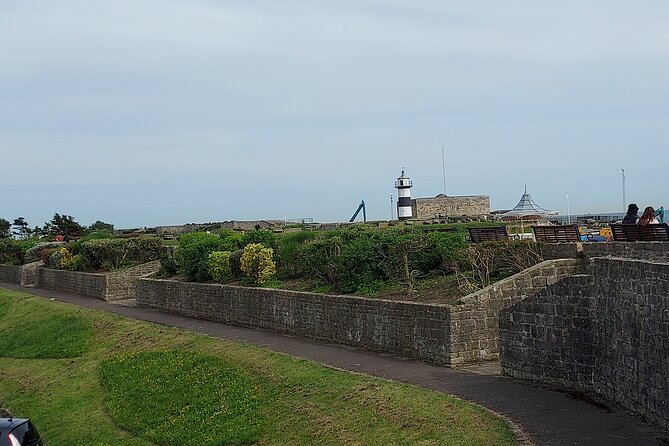
You start near Portsmouth Harbour at Harbour Station, at The Hard Interchange. From there, the tour kicks off at Southsea Castle—and you’re meeting by the exterior. That matters. This isn’t about ticking off another building; it’s about getting your mental map of why Portsmouth’s shoreline looks the way it does.
Southsea Castle is part of the long line of fortifications that shaped how the city protected itself. Even without going inside, your guide can connect the dots between the defensive layout and the later events that made Portsmouth so strategically important. It’s a strong “orientation” stop: you’re not just seeing a structure, you’re learning how the geography and defenses work together.
Why this is a good opener for you: it sets context fast. If you go in cold—especially if you only know Portsmouth for the Dockyard—you’ll appreciate this start because it makes later WWII and WWI sites feel less random.
Possible downside: the castle is exterior-only on this route, so you won’t get the full interior experience here. If inside touring is a must, you can still treat this as the explanation layer, then pair it with separate time later.
You can also read our reviews of more tours and experiences in Portsmouth.

The D-Day Story stop: commemoration you can actually see
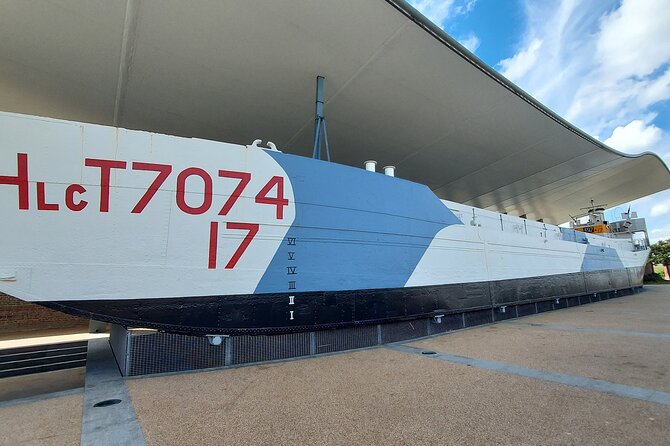
Next, you stop outside The D-Day Story. Again, it’s not an inside visit. But you do get something more practical: you’ll be able to see the commemorations and view the last remaining D-Day landing craft from the outside area.
This is one of the route’s most emotionally direct moments because it’s tied to material you can spot, not just descriptions you have to imagine. You’ll also get framing for what you’re looking at—how Portsmouth’s role fits into the broader landing planning and how the city remembers that history today.
What to expect at street level: you’ll slow down at the outside points, absorb details, and then keep moving. That blend is ideal for travelers who like facts, but don’t want a heavy museum schedule.
Trade-off to keep in mind: if you’re the type who wants full gallery time, you’ll be a bit tempted to go inside The D-Day Story later. The walking tour is designed to give you the “why” and the “what you can see right here.”
Portsmouth Naval Memorial: WWI focus with a walking loop
From the WWII commemoration area, you shift into WWI with a visit around the Portsmouth Naval Memorial. This stop is short—think a quick walking loop rather than a long sit-down—so your time works best if you’re ready to listen and look.
The guide ties the memorial to World War I and helps you understand why naval remembrance is so central to Portsmouth. Even if memorials aren’t your usual thing, a good guide can pull you out of the “reading names” mode and into the bigger picture of what this city owed to the sea.
Why it’s valuable for you: it prevents the day from becoming only WWII-focused. Portsmouth’s story doesn’t end at 1944. This stop gives balance.
Consideration: it’s not an extended reflective stop with long pauses built in. If you want more quiet time, you might later come back on your own.
Portsmouth Cathedral: free entry, timing-dependent
Now you’re heading to Portsmouth Cathedral. Here’s the key point: entrance is free, but whether you can go in depends on their service hours. That’s a practical detail that can make or break your expectations.
If the cathedral is open during your stop time, you’ll learn about the impact of the war in Portsmouth and other incidents that assailed the city, including the sinking of the Mary Rose. That Mary Rose connection is a big deal in Portsmouth’s story, because it helps bridge local ship history and national wartime memory.
Why the cathedral stop works even if it’s short: religious and civic spaces often hold different kinds of records than outdoor memorials. You get a change of atmosphere without losing momentum.
What to watch for: because access depends on service hours, you might not get long indoor time. If you catch it closed, you’ll still get the thematic explanation, but your physical experience inside could be limited.
The Round Tower: Royal Navy viewpoint and Solent views
Next, you pass by the Round Tower and get a quick lesson on Portsmouth’s role as a Royal Navy town through history. The stop also brings in one of the best “reward” elements of the walk: views of the Solent.
This is the part of the tour that feels like a breather. You’re not just learning; you’re looking out. For many people, that’s when the whole city starts to make sense. When you can see the water your guide keeps referring to, the talk clicks.
Why you’ll likely enjoy this: it breaks up the heavy memorial learning with open scenery. Even short views can make a walking tour feel more real.
Potential drawback: like other stops, it’s mostly about what you can see from the street or nearby. If you’re chasing ticketed attraction time, this won’t replace that.






Gunwharf Quays: modern harbor vibes with naval reminders
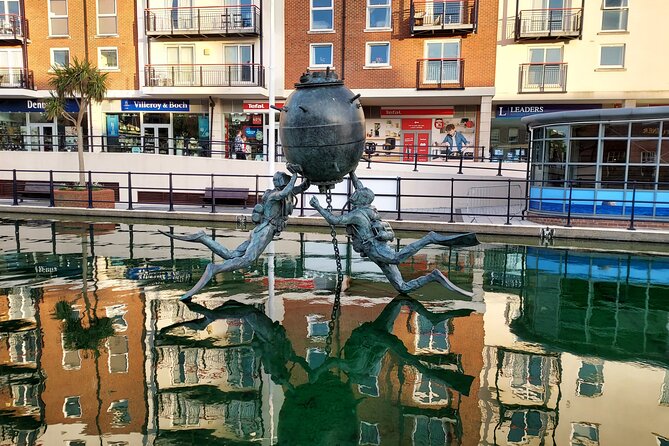
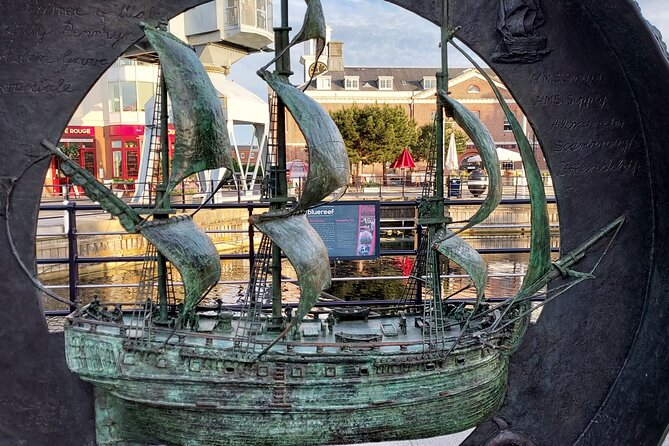
After the tower, you move through Gunwharf Quays, a harbor-side area now dedicated to shopping and hospitality. This might sound like a distraction from history—but that’s exactly why it works.
Your guide helps you spot naval history memorabilia in the area, so you’re not just walking through a commercial zone. You’re seeing how the city keeps naval identity visible even while the waterfront becomes a place for meals, shopping, and casual harbor energy.
How this helps your trip: it shows you Portsmouth as it is now, not only as it was during wars. You’ll leave with a sense of where you can linger afterward—without losing the historical thread.
Consideration: if you dislike shopping areas, focus on the landmarks and memorabilia your guide points out. The tour’s strength here is the storytelling overlay.
Spinnaker Tower finish: end near the views, plus a possible HMS Victory add-on
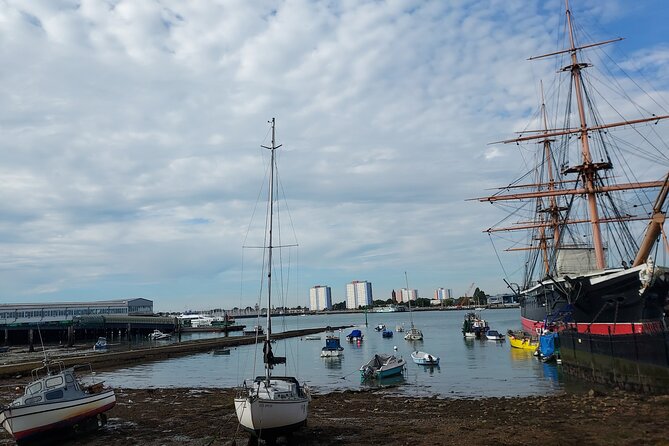
The tour ends by Spinnaker Tower. It’s a convenient finish because it’s easy to orient yourself afterward, and it helps you transition from guided history to free-time exploring.
You also get an optional idea: you can walk to the historic dockyard to see the exterior of HMS Victory, up to the client. That’s a smart add-on if you want your naval day to land on one of the most recognizable names in the UK maritime world without turning the tour into a full-day Dockyard project.
Why this ending works for most people: you’re not ending in a random alley or a far-off transit stop. You’re ending in an area where you can easily keep going—food, views, or onward connections.
What to plan around: if you choose the dockyard exterior route, you may add time on your own pace. The main tour itself is designed to be roughly 1 hour 30 minutes to 2 hours.
Price and value: paying for time with a guide, not just stops
At $35.66 per person, this private walking tour sits in a range that makes sense when you understand what you’re actually buying. You’re paying mainly for guide-led interpretation across multiple landmark areas rather than paying entrance fees for every site.
A big value signal: most stops have free admission and many are outside viewing points. That means you’re not spending your “tour time” stuck in ticket lines or absorbing history only through static signage. The route is built around short, efficient learning moments, which is exactly what private guiding does well.
You also get bottled water included, which is a small but real comfort during a waterfront walk. Coffee and tea are not included, so if you know you’ll want a caffeine break, plan that separately.
If you’re traveling with family or friends, check the group discount angle (available for this tour). The private format can be a good deal when your group wants a guided route instead of split up into multiple independent visits.
How long it really takes and how to pace yourself
The duration is listed at about 1.5 to 2 hours. That doesn’t feel long on paper, but the route makes sense for this time window because the stops are short and focused.
Here’s the pacing you should expect:
- a kickoff at Southsea Castle (exterior, context)
- short outside viewing at The D-Day Story area
- a quick loop around the Naval Memorial
- a cathedral stop that depends on service hours
- a pass-by at the Round Tower with Solent views
- a harbor walk through Gunwharf Quays
- a finish by Spinnaker Tower
Tip for you: wear comfortable walking shoes and accept that this is a “move, look, listen” day. If you treat it like a museum crawl, you’ll feel rushed. If you treat it like an organized conversation with landmarks, it fits perfectly.
Best match: who should book this tour
This is a great fit if you:
- like hearing stories tied to real places, not just reading plaques
- want a structured introduction to Portsmouth’s naval and war-linked sites
- enjoy Q and A during a walk (reviews mention guides being open and friendly)
- want a private group experience without everyone splitting up
It may not be your best fit if you:
- want extensive inside access at most stops
- plan to spend a lot of time inside Portsmouth Cathedral or The D-Day Story specifically during the guided session
What makes the guides matter (and why reviews keep pointing to the same thing)
The standout theme in the feedback is the human factor. Guides like Michelle and Lillian are repeatedly described as informative and personable, and people appreciated that the guides clearly enjoy the subject and don’t shut questions down.
That changes the feel of the walk. You’re not just receiving facts; you’re getting explanations in a way that helps you connect one site to the next. You also tend to get practical suggestions for other things to do in Portsmouth because the guide knows the city beyond the route.
If you’ve ever done a tour where the guide reads a script, this one likely feels different: the tone comes across as local and conversational. That’s why a short 1.5 to 2 hour route can still feel satisfying.
Quick practical tips before you go
- Bring a refillable bottle too, but know bottled water is included.
- Dress for wind if the Solent views are your thing; waterfront weather can shift fast.
- Plan your expectations around service hours for Portsmouth Cathedral.
- If you want more dockyard time, treat the HMS Victory exterior option as a bonus rather than assuming it’s guaranteed.
- The tour is offered in English and runs 10:30 AM to 7:30 PM during the stated operating window.
Should you book the Portsmouth Naval History Private Guided Walking Tour?
If you want an efficient, guided “best of Portsmouth naval & war sites” introduction without spending your time in entrances and lines, this tour is a strong choice. The value comes from private, question-friendly interpretation and a route that makes WWII and WWI places feel connected.
Book it if you like walking tours that explain what you’re seeing right now—especially if you’re curious about how Portsmouth’s coastal defenses, memorials, and harbor identity fit together. Skip it if your priority is long indoor museum time, since this route is designed around exterior stops and quick, focused context.
FAQ
FAQ
Where does the tour start?
The start point is Portsmouth Harbour Harbour Station, The Hard Interchange, Portsmouth PO1 3PA, UK.
Where does the tour end?
The tour ends at Gunwharf Quays, Portsmouth, UK.
How long is the Portsmouth Naval History private walking tour?
It runs about 1 hour 30 minutes to 2 hours.
Is this tour private or shared?
This is a private tour/activity, meaning only your group participates.
What language is the tour offered in?
The tour is offered in English.
Are admission tickets required for the stops?
Most stops are described as having free admission. Note that Portsmouth Cathedral entrance is free but depends on service hours.
Is bottled water included?
Yes. Bottled water is included.
Is coffee or tea included?
No. Coffee and/or tea is not included.
What are the operating hours?
The listed opening hours are 10:30 AM to 7:30 PM, Monday through Sunday.
What happens if the weather is poor?
The experience requires good weather. If it’s canceled due to poor weather, you’ll be offered a different date or a full refund.
Is there a cancellation window for a full refund?
You can cancel up to 24 hours in advance for a full refund.