REVIEW · CORNWALL
Coasteering Adventures in Bossiney Cove, Bude, and Cornwall
Book on Viator →Operated by OA Surf Club · Bookable on Viator
Coasteering turns Cornwall into an action movie. In Bossiney Cove near Bude, you spend about two hours scrambling, swimming, and jumping off rocks, with a small group limited to 14. The plan is simple: follow your instructor’s lead, and ask questions as you go, so you spend your energy moving instead of wondering.
What I like most is the mix of water thrills: natural arches, sea caves, and barnacle-covered ledges, followed by swimming across inlets. The other big plus is the friendly coaching from instructors like Joe and Kieran, who help keep the route feeling doable, even when conditions shift.
The catch is that you need moderate physical fitness and to be a confident swimmer, since you’ll be in the sea and doing climbs and jumps, even when it is wet outside.
In This Review
- Key highlights worth planning around
- Why coasteering at Bossiney Cove feels like peak Cornwall
- Price and what your £-to-adventure math should include
- Getting to Bossiney Campsite (and why starting there is convenient)
- Gear: what you get, what you bring, and how it changes your comfort
- How the 2 hours usually plays out along the coast
- Swimming confidence and fitness: the real checklist before you book
- Small-group energy: why max 14 makes a difference
- Rain, sea conditions, and why weather rules aren’t just fine print
- Who this coasteering session suits best
- Should you book this Bossiney Cove coasteering session?
- FAQ
- Where is the meeting point for the coasteering adventure?
- How long does the coasteering session last?
- How many people are in the group?
- What equipment is included with the tour?
- What should I bring with me?
- Is private transportation included?
- Do I need to be a confident swimmer?
- What language is the session offered in?
- Will I get a mobile ticket?
- What happens if the weather is poor?
- Can I get a full refund if I cancel?
Key highlights worth planning around
- Small-group cap of 14 means you are not lost in the crowd
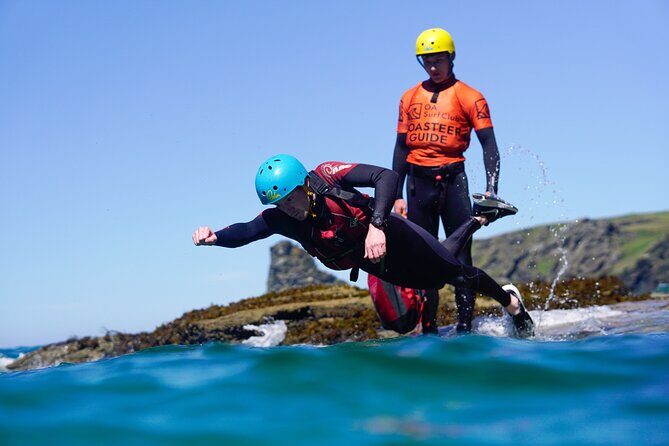
- Thick wetsuits, buoyancy aids, and helmets are provided, so you travel lighter
- Natural arches and sea caves give you more than basic rock-jumping
- Barnacle-covered ledges and inlets add real variety to the route
- Instructors like Rob, Joe, and Kieran keep things friendly and clear
Why coasteering at Bossiney Cove feels like peak Cornwall
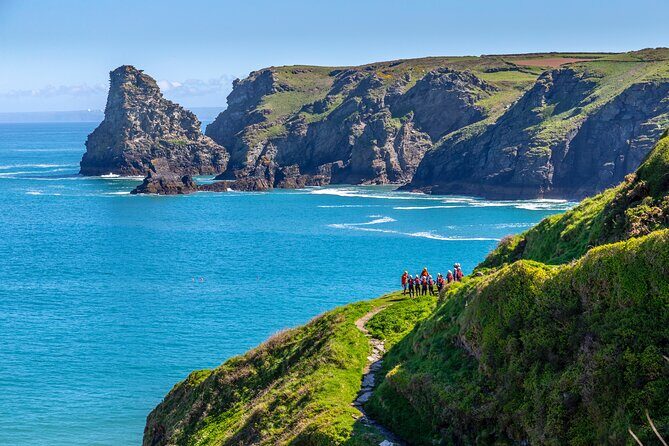
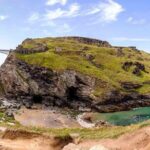
If you picture Cornwall as cliffs, coves, and weird sea shapes, coasteering is the way to make that picture move. Bossiney Cove puts you right on the coast, where you’re not just looking out at the water—you’re working your way through it. In about two hours, you get swimming, scrambling, and jumps, all tied to the coastline’s natural features.
I like that the experience is built around motion. You spend your time doing the thing instead of waiting around. You also get a very practical view of the coast: where the rocks let you move, where the sea openings create routes, and how the inlets change the feel of the swim.
One more underrated part is the chance to ask questions while you’re out there. The best sessions are the ones where you communicate with your guide and follow their calls, especially when you’re navigating caves, ledges, and entry points.
You can also read our reviews of more tours and experiences in Cornwall.
Price and what your £-to-adventure math should include
At $61.79 per person for roughly a 2-hour session, this is not a cheap activity in a strict sense. But it is priced in a way that makes sense for what you’re buying: guided coastal navigation plus full specialist gear.
The equipment is the big value piece. You get thick wetsuits, buoyancy aids, and helmets, which would be costly (or a hassle) if you had to source it yourself. It also means you can focus on packing the essentials for the water rather than hunting gear in advance.
What you don’t get matters too. You are responsible for closed toe shoes, plus swimwear and a towel. And there’s no private transportation, so you’ll need to handle getting yourself to Bossiney Campsite. If you already have decent water shoes and swimwear ready, the price feels more like paying for a guided session than paying for gear.
Getting to Bossiney Campsite (and why starting there is convenient)
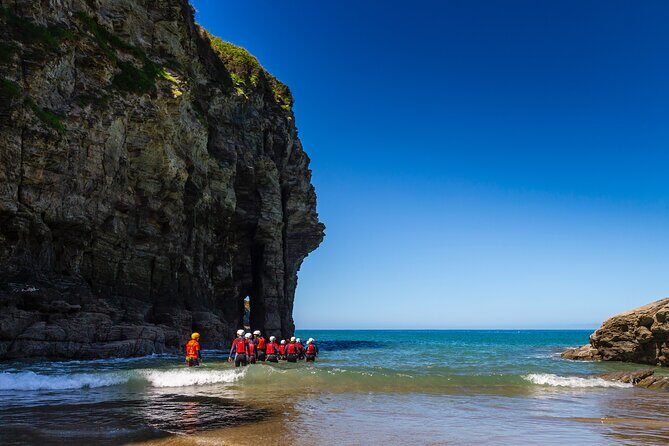
The start point is Bossiney Campsite, Tintagel PL34 0AY. The activity ends back at the same meeting point, which is a nice detail when you’re planning the rest of your day at the beach.
It’s also described as near public transportation. That matters if you are mixing this with other Cornwall time and don’t want to rely on a private car for everything. A lot of people underestimate how much stress transport adds on an active day—especially if you’re changing into wetsuit gear.
Because the session is about two hours, it works well as a focused block in your schedule. You can pair it with a relaxed meal afterward or use it as the main event in a Bude beach day. The short duration is also a plus if you’re trying to keep energy levels realistic for the rest of your trip.
Gear: what you get, what you bring, and how it changes your comfort
You’re supplied with the core safety and comfort items: thick wetsuits, buoyancy aids, and helmets. That combination is exactly what you want for coasteering. The wetsuit helps with temperature and reduces that shock factor when you hit the sea. The buoyancy aid adds stability during swims. The helmet is your protection when you’re scrambling, clambering, and negotiating rocky entry points.
Your job is to bring the items that make the gear work for your feet and body. You’ll need closed toe shoes suitable for the activity (wetsuit boots or trainers are specifically mentioned). This is not a fashion choice. Closed toes help you feel safer on rock surfaces and during transitions.
Bring swimwear and a towel. Even if you are warm from the wetsuit during the session, you’ll still want a towel ready for the dry-off stage afterward. This is also where a little prep saves you time—if you show up without what you need, you lose momentum.
How the 2 hours usually plays out along the coast
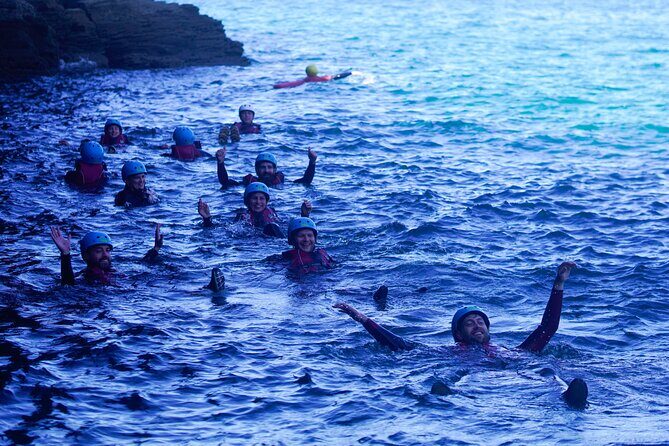
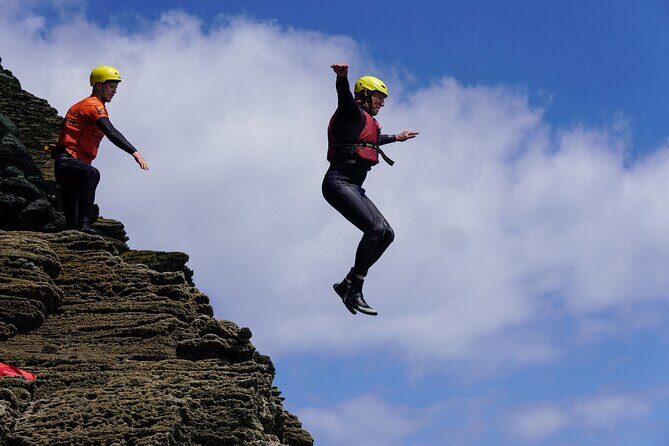
The activity is a coastal loop experience where the route follows what the shoreline offers. Expect swimming, scrambling, and jumping off rocks, all with your instructor guiding the sequence.
Here’s the kind of coastline time you should plan for. You’ll move over and around rock features like ledges that can be covered in barnacles. You’ll also tackle jumps into the sea, then transition into swim sections that take you through natural openings. The highlights specifically include swimming through natural arches and into sea caves, plus swimming across inlets and discovering hidden beaches.
The order can vary based on conditions and what the group can safely handle, but the feel stays consistent: move along the edge of the coast, use the terrain to your advantage, and use the sea as the connector between features. The instructor lead is key. You’ll do best if you keep your attention on instructions, not just on the scenery.
A practical tip from how the experience is described: ask questions early. If you understand what comes next—where you’ll jump, where you’ll enter, and how the cave or arch section works—you’ll spend the session calmer and more in control.

Swimming confidence and fitness: the real checklist before you book
This is not a sit-and-watch adventure. It asks for a body that can handle short bursts of effort: climbing, scrambling, and controlled jumping, followed by swimming.
The data given points to a moderate physical fitness level requirement. That’s a good sign for many people, but you should also take seriously the swimming confidence factor. The guidance from the experience notes highlights that you definitely need to be a confident swimmer.
So, how do you judge this honestly before booking?
- If you can swim comfortably and you’re not panicking in open water, you’re in the right zone.
- If you’re unsure about swimming for stretches or treading while wearing buoyancy support, you may want to think twice.
- If you’re okay with being in and out of the sea and using your legs for scrambling, you’ll likely enjoy it.
Also consider that the session is about two hours. Even if the effort is broken up, it still adds up. Coasteering can feel hard work while being genuinely fun, especially on days when the rocks are slippery or the water is brisk.
Small-group energy: why max 14 makes a difference
A cap of 14 travelers is a big part of why this feels manageable. In a sport like this, smaller groups reduce the waiting time between moves. They also let your instructor keep a closer eye on how people are doing with entry and exit points.
It also helps you feel like you have a voice. When you can ask questions and actually get heard, the session becomes less about guessing and more about learning in real time. That matters in caves, around arches, and when you’re dealing with ledges and transitions.
In the experience notes, instructors like Rob, Joe, and Kieran are described as friendly and supportive. That human piece matters. You want someone who can explain things clearly without making it stressful, because your focus should be on moving safely and enjoying the coast.
Rain, sea conditions, and why weather rules aren’t just fine print
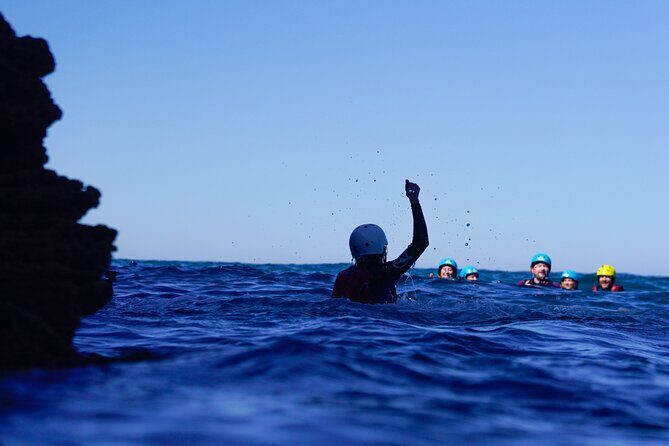
Cornwall weather can be dramatic. The good news is that the experience is described as well organised even when rain shows up. That suggests the team plans for the reality of UK coastal weather and keeps the session moving.
At the same time, the activity is described as requiring good weather. If it’s cancelled due to poor weather, you’ll be offered a different date or receive a full refund. That is how you protect your trip plans without leaving you stranded.
So what should you do with this information?
- Check conditions and don’t plan this as your only coastal activity on a day that looks wildly unsafe.
- Keep your schedule flexible if possible, since weather can affect whether the session runs.
- If you get rescheduled, you still get the same core idea: wetsuit, buoyancy support, helmet, and coastline features like arches, caves, ledges, jumps, and inlets.
In other words: you’re not paying for bad weather. You’re paying for a guided session that happens when the conditions allow it to be fun and safe.
Who this coasteering session suits best
Coasteering is ideal for people who want hands-on time outside, not a passive beach activity. If you like active travel, you’ll likely enjoy the pace: scramble, jump, swim, repeat, with instructor guidance throughout.
You should especially like this if:
- you’re visiting Bude or the Cornwall coast and want a standout day that still fits into a schedule
- you want to see sea caves and natural arches from the inside rather than from a distance
- you enjoy small-group activities with real coaching
- you’re comfortable being in the water wearing a wetsuit and buoyancy aid
It may not be the right match if you are not a confident swimmer or if you don’t want to do climbs and jumps. The moderate fitness level is also a real factor. This is not about athletic training plans—it’s about being able to move safely and recover between effort bursts.
Should you book this Bossiney Cove coasteering session?
Book it if you want a guided Cornwall experience that blends coastline exploration with real action in a tight time window. The value is strongest when you count the included gear—thick wetsuits, buoyancy aids, and helmets—plus the small-group format that helps you feel supported. If you’re a confident swimmer and you can handle moderate physical effort, you’re in the sweet spot.
Skip (or look for a gentler option) if open-water swimming makes you uneasy or if you know scrambling and jumping off rocks will put you into panic mode. Coasteering is fun, but it’s also a water-and-rock activity where comfort with the basics is what turns it from stressful into memorable.
If you do book, pack your closed toe shoes, swimwear, and towel ahead of time. Then go in with the mindset that you’ll follow your instructor’s lead, ask questions, and let the coastline features—arches, caves, ledges, jumps, and hidden beaches—do the storytelling.
FAQ
Where is the meeting point for the coasteering adventure?
You start at Bossiney Campsite, Tintagel PL34 0AY, UK. The activity ends back at the same meeting point.
How long does the coasteering session last?
It runs for about 2 hours.
How many people are in the group?
The group is capped at a maximum of 14 travelers.
What equipment is included with the tour?
You receive specialist equipment including thick wetsuits, buoyancy aids, and helmets.
What should I bring with me?
Bring pair of closed toe shoes (wetsuit boots or trainers work) plus swimwear and a towel.
Is private transportation included?
No, private transportation is not included.
Do I need to be a confident swimmer?
You should be a confident swimmer, and the activity is suited to travelers with a moderate physical fitness level.
What language is the session offered in?
The experience is offered in English.
Will I get a mobile ticket?
Yes, you’ll receive a mobile ticket.
What happens if the weather is poor?
This activity requires good weather. If it’s canceled due to poor weather, you’ll be offered a different date or a full refund.
Can I get a full refund if I cancel?
Yes. You can cancel up to 24 hours in advance for a full refund. If you cancel less than 24 hours before the start time, the amount paid is not refunded.