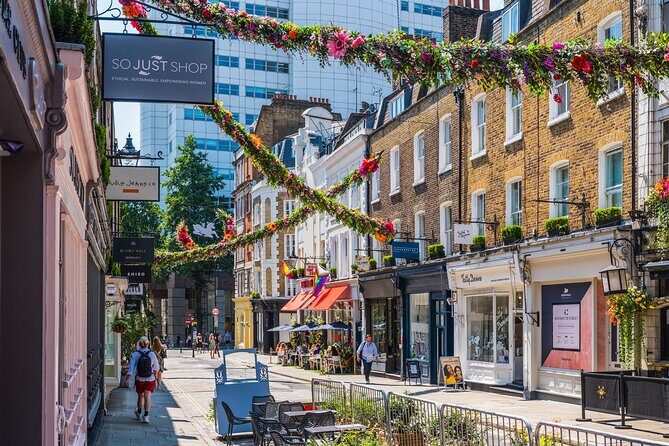
A harbour town can hold secrets for centuries. This walk through Looe mixes smuggling lore with real local landmarks, from jail courts to sea-front views. I also like how it’s not just big sights; you get streets and corners that most people would miss on their own.
The tour is led at a slow pace with plenty of stops, so you can actually take in details like Banjo Pier, Looe Bridge with its nine arches, and the quay area around the Jolly Sailor. My second favorite part is the way the stories connect sea life to local families, like the Hooper family’s role in the bay and the wreckers who worked the shoreline.
One thing to consider: the tour needs good weather. If conditions are poor, it may get rescheduled or refunded, so keep an eye on the forecast.
In This Review
- Key highlights you’ll notice fast
- Smuggling stories where you can actually see the terrain
- Price and what $27.28 buys you in real value
- Start where the town’s legal side meets the sea: Old Guildhall Museum & Gaol
- 90 minutes in Looe’s East and West streets: hideouts, ghosts, and real character
- East Looe Beach and seafront: wreckers, shipwrecks, and a shoreline built for secrets
- Banjo Pier: where family control meets betrayal
- Looe Bridge and its nine arches: pirate attacks and the reason for today’s shape
- The Quay near the Jolly Sailor: press gangs, pub landlords, and Battling Billy
- St Nicholas Church in West Looe: the jail stories that linger
- How to make the most of this walk (and who it suits)
- Should you book Looe Walking Tours – Smugglers and Skullduggery?
- FAQ
- How long is the Smugglers and Skullduggery walking tour?
- Where does the tour start and where does it end?
- How many people are in a group?
- Is the route flat and easy to walk?
- Do I need separate admission tickets for the stops?
- Who leads the tour?
- What will I see at Old Guildhall Museum & Gaol?
- What smuggling-related stories are included along the way?
- What happens if the weather is poor?
Key highlights you’ll notice fast
- Two harbours, two moods as you explore East and West Looe and learn how the town’s geography shaped the smuggling trade.
- Old Guildhall Museum & Gaol storytelling with court-case tales and a ghost who resides within.
- East Looe Beach and seafront views plus explanations of shipwrecks, wreckers, and how goods could be hidden until the moment was right.
- Banjo Pier and family control of the bay, including the Hooper family and the Silas Finn betrayal thread.
- Looe Bridge’s nine arches tied to pirate attacks and why today’s bridge looks the way it does.
- St Nicholas Church wraps it up with smuggling-linked jail tales at the end of the walk.
Smuggling stories where you can actually see the terrain
If you like Cornwall that feels human—faces, families, choices—you’ll enjoy this. You walk Looe in a way that turns the harbour and lanes into a map of the smuggling era, not just a set of pretty buildings. The guide, Mark, keeps the pace steady and uses the town itself as the set.
What makes it work is the connection between water and wrongdoing. You’re not just hearing that smuggling happened. You’re getting reasons tied to places: the bay, the shore, shipwrecks, and how locals could control what came in and what got taken.
You’ll also get a lot of story variety—ghosts, pirates, betrayals, press gangs, and that specific, local flavor of courtrooms and jail talk. It’s the kind of tour where you start looking at doorways and street angles like they matter, because in Looe, they do.
You can also read our reviews of more walking tours in Cornwall
Price and what $27.28 buys you in real value
At about $27.28 per person for around 1 hour 30 minutes, this isn’t a long tour—but it’s compact with multiple stops and lots of guided narration. The big value is that many of the listed stops are marked as admission ticket free, so you’re mainly paying for the guide’s storytelling and time—not stacking separate entry fees on top.
Also, group size is capped at 12 people. That matters. It helps you hear the guide clearly during the slower sections and makes it easier to pause for questions at spots like the quay and the bridge.
If you’re visiting Looe for a short window, this is a good fit. You’ll cover a lot of the town’s key “smuggling geography” without needing to plan anything beyond getting to the start point.
Start where the town’s legal side meets the sea: Old Guildhall Museum & Gaol
The tour starts at Old Guildhall Museum & Gaol on Higher Market St, The Quay (Looe PL13 1BP). This is a smart opening, because it frames the stories around consequences—court cases, jail talk, and the kind of evidence people tried to build in a place where the sea always had a say.
You’ll spend about 10 minutes here, with a focus on how smuggling came about and what influenced people of Looe to start smuggling. There’s also a ghost element, with a ghost described as residing within—so even if you’re not chasing spooky vibes, you’ll still get a strong anchor for the rest of the walk.
Practical note: this stop is also a good meeting spot for orientation. From here, you can get your bearings on how the quay connects to the town streets and where the walk is heading next.
90 minutes in Looe’s East and West streets: hideouts, ghosts, and real character
Stop 1 is the heart of the experience, with roughly 90 minutes spent exploring the streets and haunts of East and West Looe. This isn’t the kind of walk where you only stand and stare. You move through lanes and along harbour-linked streets where the guide points out the stories tied to each stretch.
This is where the tour earns its “look closer” reputation. You’ll hear tales of ghosts, smugglers, and skullduggery, but the payoff is seeing how the town’s layout could support secrecy—where someone could hide, where families could control access, and how the shoreline fed the trade.
The guide also mentions that many attractions are hidden away and only discovered on the tour. That’s the difference between walking past buildings and actually learning what to notice as you pass them. If you enjoy history you can walk through—street by street—this part is the main reason to book.
One consideration: because the storytelling is so location-driven, you’ll get more out of it if you keep moving with the group. If you’re the type who stops to take a photo every 15 seconds, plan for the guide to gently steer you back to the next story.
East Looe Beach and seafront: wreckers, shipwrecks, and a shoreline built for secrets
Next you head to the East Looe Beach and seafront area for about 10 minutes. This stop leans into views over the bay, but it’s not “just scenery.” The guide explains how the bay was used by smugglers and how shipwrecks littered the area.
A key theme here is wrecking. You’ll hear how the wreckers brought ships ashore to loot goods, then hid them until they could be safely brought ashore. Even if you’ve heard smuggling stories before, this angle helps you picture the practical side: the sea doesn’t only create opportunities; it creates timing, chaos, and cover.
If you want atmosphere, this is where you’ll feel it. You’re at the waterline, with sightlines that make the talk about ships and shore routes make sense without a diagram.






Banjo Pier: where family control meets betrayal
Banjo Pier is another quick but memorable stop at about 10 minutes. From the pier’s end, you’ll hear how the Hooper family controlled smuggling operations in the bay.
This is also where the story adds tension. You’ll get details about Silas Finn and how he betrayed his friend. On top of that, the guide brings in the ship called The Lottery, described as caught offshore.
Even in a short time, this stop gives you a more human picture of smuggling—less like faceless crime and more like relationships, alliances, and betrayal. That’s the thread that runs through the whole walk: people shaped events as much as geography did.
Looe Bridge and its nine arches: pirate attacks and the reason for today’s shape
About 10 minutes at Looe Bridge connects the sea-world stories to the town’s structure. You’ll talk about the original Looe Bridge(s) and why today’s bridge has nine arches.
The bridge story also links to pirate attacks on Looe. The connection feels especially real here because you’re literally standing at the crossing point—one of those spots where attackers could choose their moment and where defenders and smugglers might think about movement.
The route includes a gentle slope over the bridge, but the tour is described as flat, paved surfaces overall, with a slow pace and plenty of pauses. If you’re comfortable walking a town with occasional slight incline, this should work well.
The Quay near the Jolly Sailor: press gangs, pub landlords, and Battling Billy
Next you spend about 15 minutes around The Quay, focusing on the Jolly Sailor area. This stop adds a different kind of authority to the stories by bringing in press gangs and smugglers and giving you a sense of how local power and enforcement could intersect.
You’ll also hear grisly tales tied to Battling Billy and Vine Cottage. The guide doesn’t treat the quay like background scenery; you get it as a place where people gathered, talked, made deals, and sometimes got caught in the machinery of bigger forces.
Another detail worth noting: the guide covers the landlords of the three pubs. That local business angle is part of what makes the tour feel grounded. You come away with a sense that smuggling wasn’t only “out there on the water.” It had links to everyday rooms and everyday voices.
St Nicholas Church in West Looe: the jail stories that linger
The walk ends outside St Nicholas Church in West Looe, near the fire station and bus stop. You’ll spend about 10 minutes here at the Parish of Saint Nicholas.
This is a good closing chapter because the church ties into the jail-related talk and includes further smuggling-linked stories and skullduggery. You’re finishing where the town’s identity is visible in one place—churchyard area and local landmark—after spending the earlier portion focused on sea-front action and trading routes.
If you’re the sort of person who likes a tour to wrap up with a final “anchor stop,” this ending works. You get closure and a sense of how the stories fit into the broader town character.
How to make the most of this walk (and who it suits)
This tour runs on a slow pace with plenty of stops, and the route is flat, paved surfaces with a gentle slope over the bridge. It’s designed to be doable for most people. Still, wear shoes you’re happy in for about an hour and a half of town walking.
Because this is a story-heavy tour, you’ll enjoy it most if you like:
- Cornwall’s harbour towns and the way geography shapes local life
- People-and-place history (families, courts, and shore routes)
- A guided walk that teaches you what to notice as you move
You should also consider it if you’re short on time. The 7-stop structure covers East Looe, West Looe, and the key points that connect smuggling, wrecking, and enforcement themes.
Logistics you should know:
- You’ll use a mobile ticket.
- Service animals are allowed.
- It’s near public transportation, and the tour ends in West Looe near a bus stop.
And because it depends on good weather, check the forecast for your tour day. If weather is poor, you may be offered a different date or a full refund.
Should you book Looe Walking Tours – Smugglers and Skullduggery?
I think you should book it if you want a guided walk that feels like a real walk through Looe’s smuggling map. The value is strong for the price: multiple story stops, many marked as admission ticket free, and a group size capped at 12 so the guide can keep things personal.
Skip it only if you prefer tours that focus on museums or purely academic history with minimal storytelling. This one is built around characters, ghosts, and harbour-side intrigue, told through places you can point at as you go.
If you like the idea of leaving Looe seeing it differently—street angles, quays, the bridge’s arches, the beach line—then this tour is a solid pick.
FAQ
How long is the Smugglers and Skullduggery walking tour?
It’s approximately 1 hour 30 minutes.
Where does the tour start and where does it end?
It starts at Old Guildhall Museum & Gaol, Higher Market St, The Quay, Looe PL13 1BP. It ends outside St Nicholas Church in West Looe, near the fire station and bus stop.
How many people are in a group?
The maximum group size is 12 travelers.
Is the route flat and easy to walk?
The tour is on flat, paved surfaces with a gentle slope over the bridge, and it moves at a slow pace with plenty of stops.
Do I need separate admission tickets for the stops?
The listed stops are marked as admission ticket free in the tour information, so you’re not expected to buy extra tickets for the stops covered.
Who leads the tour?
A fun and entertaining guide leads the experience.
What will I see at Old Guildhall Museum & Gaol?
You’ll hear about how smuggling came about, influences on people in Looe, court-case tales connected to the Guildhall, and a ghost said to reside there.
What smuggling-related stories are included along the way?
You’ll hear about smuggling families who controlled the shores, wrecking and shipwrecks near the bay, the Hooper family, Silas Finn’s betrayal, the ship The Lottery caught offshore, press gangs, and stories like Battling Billy and Vine Cottage.
What happens if the weather is poor?
The tour requires good weather. If it’s canceled due to poor weather, you’ll be offered a different date or a full refund.