The White Cliffs view is the warm-up act. This private day tour from Dover strings together cliff panoramas, storybook villages, and Canterbury’s major sights with a local guide who keeps the day moving. I especially love the mix of big-ticket moments (like the White Cliffs and Canterbury) plus smaller church details you’d miss on your own, and I also like how the pace gives you real photo time instead of a quick drive-by. One caution: parts of the Dover Western Heights area involve uneven, overgrown ground and wartime concrete structures, so plan for careful walking.
You’ll ride in an air-conditioned vehicle, get a mobile ticket, and enjoy a route designed for comfort and convenience from the Dover Cruise Terminal area. The whole trip runs about 7 hours, with a mix of short stops and one longer block in Canterbury where you can choose how to spend your time.
In This Review
- Key highlights
- Dover Western Heights and the White Cliffs viewpoint
- Rolling hills and narrow streets: Barham, Bishopsbourne, and Bourne Park
- Patrixbourne’s Norman church: the kind of stop you’ll remember
- Chilham village square: Tudor streets, a castle mood, and tea breaks
- Canterbury’s UNESCO sites: Cathedral options and St Augustine’s Abbey
- St Martin’s Church: what “oldest surviving” looks like in real life
- Wickhambreaux, Ickham, and Wingham: Kent’s coastal-road charm at photo-stop speed
- Price and what you’re actually buying for $1,152.66 (up to 7)
- Comfort, timing, and the pace: what 7 hours feels like
- Who this Kent castles and coast tour is best for
- Should you book this tour from Dover?
- FAQ
- Where does the tour start and end?
- Is pickup available?
- How long is the tour?
- What is the price for this experience?
- Is this a private tour?
- What’s included in the tour price?
- Is lunch included?
- Do I need to pay for Canterbury Cathedral?
- Do I get a ticket on my phone?
- Is walking involved at Dover Western Heights?
- Can I cancel for a refund?
Key highlights
- White Cliffs viewpoint with big views: Dover Castle, the harbour, the English Channel, and (on clear days) the French coastline
- Kent villages beyond the usual stops: Barham, Bishopsbourne, Patrixbourne, and Chilham with tight timing that still feels unhurried
- Canterbury’s UNESCO cluster, with choices: St Augustine’s Abbey and nearby sites, plus Cathedral access as an optional extra
- Norman church details you can spot: flint-and-stone building materials and late-12th-century features
- Film-and-story connections in Chilham: Tudor streets, Jacobean castle elements, and a packed set of famous screen appearances
- Final photo moments near the coast: Wickhambreaux, Ickham, and Wingham along the ancient coastal road
Dover Western Heights and the White Cliffs viewpoint
Most days start with a payoff: a drive to a special vantage point on the White Cliffs of Dover. From here, you’re positioned to take in Dover Castle, the harbour, and the English Channel at the same time. If the weather is clear, you may also catch sight of the French coastline across the water, which is exactly the kind of perspective that makes Dover feel more than just a ferry town.
Timing is tight but workable: plan for about 30 minutes at the cliff viewpoint. It’s long enough to settle in, grab photos, and look around, but it’s not so long that you’re stuck when conditions change.
The main consideration is the ground. The Dover Western Heights area can be uneven, sometimes overgrown, and includes concrete war-time structures—so keep your footwear practical and your route slow. If you’re the type who hates scrambling for balance, you’ll want to take this section at a careful pace and maybe stay near the easiest paths.
You can also read our reviews of more tours and experiences in Dover.


Rolling hills and narrow streets: Barham, Bishopsbourne, and Bourne Park
After the cliffs, you shift into the Kent that works best in a private car: country lanes, rolling hills, and viewpoints that don’t come from a big-bus route. One stretch takes you through Barham, where you’ll pass newly planted vineyards and a quaint narrow street. It’s the kind of setting where you can understand why Kent looks timeless in photos, even though farms and gardens are always changing.
You’ll also see the 13th-century St John the Baptist church with its green copper spire, plus Kent peg-tiled cottages. The spire is the kind of detail that gives you a visual anchor while you’re bouncing between villages—especially when the guide explains what you’re looking at as you go.
Next up is Bishopsbourne, set within the Kent Downs Area of Outstanding Natural Beauty. This area matters because it’s not just scenic; it’s protected and shaped by how people have farmed and built for centuries. You’ll also pass Bourne Park, a stately home tied to composer Wolfgang Amadeus Mozart, who visited in 1865. That sort of fact is more than trivia. It helps you read the buildings as part of real social history, not just old stone.
The trade-off here is simple: since this is a driving-and-looking day, you’ll mostly see these places from roads and pull-offs rather than from long, ticketed visits. If you’re hoping for deep museum-style time, Canterbury will be your main longer stop.
Patrixbourne’s Norman church: the kind of stop you’ll remember
Patrixbourne is brief—about 10 minutes—but it’s the right length for what you’re actually there to do: spot the Norman architecture and feel the French influence. The highlight is a particularly fine Norman church built using flint and stone from Caen in France. That’s a detail you can learn once and then carry into your next stop, because it explains why so much southern English medieval architecture feels connected to the continent.
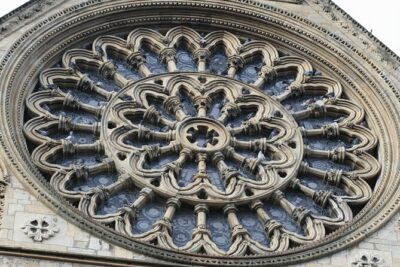
Look for the glorious south doorway in Norman style and a wheel window on the east end dating to the late 12th century. Even if you only have a short moment inside or right at the entrance, this is the type of craftsmanship that rewards close attention.
This stop is also a good “reset” between longer village time and the bigger UNESCO moments ahead. The drawback is obvious: 10 minutes goes fast. If you want longer to wander a churchyard or take dozens of photos from multiple angles, this may feel short—so treat it as a focused architectural hit.
Chilham village square: Tudor streets, a castle mood, and tea breaks
Then you reach what’s often the highlight for people who like photos and atmosphere: Chilham. You get 45 minutes here, and it’s a solid chunk for a village stop, not just a quick stop-and-go.
Chilham’s reputation fits what you’ll see on the ground: a stunning 15th-century square filled with black-and-white timbered Tudor buildings, plus a Jacobean castle, an on-site church, and a pub. It’s easy to see why this kind of village looks like a filming set—because the streets and buildings are laid out for that exact visual.
You’ll also have an efficient break built in. The plan includes morning tea and time for photo opportunities outside Chilham Castle and the historic houses, with the cobbled square as your backdrop.
One fun bonus: this area connects to pop culture and classic drama, with connections to projects like Emma (2009), The Canterbury Tales, and Agatha Christie’s Poirot and Miss Marple, plus detective show Dempsey and Makepeace. Even if you’re not a screen-history person, it helps you see the village as part of how Britain gets reimagined on screen.
The only real drawback: 45 minutes means you can enjoy the square and immediate castle views, but you’re not turning this into a full exploration. If you fall in love with a particular street, you’ll still have to keep moving.
Canterbury’s UNESCO sites: Cathedral options and St Augustine’s Abbey
The biggest block of the day is Canterbury, with about three hours. This is where you get flexibility, which I appreciate when I’m trying to match the day to my own interests.
Your guide gives an overview of Canterbury’s story from Roman times to modern day, and then you choose your own route. You can focus on the Cathedral and castle, wander the medieval streets and houses, or take a relaxing pub lunch along the River Stour.
Here’s the practical piece: Canterbury Cathedral admission is optional and not included. If you want to go in, it’s £21.00 per person. That extra cost isn’t a deal-breaker, but it matters for budgeting—especially for groups.
As you move out of the city centre, you’ll also view St Augustine’s Abbey and get context on why it’s UNESCO-level important. Founded shortly after St Augustine arrived in Kent in AD597 to convert the Anglo-Saxons, the abbey became a monastery and a residence for Augustine and his brother monks. The “missionary school” idea is worth paying attention to because it connects religious change with learning—classical knowledge and English education growing side by side.
A detail that really lands: from the abbey’s illuminated manuscripts, only 150 survived the English Reformation and the dissolution of the monasteries in 1538. One of those—the Canterbury Gospels—survived from AD597 and was used in the recent Coronation of King Charles III.
It’s also worth pausing for the statues on Lady Wootton’s Green: depictions of King Ethelbert and Queen Bertha, the two key figures credited with welcoming Augustine and enabling the foundation of Christianity throughout the country. These moments turn a guided walk into a story you can point to.



St Martin’s Church: what “oldest surviving” looks like in real life
Right as the tour leaves the busier parts of Canterbury, you get the chance to see St Martin’s Church in the outskirts area. This one is about 10 minutes—not a long stop, but it’s meaningful because it’s tied to cAD597.
St Martin’s matters because it represents continuity you can actually see in layers: it was originally a chapel connected to Queen Bertha and later became used as a base by Augustine. The structures include periods from Roman, Anglo-Saxon, and Medieval eras.
A quick tip: even with limited time, you’ll get more out of it if you look for how the building seems to have been added to over centuries. That’s the sort of thing a guide can point out quickly, and it changes a photo from a pretty exterior into something you understand.
Wickhambreaux, Ickham, and Wingham: Kent’s coastal-road charm at photo-stop speed
After Canterbury, the day shifts again into scenic driving, with brief photo moments that make Kent feel like it has a thousand stops without taking all day to get between them.
First is Wickhambreaux, with about 15 minutes. You’ll see the village green and the cluster of church, manor house, rectory, inn, and mill arranged around it—exactly the kind of layout that makes village centres feel cohesive. You can also get photos at the 13th-century church of St Andrews, which connects to WWII Dambusters Squadron Leader David Maltby. He was married there and later buried after his death in 1943.
Another name you may recognize: Christine McVie of Fleetwood Mac is listed as a famous resident connected to Wickhambreaux. These are the kinds of links that make a stop feel personal, even when you’re only there briefly.
Then the route continues to Ickham, with white weatherboard cottages, listed buildings, and a 13th-century church. Again, it’s mostly about exterior sights and atmosphere, not long entry visits.
Finally, you end near the coast with Wingham on the ancient coastal road. This is a picture-perfect finishing touch, with many buildings dating back to the 1200s, including the Grade II listed The Dog Inn. It’s a good place to wrap up because you’ll feel the shift from inland villages back toward sea air and open views—plus it’s ideal for last photos when everyone’s energy is returning after Canterbury.
Price and what you’re actually buying for $1,152.66 (up to 7)
The price is $1,152.66 per group (up to 7) for around 7 hours. Since this is a private tour, you’re paying for more than sightseeing. You’re paying for transportation, parking fees, and a guide who can time stops around your interests and the day’s conditions.
Value depends on group size:
- If you fill the group, the cost per person becomes much easier to justify.
- If you’re traveling as just two, it’s more of a splurge—but you still get the big benefit of not coordinating multiple trains or buses while you’re only in Kent for a day.
Also note what’s included versus not:
- Included: air-conditioned vehicle, guide with extensive local knowledge, parking fees, and private transportation.
- Not included: Canterbury Cathedral admission (if you choose to enter) and lunch (you can pick pubs, cafes, or restaurants in Canterbury).
If you’re trying to keep the day predictable, I’d plan your budget around the cathedral ticket only as an optional add-on. For lunch, think of your guide as a helper who can steer you to something that fits your pace and tastes.
Comfort, timing, and the pace: what 7 hours feels like
This is built as a full-day loop, but it’s not one long grind. You’ll have a mix of:
- one 30-minute cliff viewpoint,
- village stops around 10–15 minutes,
- a 45-minute Chilham break,
- and a longer three-hour Canterbury block.
That rhythm matters. You get quick hits of architecture and scenery without burning the whole day on one location, and you still get real time to make decisions in Canterbury rather than getting herded into the same checklist every time.
The vehicle being air-conditioned is also a small but real quality-of-life detail, especially if you’re traveling in warmer months.
If you like to move at a relaxed pace but still cover a lot, this route fits well. If you want long walks, this is not the day for that—most of the “work” here is observation and photos, guided by someone who knows where the good angles are.
Who this Kent castles and coast tour is best for
This day trip from Dover works especially well if:
- you’re on a cruise and want a structured day without complicated transfers,
- you like villages plus cathedral-scale moments in the same trip,
- you enjoy history, but also want it explained in a way that points you to what to look at,
- you want to avoid the limitations of larger bus tours and have flexibility at stops.
It’s also a good choice for small groups up to 7, since private transportation turns the “cost of doing things” into something more manageable when shared.
The main mismatch is simple: if you need lots of time inside major sites (beyond a cathedral optional visit) or you struggle with uneven walking surfaces, the timing and Dover Western Heights terrain may feel like too much.
Should you book this tour from Dover?
If your priority is a high-variance day—White Cliffs views, Norman architecture details, Tudor village charm, and Canterbury’s UNESCO core—this tour is a strong match. The private format means you’re not spending your day on logistics, and the stop durations are designed to keep photos and sightseeing in balance.
I’d book it if you can handle short walking segments and you’re fine with a mix of longer time in Canterbury and quicker stops elsewhere. I’d think twice if uneven ground at Dover Western Heights is a concern for you, or if you want a slower, deeper village-by-village exploration rather than a packed circuit.
FAQ
Where does the tour start and end?
The tour starts at the Dover Cruise Terminal, Western Docks, Dover CT17 9DQ, UK. It ends back at the same meeting point.
Is pickup available?
Yes. Pickup is available from any railway station or hotel within 20 miles of the Port of Dover, Kent. You’ll need to advise your preferred pick-up or drop-off location at booking.
How long is the tour?
The duration is approximately 7 hours.
What is the price for this experience?
The price is $1,152.66 per group (up to 7 people).
Is this a private tour?
Yes. It’s private, and only your group participates.
What’s included in the tour price?
Included items are an air-conditioned vehicle, a guide with extensive local knowledge, parking fees, and private transportation.
Is lunch included?
Lunch is not included. You can choose from pubs, cafes, and restaurants in Canterbury based on your taste and budget.
Do I need to pay for Canterbury Cathedral?
Canterbury Cathedral admission is not included and is optional if you visit. The listed cost is £21.00 per person.
Do I get a ticket on my phone?
Yes. The tour uses a mobile ticket.
Is walking involved at Dover Western Heights?
The Dover Western Heights site has uneven ground, may be overgrown, and includes concrete war-time structures. Care needs to be taken when walking around the site.
Can I cancel for a refund?
Yes, free cancellation is available. You can cancel up to 24 hours in advance for a full refund (based on local time).