REVIEW · LEEDS
Daily Leeds City Walking Tour (10:30am)
Book on Viator →Operated by Walking Tours in England · Bookable on Viator
Leeds history fits into one walk. In about 1 hour 30 minutes, you’ll get a guided path through Leeds city centre that explains what life feels like here, from civic buildings to working markets.
I like that the tour is wheelchair and stroller accessible, so you’re not forced into a stressy, skip-everything route.
Two things I really enjoy are the stories behind the landmarks and the pace. Guides such as Sarah and Brianna keep the facts moving with real personality, so you finish feeling like you can actually navigate Leeds. And I love ending near the Leeds Corn Exchange, which makes it easy to roll right into your next stop.
One possible drawback: this is a timed group walk, so bad weather or a last-minute hiccup can throw off your day. I’d schedule this with a little breathing room, especially if you’re juggling museum plans later.
In This Review
- Key things to know before you go
- Why a 10:30am city-centre walk works so well
- Meeting at Leeds Art Gallery and finding the starting line
- Leeds Town Hall: the civic “why” behind the city
- Leeds Art Gallery and the Henry Moore connection
- Millennium Square Leeds: festivals, markets, and the city’s open center
- Leeds City Museum: a quick peek that points you to more
- Leeds Cathedral: origin, faith, and place in the city
- The Light and City Varieties: modern energy + Victorian entertainment
- Briggate: the street that shows Leeds changing hands
- Victoria Quarter: ornate arcades you can actually enjoy on foot
- Leeds Kirkgate Market: Europe’s largest indoor market
- Finishing outside Leeds Corn Exchange: a trading past in stone
- How much value you get for the price
- Pace, group size, and who this tour suits best
- Practical tips for walking comfortably in Leeds
- Should you book the Daily Leeds City Walking Tour?
- FAQ
- FAQ
- What time does the Leeds City Walking Tour start?
- How long is the Daily Leeds City Walking Tour?
- Where do I meet the guide and where does the tour end?
- How much does the tour cost?
- What’s the maximum group size?
- Is the tour wheelchair and stroller accessible?
- Is the tour offered in English?
- Are admission tickets included for the stops?
Key things to know before you go
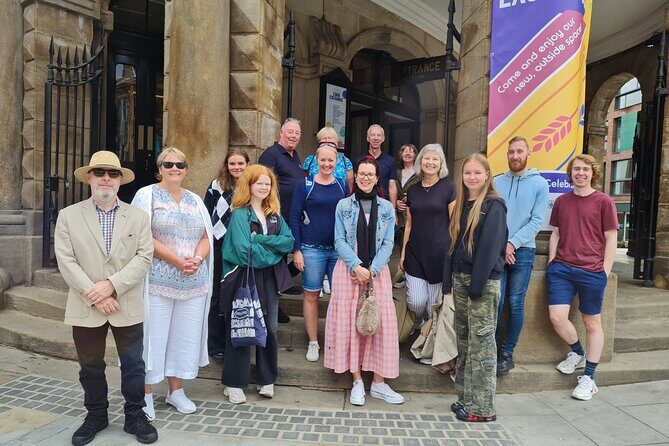
- Small group, max 15 people means the guide can keep things moving without feeling chaotic
- 10:30am start is perfect for a “first look” at the city while you still have energy
- Exterior-focused sights keep you from getting stuck in long ticket lines
- Wheelchair and stroller friendly makes this a rare city-centre walk that’s actually practical
- A market and arcades finish near Leeds Kirkgate Market and Victoria Quarter, great for photos and snacks
- Plan for walking shoes—even at a comfortable pace, you’ll be on your feet
Why a 10:30am city-centre walk works so well
If you only have a day or two in Leeds, you need two things: orientation and context. This tour is built for exactly that. You start in the civic and cultural core, then drift through the city’s shopping and market heart, so the places you see make sense as one connected story rather than a checklist.
You also get a guide who turns landmarks into clues. Not just what they are, but why Leeds built them where it did, and what they tell you about the city’s daily rhythm—work, worship, entertainment, trade, and culture all in one compact loop.
You can also read our reviews of more walking tours in Leeds


Meeting at Leeds Art Gallery and finding the starting line
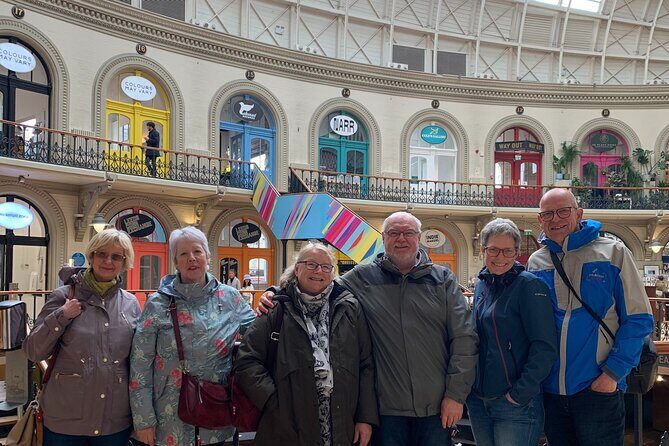
The tour meets at Leeds Art Gallery, on The Headrow (LS1 3AA). It’s a central, easy-to-find spot, and it’s near public transport, which matters more than people think. When a walk starts on time, being able to arrive without a transit mini-adventure is a win.
The tour runs in English, and you’ll receive a mobile ticket at booking. If you’re traveling solo, with friends, or with family, the setup is straightforward: show up, meet your guide, and start walking.
One practical note: because it’s a group walk with a small max size, I suggest being there a few minutes early rather than right on the minute.
Leeds Town Hall: the civic “why” behind the city
Your first landmark is Leeds Town Hall. You’ll meet your guide outside it and get an intro to the tour, plus a clear sense of how Leeds history shaped what you see today. This is an exterior visit, but it’s a strong opening because Town Hall is the kind of place that anchors civic identity. It helps your brain connect later stops—when you see the arcades, the music hall, or the market, you’ll understand how they fit into the larger city plan.
The downside? If you were hoping for deep interior time at this early stage, this tour keeps things exterior-focused. Think of it as a guided orientation first, ticketed attractions later (if you want them).
Leeds Art Gallery and the Henry Moore connection
Next up: Leeds Art Gallery (also an exterior view). This stop is linked to the Henry Moore Institute, and it’s a good pivot point. You start with civic power, then shift to the arts—both of which are major parts of how Leeds presents itself.
Even from outside, the building gives you something useful: a sense of where culture lives in the city centre. It also sets you up for the later contrast between Victorian-era structures and modern city developments.
Millennium Square Leeds: festivals, markets, and the city’s open center
Then you move to Millennium Square Leeds, a central public space that hosts Christmas markets, food and drink festivals, and other events. You’ll have time to explore the square area and take in the civic and cultural energy that spills outdoors.
There’s also a playful touch: you might spot the mysterious golden owls. These kinds of small details are exactly why a guided walk beats a solo wander. The guide notices things you’d likely miss, and they make the experience feel local rather than generic.


Leeds City Museum: a quick peek that points you to more
At Leeds City Museum, you’re again viewing the exterior. The tour frames it as a place with different exhibitions—and it mentions a very misshapen big cat. That’s not the kind of detail you’d pick up just by reading a sign, and it’s the kind of hint that makes you think: okay, I should come back and go inside.
For many people, this stop functions like a “choose-your-own-adventure” prompt. If you like museums, you’ll likely want to follow up on your own. If you’re museumed out, the exterior overview still gives you the sense of what’s nearby without turning the tour into a long queue day.
Leeds Cathedral: origin, faith, and place in the city
Next is Leeds Cathedral. You’ll look at the building from outside and learn about its origin as a Mission founded by a Dominican priest. Even without entering, that story gives the architecture meaning. You start seeing the cathedral not just as a pretty landmark, but as a snapshot of how religious communities shaped Leeds over time.
This is a short stop, so it won’t replace a full cathedral visit. But it’s a strong “meaning moment” in the middle of an otherwise commercial and entertainment-heavy route.
The Light and City Varieties: modern energy + Victorian entertainment
Two major stops here help you feel Leeds across time.
First: The Light, described as a hub of entertainment and a key development that keeps the modern city moving. This is your “today” check-in. You see how city-centre planning has evolved—still built for crowds, still shaped for gatherings, just with a different era’s priorities.
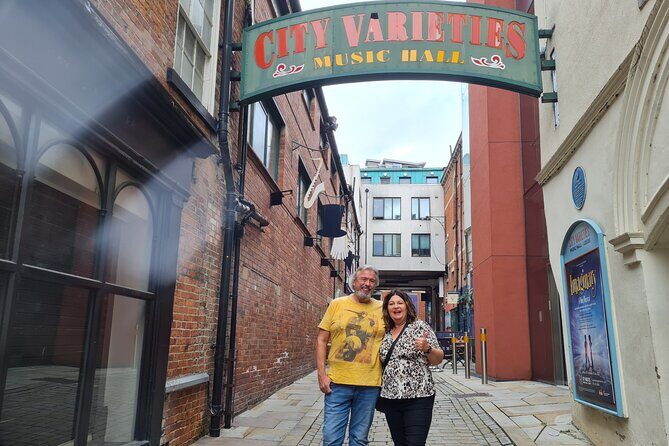
Then you head to City Varieties Music Hall, which the tour highlights as the world’s oldest running music hall and a rare surviving Victorian era relic. This is one of those stops where the guide’s storytelling really matters. The difference between an old building and an old building that still functions is huge—and it changes how you think about heritage.
If you’re the type who loves theatre or old-time performance, you’ll likely want to learn more after you see it.
Briggate: the street that shows Leeds changing hands
You’ll walk along Briggate, described as a commerical activity hub since the 13th century, still active today. The tour frames it as a shift from a textile powerhouse to a shoppers paradise.
This is one of the best segments for understanding modern Leeds without feeling like you’re only shopping. It’s a window into how the city adapted—economies change, but streets often keep the same jobs. You’re basically walking on the “spine” of the city.
Practical tip: this part of the route is busy at times. Keep your phone and wallet secure like you would in any central shopping street.
Victoria Quarter: ornate arcades you can actually enjoy on foot
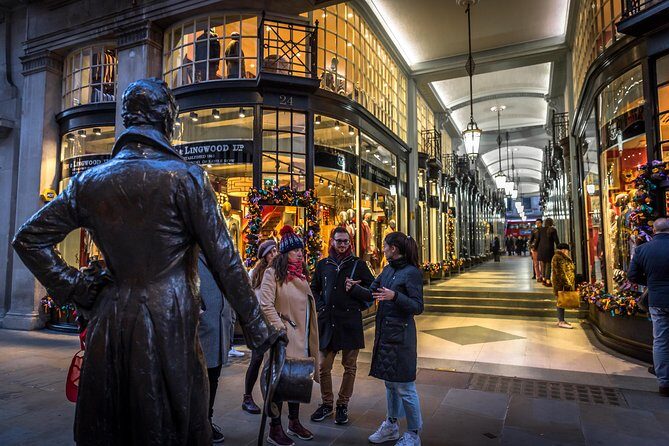
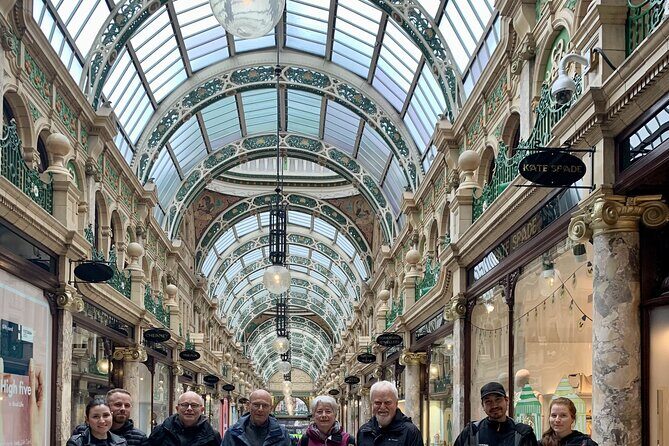
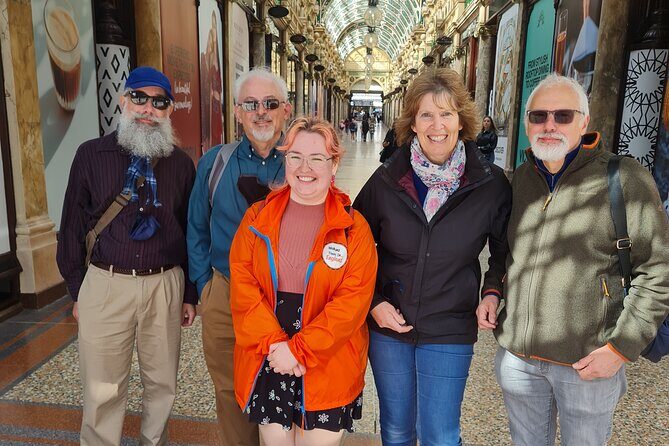
Then comes Victoria Quarter, known for its ornate, glass-roofed Victorian arcades. This is another exterior-focused segment, but it’s one where you’ll want to look up and around. Glass roofs add height and light, and the architecture makes the shopping streets feel more like a covered walk than a hurried sidewalk sprint.
Even if you’re not planning to shop, this stop is worth it for atmosphere and photos. It also gives your legs a small reset compared with open-street segments.
Leeds Kirkgate Market: Europe’s largest indoor market
Next is Leeds Kirkgate Market, highlighted as Europe’s largest indoor market that survived both bombs and fire. That detail changes your perspective instantly. It’s not just a place to buy food; it’s a place with resilience built into its story.
The tour views it from the outside, so you won’t automatically get the full sensory experience of stalls and vendors. But you’re close enough to understand why the market is a Leeds magnet. If you want to eat well after the tour, this is the ideal area to wander next.
Finishing outside Leeds Corn Exchange: a trading past in stone
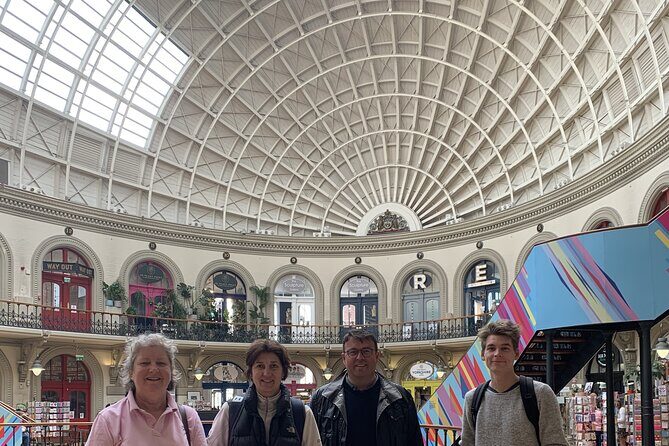
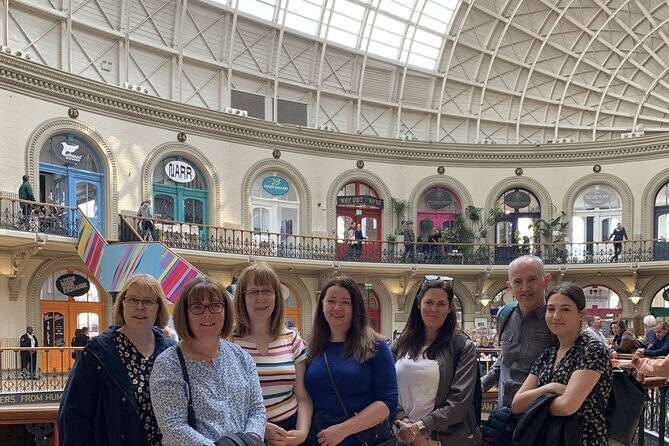
You wrap up outside the Leeds Corn Exchange. The guide explains it was built as an exchange for grain—an obvious clue that Leeds grew from trade and industry, and that those economic roots still shape what’s in the city centre.
This ending works well because it leaves you with options. You’ve just walked through a civic-to-commercial-to-market route, so you’re mentally ready to choose: museums, a meal, or a longer browse around the shopping streets.
It also means you don’t finish miles away from where things happen. The end point is on Call Ln (LS1 7BR).
How much value you get for the price
The tour costs $19.43 per person and runs about 1 hour 30 minutes. For that price, you’re paying for two things: a human guide and a curated route that hits the city’s key anchors without requiring a big time commitment.
A couple of value notes:
- Many stops are exterior views, and admission tickets are generally not included. That’s good if you want an overview without spending extra time buying entries.
- Some areas are free to explore—like Millennium Square and Victoria Quarter—so you’re not paying again just to see the best parts of those spaces.
If you’re the type who likes history in digestible bites, this price feels fair. If you’re hoping for multiple museum interiors and guided entry tickets, you may find this tour is more of a “set the stage” experience than the final act.
Pace, group size, and who this tour suits best
With a maximum of 15 travelers, the group stays small enough that the guide can keep a steady pace and help you connect dots between stops. It’s also short enough to feel doable even if you’re still jet-lagged.
This is especially good for:
- first-time visitors who want to get their bearings fast
- people with limited time who still want context
- visitors who like a walk that includes both civic buildings and everyday city life
- locals who want a fresh way to look at places they pass often
If you’re traveling with a stroller or in a wheelchair, the tour is explicitly listed as accessible, which is rare for city-centre walking loops. Still, bring comfortable shoes and expect some outdoor time.
Practical tips for walking comfortably in Leeds
Do yourself a favor and wear walking shoes. Even at 1.5 hours, you’ll be covering a decent stretch of the city centre, and you’ll want stability on busy sidewalks.
Also:
- Bring a layer. Leeds weather can be unpredictable, and the tour requires good weather.
- Start planning your next step after the tour. With the ending near the Corn Exchange and the Kirkgate Market area on your route, it’s easy to turn the walk into a longer afternoon.
- If you’re going with a group or traveling solo, arrive a few minutes early to avoid last-minute stress.
As for schedule, the experience is commonly booked about 16 days in advance. If your dates are tight, I’d book sooner rather than later.
Should you book the Daily Leeds City Walking Tour?
I’d book it if you want a friendly, focused overview that helps you understand Leeds beyond the postcard basics. The strongest part is the balance: you see civic landmarks, religious architecture, entertainment venues, major shopping streets, and a market area with serious character—without turning the morning into a slog.
If you dislike walking, or you need a tour with lots of interior time and ticketed museum stops, this probably won’t be your best fit. But for an efficient city-orientation morning—especially on a first trip or a quick connection day—this is a solid, good-value way to get grounded in Leeds.
FAQ
FAQ
What time does the Leeds City Walking Tour start?
The tour starts at 10:30am.
How long is the Daily Leeds City Walking Tour?
It lasts about 1 hour 30 minutes.
Where do I meet the guide and where does the tour end?
You meet at Leeds Art Gallery, The Headrow, Leeds LS1 3AA and the tour ends outside Leeds Corn Exchange, Call Ln, Leeds LS1 7BR.
How much does the tour cost?
The price is $19.43 per person.
What’s the maximum group size?
The tour has a maximum of 15 travelers.
Is the tour wheelchair and stroller accessible?
Yes. The tour is listed as wheelchair and stroller accessible, and service animals are allowed.
Is the tour offered in English?
Yes, it’s offered in English.
Are admission tickets included for the stops?
Admission tickets are not included for the sights listed as exterior-only. Some areas, like Millennium Square Leeds and Victoria Quarter, are noted as free to explore.