REVIEW · OXFORD
Extended: Oxford University & City Tour With Christ Church
Book on Viator →Operated by Footprints Tours Limited · Bookable on Viator
Oxford can feel like a maze.
This tour turns it into a smart, story-filled route through working colleges and famous landmarks, led by an Oxford student guide. I especially love how the pacing keeps you moving without feeling rushed, and how the audio headsets (during the Christ Church part) make the details easy to catch even when crowds get in the way. One consideration: Oxford sites can change fast, so a couple of interiors (like the Divinity School) may be limited on busy days.
You get a tight, high-impact walk through the university’s oldest corners, and it’s packed with moments that make the place feel alive, not like a postcard loop. I also like that you’re not just staring at buildings—you’re learning how they function, from ceremonial spaces to libraries that actually hold serious world records. The main drawback to plan around is the walking: you’ll cover a lot in about three hours, and you’ll want solid shoes and a realistic expectation about what you can comfortably photograph and linger on.
In This Review
- Key things I’d plan around before you go
- A student-led Oxford walk that feels like a course tour
- Price and value: what $110.90 buys you here
- The route overview: how the timing stays manageable
- Stop-by-stop: what you’ll see, why it matters, and what to expect
- Balliol College (quick look, big pedigree)
- Trinity College (beauty plus foundation date)
- Exeter College (Tolkien link, student focus)
- Hertford College (progressive reputation and modern stories)
- Magdalen College (the big college grounds and the deer park)
- Another college rivalry stop (built in 1427)
- History of Science Museum (Einstein’s chalkboard)
- Weston Library (Brutalist architecture + 5 million books)
- Martyrs’ Memorial (easy to skip, easy to miss)
- Sheldonian Theatre (Christopher Wren’s 1669 finish)
- New College (and why it’s not actually new)
- Bodleian Library (ticketed interior: built 1602)
- Bridge of Sighs (the postcard shot with a twist)
- Radcliffe Camera (iconic postcard, different purpose)
- All Souls College (exclusive tradition)
- University Church of St. Mary the Virgin (religious heart, carved details)
- Merton College (oldest-starting, academically inclined)
- Christ Church Meadow (Alice connection in open space)
- Christ Church (the big optional upgrade inside, with headsets)
- Divinity School (medieval lecture hall with seasonal access limits)
- Headsets, small groups, and student-guide energy
- Best time to go and what to wear
- Who should book this tour, and who should skip it
- Should you book this Oxford University & City Tour?
- FAQ
- How long is the Oxford University & City Tour with Christ Church?
- Does the tour include Christ Church entry?
- Is the Bodleian Library visit included?
- Will I be able to visit the Divinity School?
- Where do I meet the group?
- How big is the group?
Key things I’d plan around before you go
- Student-guided storytelling: expect a point-of-view that feels like Oxford life, not just dates and plaques
- A tight route with frequent stops: you’ll see major college exteriors plus a few key interiors where included
- Christ Church as the payoff: an optional hour inside with external orientation first, then self-paced exploring with multimedia headsets
- Libraries and scholarly landmarks: Bodleian and Weston show how Oxford’s book world works
- Seasonal interior limits: Divinity School access can be restricted, with substitution possible
- Small group size: capped at 19, which helps you keep up and hear the guide
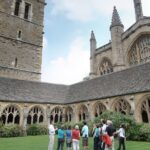
A student-led Oxford walk that feels like a course tour
Oxford is one of those places where every street corner seems like a clue. This experience makes it usable. You get a guided route through many of the university’s best-known colleges and nearby sights, with a student guide at the center of it. That matters, because the guide can explain not only why a building is famous, but how Oxford students experience the place day to day: the rhythms, the traditions, the small rules that visitors rarely notice.
I also like that the tour is designed around motion. Instead of sitting through a talk, you walk from stop to stop, and each location adds a new layer. You start with college origins, then move to iconic ceremony spaces and major libraries, and you finish with Christ Church—the part most people are secretly waiting for.
And yes, Oxford can be crowded, but this format keeps you from losing hours to wandering. The group size is limited (max 19), so you’re not stuck in a conga line of strangers. You’ll still want to manage your time. Oxford is Oxford—there’s always one more gorgeous archway, one more doorway detail, one more photo you’ll wish you had taken two minutes earlier.
You can also read our reviews of more tours and experiences in Oxford.


Price and value: what $110.90 buys you here
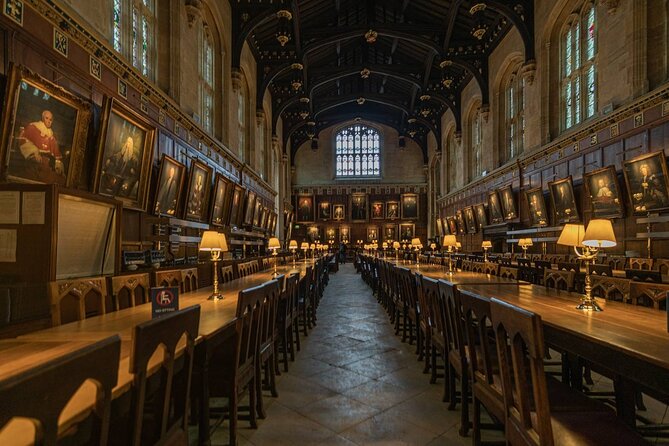
This tour costs $110.90 per person and runs about three hours. On paper, it can look pricey for a walking tour. But the value is in what’s coordinated and what’s included.
First, you’re paying for tight planning. Oxford is spread out, and some of the best sites sit just far enough apart that DIY wandering can turn into dead time. Here, you get an efficient route with many stops lined up.
Second, you’re paying for insider interpretation. Guides like Luke, Rose, Antonia, Ben, Sam D., and others (all Oxford-connected student guides in the reviews) bring a student lens. They share stories that explain why certain places matter, and those details are the difference between looking at buildings and understanding them.
Third, you’re buying access to the moments that actually need it. The tour includes entry to the Bodleian Library and the Christ Church upgrade option includes ticketed entry inside Christ Church. Other sites listed as free-entry help you keep the day moving without extra ticket juggling.
One more angle: part of the experience is getting to Oxford as part of a group. If you choose the pickup option, your meeting point is at Gloucester Road Tube Station in London. If you do not, you meet in Oxford at 15 Broad Street. That choice can make the day easier to pull off—especially if you’re doing a short stay.
If you’re the type who wants to show up, wander slowly, and linger until your feet agree to stop, you might feel boxed in by a three-hour structure. If you want a guided introduction that prioritizes major sites and context, the pricing starts to make sense.
The route overview: how the timing stays manageable
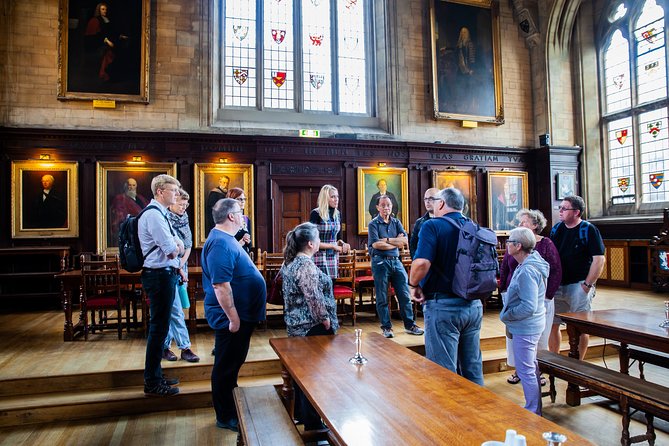
Expect moderate walking over a historic area. You’ll have lots of short stops—often around five minutes—plus a couple of longer moments at places that deserve it, especially Magdalen College and the Christ Church portion.
The tour is offered in English and uses mobile tickets. You’ll also have built-in time for a key theme of the day: Oxford’s colleges as living institutions, not just historic sets.
A practical tip: Oxford interiors and access can shift without warning because it’s still a working university. The tour approach addresses this by planning alternatives. That’s worth knowing in advance, because you don’t want the whole day depending on one interior that could close on the day.
Stop-by-stop: what you’ll see, why it matters, and what to expect
Balliol College (quick look, big pedigree)
You start with Balliol College, argued to be among Oxford’s oldest colleges. The value of starting here is perspective: you’re immediately anchored in the university’s early identity, when Oxford was becoming the template for how colleges could function as communities.
Admission is free for this stop, and the visit is short. Treat it as a “get your bearings” moment—look for how the buildings frame space, then move on while your energy is high.






Trinity College (beauty plus foundation date)
Next is Trinity College, dating back to 1555. This stop is a good example of how Oxford mixes old-world grandeur with clear institutional purpose. The exterior impressions here help you later when you spot recurring architectural motifs across different colleges.
You get admission included at this stop, and it’s roughly 10 minutes—enough time to soak in the setting without getting stuck in a long queue.
Exeter College (Tolkien link, student focus)
Exeter College, founded in 1314, is the Tolkien stop. The practical takeaway: Oxford literary connections aren’t only marketing. They’re baked into how the university environment looks and feels, and a guide can connect that environment to the kind of imaginations it inspires.
This one is another free, short stop. If you love literature, this is one of the stops where you’ll likely want to slow down for a minute and look closely at details.
Hertford College (progressive reputation and modern stories)
Hertford College has history dating back to 1282 and is known as one of Oxford’s more progressive colleges. It’s also a great photo opportunity for architecture and a useful point for the guide to connect the university’s past to later changes in culture.
You’ll see it briefly, but it helps the overall route feel balanced: not just medieval, not just postcard-gothic.
Magdalen College (the big college grounds and the deer park)
Magdalen College is the largest college in the route list, founded in 1458, with incredible grounds and its own Deer Park. This is one of the longer stops at around 20 minutes, and for a reason: you need time to absorb scale and atmosphere.
It also connects two major literary names tied to Oxford—C.S. Lewis and Oscar Wilde. Even if you’re not a deep literature buff, you’ll probably enjoy the contrast between formal college architecture and the grounds’ living, open feel.
Another college rivalry stop (built in 1427)
Right after Magdalen, there’s a stop described as built in 1427, with a historic rivalry with its neighbors. The key point for you: Oxford’s colleges weren’t just buildings. They competed, collaborated, and evolved alongside one another, and guides often use rivalry stories to explain the social map of the university.
It’s a short stop, so use it as a quick “story glue” moment—then let it flow into the next theme.
History of Science Museum (Einstein’s chalkboard)
Next is the History of Science Museum, tied to Albert Einstein’s chalkboard with his markings preserved from his Oxford lectures. This is where the day expands beyond architecture and into intellectual history you can feel.
This stop is short, but it’s memorable because it’s specific. An Einstein object is one of those rare tourist moments that makes Oxford’s scholarly identity feel physical.
Weston Library (Brutalist architecture + 5 million books)
Weston Library is the architecture contrast stop. You’ll see dramatic Brutalist elements alongside Oxford’s more common Victorian Neo-Gothic look. It’s also where you learn how the university library world works now, not only how it looked in the past.
The library holds over five million books, and after renovation, the interior feels modern and functional. This is a perfect stop if you’re into design and want to see Oxford not frozen in time.
Martyrs’ Memorial (easy to skip, easy to miss)
Martyrs’ Memorial often gets overlooked, and that’s exactly why it’s worth including on a guided route. This is one of the religious sites that tells a darker story—conflict between Protestants and Catholics with many deaths.
Because it’s only around five minutes, you might need to consciously slow down for a minute and read what you can. If you tend to skim memorials, this is the stop where you’ll get the most value from not doing that.
Sheldonian Theatre (Christopher Wren’s 1669 finish)
The Sheldonian Theatre (finished in 1669 by Sir Christopher Wren) is a ceremony anchor for Oxford. This place matters because Oxford isn’t only colleges and libraries—it has formal public moments tied to learning.
It’s another quick stop, but it’s an important one for context, especially when you think about ceremonies and traditions later in the day.
New College (and why it’s not actually new)
New College can be confusing because people assume it’s the newest. It dates back to 1379 and is described as a model for how all colleges developed. That explanation matters because it tells you why the architecture and layout are influential.
This is a free and short stop. Look for structural order: Oxford’s “feel” is often created by how spaces are arranged, not by any single building alone.
Bodleian Library (ticketed interior: built 1602)
The Bodleian Library is one of the highest-profile interior stops. It was built in 1602 and the tour includes entry here. It’s associated with an enormous collection—over 12 million books—and documents dating back to the Pharaohs, which is a mind-bending way to think about the continuity of knowledge.
If you’ve only ever seen libraries as places to study quietly, this will shift your sense of scale. Oxford treats books like heritage, like infrastructure, like a living archive.
In the tour data, the entry is included. That’s a big deal, because libraries are one of the places where getting in can make or break your day.
Bridge of Sighs (the postcard shot with a twist)
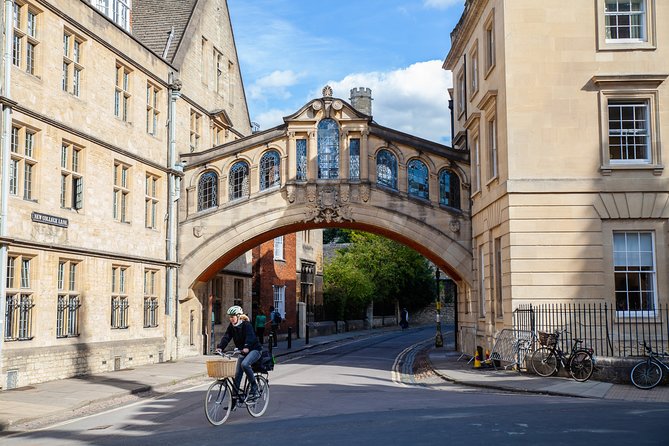
The Bridge of Sighs is flagged as the most photographed site in Oxford. It’s only about five minutes here, which is enough time to grab your bearings and take a respectful photo.
The useful expectation: you’re there for the iconic view, but don’t expect a long explanation at the bridge itself. Save your questions for the guide moments when you’re not standing on top of the crowd.
Radcliffe Camera (iconic postcard, different purpose)
Next is the Radcliffe Camera, one of the most iconic Oxford sights. It’s worth seeing even if you feel you already know it from postcards. The guide frames it as something used for a very different function than what most people assume.
This is another short stop, which means you should use it to observe and learn. When you don’t have long, small details become more important—angles, materials, and how the building sits within the street.
All Souls College (exclusive tradition)
All Souls College is presented as the most exclusive academic institution in the world, and it’s tied to famous traditions and names like Lawrence of Arabia. This stop gives you a reality check: Oxford isn’t one monolithic place. It’s a family of colleges with different identities.
You’ll likely only see it briefly, but it’s a strong contrast point when you compare the access differences between colleges and public-facing areas.
University Church of St. Mary the Virgin (religious heart, carved details)
The University Church of St. Mary the Virgin is the Oxford religious center, yet it feels more than purely churchy. It’s described as the epicenter of Oxford University, and it houses detailed grotesques.
This is a good stop for anyone who loves stonework. Grotesques are often why you notice a building even after the tour ends. It’s included as a free stop and stays short, so take quick looks at the exterior carving work if you can.
Merton College (oldest-starting, academically inclined)
Merton College starts in 1264 and is known for being academically inclined. It’s the kind of college where a guide can explain how Oxford’s student life and scholarly culture formed.
This stop also references exceptional student food, which sounds small until you realize how traditions often show up in everyday details. It’s another short, free stop, so use it to connect the dots.
Christ Church Meadow (Alice connection in open space)
Christ Church Meadow gives you a breather: a unique central Oxford space linked to Alice’s Adventures in Wonderland. This is where Oxford feels like a lived-in city, not just an academic district.
It’s short, but the open space helps reset your brain before the final college experience.
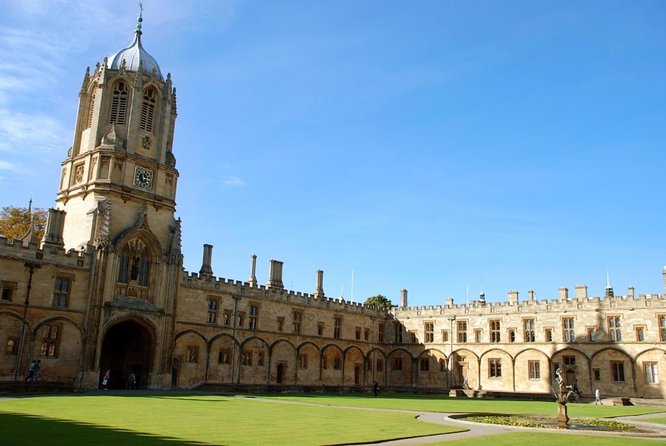
Christ Church (the big optional upgrade inside, with headsets)
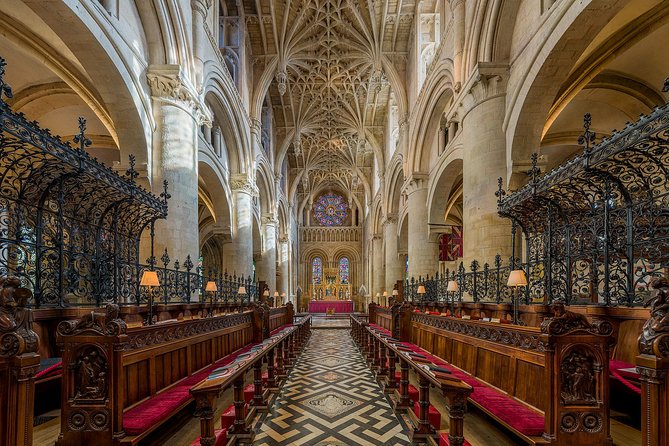
Now comes the star of the day: Christ Church. It’s nearly 500 years old and connected to both Harry Potter and Alice’s Adventures in Wonderland. But the important part for your planning is how the tour handles it.
You’ll get an external overview first, then you enter for independent exploration with a multimedia headset created by the Christ Church team. The tour experience recommends about one hour for Christ Church, and that’s realistic if you want to see more than just the headline rooms.
A practical note from the tour approach: follow the guide’s suggested order when you’re inside, because college schedules can affect which areas are available, and the college prepares for students to return. That matters if your time at the end of the day feels tight.
Also, this is where you should decide your priorities. If your goal is photo-first, you may feel limited by the “learn first, explore second” structure. If your goal is understanding what you’re looking at, you’ll likely enjoy the headset-led pacing.
Divinity School (medieval lecture hall with seasonal access limits)
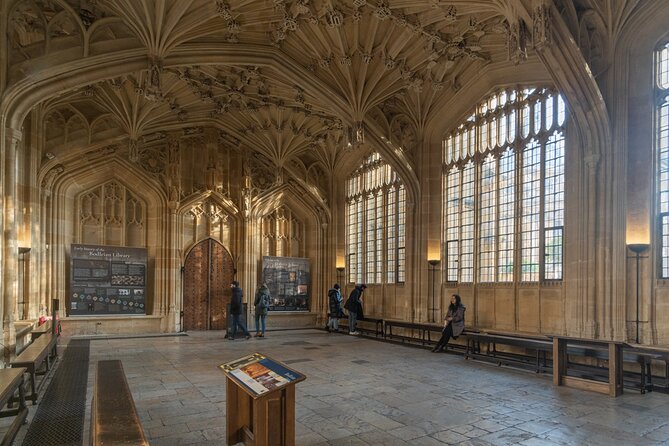
The Divinity School is described as the first purpose-built lecture room, and it’s one of Europe’s great examples of medieval architecture. It’s also a filmed setting for Harry Potter and other Hollywood productions.
The big expectation management point: during peak season (June to August), access can be extremely limited due to frequent closures and high demand, and it may not be included. If it isn’t available, the tour substitutes with entrance to another university college.
This stop is short, but it can be a highlight if you get in. If you don’t, you haven’t wasted the day—you’ll still have the other landmarks and Christ Church.
Headsets, small groups, and student-guide energy
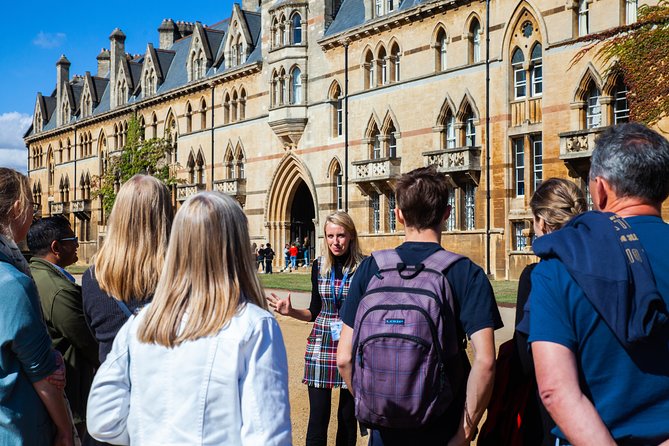
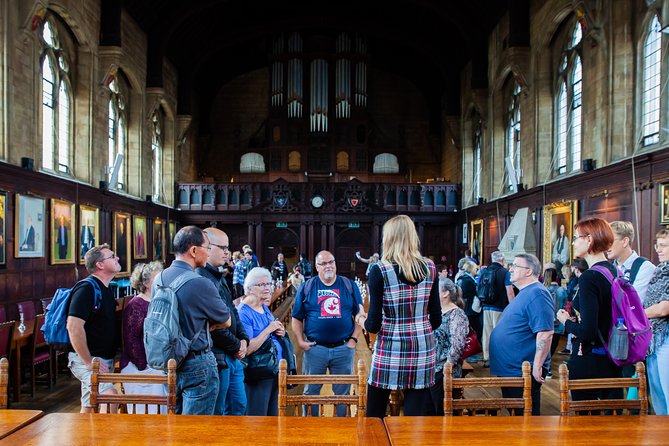
This tour works because communication is designed for crowds. In your day-to-day walking, you’ll hear the guide through headsets at key points (notably during Christ Church). That matters more than you’d think. It lets you focus on stories without constantly turning your head to find voices through gaps.
The guides in the reviews are consistently described as upbeat and engaging, with a knack for making Oxford feel human. People specifically enjoyed student perspective insights and humor along the way, from guides like Luke and Antonia to guides mentioned as Rose, Ben, Sam D., and Martin. You’re not just receiving facts—you’re getting explanations in a way that feels like conversation.
You’ll also cover a lot, and that’s why a small group helps. The route is built for staying on pace, so you don’t get separated for long. If you tend to drift off to take photos, keep an eye on where the group is heading, especially near Christ Church.
Best time to go and what to wear
Oxford weather has a mind of its own, so plan for rain. A rain jacket is a smart call even if the forecast looks fine, and solid shoes matter because the day is built for walking.
If you’re visiting in summer (June to August), keep expectations flexible about the Divinity School. That’s also when crowds are highest and closures are most likely.
If you care about interiors and want the best chance of seeing everything, aim for a day where you can stay adaptable. Oxford’s schedule isn’t always tourist-friendly.
Who should book this tour, and who should skip it
This tour is ideal if you want a guided introduction and you like context. You’ll probably enjoy it most if:
- you’re new to Oxford and want a strong overview of major colleges, plus the library highlights
- you enjoy student-led storytelling and want Oxford as a living institution
- you’re okay with walking and want a structured three-hour route
You might skip it if:
- you want a slow, photo-heavy day with lots of free roaming and no time pressure
- you want to focus on one single site deeply rather than seeing many highlights
- you’re expecting full access to every interior every time (Oxford sometimes changes what’s open)
Should you book this Oxford University & City Tour?
Yes, if you want a smooth, efficient Oxford orientation with real narrative. The combination of college exteriors, key stops like the Bodleian and Weston Library, and an optional Christ Church upgrade makes it a strong “first Oxford day” choice.
Book it if your priority is learning what you’re seeing and getting your bearings fast. It’s also a good match for short trips when you don’t have time to plot tickets and routes yourself across a spread-out university town.
Hold off if your priority is one interior you can’t miss, or if you don’t like walking without long breaks. In Oxford, flexibility is part of the deal, and this tour is built to handle that—just don’t plan as if every room is guaranteed.
FAQ
How long is the Oxford University & City Tour with Christ Church?
It runs for about 3 hours.
Does the tour include Christ Church entry?
Christ Church entry is included when you choose the optional upgrade. You’ll get an external overview first, then enter independently with a multimedia audio headset.
Is the Bodleian Library visit included?
Yes. Bodleian Library has admission included on this tour.
Will I be able to visit the Divinity School?
Access to the Divinity School can be limited during June–August due to closures and high demand. If it’s not available, the tour may substitute with entrance to another university college.
Where do I meet the group?
The start meeting point is Gloucester Road Underground Ltd, Gloucester Rd, South Kensington, London SW7 4SF, UK. If you select pickup, you meet at the London address; otherwise the Oxford meeting point is 15 Broad Street, Oxford.
How big is the group?
This tour has a maximum of 19 travelers.