REVIEW · OXFORD
Oxford University Walking Tour With University Alumni Guide
Book on Viator →Operated by Footprints Tours Limited · Bookable on Viator
Oxford can feel like a maze at first. This tour turns it into a guided storyline across the university’s most iconic landmarks. I especially love the student perspective and the way the guide connects architecture to student life, traditions, and what Oxford is actually like day to day. I also like the value of seeing Radcliffe Camera, the Bodleian complex, Divinity School, and Trinity College all in one tight loop. One consideration: the pace is quick, and in peak season the Divinity School may not be accessible as planned.
If you’re expecting a slow, meandering stroll, you may find the two hours a lot. The upside is that you get a concentrated orientation to Oxford University without having to plan every stop. The trade-off is that some entrances can be limited due to closures and high demand, so your best move is going in with a flexible mindset and comfortable shoes.
In This Review
- Key points I’d highlight before you go
- A quick orientation to Oxford’s university world (without the overwhelm)
- Price and what you’re really paying for ($41.59 for 2 hours of access and context)
- The walking route: how the order helps you see the story of Oxford
- University of Oxford and Merton College: the debate-friendly start
- Bodleian Library plus St Mary the Virgin: where learning meets epic scale
- Oriel College’s statue drama and the Divinity School reality check
- Radcliffe Camera and Trinity College: the postcard hits with meaning
- All Souls and Hertford College: tradition and one famous photo scene
- Weston Library: where the modern Oxford picture becomes real
- What makes this tour stand out: student guides, not just a script
- Who should book this walking tour?
- Should you book this Oxford University walking tour?
- FAQ
- What’s included in the tour price?
- How long is the walking tour?
- Is this a small group tour?
- Will I be able to enter Divinity School?
- Where does the tour start?
- Is there a mobile ticket?
- Can I cancel for a full refund?
Key points I’d highlight before you go
- Student-led storytelling that focuses on what life at Oxford feels like, not just dates and plaques
- Major “Oxford photo stops” in one route, including Radcliffe Camera and Trinity College
- Short time at each site means you see more in 2 hours, but you won’t linger long
- Some interior access is included, such as entry experiences at Divinity School and Trinity (when available)
- Divinity School access can be restricted in summer months, so it’s worth planning for Plan B
- Mobile ticket + small-group feel (built for a personalized experience with social distancing limits)
A quick orientation to Oxford’s university world (without the overwhelm)
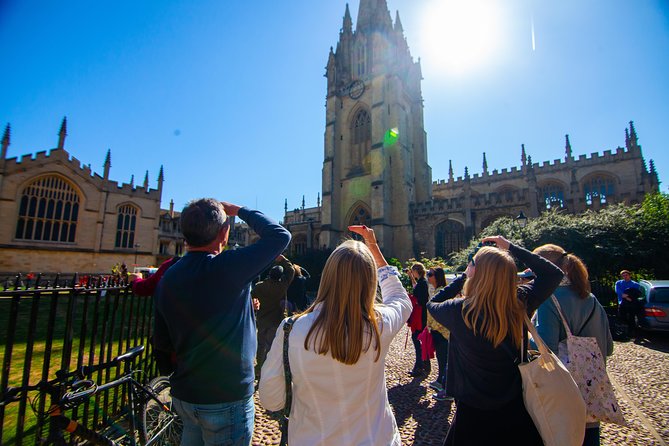
Oxford University is not one building or one campus. It’s a whole ecosystem of colleges, libraries, chapels, and lecture rooms scattered through the city. That’s exactly why I like a walking format with a student guide: you don’t just learn names, you learn how Oxford’s parts connect.
This tour is built to be efficient. In about 2 hours, you’ll hit 10+ standout stops and get a guided sense of where things sit and why they matter. It’s also student-led through Footprints Tours Oxford, so you’ll hear practical context about the student experience, not only landmark facts.
Expect a brisk rhythm. Each stop is short, which keeps the tour moving and makes it great for a single day in Oxford. If you like spending 30–60 minutes in one place, you might want to pair this with a longer, self-guided visit later.
You can also read our reviews of more tours and experiences in Oxford.



Price and what you’re really paying for ($41.59 for 2 hours of access and context)

At $41.59 per person, this isn’t a “sit on a bus and listen” kind of tour. You’re paying for two things that matter in Oxford:
First, you’re buying a guide who can connect the buildings to student life. That’s the difference between taking photos and actually understanding what you’re looking at.
Second, you’re paying for included admission where it counts. Divinity School has admission included, and Trinity College also shows up as admission included on the tour. Many other stops are free to view, so your money goes toward guided access and interpretation rather than stacking up paid tickets.
Is it a bargain? For a focused 2-hour introduction to Oxford University’s best-known landmarks, it’s strong value. Just remember: you’re not paying for a full-day university immersion, and not every entrance is guaranteed due to seasonal closures and demand.
The walking route: how the order helps you see the story of Oxford
What I like about the stop order is that it builds from “this is what Oxford is” into “here are the places where Oxford’s big ideas lived,” then into “the colleges and traditions.”
You start with a broad orientation at Oxford University itself, then move into specific colleges and key buildings. That makes it easier to understand later stops like All Souls and Weston Library, because you’ve already been oriented to how the university functions across sites.
If you’re the kind of visitor who likes a plan, this route gives you one. If you’re the kind who likes to be surprised, the guide still leaves room for questions, jokes, and the occasional real-world detail about student routines.
University of Oxford and Merton College: the debate-friendly start

The tour kicks off at the University of Oxford, covering centuries of institutional life across more than 38 colleges, libraries, and faculty buildings. It’s a helpful first step because it frames Oxford as a long-running tradition with many separate parts.
From there, you head to Merton College, which the guide uses to spark a debate: who is truly the oldest among Oxford colleges, and why that argument gets so tangled. It also points out that Oxford doesn’t do boring. Even early on, you’re hearing about quirks like the bizarre chapel associated with Merton.
This is a good time to ask questions. Guides often connect these details to bigger themes, like how colleges developed over time and how traditions kept evolving.
Bodleian Library plus St Mary the Virgin: where learning meets epic scale
Then comes the Bodleian Library. You’ll hear it described as a copyright library with a huge collection, plus the sheer reality of Oxford’s shelving—there’s something awe-inspiring about how the building supports scale.
The tour includes an entry experience connected to the Bodleian complex (you’re not just standing outside admiring stone). After that, you shift to University Church of St. Mary the Virgin, which the tour frames as a historical epicenter for the university.
I like this pairing. Learning and religion sit side by side in Oxford’s story, and you can actually feel it in the way the guide explains the role of the church in the university’s long timeline.
One practical note: because the tour is timed tightly, you should plan on a quick, guided introduction rather than an all-afternoon library fantasy. If you want extra reading-storm time, you’ll still need to add it on your own.






Oriel College’s statue drama and the Divinity School reality check

Next up is Oriel College, where the tour leans into drama: the guide highlights one of the more controversial statues at Oxford and uses it to talk about a notorious former graduate. It’s the kind of storytelling that makes Oxford feel human, not just historical.
After Oriel, you reach Divinity School. This is one of the stops I’d circle first, mainly because it’s described as the first purpose-built lecture room and a major example of medieval architecture. The guide also connects it to why it’s familiar from film settings, including Harry Potter.
Here’s your consideration: during June–August, access can be restricted because of frequent closures and high demand. Even outside summer, you should treat Divinity School as a “great if you get it” stop. The tour does try to include it, but your day can still be affected by real-life operations.
If Divinity School is closed, you won’t be left with nothing. The tour keeps moving, and your guide’s job becomes making sure the rest of the Oxford story still lands.
Radcliffe Camera and Trinity College: the postcard hits with meaning

When you arrive at Radcliffe Camera, you’re hitting one of Oxford’s most iconic shapes. Built in 1748, it’s part of the Bodleian Library world, and the tour focuses on why it looks the way it does and what makes it so recognizable.
This is a strong stop for photos, but don’t let the camera steal all your attention. The guide typically points out angles and architectural cues that help you understand the building rather than just capture it.
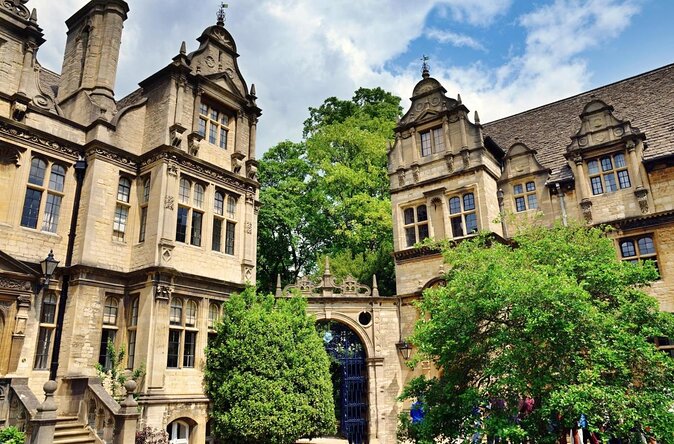
Then you get to Trinity College, another top visual stop. Trinity is presented as one of the most beautiful colleges at Oxford, and the guide uses it to connect beauty, history, and the atmosphere of college life. There’s admission included here, so you’re not only outside looking in.
In my opinion, this is where the tour starts to feel more than sightseeing. You begin to see how Oxford’s “college system” creates a sense of belonging that’s distinct from the idea of a single campus.
All Souls and Hertford College: tradition and one famous photo scene
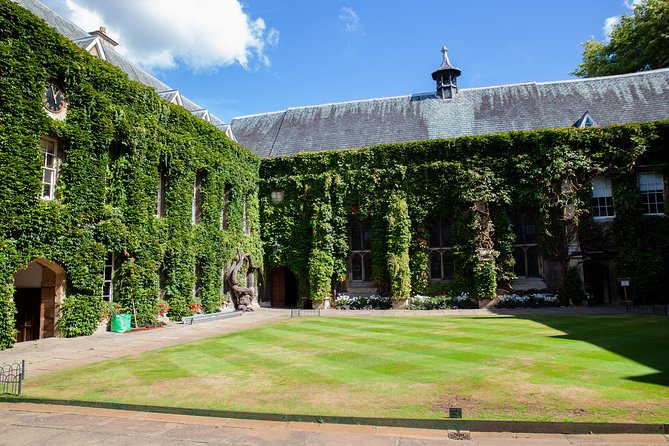
After Trinity, you pass All Souls College. The focus here is on tradition and prestige. The tour frames All Souls as a place with exceptionally strong traditions and high academic standing. Even if you don’t know the academic background, the guide explains the idea behind why this place gets mentioned so often in conversations about Oxford.
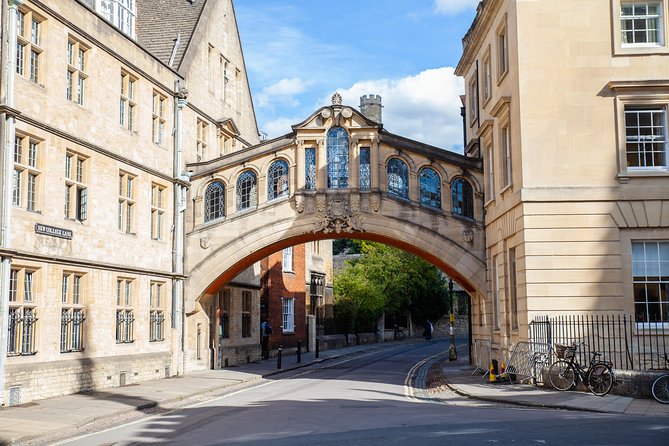
Next is Hertford College, described as progressive, plus a highlight for photography. The guide points out what’s often the most photographed spot in Oxford related to Hertford, and it’s a good moment to slow down just slightly so you can notice details instead of only angles.
This stop is ideal if you like the cultural side of Oxford: not only the buildings, but the sense that colleges also act like living communities with attitudes and identities.
Weston Library: where the modern Oxford picture becomes real
Finally, the tour reaches Weston Library, part of the Bodleian complex. This stop is designed as a contrast to the older parts of the Bodleian. You enter the modern grand entrance hall and hear about the scale of the collections, including over 12 million books, plus the care involved in keeping materials in good condition.
The guide also focuses on design choices, especially the use of light. That’s not just a nice architectural note. It changes how you experience the building: the modern part of Oxford doesn’t feel like an afterthought. It feels like the university adapting to new storage, new needs, and modern visitors.
If you finish with Weston, you leave with a clearer sense of Oxford as a place that operates now, not only a museum for the past.
What makes this tour stand out: student guides, not just a script
A huge part of the charm is the guide’s style. Names that show up in the tour experience include Jacob, Tom, Luke, Freddy, San, Ryan, Megan, Lucy, Eloise, Michael, Nick, Sam, Aran, and Antonia. That variety matters because you get different emphases: some guides lean toward student admissions and how you choose a college, while others lean harder into architecture and stories.
The common thread is that the guide approach makes Oxford feel less like a textbook and more like a place with real daily life. You’ll hear how students think, how colleges function, and why Oxford’s system produces its own kind of identity.
And yes, the tour is entertaining. Humor shows up often, but it stays tied to context, not random jokes.
Who should book this walking tour?
You’ll probably love this if:
- you want a high-impact Oxford intro in one morning or afternoon
- you like getting orientation fast, then exploring more on your own
- you enjoy stories about college life, not just famous buildings
- you’re comfortable with a moderate walking pace for about 2 hours
You might want to think twice if:
- you need long time inside buildings and don’t do well with quick stops
- you’re traveling in peak summer expecting Divinity School entry as a guarantee
Should you book this Oxford University walking tour?
I’d book it if your goal is a smart, guided “first look” at Oxford University’s most recognizable sites with student-led context. The price is reasonable for what you get, especially because Divinity School and Trinity are flagged as admission-included experiences, and the guide’s student perspective adds real value beyond sightseeing.
Just go in prepared for a brisk route and possible entrance limitations at Divinity School during June–August. If you handle that reality, you’ll leave with your bearings and a much clearer sense of how Oxford’s colleges work.
FAQ
What’s included in the tour price?
The tour includes a professional guide, and all taxes, fees, and handling charges. Admission is included for Divinity School and Trinity College, while other stops are listed as free to visit.
How long is the walking tour?
It runs for about 2 hours.
Is this a small group tour?
Yes. It’s described as a personalized experience with group sizing aligned with social distancing rules, with a maximum of 100 travelers.
Will I be able to enter Divinity School?
Access to Divinity School is extremely limited during June–August due to frequent closures and high demand, so it may not be included that day. The tour notes that it may not be possible and aims to be honest up front.
Where does the tour start?
The start is Gloucester Road, London SW7. If you choose the pickup option, the meeting point is the London address at Gloucester Road Tube Station. Without pickup, the meeting point is in Oxford at 15 Broad Street.
Is there a mobile ticket?
Yes. You’ll have a mobile ticket.
Can I cancel for a full refund?
Yes. You can cancel up to 24 hours in advance for a full refund. Canceling within 24 hours means no refund.