REVIEW · LIVERPOOL
Half-Day Liverpool Electric Beatles Bike Tour
Book on Viator →Operated by Liverpool Cycle Tours Ltd · Bookable on Viator
Beatles history, powered by an e-bike. This Liverpool Electric Beatles Bike Tour strings together the places you’ve heard about in songs, then gets you to them without the usual stop-and-go hassle. You’ll roll through streets and parks where tour buses usually don’t go, guided by locals who know how to make the stories click.
I especially like the easy ride. The bikes take the sting out of Liverpool’s hills, so you get a light workout without arriving sweaty and grumpy. I also like how the guide turns each stop into something you can picture, with Beatles context that goes beyond a quick photo and a wave.
One possible consideration: e-bikes are machines, and the tour uses well-used equipment. There’s a chance of minor on-the-spot fixes (brake noise, power, or a tire needing repositioning), though the guides handle adjustments so the tour keeps moving.
In This Review
- Key things to know before you go
- Why an e-bike Beatles tour beats the bus in Liverpool
- Meeting at Black Lodge Brewing and getting rolling
- Strawberry Field: free exhibition entry plus real time on the grounds
- Penny Lane: the street sign photo and the Penny Lane Development Trust
- St Peter’s Church hall: the John-and-Paul meeting moment
- Eleanor Rigby: a quiet, respectful visit
- Hope Street: Georgian streets, cathedrals, and a “case history” stop
- Ringo Starr mural in the Dingle: Ringoland and family connections
- Sefton Park ride and the Palm House: green space with extra Beatles context
- Calderstones Park: Quarrybank High School and the name story
- Mendips (John Lennon’s childhood home): admission isn’t included
- Forthlin Road: Paul McCartney’s childhood home area
- Back along the River Mersey: a flat finish and the best decompression
- Price and value: is $81.95 worth it?
- Who should book this Beatles bike tour?
- Quick tips: make the ride smoother
- Should you book this Liverpool Electric Beatles Bike Tour?
- FAQ
- How long is the Half-Day Liverpool Electric Beatles Bike Tour?
- Where does the tour start and end?
- What’s included with the tour stops?
- Is Mendips admission included?
- How many people are in the tour?
- Can I cancel for free?
Key things to know before you go
- Small group (max 6 riders): you’re not stuck in a giant pack, so you can hear the guide and take photos.
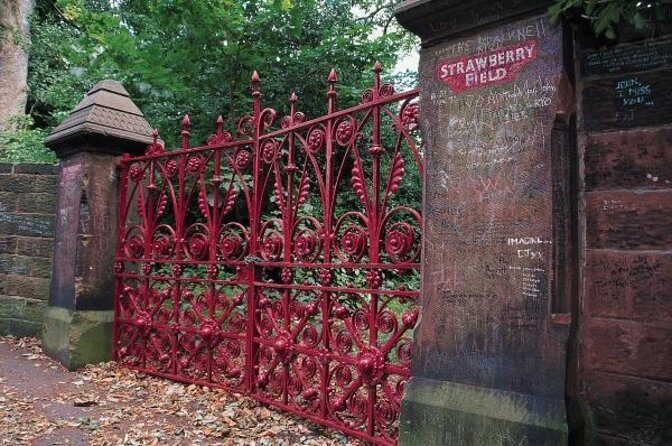
- Strawberry Field includes admission: you get time at the grounds plus exhibition access.
- Penny Lane goes past the street sign: you also see the Penny Lane Development Trust area.
- Green-space and park riding: Sefton Park and the Palm House area give you a breather from city streets.
- The finish is flat and scenic: a riverside drive along the River Mersey sets up a relaxing end.
Why an e-bike Beatles tour beats the bus in Liverpool
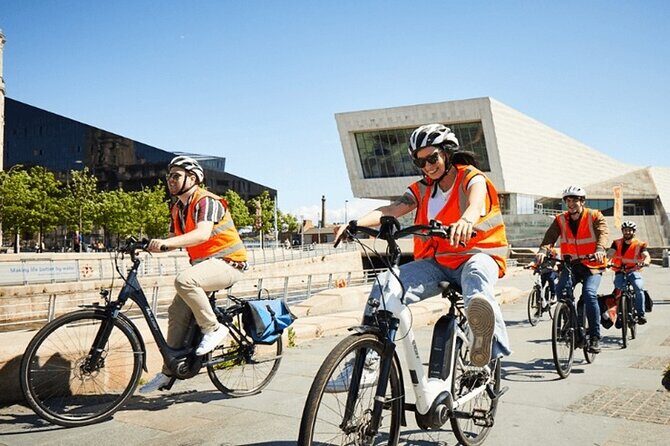
Liverpool is a city you can feel on a bike. The pace is yours. You stop when you want. And you get that close-up sense of neighborhood scale that’s hard to get from a bus window.
On this tour, the pedal-assist e-bike matters. You’re touring for about 3.5 hours, so you’ll cover real ground, but you won’t have to save your legs for a separate workout. It’s a smart match for Beatles fans who want the story and the mobility to reach the less obvious corners of town.
The other big win is the Beatles-to-real-life connection. You don’t just pass famous names. You get small-location specifics that make songs and biographies feel more grounded—church halls, childhood streets, and park corners tied to everyday life, not museum-like stuff.
You can also read our reviews of more cycling tours in Liverpool


Meeting at Black Lodge Brewing and getting rolling
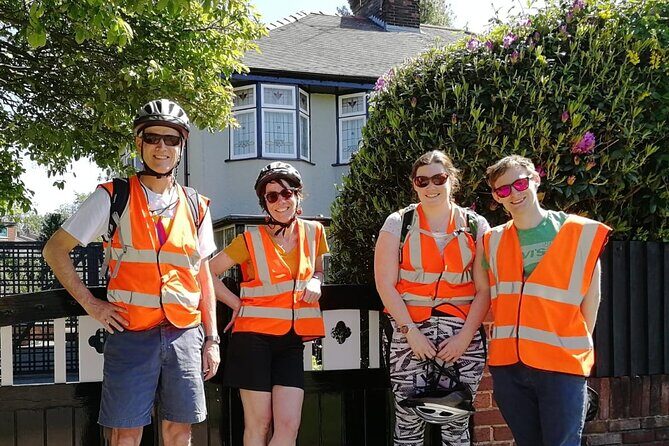
You start at Black Lodge Brewing, 3 Kings Dock St, Liverpool L1 8JU and return there at the end. If you’re arriving by public transport, this is the kind of meeting point that keeps the “how do we get there?” stress low.
The tour runs in English and is capped at six travelers, which changes the whole vibe. You’re more likely to get personal attention—asking questions, hearing the nuances between songs and places, and getting regrouping support at crossings.
If you’re the kind of visitor who likes a plan but hates rigid schedules, this one works. There are set stops with timing, but you also get room to breathe, take pictures, and let the guide’s context land before the next street turn.
Strawberry Field: free exhibition entry plus real time on the grounds
This is your longest stop: about 35 minutes at Strawberry Field, with free admission to their exhibition and access to the grounds. It’s a great anchor for the whole tour because it shifts you from “history facts” to “place you can stand inside.”
In practical terms, plan to do two things here:
- Look around at the exhibits and interpretive displays at a comfortable pace.
- Spend a chunk of time just soaking up the atmosphere on the grounds, not sprinting between viewpoints.
A longer stop like this is also valuable because your brain needs a reset partway through any Beatles-focused day. After Strawberry Field, the rest of the sites can feel like a guided route through a story you’re already starting to understand.
Penny Lane: the street sign photo and the Penny Lane Development Trust
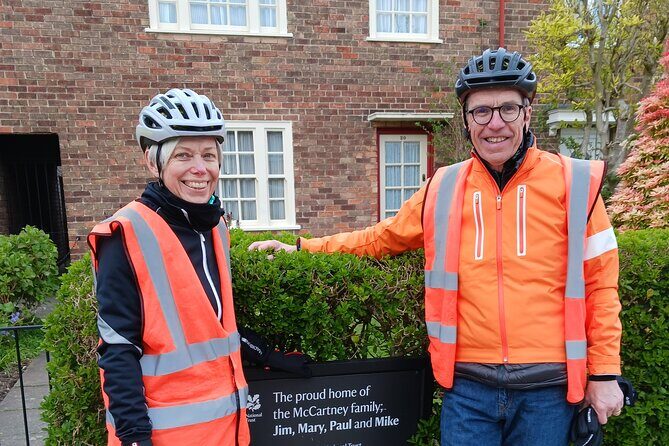
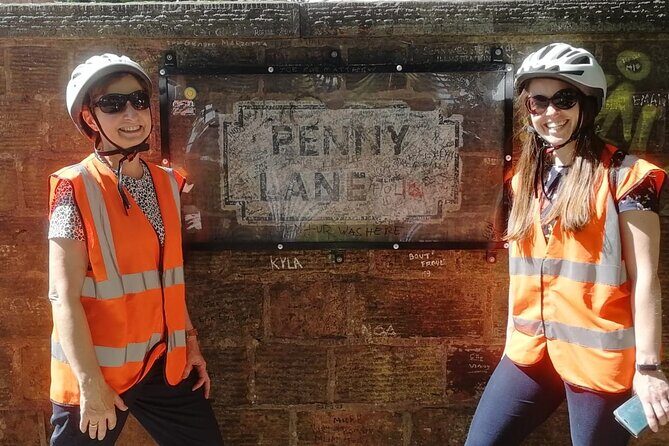
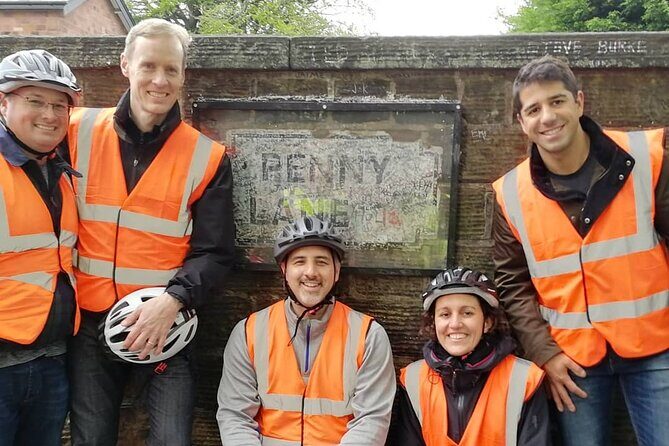
Next comes Penny Lane. You’ll get a quick photo stop at the Penny Lane Street Sign—and yes, it’s recently signed by Sir Paul McCartney himself. Then you’ll have time in the Penny Lane Development Trust area.
That added stop is a smart move. You’re not only chasing the postcard version of Penny Lane. You get to see details connected to the broader Penny Lane story, including elements like the firedoors from the Penny Lane Firestation, a Beatles mural, Octopuses Garden, a memorial for George, and time in the gift shop.
It’s fast—around 5 minutes for the sign moment and 5 minutes for the Trust layover—but it’s packed. If you’re a Beatles fan who likes context, this is one of the stops that rewards you for being there even when you think you already know the song.
St Peter’s Church hall: the John-and-Paul meeting moment
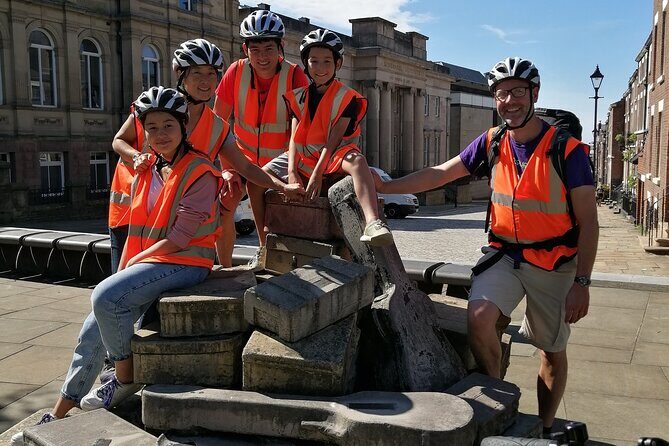
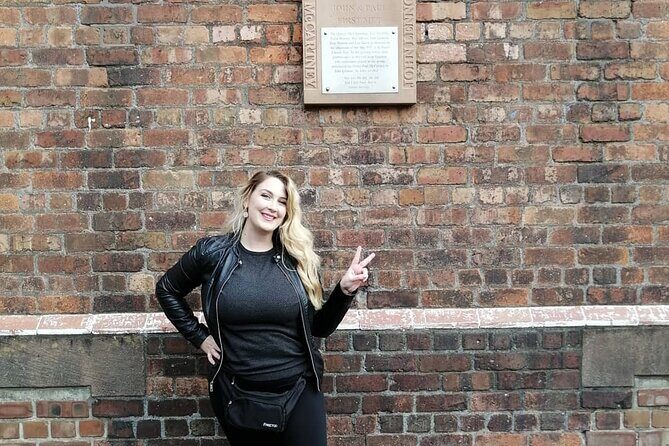
You’ll stop at St Peter’s Church Building, described as the place where it all began. The big hook here is the John Lennon and Paul McCartney meeting on 6 July 1957 at the Woolton Village Fete, with a visit to the church hall where that story is tied.
This stop is only about 5 minutes, so I treat it as a “story activation” moment. You’re not there to tour a building for an hour. You’re there to connect a specific date and meeting place to what comes later in their music history.
If you like biographies with a sense of time and place, you’ll probably love this part. If you’re more into big landmarks and scenic walking, it may feel brief—but it’s one of the tour’s most meaningful links.
A few more Liverpool tours and experiences worth a look

Eleanor Rigby: a quiet, respectful visit
Then comes the Eleanor Rigby tombstone. The tour keeps this stop short—around 5 minutes—and frames it as a respectful, quiet visit.
This is one of those stops that doesn’t need lots of commentary to work. The value is in your own moment of recognition: you’re standing at the visual symbol made famous by the song, without the distraction of a big crowd.
For me, this stop works best when you slow down. Don’t just grab a photo and move. Take 20–30 seconds to look, read, and let the song title stop sounding like a trivia answer.
Hope Street: Georgian streets, cathedrals, and a “case history” stop
Hope Street is a beautiful Georgian street that divides Liverpool’s two cathedrals, and it’s tied to where John, Paul, and George would study and socialize. You’ll spend about 5 minutes, plus a stop at a monument called a case history that explains the street’s background and significance.
This part is great if you want Liverpool to feel like a lived-in city, not a set of isolated Beatles stops. Hope Street gives you a sense of older street form, architectural rhythm, and how neighborhoods actually shape daily routines.
The short timing means you should come prepared for “overview plus meaning.” This isn’t a deep architecture lesson. It’s a quick way to see the physical setting behind the story.
Ringo Starr mural in the Dingle: Ringoland and family connections
In the Dingle, you’ll see the Ringo Starr mural on the side of a pub. It’s often called Ringoland, and the tour explains why it’s meaningful to Starr—being opposite his birthplace, school, and the street where he was raised.
Like Hope Street, this isn’t a long stop. It’s about 5 minutes, but it’s visually strong. Murals stick in your memory, and a public-art moment like this helps you feel how Beatles influence maps onto everyday streets.
If you’re the type who likes “spot the detail” moments, keep an eye out here. The mural isn’t just decoration—it’s a pointer to family roots and local identity.
Sefton Park ride and the Palm House: green space with extra Beatles context
Then you transition into what the tour calls Liverpool’s oldest green spaces, including Sefton Park, one of the city’s largest and best-known parks. You’ll ride through it, then (if there’s time) you can get closer to the Sefton Park Palm House and walk the grounds.
The key detail: the tour ties the park and the Palm House to Beatles history of their own. Even if you don’t know those specifics already, park time does two things for your day:
- It breaks up the “stop-photo-stop-photo” rhythm.
- It lets you absorb Liverpool’s scale in a calmer way than the busy streets.
I like this portion because it turns the tour into more than a checklist. You leave with a sense of how the band’s early environment included parks and public spaces, not just school routes and street corners.
Calderstones Park: Quarrybank High School and the name story
At Calderstones Park, you’ll find a corner tied to Quarrybank High School, once attended by one of the Beatles. The stop is about 5 minutes, and it’s positioned around the story of how they found their name.
This is the kind of stop that can feel “short and sweet” in the best way. You’re not meant to hang around for an hour. You’re meant to understand how a real school location connects to a real turning point in their early identity.
If you’re a fan of how bands form—who knew whom, where they went, how names started—this stop will click.
Mendips (John Lennon’s childhood home): admission isn’t included
Next is Mendips, John Lennon’s childhood home. You’ll have a brief about 5-minute visit, but admission is not included.
That difference matters. It means you should think of Mendips here as a viewing stop, not a full interior experience. If you were hoping for museum-level access to the home itself, you may need to plan that separately.
Still, this is a high-value moment in the tour because it places Lennon’s early life into a specific street presence you can stand near. Even without admission, the meaning is strong.
Forthlin Road: Paul McCartney’s childhood home area
You’ll then reach Forthlin Road, described as one of the most important homes in the history of modern music—Paul McCartney’s childhood home. Like many of the earlier stops, it’s about 5 minutes and admission is free.
This is another “quick hit” location, but it balances the day. Mendips anchors John’s childhood setting; Forthlin Road anchors Paul’s. Together, they give you a sense that the early Beatles story wasn’t built in one place—it grew across the city’s connected neighborhoods.
If you’re doing the tour as a Beatles fan, this is one of the moments you’ll probably look back on when you remember the day most clearly.
Back along the River Mersey: a flat finish and the best decompression
The tour ends with a riverside drive along the banks of the River Mersey back into the city centre. It’s noted as a flat ride, which is exactly what you want at the end of a 3.5-hour city circuit.
This finale is more than transportation. It gives you time to reset. You’ve been in Beatles mode for hours, plus you’ve been riding with traffic awareness. The Mersey stretch lets you breathe and take in Liverpool from a calmer angle.
And yes, it’s a nice lead-in to grabbing a drink at the end. The day ends with a view, not with a grim scramble to find your way back.
Price and value: is $81.95 worth it?
At $81.95 per person, you’re paying for a guided, timed route that bundles in multiple meaningful stops and includes access fees where listed—like Strawberry Field. You’re also paying for the e-bike, which is the real engine of the experience.
Here’s the value logic I see:
- You’re getting to sites you might not reach easily on foot or from a bus route.
- You’re spending the day with a guide who uses local storytelling to connect songs to street-level reality.
- You’re doing it with a small group (max 6), which makes the tour feel less like a production and more like a focused walk-through.
If your goal is only a few photos at the “big names,” this might feel pricey. But if you want the full Liverpool-feels-Beatles-day, this is one of the more efficient ways to do it without burning half your time on logistics.
Also, the tour tends to get booked ahead—on average 63 days—so if you’re traveling during peak season, I’d plan early.
Who should book this Beatles bike tour?
This is ideal for:
- Beatles fans who want more than surface-level landmarks.
- Music lovers who enjoy the “how it started” details tied to specific places.
- People who want an active day but don’t want to punish themselves with steep climbs.
It also works well if you’re traveling with someone whose interests are slightly different. One person can be obsessed with song references, while the other can enjoy the city form, parks, and a guide who brings Liverpool’s personality into the ride.
From the guide names that show up often—people like Alex, Phil, Tom, Kyle, Cayl, Robbo, and Michael—it also seems like the operator hires guides who genuinely love talking about the music and the city, not just reading from a script.
Quick tips: make the ride smoother
A few practical things that will help you get the best out of the tour:
- Bring water. Even short stops add up in warm or rainy weather.
- Dress for rain, because Liverpool weather can change fast. The tour context expects you to be out and riding.
- Use the e-bike like it’s meant to be used: it’s pedal-assist, and pedaling is part of the deal.
- Follow your guide at crossings and in traffic. The tour is built around a moving group, and safety is a real priority.
Should you book this Liverpool Electric Beatles Bike Tour?
If you’re a Beatles fan who wants a day that feels personal—small group, real street access, and stories tied to the exact places—you should book this tour. It’s one of the better ways to see Liverpool at a human pace without turning it into an all-day walking grind.
If you’re the kind of visitor who hates any chance of delays from minor equipment issues, then you might want a different format. E-bikes can need quick adjustments, and while the guides seem practiced at handling it, you’re still relying on machines.
My bottom line: for the combination of Beatles stops, e-bike ease, and that scenic Mersey finish, it’s a very strong “yes” for most people visiting Liverpool with a love for the Fab Four.
FAQ
How long is the Half-Day Liverpool Electric Beatles Bike Tour?
The tour runs for about 3 hours 30 minutes.
Where does the tour start and end?
It starts at Black Lodge Brewing, 3 Kings Dock St, Liverpool L1 8JU, UK, and it ends back at the same meeting point.
What’s included with the tour stops?
Strawberry Field includes free admission to the exhibition and access to the grounds. Penny Lane has a free photo stop and includes a free layover at the Penny Lane Development Trust. Other listed stops (like the Penny Lane area, St Peter’s Church hall, Eleanor Rigby tombstone, Hope Street, Ringo Starr mural, Sefton Park Palm House, Calderstones Park, and Forthlin Road) are marked as free where stated. Mendips is not included for admission.
Is Mendips admission included?
No. Mendips (John Lennon’s childhood home) is a stop where admission is not included.
How many people are in the tour?
The tour has a maximum of 6 travelers.
Can I cancel for free?
Yes. You can cancel up to 24 hours in advance for a full refund.