REVIEW · LONDON
The History of London City Center Tour Semi-Private 12ppl Max
Book on Viator →Operated by Babylon Tours London · Bookable on Viator
London history feels close up on this walk. You’ll cover major sights on foot with a semi-private group and a guide who keeps the stories moving. I like the small-group size because it makes it easier to ask questions and actually follow the thread of London’s past as you pass landmark after landmark.
Two things I’d bet you’ll appreciate: the pace is built for active sightseeing (not rushing one photo stop to the next), and the route lines up big-name London with less obvious context, from Roman-era roots to the WWII-era world beneath Churchill. One consideration: this is a walking tour, so it’s not for people with walking disabilities or wheelchair users, and security rules mean you won’t always go inside buildings you see from the outside.
In This Review
- Key Highlights Worth Booking For
- London City Center Tour Semi-Private (Max 12): What the Experience Really Feels Like
- Starting in Covent Garden: The Perfect First Step on a City-Story Walk
- Trafalgar Square and Nelson’s Column: More Than a Famous Photo Spot
- Admiralty Arch and Whitehall: Where Power Looks Like Architecture
- Downing Street and St James’s Palace: The Royals and the Prime Minister’s Office
- Buckingham Palace: How a Working Royal Residence Fits Into Your Route
- Churchill War Rooms and the WWII Underground Mindset
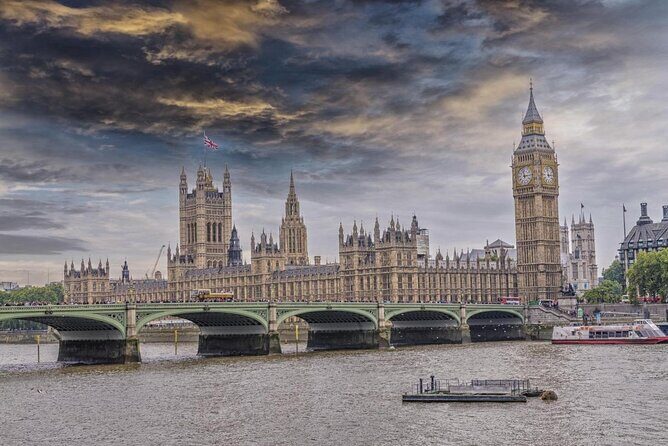
- Big Ben and the Houses of Parliament: Gothic Pride and Political Procedure
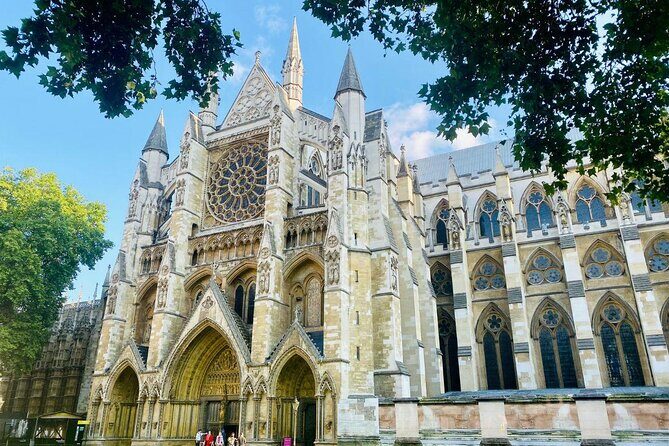
- Westminster Abbey Finale: Entry Included, Interior Self-Guided
- Price and Value: Is $59.28 a Good Deal for This Route?
- What to Wear and Bring for a Rain-or-Shine Walk
- Who Should Book This London Walking History Tour?
- Should You Book This Tour?
- FAQ
- What is the duration of the London City Center Tour Semi-Private 12ppl Max?
- Where does the tour start and where does it end?
- How many people are in the group?
- What’s included at the end of the tour at Westminster Abbey?
- Are tickets for Churchill War Rooms included?
- Can I cancel for a full refund?
Key Highlights Worth Booking For
- Max 12 people keeps the experience on the personal side, not a bus-load shuffle
- A guided history story ties Trafalgar Square, Parliament, and the Royals into one walk
- You end with Westminster Abbey entry tickets for independent viewing (guided interior not included)
- Many top sights are seen from the outside, especially when security limits access
- The tour runs rain or shine, with a route plan that can adjust for national events
London City Center Tour Semi-Private (Max 12): What the Experience Really Feels Like
This tour works because it treats London like a city you can read with your feet. You’ll start in Covent Garden and finish at Westminster Abbey, staying in the core where the biggest political and royal landmarks sit within walking distance. The guide’s job is to connect what you’re looking at with why it matters, so you don’t just collect photos—you pick up context you can use later.
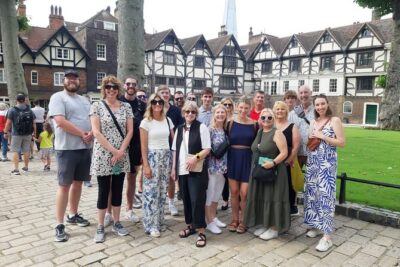
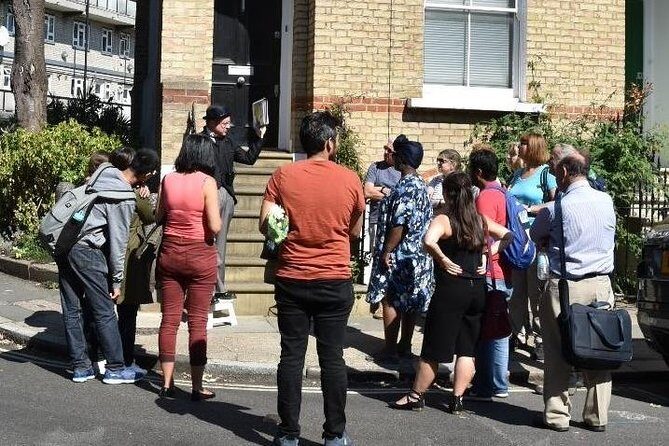
The semi-private format is the biggest quality-of-life upgrade here. With up to 12 people max, you’re less likely to get swallowed by the crowd. That matters on a route like this, where timing and spacing affect how much you hear and how much you can actually see without craning your neck.
Also, this is built for people who like to move. Even though each stop is brief, you’re getting a steady rhythm of walking plus short explanations. If you prefer museum-style lounging, this may feel a bit fast. If you like to cover ground and keep your day efficient, you’ll probably enjoy it.
You can also read our reviews of more city tours in London



Starting in Covent Garden: The Perfect First Step on a City-Story Walk
You begin at Covent Garden, a place people associate with shopping and theater, but it also has layers going back to early settlements. The guide frames it as more than a pretty starting line. The point is smart: you begin in a neighborhood that mixes everyday London life with older roots, so the history theme doesn’t feel abstract right away.
This is also a practical start because Covent Garden is easy to reach on public transport. The tour is designed to get moving quickly, so you’re not spending the first hour waiting around. One note: no large bags or suitcases are allowed, so plan to travel light if you’re coming from a hotel.
If you’re the type who likes to understand a city’s “why,” this first segment sets up everything that follows. If you’re just trying to see everything fast, it still gives you an organized entry point without needing research time.
Trafalgar Square and Nelson’s Column: More Than a Famous Photo Spot
From Covent Garden, you pass through Trafalgar Square, one of London’s most recognizable public spaces. The guide’s angle here is history with real civic energy: the square commemorates the Battle of Trafalgar, and it has also been a stage for protests and demonstrations over time. That mix—ceremony plus crowd life—is part of what makes Trafalgar Square feel like a living center rather than a museum display.
Next is Nelson’s Column, built to honor Admiral Horatio Nelson after he died at the Battle of Trafalgar in 1805. Even if you’ve seen it in pictures, the value of the stop is the quick explanation that turns it from landmark to story. This is where you start hearing how London’s power and pageantry often travel together.
A possible drawback at this stage: Trafalgar Square can get busy. The tour keeps the stop time short, so you’ll see and learn, but you likely won’t linger like you would on your own. If you hate crowds, keep your expectations realistic.
Admiralty Arch and Whitehall: Where Power Looks Like Architecture
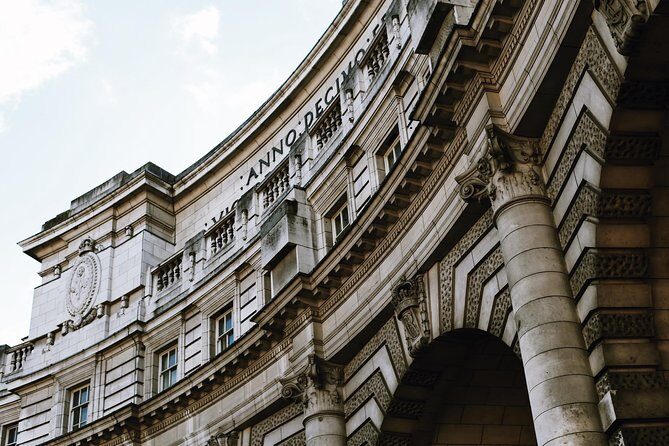
You’ll move onward to Admiralty Arch, commissioned by King Edward VII as a memorial to Queen Victoria. This kind of detail matters on a walking tour because it changes how you see the street. You stop treating buildings like background scenery and start reading them like purposeful design.
Then comes Whitehall, the street and area between Charing Cross and the Houses of Parliament. The guide explains the name and the long-running role of government offices here, tracing it back to Henry VIII’s establishment of court at Whitehall Palace in the 1530s. It’s a useful correction for how many people think of politics in London—as something that just “happens” in the present. Here you see how the geography is part of the system.
This segment is also a good test of whether you’re comfortable walking. The route is active, and the streets here can have a bit of hustle. If you’re wearing shoes that aren’t up to long sidewalk time, this is when you’ll feel it.
Downing Street and St James’s Palace: The Royals and the Prime Minister’s Office
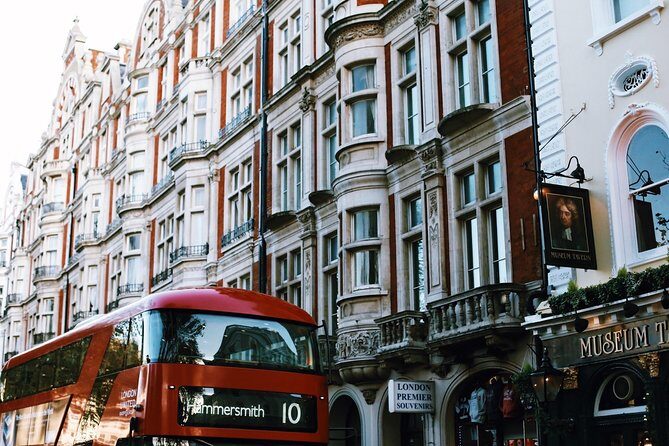
Next you’ll pass 10 Downing Street, the well-known official home and office of the Prime Minister of the UK. You won’t be wandering around the front gates like a movie, of course. But the stop is valuable because it gives you the political context that makes Parliament and Westminster feel more than “old buildings.”
Then you walk by St. James’s Palace, described as the most senior royal palace in the UK. It has served as a royal residence for over 300 years, and the guide uses that long timeline to explain why these royal sites aren’t just tourist backdrops—they’re tied to key moments in British royal history.
If you’re visiting London for the first time, this is a strong concentration of symbols in one continuous walk. The main consideration: it’s primarily pass-by viewing. You’ll learn a lot, but you’re not getting private access to restricted areas.
You can also read our reviews of more private tours in London





Buckingham Palace: How a Working Royal Residence Fits Into Your Route
You’ll also see Buckingham Palace, the official London residence of UK sovereigns since 1827. The tour frames it as a working building with administrative roles, not only a stage for ceremonial moments. That’s a helpful way to shift your mental image, especially if you’ve only encountered the palace as a postcard.
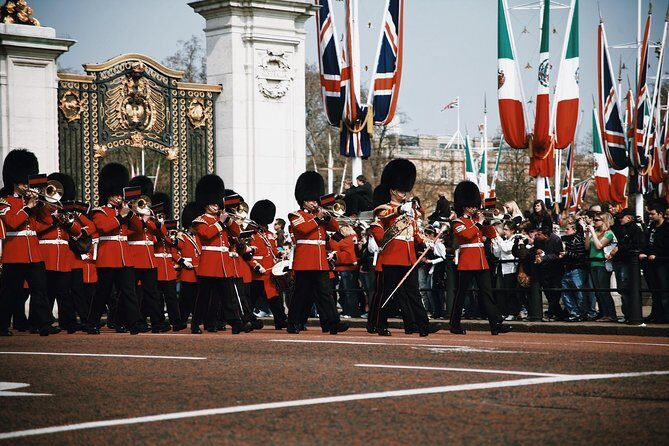
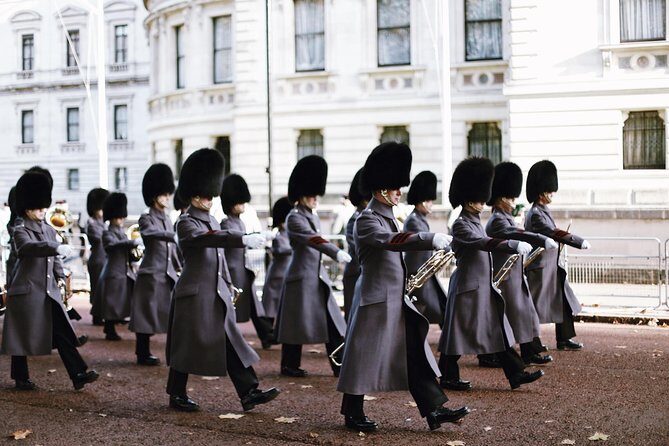
There’s no guarantee of specific events, but if your timing aligns, you might catch glimpses of ceremonial life, bands, or marching activity. One guide experience on similar routes included getting to notice changing-guard style moments and service bands, and that kind of timing can make this segment feel extra alive.
If you’re a photography person, Buckingham Palace will likely be one of your bigger “pause and look” points. If you’re not, focus on what the guide says about the palace’s role and you’ll still come away with more than a picture.
Churchill War Rooms and the WWII Underground Mindset
As you continue, you’ll pass by the Churchill War Rooms, connected to the Imperial War Museum network. This is the part of the walk that turns the story toward WWII and the idea of government operating under pressure.
Important practical detail: the Churchill War Rooms admission ticket is not included, so you’ll mainly be passing by unless you plan to buy entry separately. The stop still works even if you don’t go inside, because the guide helps you understand what the Cabinet War Rooms and Churchill Museum represent within the wartime timeline.
If you’re trying to manage a day with one main paid add-on, this is a good candidate to decide on. You’ll have the setting explained, then you can decide whether the underground experience is worth the extra time and ticket cost for your style.
Big Ben and the Houses of Parliament: Gothic Pride and Political Procedure
You’ll see Big Ben, the clock tower at the end of the Palace of Westminster. The tour notes that admission ticket is not included, so you’re taking in the landmark from the outside. Even from there, the guide’s context makes a difference. You’re learning about the site as part of the working framework of UK governance, not just as a famous clock face.
Then you reach the Houses of Parliament—the Westminster Palace complex also known as where the House of Commons and House of Lords meet. The guide frames it as a Gothic-style building with history spanning over 900 years. That long timeline is easy to lose if you’re only looking at the architecture. The guide’s job is to connect style to function and change over centuries.
This is a strong moment to slow down mentally even if you’re physically moving. If your mind is wandering, set it back on track: you’re standing in a place where British political life has been staged for generations.
Westminster Abbey Finale: Entry Included, Interior Self-Guided
The tour ends at Westminster Abbey, right by the exterior view. Here’s the big practical win: you get entry tickets at the end of the tour. But the guided tour of the Abbey interior is not included, and your visit inside is unguided, meaning you explore on your own.
That combo is often ideal. You get a guided introduction to the area first, then you decide how long to spend inside without feeling locked into a schedule. Westminster Abbey can reward self-paced attention, especially if you like to stop and read plaques, look at monuments, or just feel the scale of the space.
One consideration: like many major attractions, security measures can affect what you can do and what you can access from each viewing point. The tour also notes that not every building is visited from the inside for that reason. Build your expectations around a great walking overview plus an Abbey interior visit at the end.
Price and Value: Is $59.28 a Good Deal for This Route?
At $59.28 per person for about 2.5 hours, the value depends on what you’d do otherwise with your time. This isn’t a ticket-heavy tour. Most of what you see is exterior viewing, plus story time. The included value is the structure: you get a clear walk through key sights, and you get context that you’d otherwise have to hunt for using apps and guidebooks.
The semi-private max of 12 also helps justify the price. In a larger group, the guide’s attention spreads out and the walk can feel like a line you’re stuck in. Here, the design is aimed at keeping the experience more responsive—especially for people who like to ask questions.
Where your wallet might change is at add-on points. Churchill War Rooms admission is not included, and any interior access beyond Westminster Abbey is not guaranteed. If you want multiple museum-style entries in one day, you may need to budget extra.
That said, for many first-timers, paying for guided context and then exploring Abbey on your own is a smart way to balance time and cost.
What to Wear and Bring for a Rain-or-Shine Walk
The tour runs rain or shine, so plan like London weather is in charge. Bring comfortable shoes first. Then add a bottle of water and an umbrella. If you’re coming in summer, a hat helps.
Also plan for the “no large bags or suitcases” rule. If you’re juggling luggage, consider storing it and keeping your daypack small. You’ll be happier if you can move freely through crowds and narrow sidewalks.
Finally, this is listed for moderate physical fitness. The route is doable, but you’re walking enough to feel it by the end. If you want a sit-down sightseeing style day, you’ll likely prefer a slower option.
Who Should Book This London Walking History Tour?
This tour fits best if you:
- Want an organized first-day introduction to central London sights
- Like walking routes where the guide helps you connect the dots between monarchy, politics, and modern Britain
- Prefer small-group attention over a huge crowd
It may not be a fit if you:
- Need wheelchair access or have walking disability constraints (this one isn’t available for that)
- Want lots of inside-the-building time (many stops are viewing from the street)
If you’re traveling with kids, the tour requires children to be accompanied by an adult, and a shorter, story-driven walk can work well when the kids can handle steady walking and listening breaks.
Should You Book This Tour?
I’d book it if you want a high-efficiency day: you’ll see the big “musts” (Trafalgar Square, Parliament area, Buckingham area), you’ll get guided context that makes them click, and you’ll still have time to do your own Abbey visit afterward. The semi-private cap of 12 is the deciding factor for me because it keeps the experience from turning into background noise.
I’d skip or compare if you’re mainly chasing lots of indoor museum time or you need accessible options for mobility. In that case, the walking format and access limits could annoy you more than help you.
FAQ
What is the duration of the London City Center Tour Semi-Private 12ppl Max?
The tour runs for about 2 hours 30 minutes.
Where does the tour start and where does it end?
It starts in Covent Garden, London, UK and ends at Westminster Abbey (SW1H 0NE).
How many people are in the group?
The tour is semi-private with a maximum of 12 travelers.
What’s included at the end of the tour at Westminster Abbey?
You receive entry tickets to Westminster Abbey at the end of the tour, but the interior visit is unguided. A guided Abbey tour is not included.
Are tickets for Churchill War Rooms included?
No. Churchill War Rooms admission is not included.
Can I cancel for a full refund?
Yes. You can cancel up to 24 hours in advance for a full refund. If you cancel less than 24 hours before the start time, the amount you paid is not refunded.