REVIEW · LEEDS
Houdini’s Golden Handcuffs Leeds Self-Guided Treasure Hunt
Book on Viator →Operated by Mystery Guides · Bookable on Viator
A Houdini mystery turns Leeds into your game board. This self-guided treasure hunt sends you chasing clues around central Leeds, starting outside the Leeds Art Gallery, with a story that builds to a case-solving reveal. You get a mobile ticket and a 40-page activity booklet that keeps you moving and thinking.
What I like most is how the hunt mixes proper puzzle time with real places you can actually see. I also like that it hits big architectural stops like the Leeds Corn Exchange, Victoria Leeds, and Leeds Cathedral, so you’re not just reading clues in a vacuum. One thing to consider: this is built for around 3 hours on foot, but the route and puzzle difficulty can stretch it closer to a half-day if you stop for food, photo breaks, or extra checking.
In This Review
- Key things that make this Houdini hunt worth your time
- How the self-guided Houdini hunt works in Leeds
- Starting outside Leeds Art Gallery: the perfect first move
- Stop 1: Leeds Corn Exchange and the fun of clue-solving on serious architecture
- Stop 2: Victoria Leeds for modern Leeds energy and quicker transitions
- Stop 3: Leeds Cathedral for atmosphere and a strong final-stretch feeling
- The clue booklet: 16 cryptic puzzles, maps, and a story you can follow
- Timing and walking: 3km, about 3 hours, and how to plan your day
- Food and the ending pub: where the story lands
- Who this mystery hunt suits best (and who might not love it)
- Value for money: landmarks plus a puzzle you control
- FAQ
- FAQ
- How long does the Houdini’s Golden Handcuffs hunt take?
- How far do we walk?
- Where does the treasure hunt start and end?
- What are the main stops along the route?
- What’s included in the experience?
- Do we get a guide during the hunt?
- Are alcoholic beverages included?
- Is this activity limited to one group at a time?
- Is there anything I should know about health or mobility?
- Should you book this Leeds mystery hunt?
Key things that make this Houdini hunt worth your time

- 16 cryptic clues that you solve across the historic centre, not one single riddle at the start
- A story that unfolds through the booklet, so each stop feels like a new step in the case
- Landmarks with atmosphere at every turn, from the Corn Exchange to Leeds Cathedral
- A manageable walking loop at about 3km, designed for a relaxed self-guided pace
- An ending reveal that ties the suspect-elimination part together right before your eyes
How the self-guided Houdini hunt works in Leeds

This is a private, self-guided mystery. That means your group does it on your own schedule, without a live guide trailing behind you with answers. You start from a fixed point, follow the booklet’s instructions stop by stop, and work through a sequence of clues that gradually reveal the larger story.
The format is simple but satisfying: each clue leads to the next step, and the case itself matters. You’re not just collecting random trivia. You’re eliminating suspects and piecing together the mystery of Houdini’s Golden Handcuffs, with your booklet acting like your in-city script.
You’ll want to treat this like an easy walking activity, not a museum ticket. The best way to enjoy it is to take your time at each stop, scan your surroundings, and only check anything external if you truly get stuck.
You can also read our reviews of more guided tours in Leeds

Starting outside Leeds Art Gallery: the perfect first move
Your meeting point is Leeds Art Gallery on The Headrow (LS1 3AA). It’s an excellent starting spot because it’s central, easy to reach, and the area has enough foot traffic that you can orient quickly. The tour runs during the opening window listed for the gallery, so if you’re planning for early or late in the day, you’re not stuck guessing.
From the start, the booklet sets the tone: you’re on a mission to untangle an unsolved crime and identify the villain behind Leed’s most daring prank. That premise makes the walk feel more like a story route than a straight sightseeing list.
Tip for a smoother start: before you move, get your booklet open to the first pages and take a minute to understand how the clues are presented. You don’t want to spend your first 10 minutes lost in paperwork while everyone else is already walking.
Stop 1: Leeds Corn Exchange and the fun of clue-solving on serious architecture
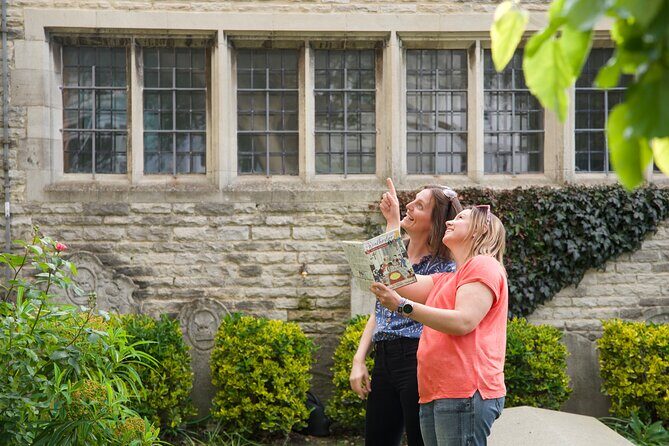
The hunt’s first stop is Leeds Corn Exchange. This is one of those Leeds landmarks that instantly makes your walk feel more “real” and less like a scavenger hunt in an empty plaza. Solving a clue in a building like this does something subtle: it makes you look up, slow down, and pay attention to details you’d otherwise skip.
What you can expect here is a change in pace. Early on, you’re still learning how the clues behave, and the Corn Exchange gives you a strong visual backdrop for the first few questions. If you’re doing this on a rainy day, the setting can also help you stay comfortable while you look around.
A practical way to get value out of this stop: don’t just locate the answer. Read what the booklet tells you about what you’re seeing and why it matters. That’s where the local flavour kicks in.
Stop 2: Victoria Leeds for modern Leeds energy and quicker transitions
Next you move to Victoria Leeds. This stop works well because it adds contrast. Leeds isn’t only stone-and-history; it also has modern layers, and the hunt uses that to keep your attention. If you’ve been to Leeds before, this is the kind of stop that reminds you the city is always shifting, not just preserving the past.
The clue style at this point tends to feel like you’re settling into the rhythm. You’re not starting from scratch anymore; you’re translating earlier clue steps into how you should search now. Look around for the booklet’s cues, and make sure you’re checking your surroundings at street level and slightly higher—some answers come from architectural context.
One thing to watch: seasonal changes. During busy periods, temporary installations and crowds can make your chosen viewing point feel different. If something looks off, don’t panic. Use the clue wording like a map, not like a guess.
Stop 3: Leeds Cathedral for atmosphere and a strong final-stretch feeling
The last named stop is Leeds Cathedral. This is a smart place for the hunt to land because cathedral areas naturally add weight to the moment. Even when you’re doing puzzles, the surroundings change how you feel—quietens the walk, sharpens your attention, and makes the final part feel more earned.
This is where you’re likely to be thinking ahead: the mystery is nearing its conclusion, and the booklet’s story is guiding you toward the big reveal. It’s also where you want to slow down, because you’ll often get the most accurate solution by re-checking what you saw earlier in the route and connecting it to what the clues are asking now.
If you’re the type who likes to linger at landmarks, this is your moment. If you’re in a rush, you’ll still finish—but you might miss some of the satisfaction of watching the case click into place.





The clue booklet: 16 cryptic puzzles, maps, and a story you can follow

Your pack is a 40-page booklet in English, with maps, historical bits, and the “Mystery Guide” story structure. You’ll work through 16 cryptic clues across the historic centre. That’s enough puzzles to keep it engaging, but not so many that you’re stuck forever hunting for one answer.
A key detail that improves the experience: the booklet doesn’t just drop questions. It gradually unfolds the unique narrative across the adventure, so the clues feel like evidence, not separate tasks. You end up solving a case rather than collecting answers.
Cryptic clue fans usually like this format, but it’s also approachable. The clues are meant to be challenging while still fun—think of it as a push to look harder, not a wall you can’t climb. If you like puzzles but hate being stuck, plan to keep a calm pace and move on quickly if you’re at an impasse. You can always return to a previous stop’s area if the clue logic points back there.
Timing and walking: 3km, about 3 hours, and how to plan your day
The total walking distance is around 3km, with an estimated duration of about 3 hours. That’s a reasonable commitment for a self-guided city activity, especially because you’re not constantly sprinting between points. The route is built to let you stop, read, and solve.
In real life, your time can swing. One of the nice things here is that people have finished closer to the “about 3 hours” mark even when adding a pub break. Still, if you’re doing this with friends who like to chat a lot, or you stop often for photos, it can run longer.
My practical advice: treat it like a 3-hour block plus buffer time. If you want lunch or a drink, schedule that after you’ve solved the main case so you don’t feel rushed at the ending.
What to wear: comfy walking shoes. Even though the distance is short, you’ll be spending time looking upward and shifting your stance around each stop.
Food and the ending pub: where the story lands

The hunt leads you back to the start point, and the end is tied to the case resolution. There’s also an element of tavern time baked into the experience vibe. Alcoholic beverages aren’t included, so you’re free to skip or order as you like.
A standout detail from the experience style: the final pub can have a no-mobile-phones rule, so if you want photos for the solved case, be ready to take them outside first. That’s actually a fun twist because it makes the reveal feel less like everyone is distracted by their screens and more like a shared moment.
If you want to eat or grab a quick drink, it’s best to plan those moments after you’ve reached the final stage. You’ll get more satisfaction when the mystery is solved before you slow down.
Who this mystery hunt suits best (and who might not love it)
This is a great fit for people who enjoy puzzles, city wandering, and learning something in a way that doesn’t feel like a lecture. It also works well for dates and group trips because each person can contribute—one person reads clues, another scans the surroundings, and you compare notes.
It’s also a nice choice if you’re showing a friend around Leeds, or you want to see the city through a different lens. Even if you’ve visited the main sights before, the clue process tends to make you notice details you’d normally walk past.
You might want to think twice if your group hates cryptic-style clues or you strongly dislike walking in the city centre. While the route is only about 3km, it does require moderate physical fitness and you’ll be on your feet for the full activity window.
Also consider timing during busy seasons. If you’re doing it around festive installations, the environment around a clue spot may look different than usual, which can slow you down.
Value for money: landmarks plus a puzzle you control
There’s no live guide included, so you’re buying an experience where you control the pace. The 40-page booklet does the heavy lifting: it gives you the story, the clues, and the maps, plus context about what you’re seeing.
In value terms, this beats a lot of “audio tour meets sightseeing” formats because you’re not only moving from A to B. You’re solving a coherent case across the walk. That’s what makes it feel like time well spent, even if you’re only in Leeds for a few hours.
You also get flexibility. Since it’s self-guided and private, you can pause for a photo, slow down for a tricky clue, or take a short break without feeling like you’re holding up a group.
FAQ
FAQ
How long does the Houdini’s Golden Handcuffs hunt take?
It’s listed at about 3 hours.
How far do we walk?
The walking distance is about 3km.
Where does the treasure hunt start and end?
It starts at Leeds Art Gallery (The Headrow, Leeds LS1 3AA) and ends back at the meeting point.
What are the main stops along the route?
The named stops are Leeds Corn Exchange, Victoria Leeds, and Leeds Cathedral.
What’s included in the experience?
You get a 40-page activity booklet in English with the story, clues, historical information, and maps.
Do we get a guide during the hunt?
No. This is a self-guided activity, and a guide is not included.
Are alcoholic beverages included?
No. Alcoholic beverages are not included.
Is this activity limited to one group at a time?
Yes, it’s described as a private tour/activity, so only your group participates.
Is there anything I should know about health or mobility?
It’s suitable for people with moderate physical fitness since it involves walking around the historic centre.
Should you book this Leeds mystery hunt?
If you want a city activity that mixes puzzles + landmark sighting and you’re happy to wander under your own steam, this is an easy yes. The route is short, the story structure keeps it fun, and the “case solved” ending gives you a real payoff beyond just ticking off buildings.
If your group hates cryptic clues or you only have a tight schedule that can’t flex, it might feel longer than the headline. Otherwise, grab your booklet, take it slow, and enjoy Leeds the way you’d do in a good mystery: looking up, looking around, and making the clues work for you.