REVIEW · LONDON
London Self Guided City Tour With an App
Book on Viator →Operated by Trippy Tour Guide · Bookable on Viator
London can be a lot at once. This route keeps it manageable with audio directions and offline maps. You get a smart mix of big-name sights and quieter stops, all strung together into a walk you can start and control.
I really like the offline map setup. After you download everything, you can follow along without hunting for signal at every corner. I also like the free-admission style stops—you’re nudged toward viewpoints and landmarks that don’t require paid entry as part of the walk.
One thing to watch: the time estimate of about 1 to 2 hours may feel short once you pause for photos, enter churches, or just wander. If you move at a slow, sightseeing pace, plan for several hours instead of rushing.
In This Review
- Key things to know before you go
- Price and logistics: a $9.99 walk with real pacing decisions
- How the Trippy Tour Guide app keeps you moving (and when it fails)
- The route basics: from Monument Station to St Paul’s Churchyard
- Sky Garden to the Monument: skyline views with 311 steps
- All Hallows by the Tower and Tower Hill’s time plaques
- Tower Bridge, Queen’s Walk, and the Thames corridor
- The Shard and London Bridge: modern height over old ground
- Borough Market and Shakespeare’s Globe: food and theatre in walking distance
- Tate Modern and the Millennium Bridge: art in a power station
- Stop-by-stop pacing: how to enjoy the route without rushing
- Price vs value: what you really get for $9.99
- Who should book this self-guided London walk
- Should you book this London Self Guided City Tour with an App?
- FAQ
- How much does the London Self Guided City Tour with an App cost?
- Do I need Wi‑Fi or data to use the map?
- Where does the tour start and end?
- About how long should I plan for?
- Is the audio narration available in English?
- Are tickets included for stops like Sky Garden, the Monument, and Tate Modern?
Key things to know before you go
- Offline by design: The map works without Wi‑Fi or data once you’ve downloaded the tour.
- Audio navigation help: You’ll get 30+ narration points plus directions to attractions and side spots.
- Route starts at Monument Station: Your walk begins near King William St and ends at St Paul’s Churchyard.
- Planned for first-timers: The mix works well if London is new to you and you want context fast.
- Time can run long: The route has many stops, so it stretches beyond the short “1–2 hours” promise.
- A few app gotchas exist: GPS access and a full download before you start are crucial for the app to guide you.
Price and logistics: a $9.99 walk with real pacing decisions
At $9.99 per person, this is the kind of London experience that lets you spend money on meals and transport instead of a packaged guided tour. You’re buying structure: a route, narration points, and directions that help you connect the city’s geography with what you’re seeing.
The trade-off is that you steer the pace. The route is described as roughly 1 to 2 hours, but the walk includes many stops, and you’re likely to spend extra minutes at viewpoints and inside places like churches. I’d treat the estimate as a bare-minimum walk time if you’re moving quickly and skipping longer looks.
Also, there’s no private transportation included. That’s normal for a self-guided walking tour, but it’s important if you’re counting on taxis or scheduled pickup. You’re on your own for moving between points by foot.
You can also read our reviews of more guided tours in London



How the Trippy Tour Guide app keeps you moving (and when it fails)
This experience runs through the Trippy Tour Guide app and is offered in English. The biggest selling point is that it includes a fully offline map, so you’re not paying for data or relying on spotty reception while walking.
Here’s the part you can’t ignore: you need to download the tour before you start. Without that, offline content won’t load properly. You also need to allow GPS access, because the app uses your location to play the right audio and guide you to the right spots.
In plain terms: prepare once, then walk without stress. If you don’t, you can end up wandering or reaching the end before the app catches up—exactly the kind of frustration that shows up when GPS guidance doesn’t kick in.
The route basics: from Monument Station to St Paul’s Churchyard
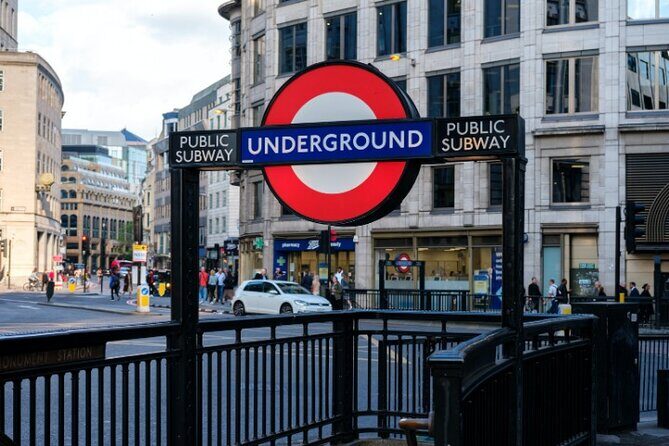
You start at Monument Station (Underground), King William St, London EC4R 9AA. Your walk ends at 100 St. Paul’s Churchyard, London EC4M 8AE, with St Paul’s Churchyard as the last stop.
The tour is available daily between 6:00 AM and 9:00 PM. That flexibility is helpful. Morning is calmer for photos and fewer crowds around major sights, while later in the day can be better if you want a smoother rhythm with markets and galleries.
Also note: this is described as a private tour/activity where only your group participates. With a self-guided format, that usually means no mixing with strangers on the same route—though you’ll still be sharing public sidewalks with Londoners and other visitors.
Sky Garden to the Monument: skyline views with 311 steps

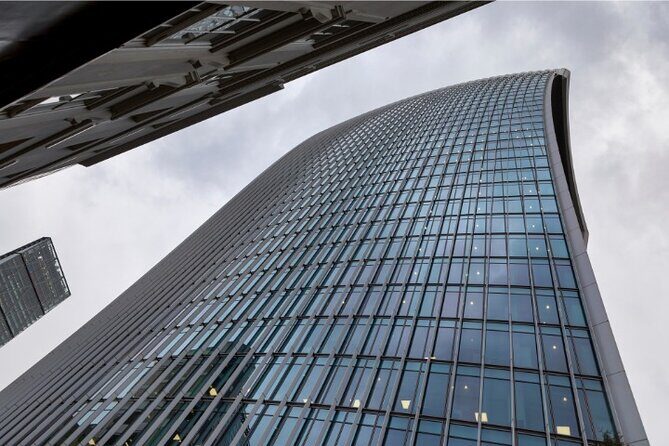
Stop 1 is Sky Garden, associated with the distinct Fenchurch building shape often nicknamed the Walkie‑Talkie. The route emphasizes the contrast here: modern architecture up top, with a garden-like calm and panoramic views over London.
You’ll also see why the building’s height is discussed in relation to Saint Paul’s Cathedral. That idea—designed to protect key sightlines—adds meaning beyond the view. It’s not just a skyline stop; it’s a lesson in how London’s older landmarks still influence modern design.
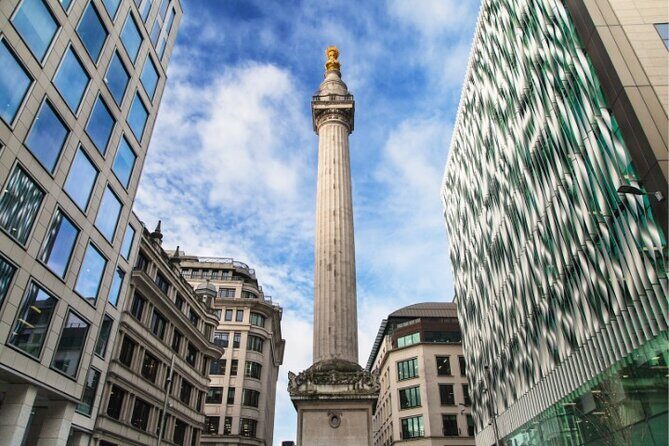
Next comes The Monument to the Great Fire of London. This part is about resilience and memory. The route notes that the Monument was designed by Sir Christopher Wren and marks the symbolic location where the Great Fire began.
If you’re up for it, the Monument includes an adventurous element: you can climb 311 steps for a panoramic view and a commemorative certificate. Even if you don’t climb, stopping at street level helps you understand the scale of the landmark and why people make the effort.
A practical note: the route lists admission for these stops as free. Still, keep your eyes open at each site. One review mentioned missing tickets for a stop that was expected to be free. So check what you need on the day—especially for popular viewpoints.
All Hallows by the Tower and Tower Hill’s time plaques
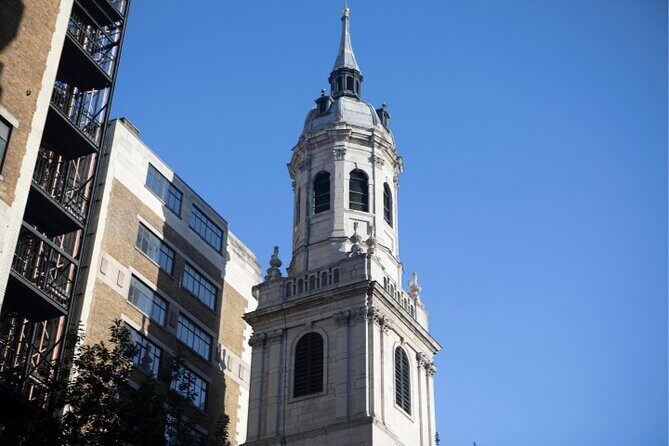
Stop 3 is All Hallows by the Tower, dating back to 675 AD. This is billed as London’s oldest church and noted as surviving the Great Fire. That single fact is why this is a standout for history buffs: it’s not just a “look at a building” moment; it’s a physical link across centuries.
The interior details in the route description are where your curiosity gets rewarded. You’ll find remnants from the 13th and 14th centuries, and there’s mention of a hidden Roman road. The tour also connects the church to famous visitors and nearby Tudor-era darker tales, with a nod to King Henry VIII’s period.
Then you head to the Sundial at Tower Hill Underground Station. This one is more than a sundial. Each bronze plaque covers pivotal moments from Roman times through the end of World War II. As sunlight shifts, the sundial becomes a living timeline—small, clever, and easy to fit into a walking route.
If you like “history you can touch,” this pair of stops works. You’re going from a surviving ancient church to a compact street-level time lesson, without needing a museum ticket.
You can also read our reviews of more city tours in London





Tower Bridge, Queen’s Walk, and the Thames corridor
Now you reach the river landmarks—where London stops feeling like a list and starts feeling like a story.
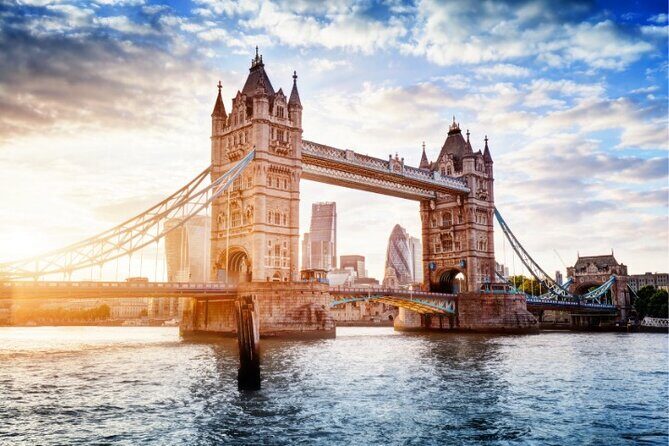
The route highlights Tower Bridge, stressing the engineering you can spot: it’s a bascule and suspension bridge designed to let ships pass. It also clarifies a common confusion: this is not London Bridge. The distinction matters because the areas feel similar at a glance, and the walk becomes smoother when you know exactly which bridge you’re standing on.
There’s also a fun anecdote about daring feats in 1952, when a bus driver is described as jumping the bridge’s bascules. That kind of story is the reason audio tours work. You’re not just looking—you’re seeing with context.
Next is Queen’s Walk, a riverside strip tied to queens who shaped London. The route connects it to long timelines—from the 15th century to grand houses after King Henry VIII’s reign—and it even references the 1666 Great Fire. Today, you’ll also notice modern landmarks like the London Eye alongside older structures, which makes this stretch great for orientation.
If you’ve never walked London’s river before, this section helps you learn how the city layers time across short distances.
The Shard and London Bridge: modern height over old ground
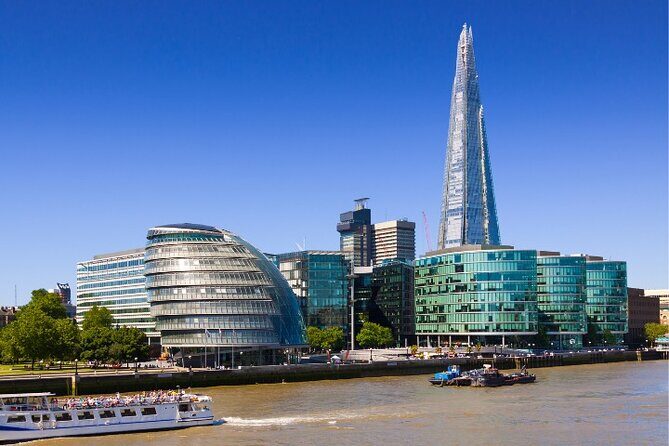
Stop 5 is The Shard, described as Western Europe’s tall icon at 310 meters. This is the city’s modern look—straight lines, massive scale, and an exterior that you can’t miss.
But the route also threads in the past. It points out that the Shard’s foundations sit in Southwark, historically tied to inns and the Shakespeare’s Globe area. That detail is useful. Without it, The Shard can feel like a standalone postcard. With it, you start noticing how London’s theatre, commerce, and riverside living connect.
Then you’re on to London Bridge. The route description gives a specific twist: historically, it wasn’t only a bridge. It functioned like a street with shops, homes, and even a chapel. Standing there, you’ll understand that “bridge” once meant neighborhood space, not just passage.
This part is a good mid-walk reset. You go from view-driven modernity back to the idea of everyday life built onto infrastructure.
Borough Market and Shakespeare’s Globe: food and theatre in walking distance
The route includes Borough Market, presented as a culinary anchor with roots going back to 1014 AD. It also ties Borough Market to trading connected to London Bridge, with growth noted by the 16th century.
Even if you don’t plan to eat everything, Borough Market is useful because it gives you a clear break in the walk and a chance to match the rest of the route with your appetite. If you want to spend money, this is where it makes sense—snacks here feel like part of the day, not an afterthought.
Then the route takes you to Shakespeare’s Globe Theatre, describing the modern Globe opened in 1997 as an homage inspired by Sam Wanamaker. The route emphasizes the use of traditional materials like unseasoned oak and thatch, and that the design aims to recreate the Elizabethan theatre feel, including an interactive audience style.
At around a short stop time, this is best for quick orientation. If you’re serious about theatre, you might want more time than the walk gives you—but for most visitors, the stop helps you connect London’s street scenes with what the city is known for culturally.
Tate Modern and the Millennium Bridge: art in a power station
Stop 8 is Tate Modern, described as a major gallery originally built as a power station by Sir Giles Gilbert Scott. In 2001, it was repurposed, and the transformation is attributed to architects Herzog and de Meuron.
The tour also points you to the biggest interior logic: the former turbine hall creates huge, flexible space for art, while upper floors offer panoramic views of the Thames. That’s a smart pairing. If you like modern art, you get scale. If you don’t, you still get the building and the views.
To finish the river-side loop, you head to the Millennium Bridge. It includes a detail that makes it memorable: it was notorious for a wobble at its 2001 debut, but it now stands firm.
That last note is practical too. It helps you know what to look for in the moment. You’ll probably notice how lightweight the bridge feels, and the story explains why people talked about it so much.
Stop-by-stop pacing: how to enjoy the route without rushing
The walk includes multiple stops with short “time” estimates at each point, but that’s not the same thing as how long you’ll want to spend. Here’s how I’d pace it so it feels enjoyable, not like a race.
First, treat the viewpoints—Sky Garden and the Monument—as “decision points.” If you want photos and more time, those are where you spend it. If you’re moving fast, you can still get the key photos and move on without burning the whole day.
For All Hallows by the Tower and the sundial, aim for short, focused time. The Roman road detail and the plaques are the kind of information you’ll only notice if you slow down for a few minutes to listen.
For the bridges and Queen’s Walk, let the Thames scenery do its job. You’ll enjoy it more when you stop pretending you’re following a checklist and start looking at sightlines: which towers you can see, where the modern skyline starts, and how the river connects everything.
For Borough Market and the Globe, plan your break. Even if you don’t go inside everywhere, these stops help you keep the route from feeling repetitive. They give your brain a shift in pace—food and culture instead of monuments.
Price vs value: what you really get for $9.99
This tour’s value comes from the mix of features for low cost:
- 30+ narration points that explain what you’re seeing, not just where to walk.
- Detailed directions to both major and lesser-known stops.
- Offline map access, which reduces the stress of navigating in a dense city.
- Free entry style stops listed for many landmarks.
At $9.99, it’s hard to beat as a way to get a structured overview without paying for a guide or a full-day ticketed program. But you should be honest about what you’re buying: you’re not paying for someone to manage crowds, wait times, or tech issues. You’re paying for self-guided structure and audio.
That also means your biggest “hidden cost” is your time. If you want to explore each stop properly, you may need more than the 1–2 hour label. Budget half a day if that’s your style, especially if you include museum time at Tate Modern.
Who should book this self-guided London walk
This works best if you want:
- A budget-friendly, flexible way to see key landmarks.
- A route that helps you understand London quickly, with narration points doing the teaching.
- Offline navigation support so you’re not stuck asking for Wi‑Fi on the street.
It may be less ideal if you:
- Need turn-by-turn clarity like Google Maps at every step, because a self-guided map can be confusing when streets don’t match what’s in your head.
- Hate app setup. You must download and allow GPS permissions for smooth guidance.
- Want a carefully timed schedule with minimal wandering. This route rewards curiosity, not strict clock control.
Should you book this London Self Guided City Tour with an App?
If you’re the kind of traveler who likes to explore in your own rhythm, this is a strong pick for first-time London orientation—especially for the price. You’ll get major sights like Tower Bridge, The Shard, and Tate Modern, plus thoughtful stops like the Tower Hill sundial and All Hallows by the Tower.
I’d book it when you can handle two conditions: you’ll do the app setup right (download first, enable GPS), and you’ll give yourself enough time to enjoy rather than rush. If you only have an hour or two and want every stop to be quick, plan that trade-off in advance.
FAQ
How much does the London Self Guided City Tour with an App cost?
It costs $9.99 per person.
Do I need Wi‑Fi or data to use the map?
No. The tour includes a fully offline map, so you don’t need Wi‑Fi or data during your walk.
Where does the tour start and end?
The tour starts at Monument Station (Underground), King William St, London EC4R 9AA and ends at 100 St. Paul’s Churchyard, London EC4M 8AE.
About how long should I plan for?
The tour is described as about 1 to 2 hours. The route includes many stops, so you may want to allow more time if you plan to linger.
Is the audio narration available in English?
Yes. The tour is offered in English.
Are tickets included for stops like Sky Garden, the Monument, and Tate Modern?
The tour details list free admission tickets for multiple stops, including Sky Garden, the Monument, and Tate Modern. However, one review says tickets for a site weren’t included as expected, so it’s smart to verify what you’ll need before you go.