REVIEW · CHESTER
Private Chester Self-Guided Tour
Book on Viator →Operated by Pandemic Tours · Bookable on Viator
Chester gets explained while you stroll. This private self-guided walk uses an audio guide (Jake) plus map and GPS routing to point you toward the city’s big story—from Roman Deva Victrix to Victorian Chester—at a pace you control. I especially like how the route gives you smart structure for seeing major sites fast, and how the included pics/videos and recommendations help you turn landmarks into something you actually understand. One drawback: the app experience can be hit or miss, and the narration style may feel more factual than story-driven for people who want extra drama.
Expect about 2 to 3 hours from Chester Cathedral to Grosvenor Park. Two stops may require tickets on your side (the cathedral and the castle), while the rest are free to visit from the street. If you love wandering but also like not guessing your way around, this is an easy way to get your bearings.
In This Review
- Key Highlights You’ll Care About
- Why This Chester Self-Guided Route Works on Your Own Time
- Chester Cathedral Start: Context First, Tickets Later
- Eastgate Gate and the Clock: The City’s Roman Emblem
- City Walls From East to North Gate: A Walk With Purpose
- The Civil War High Cross: Why This Symbol Sits Here
- Chester Castle and Agricola Tower: Norman Chester in One Remaining Piece
- Minerva at Edgar’s Field Park: Roman Religion You Can Still Find
- Roman Gardens and the Amphitheatre: Deva Victrix in Stone
- Roman Gardens: Reconstructed Buildings and a Controversy
- Roman Amphitheatre: Britain’s Largest Uncovered Portion
- Grosvenor Park Finish: A Good End Point, Not a Random Stop
- Price and Logistics: Is $12.33 Good Value?
- Who This Tour Suits Best (and Who Might Want Something Else)
- Quick Tips to Get the Best Experience From the App
- Should You Book This Private Chester Self-Guided Tour?
- FAQ
- How long is the Chester self-guided tour?
- Is this tour private for my group?
- What is included in the app experience?
- Do I need tickets for Chester Cathedral or Chester Castle?
- Which stops are free to visit?
- Where does the tour start and end?
- How do I activate the tour in the app?
Key Highlights You’ll Care About
- A plan you can pause: GPS route and timed stops so you move efficiently without feeling rushed.
- Audio-led orientation: Jake’s audio ties landmarks together so you are not just reading plaques.
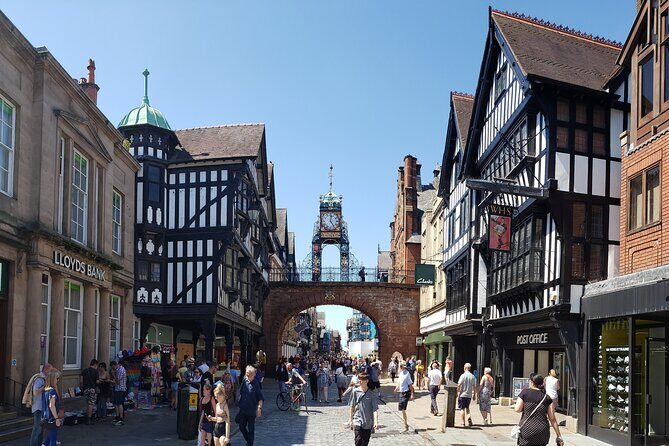
- Roman Chester in big chunks: Eastgate, city walls, Roman Gardens, and the amphitheatre all show the Roman imprint.
- Mix of eras, not one-trick history: Norman Chester (Agricola Tower) and even a Minerva shrine show up.
- Finish in Grosvenor Park: You end with a proper breather and practical ideas for what to do next.
Why This Chester Self-Guided Route Works on Your Own Time
This tour is built for travelers who want a middle ground: you still get a path, stops, and context, but you are in charge of timing. The whole experience is designed around walking from Chester Cathedral to Grosvenor Park, and the app handles the heavy lifting with a map, directions, and a GPS route.
You also get 3 weeks unlimited access in the app. That matters more than it sounds. If you start late one day, or you want to re-check a stop while you’re waiting for a train, you can. And because it is private (only your group), you do not have the usual herd-pressure of a fixed group tour.
Practical note: the tour is offered in English, and the meeting point is central. That makes it easier to combine with other plans—like popping into shops, markets, or nearby cafés—without a long commute.
The big thing to watch is phone behavior. The app is supposed to cue you as you approach each stop. In real use, that kind of geolocation can occasionally trigger early audio playback, and the directions between a couple of sites can feel rough. If you hate troubleshooting, test your headphones and audio volume before you leave the starting area.
You can also read our reviews of more guided tours in Chester


Chester Cathedral Start: Context First, Tickets Later

Your tour begins at St Werburgh St, Chester CH1 2DY, right by Chester Cathedral. The audio starts with a “city picture” before you get into details, which is a smart way to start. Rather than jumping straight into one fact, you get a frame for why Chester matters across different periods.
This stop is timed at about 15 minutes. The cathedral itself is also the one place where admission is not included, so you’ll need to decide what you want to do:
- If you only want the exterior context and quick orientation, you can keep it simple.
- If you want to actually go inside, plan on extra time and bring the right ticket setup for the cathedral.
Either way, you’ll learn about the cathedral as the mother church of the Diocese of Chester. Even if you have walked past cathedrals before, hearing what it represents helps you see it as more than an old stone building.
Eastgate Gate and the Clock: The City’s Roman Emblem
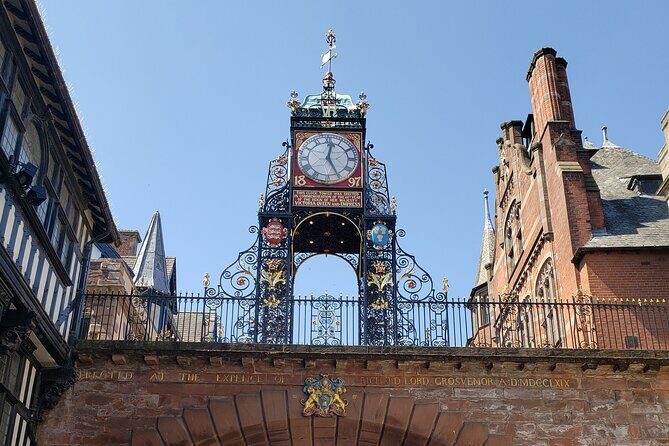
Next up is Eastgate Gate and the Eastgate Clock—about 5 minutes of stop time, and free. This is one of those “small but symbolic” moments in Chester. The audio focuses on why this clock sits above an ancient Roman gate and how that overlap became an emblem for the city.
The value here is that it teaches you how Chester keeps reusing the past instead of replacing it. You are not just learning that Romans were here; you’re seeing how their footprint still shapes what you see today.
Quick tip: since this is a short stop, you’ll get more out of it if you pause long enough to look at the gate itself, then look up at the clock. The audio is timed, so rushing makes it harder to connect the pieces.
City Walls From East to North Gate: A Walk With Purpose

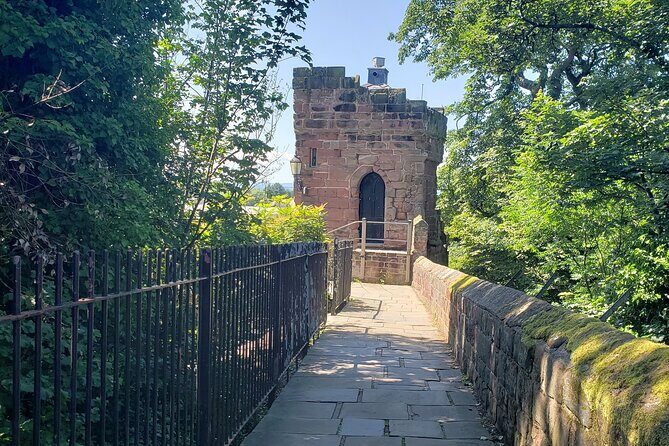
You then move into Chester City Walls, walking from east toward the North Gate. This section is about 15 minutes and is free.
City walls are often “nice to see” rather than “worth hearing about.” This tour tries to fix that by explaining the stories behind the wall—why it was created and how and why it ended up preserved. When you understand the defensive logic, the walk becomes more than a stroll along stone.
A practical drawback: since the tour is self-paced and GPS is guiding you, you want your phone charged. If your battery is low, you lose both navigation and audio context at the time you most want a clear sense of direction and timing.
The Civil War High Cross: Why This Symbol Sits Here
There is a stop focused on a High Cross, tied to Chester’s civil war story. You’ll hear why the cross is positioned in that specific place and why it mattered in the past.
This is one of the stops that can feel “less obvious” from a distance, because cross monuments can look like background architecture if you do not know what to look for. The audio is doing the job of pointing you toward meaning: place, timing, and why the symbol mattered then.
Because this is a short timed section, you’ll get the best payoff if you slow down for a minute and match what you hear to what you see. If you are zooming through, the symbolism can slip by.
You can also read our reviews of more private tours in Chester

Chester Castle and Agricola Tower: Norman Chester in One Remaining Piece
Stop 4 is Chester Castle, guided toward what remains today: Agricola Tower. This section runs about 15 minutes, and admission is not included.
Here’s the key historical anchor you’ll get: the Norman castle is credited to William the Conqueror in 1070, and the tour explains how the site looked back then using tools to help you visualize the scale and daily life.
That “visualize” approach is the best reason to listen closely at this stop. The surviving piece is real and impressive, but ruins can be hard to picture. The audio tries to bridge that gap by helping you imagine what life might have looked like nearly a thousand years ago.
Consideration: if you were hoping for a fully interactive castle experience, this tour is more about interpretation than inside-the-buildings sightseeing. You will likely do best if you treat this as a place-based history lesson rather than a full museum day.
Minerva at Edgar’s Field Park: Roman Religion You Can Still Find
You’ll then walk to Minerva’s Shrine at Edgar’s Field Park. This stop is about 10 minutes and is free.
The tour frames it as a shrine to the Roman goddess Minerva, and it notes that it is recorded in the National Heritage List for England as a Grade I listed building. The audio also covers what is known about the early 2nd-century sandstone quarry and what that would have meant to the common people of the time.
This is a great stop for people who like human-scale history. Temples and statues can feel distant until you understand the materials, the purpose, and the everyday role religion could play in community life.
Practical tip: this is a quick stop. If you like photos, get them early. Then spend the rest of the time listening, because the meaning is the point here.
Roman Gardens and the Amphitheatre: Deva Victrix in Stone

The route then leans hard into Chester’s Roman identity—Deva Victrix—with two major free stops.
Roman Gardens: Reconstructed Buildings and a Controversy
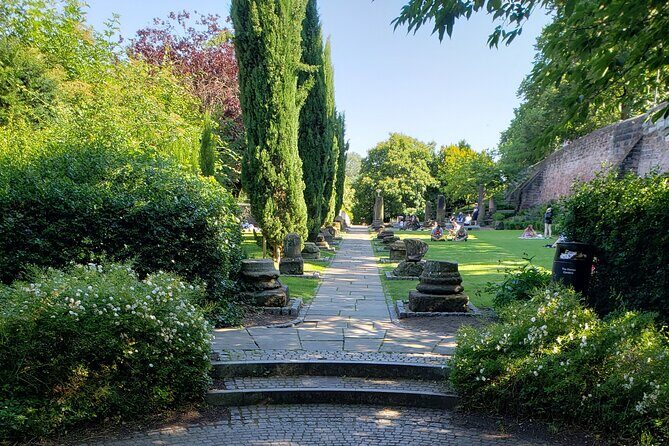
You’ll spend about 15 minutes at Chester Roman Gardens, which presents reconstructed Roman buildings for public display. The tour explains why this garden was created and notes that the choice is controversial.
That word, controversial, is actually helpful. It means you should listen for the reasoning, not just the facts. Reconstructed sites can be educational, but they can also involve interpretation. The tour aims to give you enough context to understand what you’re looking at and why scholars might disagree.
Roman Amphitheatre: Britain’s Largest Uncovered Portion
Next is the Roman Amphitheatre, another 15 minutes, and also free. The ruins exposed here are the northern half of a larger stone amphitheatre. The tour highlights that it is the largest such structure uncovered in Britain so far, dating back to the 1st century when Deva Victrix was founded.
This is one of those places where audio works especially well. Roman amphitheatres are hard to picture when you only see part of the structure. The narration helps you connect the shape and setting to how the space would have functioned.
Even if you are not a Roman-nerd (you’re allowed), you’ll likely come away with a clearer sense of how Roman entertainment and public life worked.
Grosvenor Park Finish: A Good End Point, Not a Random Stop
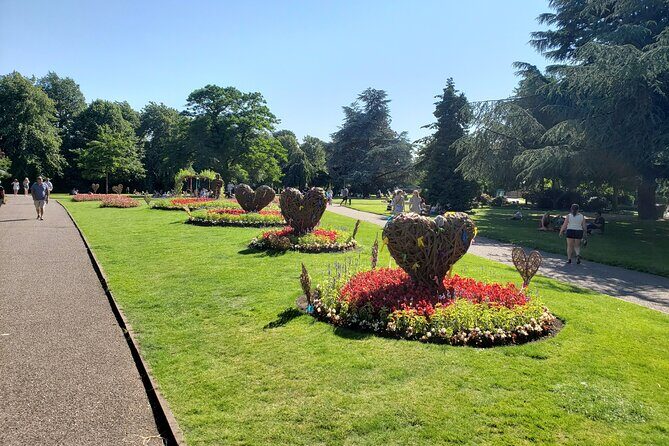
The tour ends at Grosvenor Park, about 20 minutes and free. The address end point is Grosvenor Park Rd, Chester CH1 1QQ, and the park sits just outside the historic walls with views toward the River Dee.
The tour calls Grosvenor Park a Grade II registered, Green Flag Award-winning public park and frames it as a top example of Victorian park design in the UK. That matters because it gives you a satisfying landing after the heavy stone-and-history walking.
What I like about ending here: you get a natural reset. You can sit, stretch, and then use the tour’s recommendations to decide how to spend the rest of your day—whether that means grabbing food, checking out nearby streets, or continuing with your own exploration.
This stop is also where you can slow down and reflect on what you just learned. When you look back at the walls and Roman sites in your memory, Grosvenor Park feels like the breathing room Chester reserves for people who want to linger.
Price and Logistics: Is $12.33 Good Value?
At $12.33 per person, this tour sits in the low-cost range for heritage experiences. The value comes from a few specific things:
- You get a full walking route that covers major Chester landmarks in 2 to 3 hours.
- You receive map, GPS route, and timed stops, which saves time and reduces the guesswork.
- The app includes audio, pictures, videos, and recommendations, and you get 3 weeks of access.
The main cost wrinkle is that Chester Cathedral and Chester Castle have admission not included. So your final spending depends on whether you choose to go inside. If you only do exterior viewing at those stops, the out-of-pocket cost stays low. If you want the full interior experiences, your budget needs to include tickets.
My honest take: for someone who wants a structured way to see Chester’s highlights without paying for a guided tour, this is good value. For someone who expects a highly polished, always-flawless app experience with top-tier storytelling, it can feel like a gamble—especially because audio playback and directions have been reported as inconsistent.
Who This Tour Suits Best (and Who Might Want Something Else)
This works especially well if you:
- Are visiting Chester for the first time and want a tight overview of the city’s identity.
- Like walking but want a plan that reduces dead-ends.
- Prefer to move at your own pace, including pauses for photos, cafés, or quiet corners.
- Travel as a group that wants to stay together without matching a stranger’s schedule.
It also checks a lot of practical boxes: service animals are allowed, it is near public transportation, and the tour is designed so most people can participate.
You might want a different format if you:
- Want a live guide who can answer your questions in the moment.
- Expect narrative history that feels like a story, not a set of facts.
- Have a low tolerance for app issues (auto-play timing, app not behaving, or route directions that feel awkward in certain segments).
Quick Tips to Get the Best Experience From the App
- Charge your phone fully before you start and bring a short charging cable if you can.
- Download or open everything in advance. The process uses the Exploro App, and you get email instructions to activate your tour.
- If audio auto-starting bugs you, be ready to pause your phone or adjust settings quickly.
- Use the short stops as intended: listen first, then look around. Otherwise you miss the point of why that specific landmark matters.
- End at Grosvenor Park and use the tour’s recommendations to decide what to do next while you still have your bearings.
Should You Book This Private Chester Self-Guided Tour?
If your goal is simple—see the major Chester sights in a logical order, learn what they mean, and do it on your time—then yes, book it. At $12.33 with GPS routing, audio context, and 3 weeks of access, it is an efficient value play, especially for first-time visitors.
I’d skip or reconsider only if you know you hate app-based navigation or you strongly prefer a highly story-driven human guide. In that case, you might feel let down when the experience becomes more factual than cinematic. For most people who like independent travel with built-in structure, this tour is a smart way to meet Chester halfway—stone by stone, stop by stop.
FAQ
How long is the Chester self-guided tour?
The tour takes about 2 to 3 hours, depending on how long you linger at each timed stop.
Is this tour private for my group?
Yes. It is listed as a private tour/activity, so only your group participates.
What is included in the app experience?
You get 3 weeks unlimited access in the app, plus a map, directions, GPS route, and an audio guide. The app also includes photos, videos, recommendations, and the info you need.
Do I need tickets for Chester Cathedral or Chester Castle?
Admission tickets are not included for Chester Cathedral and Chester Castle, so you would need to handle entry tickets separately if you want to go in.
Which stops are free to visit?
Eastgate & Eastgate Clock, Chester City Walls, the High Cross stop, Statue of Minerva, Chester Roman Gardens, Roman Amphitheatre, and Grosvenor Park are all marked as free (admission not required).
Where does the tour start and end?
It starts at Chester Cathedral on St Werburgh St (CH1 2DY) and ends at Grosvenor Park Rd (CH1 1QQ), finishing in Grosvenor Park.
How do I activate the tour in the app?
After booking, you’ll receive an email with instructions to activate your tour in the Exploro App. The instructions note that your booking reference is not the code.