REVIEW · YORK
Private York Self-Guided Tour
Book on Viator →Operated by Pandemic Tours · Bookable on Viator
York feels old on day one. This private, English-language smartphone tour strings together York’s big stories into one walk: medieval church power, Roman fort traces, Viking life, and the walls you can still walk.
I especially like the way the route stays practical and low-stress, with map, directions, and GPS stop-by-stop guidance. I also love that the audio is narrated by Jenny and delivered in short segments, so you’re not stuck talking-to-a-phone the whole time. One drawback to plan for: a self-guided app tour is only as smooth as the app, and a few past users reported navigation or audio glitches that required troubleshooting or a refund.
In This Review
- Key things to know before you go
- York at your pace, with just enough guidance
- The smartphone app: three weeks of Jenny’s audio
- Stop 1: York Minster and the power of the Archbishop
- Stop 2: The Roman Column and York’s Roman fortress layer
- The Liberty of St Peter: a medieval city within a city
- Stop 3: St Michael le Belfrey and Guy Fawkes’ baptism
- Stop 4: High Petergate, Petergate House, and Bootham Bar
- Stop 5: York City Walls and where to actually walk them
- Stop 6: The Multangular Tower as a Roman-medieval mashup
- Stop 7: Museum Gardens for the calm break between monuments
- Stop 8: St Mary’s Abbey and the 1086 origin story
- Stop 9: The Shambles and the myth-versus-real talk
- Stop 10: Saint Margaret Clitherow and a shop-front story
- Stop 11: Jórvík (Danish York) and Viking legends like Ragnar
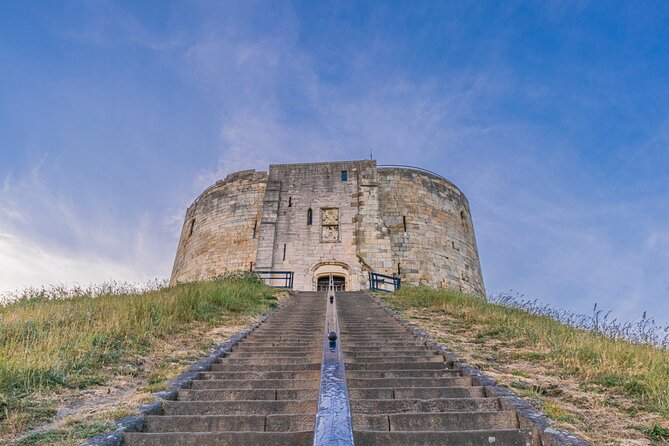
- Stop 12: Clifford’s Tower and a strong ending viewpoint
- Price and value: where $12.33 makes sense
- Who this self-guided York walk is best for
- So, should you book it?
- FAQ
- How long does the Private York Self-Guided Tour take?
- Is this tour guided by a person in York?
- How long do I have access to the tour on the app?
- Where does the tour start and where do I end?
- Are attraction entrance fees included?
- What language is the tour available in?
- Is this a private tour for just my group?
- What kind of audio does the tour use?
- What should I do if the app has a problem?
Key things to know before you go
- Private by design: only your group joins you on this route.
- Three-week access: download the tour and keep it on your phone for up to three weeks.
- Human narration: guided audio by Jenny, not a robotic voice.
- Built around major sights: York Minster, Roman remains, St Mary’s Abbey area, the Shambles, Viking York, and Clifford’s Tower.
- Time-friendly pace: each stop is set up for roughly 5 to 20 minutes, so you can finish in about 2 to 3 hours.
York at your pace, with just enough guidance
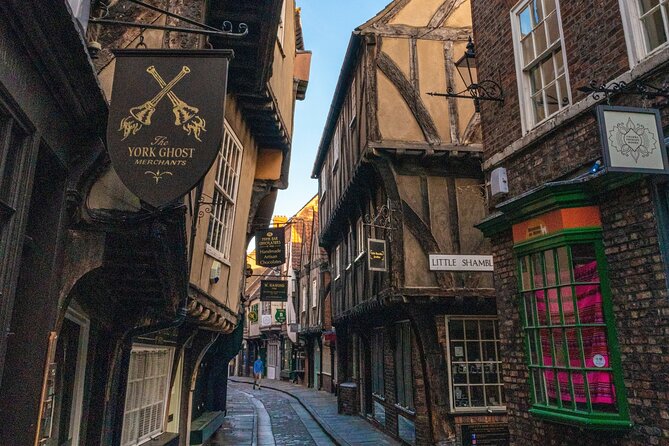
This tour is a classic fix for a common York problem: you want the highlights, but you also hate rigid group schedules. Here, you start at 6 Minster Yard and work your way to Clifford’s Tower. Along the way, the app gives you a GPS route, tells you when to move on, and offers audio at each stop.
You’ll like the overall rhythm. The stops are short, which keeps your feet moving and your attention on what’s in front of you. You can also break it into smaller chunks if you want, which matters if you’re combining York sightseeing with food stops, pubs, or shopping.
The best part is that the stories are layered. This isn’t just, Look at that old building. It’s, why it mattered, who controlled it, and how it shaped the streets you’re walking on now.
You can also read our reviews of more tours and experiences in York.



The smartphone app: three weeks of Jenny’s audio
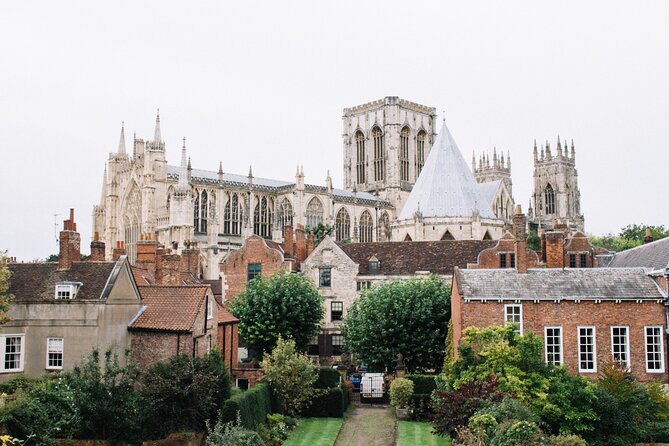
This tour lives inside a smartphone app. Once you download it, you get unlimited access for three weeks. That’s a real value point if you’re the type who likes to wander back the next day to re-check a detail or take an easier second pass.
Another smart design choice: the audio isn’t one long narration track. It’s broken into stop-length clips. The idea is that you can listen, then look up and take in the environment without feeling glued to your screen.
You’ll need to activate the tour using instructions sent by email. A booking reference is not the activation code, so don’t panic if you’re expecting a simple one-to-one match. Also note the language: it’s offered in English.
Now, a practical warning. A few users had trouble with app navigation, battery use, or audio cutting out. So I’d treat the first activation moment like a mini test: start the tour when you’re ready, not while you’re rushing out the door. If your phone battery runs low easily, consider how you’ll manage power so you don’t end up switching to a bus tour halfway through.
Stop 1: York Minster and the power of the Archbishop
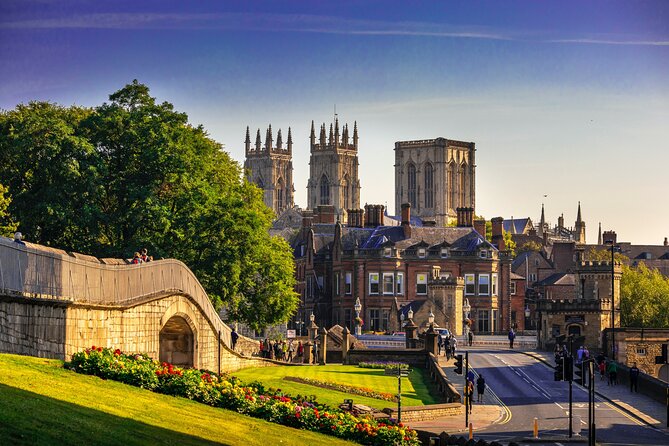
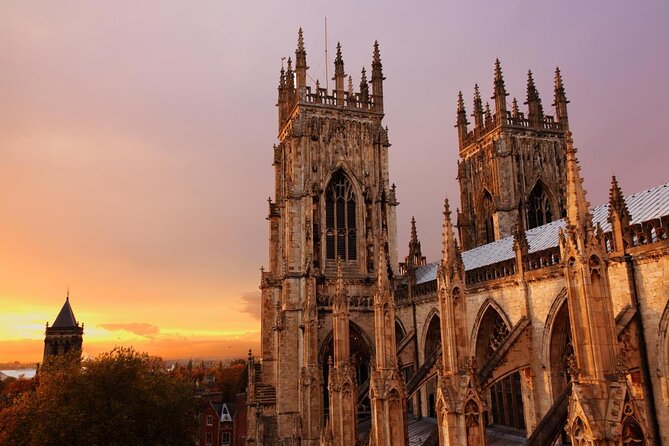
Your walk starts at York Minster, the Cathedral and Metropolitical Church of Saint Peter in York. The minster is described as one of the largest of its kind in Northern Europe, and it’s not just pretty stonework. It’s also the seat of the Archbishop of York, noted as the third-highest office in the Church of England.
This stop sets the tone for the whole route. You’ll hear about the building’s story and its surroundings, which helps you understand why York’s religious and civic power was so intertwined.
Plan around the practical detail: the stop is around 10 minutes, but admission tickets are not included. That means you should expect to learn from the area and viewpoints without assuming entry is covered. If you want inside time, plan for a separate ticket.
Stop 2: The Roman Column and York’s Roman fortress layer
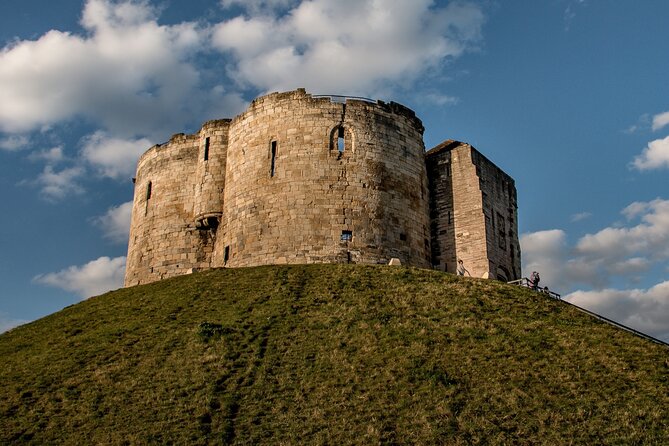
Next up is the Roman Column, tied to York’s Roman past. The story here is grounded and specific: York was once the Roman fort Eboracum, founded in 71 AD by Roman General Quintus Petillius Cerialis of the Ninth Legion.
If you’ve ever wondered why York feels like it has layers stacked like a history cake, this stop gives you the reason. You’re not just seeing old things. You’re tracing a city built near the River Ouse, near where it meets the River Foss.
This is another short stop, around 10 minutes, and it’s listed as free. Even if Roman remains aren’t always as dramatic as a full amphitheater, this kind of pinpoint marker helps your brain connect the dots as you keep walking.
The Liberty of St Peter: a medieval city within a city
There’s a quieter, more social-history-style segment here, focused on medieval York. The tour points you to the boundaries around St Peter’s Church and its inhabitants, describing it as a city within a city known as the Liberty of St Peter.
The key idea is authority. This area didn’t come within the Mayor’s control, so it created its own pocket of rules and consequences. You’ll hear what life looked like inside that liberty and what social repercussions could ripple outward through the rest of the town.
This is the kind of stop that’s easy to miss if you’re only chasing photos, so I’d treat it as a “listen and look” moment. Even a few minutes can change how you interpret the next streets.





Stop 3: St Michael le Belfrey and Guy Fawkes’ baptism
Then you’ll reach St. Michael le Belfrey Church, described as the only remaining sixteenth-century church in York and the largest pre-Reformation parish church in the city.
It’s famous for one very specific fact: it’s listed as the place where Guy Fawkes was baptised on 16 April 1570. The narration ties this church to the wider story of why the name Guy Fawkes became so enduring, especially around the 5th of November.
This stop is about 10 minutes and is free. It works well if you like history that links places to famous events. It’s also a good mental palette cleanser after the heavier Roman and governance themes.
Stop 4: High Petergate, Petergate House, and Bootham Bar
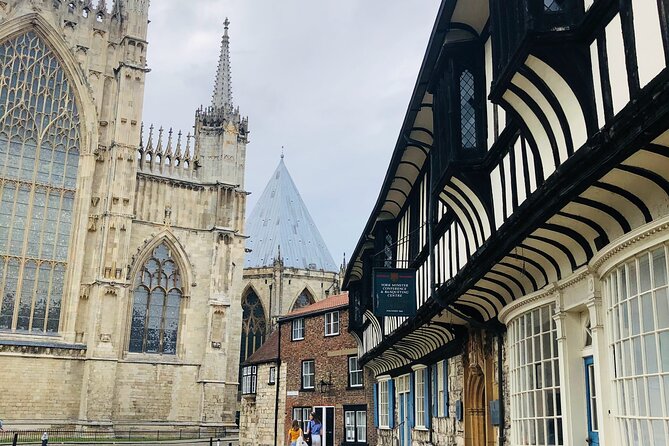
From St Michael’s area, you’ll move into High Petergate, part of what’s now the Minster Quarter. The narration connects it to deep time: it sits on the site of the Roman Via Principalis, the first-century main east-west route through the Roman fortress.
The naming story matters too. High Petergate is named for its proximity to York Minster, dedicated to St Peter. And in medieval times, it served as a route into York from the north, running from Bootham Bar to Stonegate.
What makes this stop fun in real life is that it mixes architectural eras. The tour describes an eclectic blend of medieval building remnants with styles from later periods, including Georgian-era architecture. You get the feeling of walking through a timeline.
A couple of extra highlights along this stretch:
- Petergate House, a Grade II listed building that was once home to Sir Thomas Herbert, a historian and groom of the bedchamber to Charles I.
- A story tucked into the area about a haunted house. Whether you’re a skeptic or a believer, it gives the street a little extra personality.
This segment is set for roughly 15 minutes, and then you’ll reach Bootham Bar, described as one of the four main entrances to the Roman fortress about 2,000 years ago. It’s also noted as still preserved, so it’s a great “stand here and picture the past” moment.
Stop 5: York City Walls and where to actually walk them
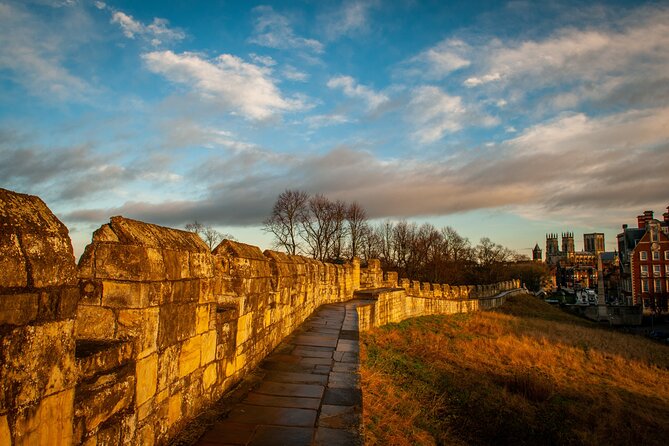
York’s defenses are a big deal here. The tour explains that York has more miles of intact wall than any other city in England. You’ll hear them referred to in different ways, including York City Walls and the Bar Walls.
This is one of the most useful stops for independent travelers, because it’s not only storytelling. The audio includes recommendations on where to hop on and gives you the liberty to walk through the walls as long as you like.
Because it’s free and flexible, I like treating it like your built-in buffer. If you’re ahead of schedule, walk a bit farther. If you need a breather, pause and watch the street move below you.
The stop is roughly 15 minutes, but your wall walk can stretch if you feel like it.
Stop 6: The Multangular Tower as a Roman-medieval mashup
At the western corner of the Roman fortress stands the Multangular Tower, described as about 9 metres high. The interesting detail is that its stonework includes elements from both Roman and medieval periods.
This is a quick hit, around 5 minutes, but it’s a neat reminder that York’s history doesn’t neatly separate into different neighborhoods. Sometimes the same structure carries more than one era at once.
Stop 7: Museum Gardens for the calm break between monuments
After wall energy, you get a change of pace at Museum Gardens. The tour describes them as a ten-acre botanical space surrounding the Yorkshire Museum, built on grounds of the former medieval St Mary’s Abbey.
This stop is especially good if you want your legs and your brain to catch up. Gardens make the history easier to digest because they slow the whole scene down.
The audio notes that the gardens were established in the early nineteenth century by the Yorkshire Philosophical Society and designed by landscape architect Sir John Murray Naysmith. You’ll also hear about the collections of trees, shrubs, perennials, and bulbs.
There are also historic remains inside the grounds, including the west corner of the Roman fort of Eboracum and parts connected to St Mary’s Abbey. That makes it more than just a scenic break. It’s another layer of the same story.
This stop is set for about 20 minutes and is free.
Stop 8: St Mary’s Abbey and the 1086 origin story
Right next to the gardens is St Mary’s Abbey, where you’ll learn about a Benedictine foundation dating back to 1086. The narration includes key names: Alan Rufus granted it to monk Stephen of Whitby.
This is where you start to feel how much influence medieval institutions had over land just outside the city walls. The abbey occupied an extensive precinct site immediately outside the walls, and now that area is tied into the gardens.
The tour also mentions remains of a Roman Anglian Tower in this area. That detail keeps the timeline from feeling too tidy. York often overlaps cultures, not replace them cleanly.
Expect around 15 minutes here, and it’s free.
Stop 9: The Shambles and the myth-versus-real talk
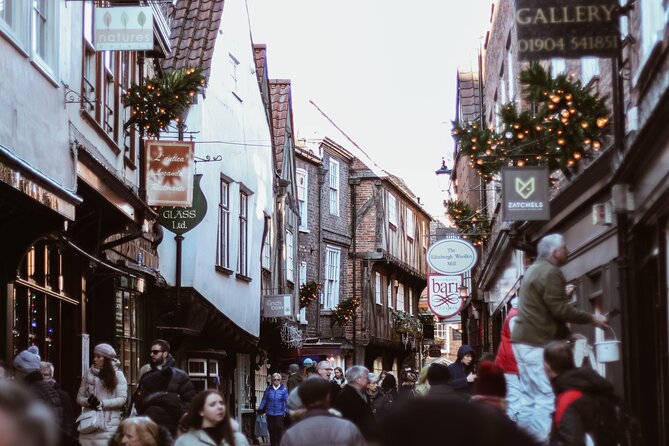
Then comes one of York’s most famous streets: the Shambles. The tour describes it as a historic street with overhanging timber-framed buildings, some dating back as far as the fourteenth century.
It also gives you the old-purpose name: it was once called the Great Flesh Shambles, connected to butcher shops and meat shelves.
The narration adds a pop-history angle: it talks about what’s myth and what’s real about the Shambles in relation to the wider culture people associate with the name. You don’t need to be a superfan to enjoy this portion. It helps you separate street-history from modern storytelling.
This is about 15 minutes and free, and it’s a great photo stop if you pace yourself and don’t get stuck in the slow-moving crowd you might expect on a classic street.
Stop 10: Saint Margaret Clitherow and a shop-front story
Inside the Shambles area, you’ll find the Shrine of Saint Margaret Clitherow, described as a shrine within the Shambles streetscape.
The tour focuses on her story as an English saint and martyr of the Roman Catholic Church. It also gives you a personal connection to the area: she was married to a butcher who owned and lived in a shop on this street, and her home is thought to have been No. 10 Shambles.
This stop is around 10 minutes and is listed as admission ticket not included, so again, don’t assume the inside shrine experience is free. Use it as a story moment first, and decide on entry separately if you want more.
Stop 11: Jórvík (Danish York) and Viking legends like Ragnar
Next, you shift from medieval to Viking York with Jórvík, also described as Danish York. The tour explains this term used by historians for the southern part of Northumbria, roughly modern-day Yorkshire, during the late 9th century and the first half of the 10th century when Vikings dominated the city.
You’ll learn how Vikings established themselves here more than a thousand years ago. Then the audio adds story flavor with bonus tales about famous Vikings who visited the city. It notes there are three famous Vikings in the mix, and it includes Ragnar.
This is about making the past feel human. Instead of just dates, you hear about people and reputations, which makes later stops like Clifford’s Tower land better.
Stop 12: Clifford’s Tower and a strong ending viewpoint
You finish at Clifford’s Tower, one of York’s best-loved landmarks. The tour describes it as the largest remaining part of York Castle, which once served as the center of government for the north of England.
You’ll hear about the castle’s history and how it related to people in York. It also includes practical recommendations, including where to eat and what to do next in the city.
This stop is set at about 15 minutes, and it’s where I’d normally pause to plan your next move. If you still have energy, this is an ideal place to pivot into a longer walk, a museum stop, or a food stop. If you’re done for the day, it’s a satisfying finish.
Price and value: where $12.33 makes sense
At $12.33 per person for a 2 to 3 hour self-guided experience, you’re mostly paying for two things: structure and narration.
Structure matters because York is compact but confusing. The GPS route and stop order help you avoid the classic indecision loop where you spend more time checking maps than looking around. Narration matters because it connects each landmark to a specific theme, like authority, defense, religion, or everyday street life.
This tour is also built to stretch. You get the app for three weeks, so if you return later, you can re-listen without paying again. That improves value if you’re staying more than one night.
Where the math can go wrong is if the app experience becomes frustrating for you. The reviews include issues like hard navigation, short audio cutting out, and battery drain concerns. If you’re worried about tech reliability, you might want to keep a backup plan in mind so a glitch doesn’t derail your whole day.
Who this self-guided York walk is best for
This tour fits best if you want:
- a highlights route without a fixed group pace
- a narrative-driven walk with short listening breaks
- flexibility to stop, look, and move on at your own speed
It’s less ideal if you strongly prefer in-person guiding, or if you know you get stressed when your phone navigation fails. Since the audio is stop-based and the route is GPS-led, it works well for most people, but tech friction can be a deal-breaker for a few.
So, should you book it?
If you’re planning a quick York trip and you want the big stories in one efficient walk, I think this is a good buy. The route coverage is wide but not chaotic, and the stop-length audio is a smart way to keep your attention on York, not on your screen.
Just do one thing before you commit your time: test the app activation and make sure audio plays through without cutting out. If it works smoothly for you, you’ll finish feeling like you truly understood the city instead of just passing through it.
FAQ
How long does the Private York Self-Guided Tour take?
The tour is designed for about 2 to 3 hours, with each stop scheduled for short visits.
Is this tour guided by a person in York?
No. It is self-guided using a smartphone app, with audio narrated by Jenny.
How long do I have access to the tour on the app?
Once downloaded, you have unlimited access for three weeks.
Where does the tour start and where do I end?
It starts at 6 Minster Yard, York YO1 7JD, UK and ends at Clifford’s Tower, Tower St, York YO1 9SA, UK.
Are attraction entrance fees included?
Entrance tickets are not included for some stops, including York Minster and the Shrine of Saint Margaret Clitherow. Other stops are listed as free.
What language is the tour available in?
The tour is offered in English.
Is this a private tour for just my group?
Yes. It is listed as private, meaning only your group participates.
What kind of audio does the tour use?
The audio is narrated by Jenny and is not computer-generated. The audio is provided for each stop.
What should I do if the app has a problem?
The info provided shows the provider has customer support, and there are examples of support resolving issues and refunds being processed when technical problems prevented use.