REVIEW · OXFORD
Tours of Oxford private walking tours for the Discerning Traveler
Book on Viator →Operated by Tours of Oxford · Bookable on Viator
Oxford can feel like a maze at first. This private walk helps you read the city fast and well. You start in the Bodleian universe at the Weston Library, then spend time in the university quarter, a college interior, and the medieval Old Town so it all clicks together.
I like the small, private-group format (up to 6). It means questions don’t get shunted to the end, and the guide can tailor the pace to your interests, whether that’s architecture, books, student life, or Oxford legends.
One thing to consider: entry access can vary by day and by college. Some places charge entry, and chapels can have limited opening when a service or rehearsal runs—so you’ll want to keep a flexible mindset.
In This Review
- Key highlights in plain English
- Start at the Weston Library: Your Oxford game plan in 2 hours 15
- University Quarter stops: Ashmolean, Old Bodleian, Radcliffe Camera, and more
- Divinity School and Oxford legends: Why the campus got so powerful
- Inside a college: chapels, dining halls, gardens, and student-life hints
- Old Town Oxford on foot: medieval streets, squares, churches, and alleyways
- Private guiding that really adjusts: questions, pace, and personal recommendations
- Price and value for a group up to 6
- Timing, walking pace, and what to wear
- Who should book this Oxford private walking tour
- Should you book it?
- FAQ
- Where does the tour start?
- What time does the tour begin?
- How long is the walking tour?
- Is this a private tour?
- How large is the group?
- What’s included, and do I need to pay extra for entrances?
- Is the tour in English?
- Does the tour run in bad weather?
- Are children allowed?
- Where does the tour end?
Key highlights in plain English

- Weston Library start in the Bodleian complex, plus a quick shot at Blackwell’s bookshop next door
- University Quarter classics like the Ashmolean, Radcliffe Camera, Sheldonian Theatre, and St Mary the Virgin
- Divinity School interior time and hands-on context for Oxford’s bigger religious and political story
- A college visit (or two) with chapels, dining halls, and gardens where allowed
- Oxford Old Town focus on medieval streets, squares, alleyways, churches, and older houses
- Your guide matters: many groups book for guides like Chris Peters for story-heavy, funny explanations
Start at the Weston Library: Your Oxford game plan in 2 hours 15
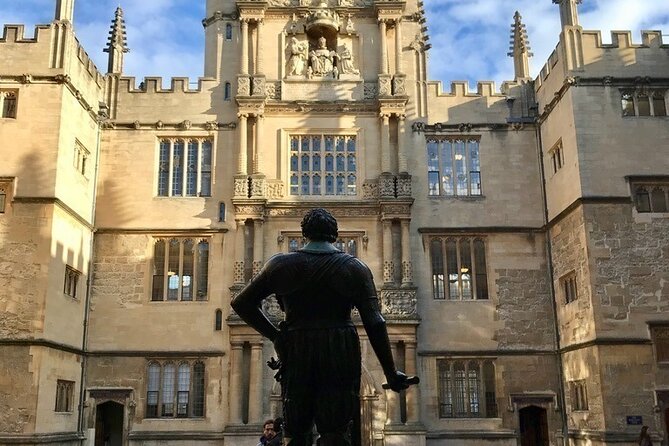
Your tour is timed to help you see Oxford in a way that feels less like ticking boxes and more like understanding how the place works. You’ll meet in the university heart on Broad Street near the Clarendon Building area, then get oriented at the Weston Library, a key part of the Bodleian Library network.
Why this works: Oxford is built in layers—university power, town life, religious history, and plain old street-level reality. Starting at the Weston gives you an immediate “map” for the rest of the walk. You’re also in a spot with practical perks: the Weston has excellent facilities and a high-end cafe, plus free exhibitions if you want to linger briefly before you move on.
Next door sits Blackwell’s—the Oxford bookshop you’ve probably heard about. If you like books, it’s a quick detour with real depth, including the Norrington Room where books are shelved underground. Even if you don’t do a big book-buying spree, it’s a great reminder that Oxford’s identity isn’t just buildings. It’s people who read, teach, argue, and write.
The private-group angle matters here too. With a dedicated guide, you can ask, right away, what you should prioritize during the rest of your stay—college courtyards, literary sights, church interiors, or just the best nearby places for lunch.
You can also read our reviews of more tours and experiences in Oxford.



University Quarter stops: Ashmolean, Old Bodleian, Radcliffe Camera, and more
After you’re oriented, you move through what feels like Oxford’s most cinematic patch: the Old University Quarter. Here, the walk turns architectural. You’re not just looking at famous facades; you’re learning what they were built for and why they shaped reputations.
A few of the highlights you’ll see along the way:
- the original Ashmolean Museum, one of Oxford’s anchor institutions
- the Sheldonian Theatre, tied to Oxford’s tradition of formal public life
- the Old Bodleian Library and nearby historic university buildings
- the Old Schools Quadrangle and Clarendon Building
- the Radcliffe Camera, one of those “how is this real?” landmarks
- the University Church of St Mary the Virgin, where Oxford’s religious story shows up in stone
- the Narnia Doorway, made famous through CS Lewis
What makes these stops valuable is the way they connect. You’ll hear how Oxford’s institutions built status over centuries, and how that status played out in real conflicts between the university and the city—often described as the Town and Gown relationship. It’s not just trivia. It helps you understand why streets, buildings, and even rules feel different in Oxford compared with other English cities.
Also, this is a “see it, then get why it matters” kind of tour. The guide’s style tends to be story-forward—fun anecdotes and human details—so the buildings don’t feel like history glass cases. You’ll leave with a better sense of what to look for on your next self-guided walk.
Divinity School and Oxford legends: Why the campus got so powerful
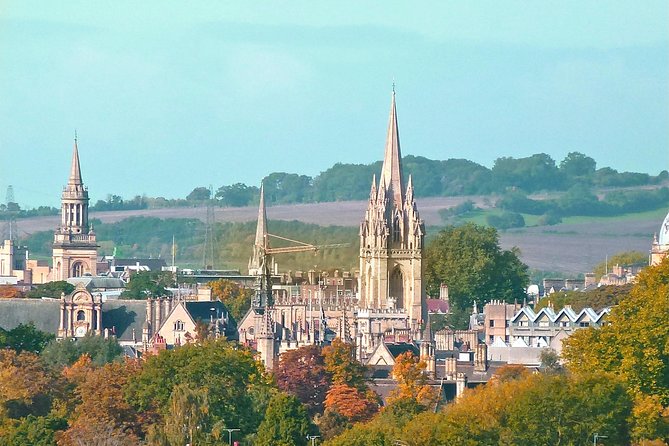
One reason people keep booking this specific Oxford loop is that it pushes past surface sightseeing into Oxford’s deeper themes. You spend time on the university side in ways that give the bigger picture: religion, learning, reform, and the long influence of Oxford graduates.
A key moment is visiting the interior of the Divinity School. That’s a spot where the “why” becomes tangible. Even if you’re not a religious-history specialist, you’ll get enough context to understand why Oxford’s theological study wasn’t just academic—it helped shape how ideas moved through Britain.
This is where a good guide really earns their fee. For many groups, guides like Chris Peters bring a mix of architectural framing and cultural history, plus a light sense of humor that keeps long timelines from getting heavy. In other tours, guides like Tom have been praised for keeping the conversation going for kids too, so the story doesn’t go over anyone’s head.
You should also expect the guide to bring in Oxford legends—stories that help you remember what you saw. That matters because Oxford is dense. Without a thread, it’s easy to mix up buildings that look similar. With legends and context, those landmarks become anchors.
If you like Oxford as a living idea more than just a photo stop, this segment is the reason to choose a guided route rather than wandering alone.
Inside a college: chapels, dining halls, gardens, and student-life hints
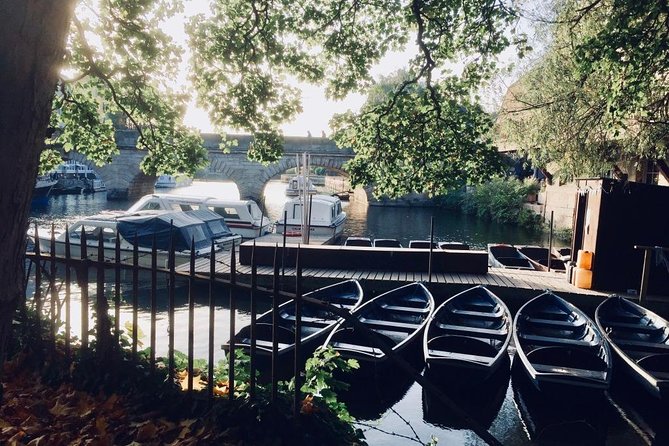
The tour doesn’t stay outside. You get time with a college interior experience—often one or two colleges, depending on access. You’ll see spaces that feel like the Oxford people actually lived in: magical chapels, dining halls, and gardens. The goal isn’t a full campus tour. It’s a taste of student life and the atmosphere behind it.
This portion usually includes admission for the college visit. That’s important for value. Oxford colleges can be hit-or-miss for walk-in access if you’re not with a group, and interiors are where Oxford’s “classroom reality” shows up. The chapels and cloisters are built to impress, but they’re also where you start to grasp the social side of university power: who belonged, who led, and how tradition became a system.
A practical heads-up: college openings can change for rehearsals, services, or schedules. In at least one case, a chapel closed early due to choir practice, while other parts of the college remained accessible. That doesn’t ruin the tour, but it does mean you should treat college entry as “what’s available right now,” not as an iron guarantee for every room.
If you’re visiting with kids, this is often a win. Multiple families have said their children stayed engaged because the guide made the history relevant rather than lecturing.
And if you’re planning to return later on your own, the college stop gives you a list of what’s worth re-seeing: the exact chapel angles, the best courtyard routes, and the kind of detail to look for without getting lost.
Old Town Oxford on foot: medieval streets, squares, churches, and alleyways
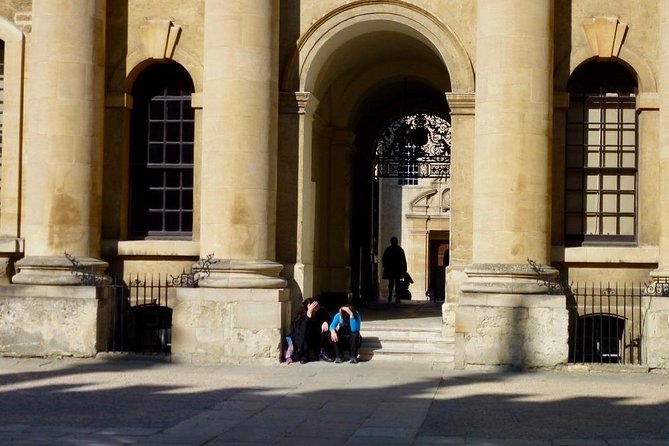
After the university quarter, you switch gears into Oxford’s medieval city fabric. This is the part where Oxford becomes less formal and more human-scale. You’ll walk through older streets, squares, and alleyways lined with churches and older houses that carry their own micro-histories.
The practical benefit: you start seeing how Town and Gown played out at street level. Where the university’s presence feels orderly and monumental, the Old Town is tighter, older, and more uneven. That contrast is what makes Oxford memorable. You don’t just see institutions. You see the city around them—how people moved, gathered, and built communities over time.
This segment is also great for photo strategy. You’ll be able to find the spots you’ll want to return to in daylight, and you’ll get a better sense of where to wander later without doubling back through the same streets.
And yes, you’ll likely hear some legend-style stories here too. Oxford is good at turning history into a living conversation. A strong guide uses that talent without turning everything into a spooky theme. It stays grounded in what you can actually see.
If you love walking tours that teach you how to navigate, this final stretch is where you feel your “Oxford IQ” rising.






Private guiding that really adjusts: questions, pace, and personal recommendations
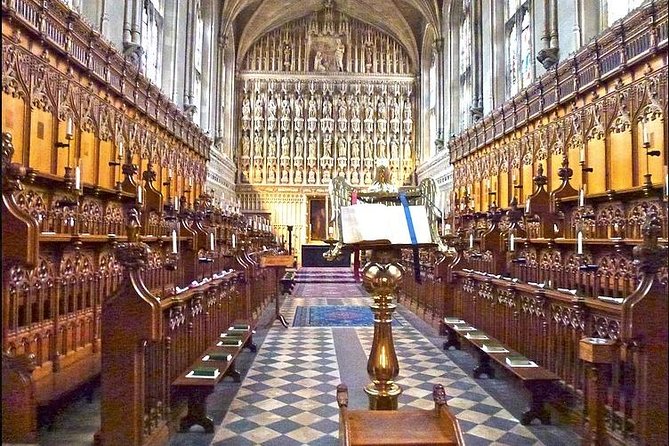
A private walking tour sounds like a buzzword until you feel the difference. With your own group, the tour stops becoming a one-size narrative. It becomes a conversation.
From the way guides have been described in real bookings, you can expect a guide to:
- answer questions without rushing you
- adjust the route emphasis to your interests (architecture, books, student life, broader British history)
- include “where next” suggestions—things like additional sites and food options in the area
This is where the tour can shape the rest of your Oxford day. The guide’s recommendations are usually strongest because they’re connected to what you just saw. After you’ve toured the university quarter and a college interior, you’re better able to understand which museums and streets actually match your tastes.
One family-friendly example from feedback: guides have been praised for tailoring the experience to younger visitors by keeping the story moving and making it feel like a place, not a lecture. That flexibility is part of the value here.
It also helps that guides often bring their own background into the mix. Chris Peters, for instance, has been noted for linking Oxford stories to religion, architecture, and British history—so you get connections rather than isolated facts.
Price and value for a group up to 6
The price is $208.13 per group, up to 6 people, for about 2 hours 15 minutes. On a per-person basis, that can be a very fair deal once you’re splitting it among friends or family. For four people, it’s often the difference between doing one big paid experience and still having money left for lunch, a museum ticket, or an extra stroll.
But the bigger value isn’t just math. It’s access and interpretation. You’re paying to:
- have a guide connect buildings to stories
- spend time inside university and college spaces (where allowed)
- get tailored pacing and question time
- leave with a clear sense of what to revisit
One consideration tied to cost: some college spaces can have additional entry charges, and those are typically payable as you go, depending on what’s open that day. In at least one case, a chapel experience was affected by closure timing, while other college areas stayed open. So think of the tour as including guided access to key areas, not as a guarantee that every room you point at will be included.
Still, for a group that wants a “best of Oxford without the confusion,” this is often a strong value choice.
Timing, walking pace, and what to wear

The tour runs in the afternoon, starting at 2:00 pm, and it works in most weather. You’ll be walking at a moderate pace, and comfortable trainers or shoes are the sensible choice.
Why the walking part matters: Oxford can be tiring if you’re doing it solo. Distances are short but frequent, and the streets twist. Having a guide keep the flow moving helps you avoid getting stuck in the wrong neighborhood for the rest of the day.
Also, because the tour is private, your group’s pace is your pace. If you want to slow down for a photo, ask a question, or take a short break, you can usually do that without feeling like you’re holding up a larger crowd.
Plan your energy like this: you’re going to see a lot, but not at sprint speed. The tour gives you breathing room for the story portions, and that’s when the guide’s humor and details make the buildings stick in your memory.
If anyone in your party has limited mobility, you’ll still want to confirm your comfort level for moderate walking before booking. The tour is designed for most travelers, but it’s not a sit-and-watch experience.
Who should book this Oxford private walking tour
This tour fits best if you want Oxford to make sense fast. I’d book it if:
- you’re short on time and want the university story plus Old Town in one run
- you care about architecture, reading history, or the evolution of Oxford’s institutions
- you’re traveling with kids (often age 10 and up) and want a guide who can keep attention
- you have a group of up to 6 and want good value without the stress of coordinating separately
- you like guided context that helps your self-guided exploring later
It’s also a good pick if you’ve been to big cities and you’d rather spend your time on a place where every building has a backstory and every street feels like it leads somewhere.
If you prefer total freedom with no structure at all, you might prefer a purely self-guided day. But if you want a guide to give you a framework, this one does that job well.
Should you book it?
If you want Oxford with a storyline and not just photos, I think this is a smart booking. The private format turns the tour into something interactive, and the mix of university institutions, college interiors, and medieval Old Town gives you a full-bodied sense of the city.
I’d book this especially if:
- you’re traveling with 2–6 people and want to split the group price
- you want insider explanations and practical next-step recommendations for food and more sights
- you value the moments inside the university world, like the Divinity School interior
The only reason to hesitate is the variable nature of college access on the day—some rooms may close for rehearsals or schedules, and some entry charges can be extra depending on what’s open. If you can roll with that, you’re set up for a memorable Oxford afternoon.
FAQ
Where does the tour start?
The tour starts at the Clarendon Building area at 48 Broad St, Oxford OX1 3AZ. Your guide meets you at the Weston Library in the University area, and pickup may be available at your Oxford city hotel or at Oxford Railway station.
What time does the tour begin?
Tours start at 2:00 pm.
How long is the walking tour?
It runs for about 2 hours 15 minutes.
Is this a private tour?
Yes. It’s private, and only your group participates.
How large is the group?
The price is for a private group of up to 6 people.
What’s included, and do I need to pay extra for entrances?
You’ll have a guided experience that includes admission for at least one college stop. Some other sites are listed as free, but additional entry charges may apply to certain college areas depending on what is open.
Is the tour in English?
Yes, it’s offered in English.
Does the tour run in bad weather?
It operates in all weather conditions, so you should dress appropriately.
Are children allowed?
Children must be accompanied by an adult, and the minimum age is 10. You should indicate how many children are in your party when booking.
Where does the tour end?
The activity ends back at the meeting point.
If you tell me your travel dates and who’s in your group (adults vs kids, and what you care about most), I can help you decide whether this afternoon slot makes sense for your itinerary.