REVIEW · NEWCASTLE UPON TYNE
1-Hour and a Half Walking Guided Tour in Medieval Newcastle
Book on Viator →Operated by Newcastle Castle · Bookable on Viator
Medieval Newcastle in 90 minutes. This guided walk strings together the city’s medieval power centers and ends with an included look at the Black Gate and Castle Keep. It’s compact, easy to follow, and built for people who want the story fast without sacrificing the must-see sites.
I love how this tour is timed right—about 1 hour 30 minutes—so you get a real sense of how medieval life shaped modern Newcastle. I also like the small-to-medium group size (up to 20), which keeps the pace human and makes it easier to ask questions as you go.
One thing to consider: it’s still a walking tour. Expect moderate fitness needs, plus you may hit steep bits and stairs near the castle area depending on the route.
In This Review
- Key things worth knowing before you go
- Price and value: what $0.00 gets you in Newcastle
- The walk plan: how the 90 minutes flow
- Stop 1: St Andrew’s Church and the Scotland connection
- Stop 2: The Newcastle Town Wall and Hotspur-style drama
- Stop 3: Blackfriars Medieval Friary and how power grows
- Stop 4: St Nicholas’ Church (Newcastle Cathedral) and merchant wealth
- Stop 5: The Guildhall site and Royal-charter timing
- Stop 6: Trinity House and ship power between Whitby and Berwick
- Stop 7: Newcastle Castle, Black Gate, and Castle Keep (included)
- What I’d watch for when you explore the Keep
- Guide style: stories, humor, and occasional costume flair
- How this tour fits into your Newcastle day
- Who this tour is best for (and who should reconsider)
- Tips to make the most of your 90 minutes
- Should you book this Medieval Newcastle walking tour?
- FAQ
- How long is the guided walking tour?
- Where does the tour start?
- Where does the tour end?
- Is the tour in English?
- How big is the group?
- Do I need to buy tickets for Black Gate and Castle Keep?
- Do I get access to Newcastle Castle after the tour ends?
- Is admission included for every stop?
- Is this tour near public transportation?
- What if the weather is bad?
Key things worth knowing before you go
- Up to 20 people means you’re not swallowed by a huge crowd.
- Included castle entry saves time and adds a big payoff at the end.
- Multiple medieval themes show up fast: religion, defense, and merchant wealth.
- English-speaking guides with strong storytelling show the connections between past and present.
- St. Andrew’s to the Black Gate keeps the route straightforward, with good public-transport access.
Price and value: what $0.00 gets you in Newcastle
This experience is listed at $0.00 per person, and that’s the sort of price that makes you ask: what’s the catch? The honest answer is that the structure does the heavy lifting. You’re getting a focused 90-minute walk with stops that explain how Newcastle grew into the city you see today.
The standout value piece is that you’re not just walking past sights. You get included admission to Newcastle Castle, specifically the Black Gate and Castle Keep. That matters because castles are where tours often add costs or make you plan a separate ticket. Here, the castle visit is built into the day, and your ticket also covers you after the walk.
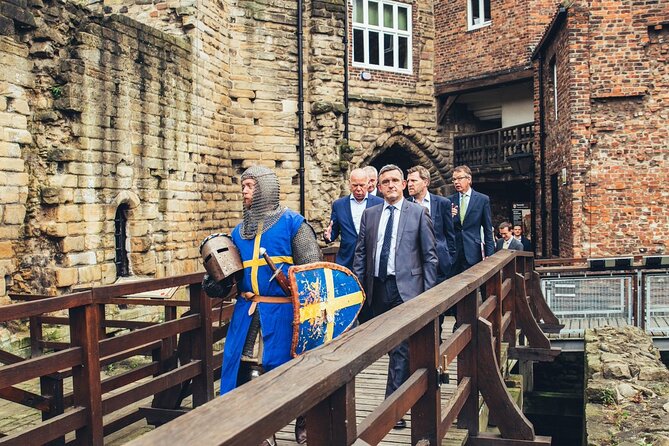
Also, the group is limited to a maximum of 20. For a short, tour-based experience, that’s a real comfort factor. Big groups can turn a historical walk into a slow-moving lecture where you can’t hear or ask anything. With this one, the odds are better that your guide’s stories land.
You can also read our reviews of more tours and experiences in Newcastle upon Tyne.


The walk plan: how the 90 minutes flow
The tour runs at an easy-to-manage pace with quick stops, each typically around 5 to 10 minutes. You start at St Andrew’s Church and finish at the Black Gate at Newcastle Castle. That end point is useful because it lines you up perfectly for sightseeing right away.
You’ll want comfy shoes. This is not “museum pace,” and you’re moving through a series of old-city sites that may involve hills and steps. The good news is that the stops are short, so you’re rarely stuck staring at a single spot for ages.
The tour is in English, and you’ll use a mobile ticket. Confirmation is sent at booking, and service animals are allowed. It’s also near public transportation, so you can arrive without a long slog.
Stop 1: St Andrew’s Church and the Scotland connection
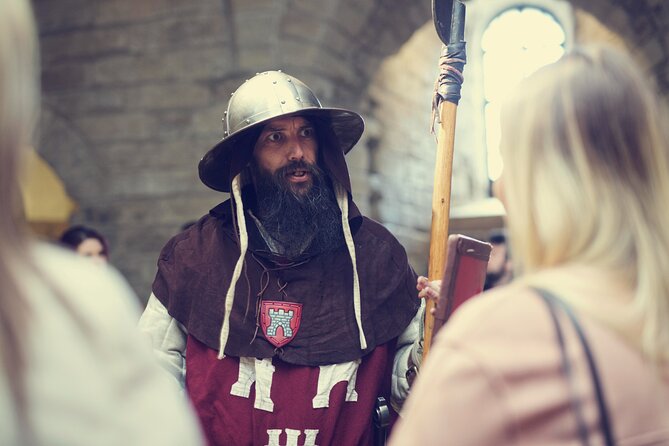
You begin at St Andrew’s Church on Newgate Street (NE1 5SS). Your guide meets you here and sets the tone by talking about Newcastle’s oldest church and the period when the region had connections to Scottish rule.
Why this start works: it’s a quick way to show that medieval Newcastle wasn’t a tiny bubble. It was influenced by larger politics. Even if you only catch one “big” idea from the morning, it’s a helpful one: borders and power changed, and towns had to adapt.
Practical note: this stop is short—about 10 minutes—so don’t expect a deep architectural checklist. Instead, focus on the stories and dates your guide shares, since they set up the next stops.
Stop 2: The Newcastle Town Wall and Hotspur-style drama
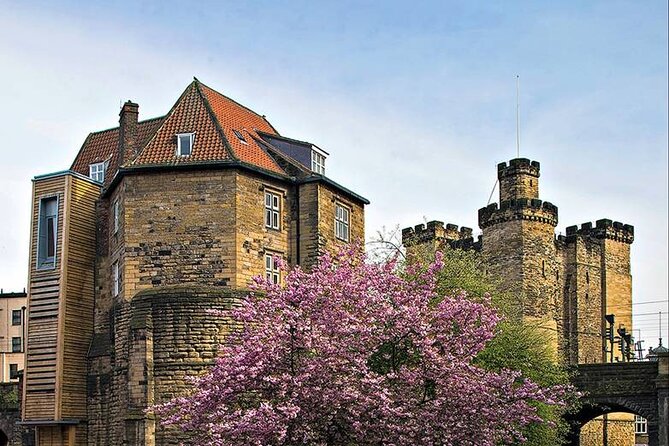
Next you head to the Newcastle Town Wall. This is where the tour shifts from religious roots to defense and public life. You’ll hear that Newcastle once claimed the largest and fairest walls among English towns, and you’ll get tales of sieges, jousts, and battles.
One name you’ll likely hear is Hotspur. If you’ve ever bumped into Hotspur in English history, this is a way to see why a medieval fighting legend matters to a real place, not just a book reference.
This stop is also short (around 10 minutes). The wall sections can feel like “just stone” unless someone explains what they were for. That’s why the guide matters here: they help you read the city’s shape like it’s a medieval map.
Stop 3: Blackfriars Medieval Friary and how power grows
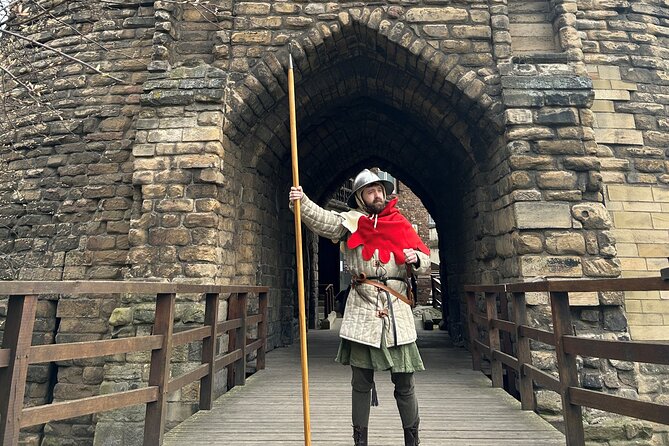
At Blackfriars Medieval Friary, the tone turns from fighting walls to money and influence. The story here is that the Dominician friars began as the home of Newcastle’s Dominicans and later accumulated wealth and political power.
This stop is quick (about 5 minutes), but it’s a strong reminder that medieval power wasn’t only about kings and castles. Religious institutions could be economic engines too, and that affects how you interpret what you see later in town—especially the merchant wealth angle.
If you like history that explains how systems made people powerful, this is one of the most useful stops, even when it’s brief.



Stop 4: St Nicholas’ Church (Newcastle Cathedral) and merchant wealth
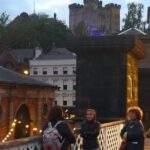
You then reach Newcastle Cathedral, which today is St Nicholas’ Church. You’ll be told it used to be the largest of Newcastle’s four parish churches and that it reflects the wealth and grandeur of the city’s merchants.
This is where you start noticing the pattern: defense (walls), institutions (friary and church), and civic power (guild-like structures). A good guide connects the dots, so you don’t leave thinking it’s just a set of nice old buildings.
Expect about 10 minutes at this stop. Again, the value is in the interpretation. Even if you’ve seen medieval churches before, the merchant-power angle makes this one feel tailored to Newcastle.
Stop 5: The Guildhall site and Royal-charter timing
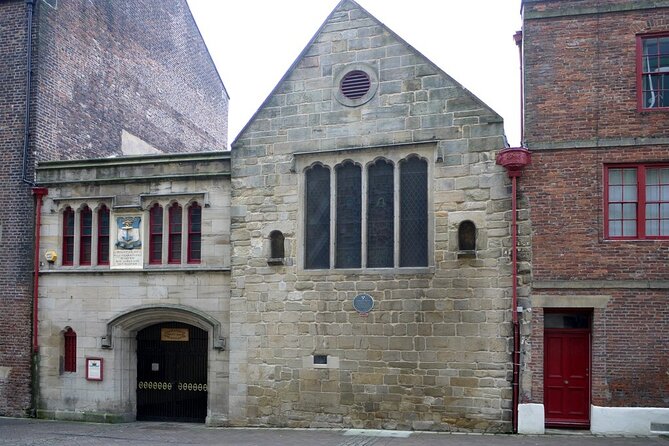
Next is the Guildhall, a site that has been occupied since 1216, when Newcastle’s merchants received a royal charter.
This stop is about 5 minutes, and the key word is timeline. Charters are the legal framework behind trade, rights, and civic control. When a guide ties that to what you see in the city today, you start to understand why Newcastle functioned like it did during the Middle Ages.
Admission for this specific stop is not included, which makes sense because you’re likely viewing from outside or at a viewpoint rather than entering. Still, the story is worth your time because it explains why “merchant power” is such a repeated theme on this walk.
Stop 6: Trinity House and ship power between Whitby and Berwick
The tour continues at Trinity House, tied to the medieval Guild of Masters and Mariners. You’ll learn it once controlled shipping from Whitby to Berwick.
This is one of those facts that feels too specific to be random. And it isn’t. Newcastle’s identity as a port and trading hub is central to its medieval story. When you’re told the exact range, you can picture shipping lanes as real geography, not vague “trade.”
Like the Guildhall stop, this one is brief (about 5 minutes) and admission isn’t included. Treat it as a story stop rather than a ticket stop.
Stop 7: Newcastle Castle, Black Gate, and Castle Keep (included)
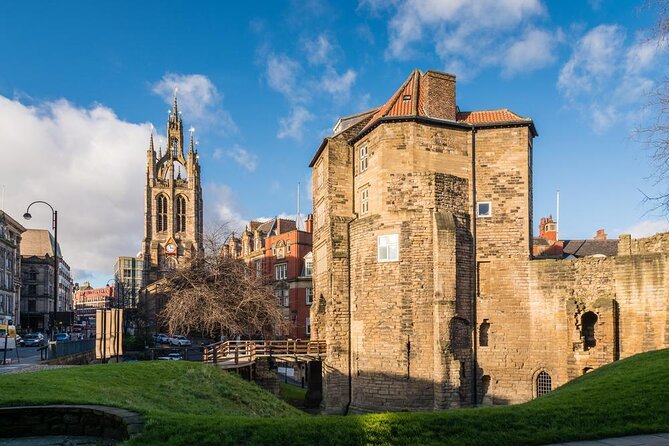
The final stop is Newcastle Castle, focused on the two finest surviving medieval buildings in the city: the Black Gate and the Castle Keep. Your guide will introduce the castle from the outside, and then you’re free to explore both buildings after the end of the tour.
Here’s the payoff: included admission. That’s a big deal because castles are where you often spend time waiting, buying tickets, or fitting extra plans into your day. This one simply hands you time and access.
Your included castle access also comes with a day-pass style perk. Ticket holders get complimentary access to Newcastle Castle for the remainder of the day, with last entry at 4pm and the castle closing at 5pm. In practice, that means you’re not trapped at the end of the walk—you can linger if the castle grabs you.
What I’d watch for when you explore the Keep
Once the guided portion ends, you’ll still get value from being observant. The Keep is the kind of structure that rewards slow walking and looking up. You’ll likely notice staircases, tight rooms, and the “fortress feel” that makes the medieval defensive story click.
One useful detail from guide storytelling styles: some guides on this route have explained odd-but-memorable medieval connections. For example, you may hear about items like a gong farmer, or you might get the kind of context that links famous medieval names—like Matilda and the White Ship—to what you see in front of you. Those story threads are exactly what turn a castle visit from photos-only into understanding.
If you’re the type who likes to ask questions, hang around a bit longer in the Keep area. Several guides described in past experiences are willing to answer many questions without rushing people.
Guide style: stories, humor, and occasional costume flair
This tour’s best energy comes from the guide. Past guides included Olivia, who is associated with Newcastle Keep in the context of working there, and Thomas, who delivered clear, witty explanations in a way that made the subject feel fun. Other named guides include Karyan, Damian, Phoebe and Daniel, Ben, and Danny.
A few patterns show up across those experiences:
- Guides often make connections beyond strict medieval details, pulling in how Newcastle later evolved.
- Humor and energy show up often. That matters because the tour hits several themes quickly, and a light tone helps it stay memorable.
- Some guides have used relevant costumes, which can make the era feel more present.
You won’t get a scripted reading of dates. You’ll get interpretation—plus the chance to ask follow-ups. That’s one reason the small group size matters.
How this tour fits into your Newcastle day
A 90-minute tour ending at the castle is a great setup for the rest of your afternoon. You can either:
- Continue exploring the Castle Keep at your own pace before the 5pm close, or
- Use the walk as orientation, then branch out to nearby areas while the stories are fresh.
Because the stops include church sites, walls, and guild connections, it’s also good timing-wise. If you do this early in your trip, you get a framework for seeing the city later without feeling lost.
If you’re short on time, you’re still hitting major themes: religion, defense, merchant wealth, and maritime power. If you have more time, you can use the route to plan what to revisit.
Who this tour is best for (and who should reconsider)
This walk is ideal if you:
- Want a structured medieval overview without spending hours hopping between museums
- Enjoy city walks where the guide explains why places matter
- Like question-friendly tours, especially since the group cap helps keep things interactive
It may not be ideal if you:
- Prefer a mostly flat, easy stroll with zero stairs or steep sections
- Need a very deep, slow-paced visit at each site. The stops are short by design, so you’re not getting a long, detailed on-site lecture at every stop.
The good news is that the overall duration is short, so you can always pair it with more leisurely self-guided exploring afterward.
Tips to make the most of your 90 minutes
Bring the basics: water and a layer for changing weather. This experience requires good weather, so plan to have a backup date if conditions are rough.
Wear walking shoes. The tour has moderate fitness expectations, and the castle area can involve stairs and uneven terrain.
Arrive a few minutes early at St Andrew’s Church. Getting settled and starting on time keeps the whole flow easier.
And once you’re inside the Castle Keep, slow down. This is where you can convert the guide’s stories into a real physical sense of medieval space.
Should you book this Medieval Newcastle walking tour?
If this is listed at $0.00 per person, I’d book it without overthinking. You’re paying nothing for a guided walk that hits multiple medieval themes and ends with included castle admission, plus you get extra castle access for the rest of the day.
Book it if you want a smart first look at Newcastle’s medieval roots, especially if you like stories with clear connections to modern streets, not just isolated facts. Skip it only if stairs and hills make walking hard for you, since this is still a city walk that moves you between sites.
FAQ
How long is the guided walking tour?
It runs about 1 hour 30 minutes.
Where does the tour start?
The meeting point is St Andrew’s Church, Newgate St, Newcastle upon Tyne NE1 5SS.
Where does the tour end?
The tour ends at the Black Gate, Castle Garth, Newcastle upon Tyne NE1 1RQ, which is part of Newcastle Castle.
Is the tour in English?
Yes, it’s offered in English.
How big is the group?
The maximum group size is 20 travelers.
Do I need to buy tickets for Black Gate and Castle Keep?
Included admission to Black Gate and Castle Keep is part of the tour.
Do I get access to Newcastle Castle after the tour ends?
Yes. Ticket holders get complimentary access to Newcastle Castle for the rest of the day, with last entry at 4pm and closing at 5pm.
Is admission included for every stop?
Not for every site. St Andrew’s Church and other listed stops are free as noted, while Guildhall and Trinity House admission are not included.
Is this tour near public transportation?
Yes, the meeting area is near public transportation.
What if the weather is bad?
This experience requires good weather. If it’s canceled due to poor weather, you’ll be offered a different date or a full refund.