REVIEW · LONDON
5-Day Devon and Cornwall Small-Group Tour from London
Book on Viator →Operated by Rabbies Trail Burners · Bookable on Viator
Stonehenge and Cornwall in one trip can work.
This 5-day small-group route links England’s big hitters with real coastal time, all in the care of a driver-guide and a tight group.
I especially like two things: first, the small-group size (max 16), which makes it easier to hear the guide and get quick help at stops. Second, you get 4 nights with breakfast and two major admissions handled up front, so you can spend your energy on the scenery and the walking.
One drawback to plan for: it is a lot of driving. You’ll see a ton, but a few sites are more time-boxed than you might hope, and the last day back to London can feel long.
In This Review
- Key takeaways before you book
- London to Winchester and Stonehenge: the opening punch
- Exeter, Dartmoor, and Tavistock: moorland walking without the car stress
- Boscastle, Tintagel, and Port Isaac: Arthur vibes plus Doc Martin roads
- St Michael’s Mount and the Minack Theatre: Cornwall views with real drama
- The return day: Bodmin Moor and Glastonbury in one push
- Where you stay: B&B feel vs hotel comfort in Exeter/Torquay and Falmouth
- The coach experience: mini-coach comfort, no bathroom onboard
- Value for money: what’s included, what’s not, and why it matters
- Guides and timing: how the trip stays smooth across big distances
- Who should book this Devon and Cornwall tour from London
- Should you book this 5-day Devon and Cornwall small-group tour?
- FAQ
- Where does the tour start?
- What time does the tour depart?
- How much luggage can I bring?
- What attractions are included in the tour price?
- Are meals included?
- Is there a restroom on the coach?
- Is the coach wheelchair accessible?
- How old do kids need to be?
Key takeaways before you book

- Small-group coaching: you travel with a driver-guide who gives context before each stop, not just directions.
- Stonehenge and Tintagel covered: admissions for both are included, so you avoid the common ticket scramble.
- Dartmoor + Cornish coast pacing: days are broken into scenic chunks with breaks, not nonstop rushing.
- Falmouth as your base: you get two nights on the Cornish coast, which helps the whole trip feel less frantic.
- Minack Theatre depends on availability: you may not be able to enter on certain dates.
- Pack within the limit: you’re limited to 20kg plus a small bag, and B&Bs can mean stairs and short walks to food.
London to Winchester and Stonehenge: the opening punch

You start in London at the Green Line Coach Station near Victoria, with a 9:15 am departure. Show up early enough to check in before they close it 15 minutes before departure, because this is a coach that leaves on time.
The first real “wow” moment is Winchester. It’s an old royal city tied to Anglo-Saxon power, and it gives you a proper warm-up before the prehistoric shock of Stonehenge. You’ll have free time here between 11:00 am and 1:00 pm, so bring a plan: if you want the cathedral or the Norman Great Hall-style sights, reserve ahead.
Then comes Stonehenge. You’ll transfer to the visitor area where you can see the Stonehenge collection exhibition, and from there you take the land train shuttle to the stones. I like this flow because it saves you from wandering blindly in a big tourist zone—by the time you’re standing by the circle, the story already has shape.
Tip that matters: Stonehenge is a quick emotional hit. If you want photos with fewer crowds, aim for your own timing during the allotted slot rather than trying to do everything at once.
A few more London tours and experiences worth a look


Exeter, Dartmoor, and Tavistock: moorland walking without the car stress
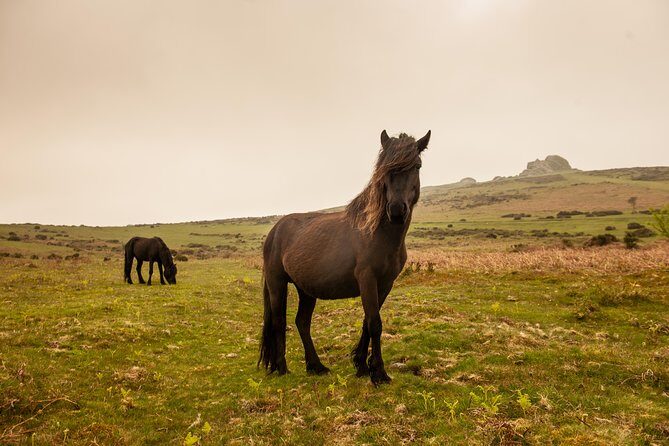
After Winchester and Stonehenge, you settle into your two-night base in Exeter (or Torquay, depending on your allocation). Exeter is a Roman fort settlement that still feels layered with walls, medieval streets, and cathedral presence. It’s also a practical base: you’re close enough to explore without losing hours to transfers.
Day two is built around Dartmoor National Park. The moor is wild in a way that’s hard to fake: windy open space, native ponies grazing nearby, and rock formations that look sculpted by time and weather. You’ll get a short stop here, which means you should focus on one or two viewpoints or a manageable walk rather than trying to cover the whole moor.
Then you head to Tavistock with time for the town and the famous area crossing point—there’s mention of the Clapper Bridge at Postbridge—plus the Drake connection. Tavistock being Sir Francis Drake’s birthplace gives the stop extra weight if you like the England-over-time thread of the itinerary.
When you return to Exeter, you’re not forced into another tight schedule. The guide builds in a more relaxed evening so you can eat on your own and reset before Cornwall.
Boscastle, Tintagel, and Port Isaac: Arthur vibes plus Doc Martin roads

Day three gives you a shift from moorland to rugged coast. First stop is Boscastle Harbour, often described as one of the last places that still feels unspoiled. You’ll see medieval harbor structure, fishing boats, and you can choose your pace: a cream tea, a stroll toward the headland, or the Museum of Witchcraft.
Next is Tintagel Castle, with its clifftop ruins and the Arthur-legend association (the birthplace story is part of the area’s mythology). Admission is included, so you can focus on the experience rather than hunting a ticket desk.
Then you finish with Port Isaac, the seaside village tied to Doc Martin filming. Even if you’re not deep into the show, this works because it’s a real fishing village. You’ll get time to wander the harbor area and soak up the atmosphere.
From Port Isaac you travel onward to Falmouth for your next two nights. This is a smart handoff: instead of bouncing every night, you get enough time on the coast to do more than one coastal walk without an early checkout vibe.
Practical note: cream teas and harbor cafés are great, but don’t spend your entire Boscastle slot chasing every menu option. Dartmoor and Tintagel already set the bar high—use Boscastle as a calmer intermission.
St Michael’s Mount and the Minack Theatre: Cornwall views with real drama

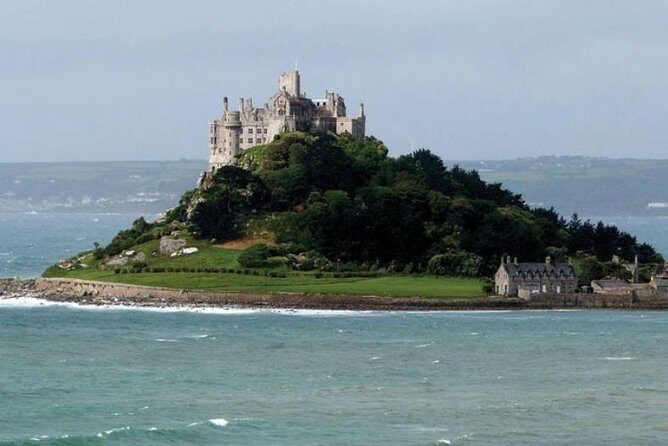
Day four is one long “face the coastline” day. The schedule starts with St Michael’s Mount, where you’ll have a photo stop only. Even with limited time, it’s a strong introduction: an island-world feeling with a legend-heavy reputation and history layered on top of the shoreline drama.
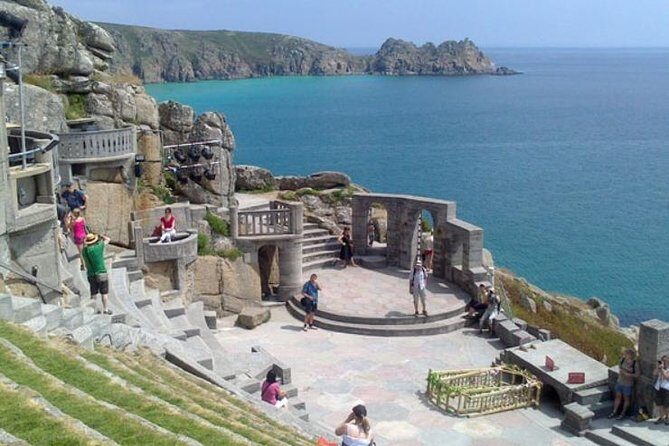
Then you move toward Minack Theatre at Porthcurno. This is the part you’ll want to plan for mentally. It’s an open-air performance setting perched above the ocean, and because it’s weather and schedule sensitive, the itinerary notes that you may be unable to visit depending on availability. Still, if you do get in, the climb and the views are the whole point.
After Minack, the day continues to Land’s End. You’ll also pass landscape dotted with Cornish tin mining heritage, and it’s a filming location for Poldark. Land’s End can be windy and crowded depending on season, so treat it as a short stop for photos and a quick sense of place.
Finally, you land in St Ives with time among the narrow, harbor-side streets and artists’ galleries. This is one of those stops where your best choice is based on your mood: gallery browse, seaside wandering, or just finding a quiet corner to reset.
The return day: Bodmin Moor and Glastonbury in one push
On the last day you travel back toward London. You cross Bodmin Moor, described as wild moorland and an Area of Outstanding Natural Beauty. The stop is short, so you’re not going to turn it into a long hiking day—but you will feel the moor atmosphere.
Then comes Glastonbury, with its early Christianity stories and Arthurian and pagan legend connections. You’ll have time to visit the abbey ruins, eat lunch on your own, relax, or scale Glastonbury Tor for wide views across five counties.
This is also where the pace can feel sharp. Even if you’ve had a good time the whole week, it’s a long travel day back to London. If you’re the type who hates late-day fatigue, pack a little smarter: snacks, water, and a charged phone or camera.






Where you stay: B&B feel vs hotel comfort in Exeter/Torquay and Falmouth
You get 4 nights en-suite accommodation with breakfast, and you can choose between B&Bs or 3-star hotels. That choice changes your day-to-day feel.
B&Bs tend to be on the outskirts of towns. Expect 20–30 minute walks to get to pubs and restaurants, and many B&Bs mean stairs with no lifts. If stairs are an issue, say so early—you may be able to get a ground-floor option or a hotel with lift access if available.
Hotels are usually more central, with rooms that tend to be more predictable for comfort. One review mentioned a big contrast between an Exeter property with room-and-sink tightness and a Falmouth hotel with a better setup and views, so it’s worth taking your room category seriously when you choose.
Falmouth, though, is a strong base regardless. Being there for two nights means you can do an easy evening stroll and not feel like you’re just passing through Cornwall.
The coach experience: mini-coach comfort, no bathroom onboard
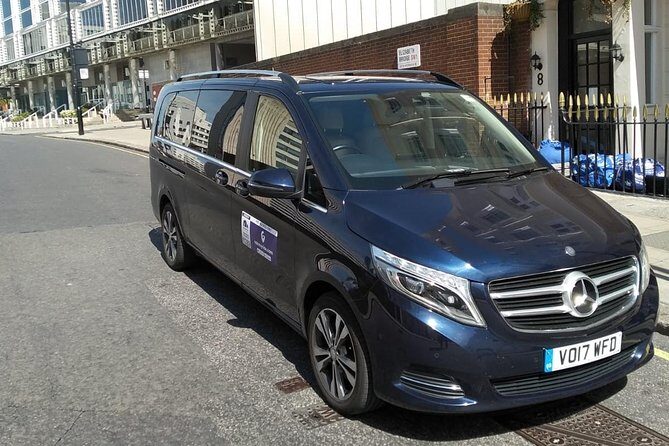
You’ll ride in a 16-seat Mercedes mini-coach. The practical detail is the entry: there are three steps, each about 150mm high, and the step edges are marked with non-slip treads. There are grab handles on both sides, which helps on uneven pavement.
There’s no restroom on board, but the group takes regular breaks. I think this is fine as long as you don’t over-plan every stop meal around bus comfort—use the breaks.
Also, you’ll have to pack within the 20kg luggage limit plus one small bag for personal items. If you bring more, it becomes a hassle fast when you’re switching hotels and walking to dining spots from B&Bs.
If you care about accessibility: the bus is not wheelchair accessible. Storage may be available for a folding wheelchair or walking frame, but you still need to be able to get on and off with assistance from a companion, since guides can’t provide physical help.
Value for money: what’s included, what’s not, and why it matters

At $1,347.48 per person, the headline number can look steep until you price it piece by piece.
What you do get that drives value:
- 4 nights en-suite with breakfast
- transport in an air-conditioned mini-coach
- a driver-guide
- small-group format (max 16)
- admissions included for Stonehenge and Tintagel
What you should budget separately:
- meals and refreshments (not included unless specified)
- optional attractions that may require time-slot reservations
- the Minack Theatre visit may not be possible on your day
For me, the big value win is not just the included tickets. It’s the way the itinerary strings together major sites with enough context. You’re not just dropped off at famous locations—you get story, timing, and guidance on what to do with your time.
If you love famous landmarks but also want real towns—Winchester’s cathedral area feel, Exeter’s old walls, Boscastle’s harbor edges—this format makes sense. If you’re the type who wants full-day freedom at each site, you might find the time limits frustrating.
Guides and timing: how the trip stays smooth across big distances
One theme I’d trust in this tour style is the guide’s ability to manage expectations. In different departures, guides like Carl, John, June, Dean, David Coatsworth, and Jack have been singled out for clear commentary, good maps or region context during the drive, and staying on top of timing.
That matters because this route covers a huge slice of southern England. You’re moving from London into Winchester and Stonehenge, then down into Devon, across Dartmoor, and all the way through Cornwall coast stops. The guide’s job is to keep you from feeling like you’re just being shuffled.
Timing can still be tight, though. A common complaint is that some stops feel shorter than ideal. I’d treat this itinerary as a sampler with strong highlights, not a slow travel deep-dive.
My practical strategy: pick one must-do per stop, and let the rest be bonuses. That way, you don’t end up stressed trying to do everything.
Who should book this Devon and Cornwall tour from London
This tour fits you well if:
- you want to see Stonehenge, Dartmoor, and the Cornwall coast in one week
- you prefer being driven over navigating narrow roads
- you like guided story context and clear meeting points
- you want the balance of iconic sights plus real town wandering (Port Isaac, St Ives, Boscastle)
You may want to skip or switch strategies if:
- you want a long, slow visit at each major attraction
- you hate packed days and the idea of a long return to London on day five
- you’re very sensitive to stairs or short walks from B&Bs (tell the operator during booking)
Season note: weather can affect site access and road conditions. The itinerary is built to keep you moving, but you should still dress for wind and rain, especially for the coast.
Should you book this 5-day Devon and Cornwall small-group tour?
If your goal is a high-coverage introduction to Devon and Cornwall, I’d say yes. The combination of small-group comfort, included heavy-hitters like Stonehenge and Tintagel, and an overnight base in Falmouth makes the trip feel efficient without feeling like a blur.
Book it if you like structure plus options: the guide gives you the setup, and you can choose how active to be once you’re on the ground. Skip it if you’re planning this as a deep, slow relationship with one place—this is a sampler, and it’s designed for variety.
If you do book, pack light, reserve any timed tickets you’re offered via your voucher links, and decide your must-do for each stop before you step off the coach. That simple habit turns a busy itinerary into a satisfying one.
FAQ
Where does the tour start?
You depart from the Green Line Coach Station at Bulleid Way, London SW1W 9SA.
What time does the tour depart?
Departure time is 9:15 am, and check-in closes 15 minutes before departure.
How much luggage can I bring?
You can bring up to 20kg (44lbs) of luggage plus one medium-sized suitcase/bag and a small bag for personal items.
What attractions are included in the tour price?
Stonehenge and Tintagel Castle admission fees are included.
Are meals included?
Meals and refreshments are not included unless specified. You’ll cover your own food while on free time or breaks.
Is there a restroom on the coach?
No, there are no restrooms on board, but the group makes regular restroom breaks.
Is the coach wheelchair accessible?
The bus is not wheelchair accessible, but there may be storage for a folding wheelchair or walking frame. You must be able to get on and off on your own (or with a companion), since guides cannot physically assist.
How old do kids need to be?
Children must be at least 5 years old. If they are under 1.35m (4.4 ft.) tall, you should note it for a booster seat arrangement.