REVIEW · OXFORD
Ashmolean Museum Tour – by Uncomfortable Oxford™
Book on Viator →Operated by Uncomfortable Oxford · Bookable on Viator
Oxford history gets awkward—on purpose.
This Ashmolean Museum tour pairs a guided walkthrough with thoughtful questions about how collections were formed and displayed, so you don’t just look—you think. I like the way the pacing moves gallery to gallery, each stop building on the last, and I like that you’ll get discussion-style guidance rather than a dry script.
The experience also zooms in on the stuff most museum tours skip: colonialism and repatriation, the ethics of excavations and replicas, and how to interpret mummies and human remains. The one drawback to consider is that these themes can feel heavy, especially if you want a purely art-and-objects-only visit with zero uncomfortable questions.
In This Review
- Key highlights you’ll actually notice
- Entering the Ashmolean with a plan (and a purpose)
- Stop-by-stop: how the tour unfolds in 1 hour 15 minutes
- 1) Statue Gallery start: get your bearings quickly
- 2) Ashmolean Story Gallery: how the museum was shaped
- 3) Cask Gallery: Greek and Roman culture, plus darker angles
- 4) Hellenistic World: excavation ethics, display choices, and replicas
- 5) Colonialism and repatriation: what the museum does with responsibility
- 6) Egyptian Galleries finish: mummies and human remains
- Price and value: what you’re really paying for
- Who this tour suits best (and who might want a different option)
- Practical tips so you get the most out of the experience
- Should you book the Ashmolean Museum Tour by Uncomfortable Oxford™?
- FAQ
- How long is the Ashmolean Museum Tour?
- Where does the tour start?
- How many people are in the group?
- What language is the tour offered in?
- Is admission included?
- What topics does the tour cover?
- Are mobile tickets used?
- What about service animals and public transportation access?
- What is the cancellation and weather rule?
Key highlights you’ll actually notice
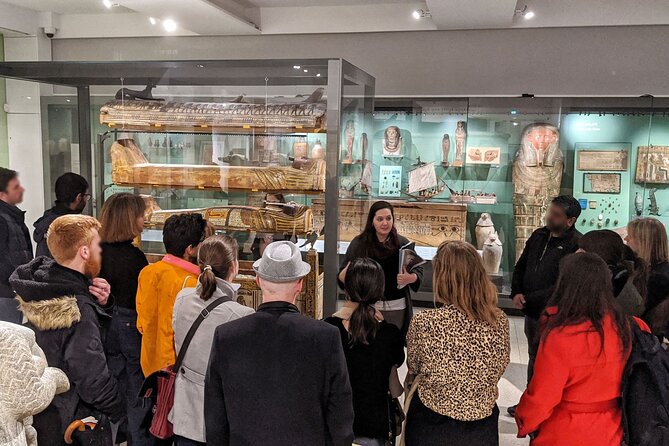
- Small group size (max 12): more chances to ask questions without shouting over a crowd
- Built around museum ethics: colonial collecting, enslavement, display choices, and repatriation
- Gallery-by-gallery structure: you get a guided path that makes the Ashmolean easier to navigate
- Free admission ticket listed throughout: you’re paying mainly for the guide and tour framework
- Ends in the Egyptian Galleries: mummies and human remains are treated as an ethics topic, not just a spectacle
Entering the Ashmolean with a plan (and a purpose)
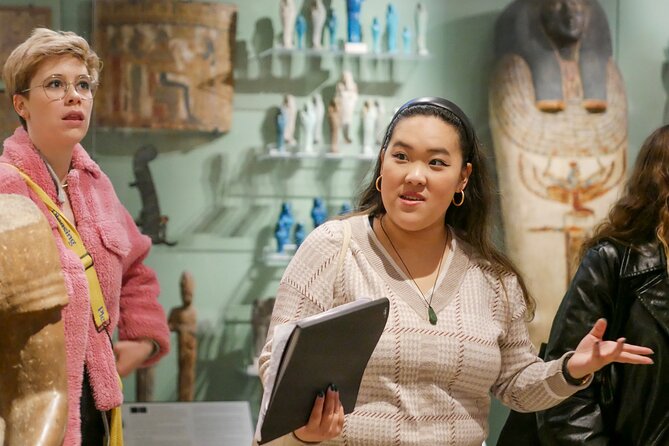
The Ashmolean can feel like a lot—beautiful rooms, big collections, and enough objects to keep you wandering until tea time turns into evening. This tour gives you a route with built-in stops and a guide who keeps the focus sharp. You meet at the Statue Gallery near the main entrance, which is helpful because it gets you oriented fast and avoids the usual scramble of figuring out where you’re supposed to start.
What makes this tour especially interesting is the point of view. The guide doesn’t treat the museum like a neutral storage unit for ancient art. Instead, you’ll talk about how cultural objects were gathered, excavated, purchased, and exhibited—then you’ll ask what that means now. That shift changes how you look at familiar ancient themes like sculpture, Roman and Greek culture, and Egypt.
You can also read our reviews of more tours and experiences in Oxford.



Stop-by-stop: how the tour unfolds in 1 hour 15 minutes
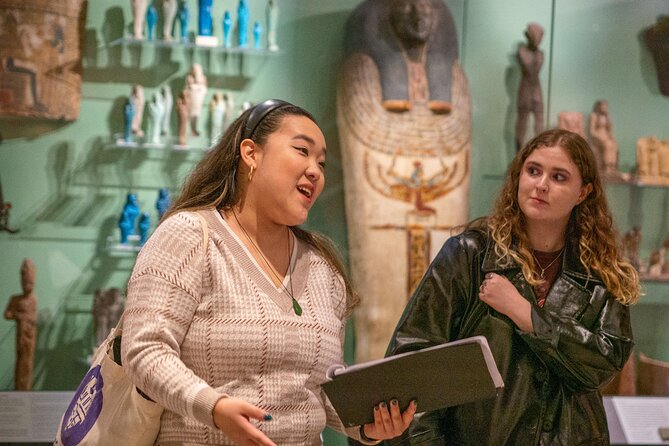
This is an approximately 1 hour 15 minutes guided experience, designed to move quickly but not randomly. Each stage is timed so you get context, you see a chunk of the museum, and you still have time for questions.
1) Statue Gallery start: get your bearings quickly
The tour begins at the Statue Gallery by the main entrance. That matters because you start from a visible landmark instead of guessing your way through an interior maze. From the first minutes, you’re set up for what you’re about to do: look at objects, yes, but also confront the systems behind how those objects ended up on display.
If you like guided structure, this opening feels efficient. If you hate being told where to go, you might feel a bit herded—though the small group size helps the guide adapt as questions come up.
2) Ashmolean Story Gallery: how the museum was shaped
Next you move into the Ashmolean Story Gallery, where the tour lays out the museum’s origins and the legacies of early colonial collecting practices. This stop is the foundation. You’re not asked to know everything about British history before you arrive; instead, you’re given the context that makes later discussions make sense.
I like this approach because it prevents the common problem of museum talks that skip the “how did this collection get here?” part. Once you have that background, the rest of the tour feels less like random facts and more like one connected argument: who collected, who benefited, and what the display emphasizes.
3) Cask Gallery: Greek and Roman culture, plus darker angles
In the Cask Gallery, you’ll raise questions around the heavy overlap between classical culture and ethics—especially discussions involving enslavement practices and how aesthetics can hide uncomfortable truths. You’ll also look at the way the museum frames Greek and Roman culture, and how that framing affects what you notice first.
Here’s the practical value: after this stop, you’ll start seeing patterns. You may find yourself asking, in the middle of looking at sculpture or pottery, what’s missing from the story. That’s not meant to ruin your appreciation of ancient art. It’s meant to make your appreciation more complete—and honest.






4) Hellenistic World: excavation ethics, display choices, and replicas
The next phase covers the Hellenistic World, focusing on the ethics of excavations, how discoveries are displayed, and the use of replicas. That combo is smart because it doesn’t stop at the past. It pushes into the present-day decisions museums make: what gets shown, what interpretation becomes “official,” and what viewers receive when an object is not the original.
This stop is also a good reminder that a museum label isn’t just information—it’s a viewpoint. If you’ve ever wondered why one object feels “more authentic” than another, this is where the tour explains the machinery behind that feeling.
A consideration: if you came for a relaxing stroll through ancient art, these topics might take the air out of the room a bit. You’ll still get to look at objects, but the conversation leans serious.
5) Colonialism and repatriation: what the museum does with responsibility
Then you’ll examine and discuss the display specifically on colonialism and repatriation, created by the museum. This is one of the most direct parts of the tour, because it’s about accountability: what institutions admit, how they present claims, and how they handle movement of cultural items across time.
I find this stop useful because it turns abstract moral debates into something you can see in real display choices. You’re learning how repatriation is communicated to the public—what language is used, what questions are framed, and what remains unresolved.
6) Egyptian Galleries finish: mummies and human remains
The tour closes in the Egyptian Galleries, with a discussion of mummies and human remains as display items. This is the most emotionally charged segment in the itinerary. The point isn’t to sensationalize. It’s to treat human remains as something with ethical weight: how they’re presented, why they’re in museums, and what respectful interpretation can look like.
If you’re sensitive to topics around death or human remains, plan for that. Bring your own pace. You don’t have to force yourself to “power through” just to complete the tour.
Price and value: what you’re really paying for

The tour is priced at $96.02 per person and runs about 1 hour 15 minutes. That price might look steep at first glance until you notice two things in the way the experience is packaged: you’re in a maximum group size of 12, and admission tickets are listed as free across the stops. In other words, you’re mainly paying for the guide’s structure, interpretation, and the guided conversation that connects the galleries.
This is where value depends on you:
- If you love art and archaeology but also want the “why this is on display” part, you’ll feel you got your money’s worth quickly.
- If you only want to see highlights at your own speed, a paid guided ethics tour might feel like too much guidance for the time.
The good news is that the tour is short enough to fit in a day, and the compact route means you spend less time figuring out where to go next.
Who this tour suits best (and who might want a different option)
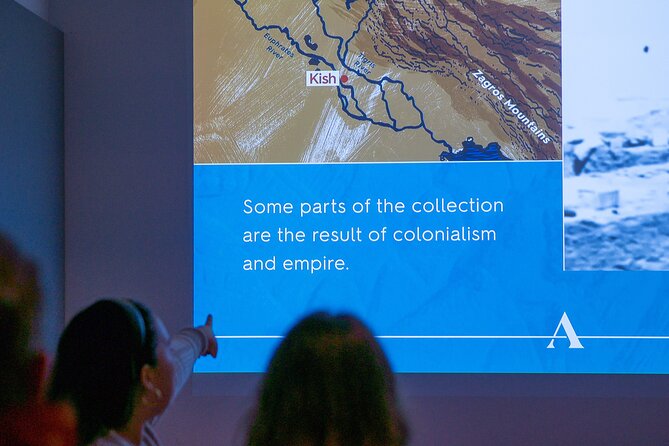
This is best for people who enjoy looking at objects with context and who don’t mind museum ethics being part of the conversation. You’ll get the most from it if you like:
- asking questions during a guided visit
- learning how exhibitions shape interpretation
- seeing connections between archaeology, collecting practices, and modern responsibility
It may be less satisfying if you want a traditional, purely descriptive tour that sticks to dates, artists, and technique without addressing colonialism, enslavement, excavation ethics, repatriation, or human remains.
Practical tips so you get the most out of the experience
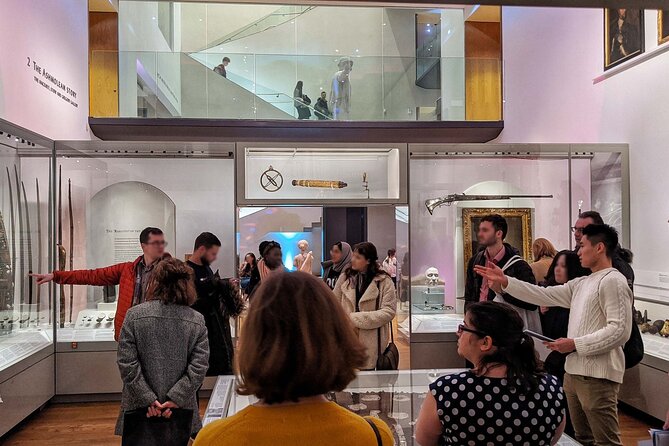
- Wear comfortable shoes. You’ll be moving gallery to gallery without long rests.
- Come ready to talk. The best parts of this tour come from questions and guided discussion, not from passively reading labels.
- Decide in advance how you want to handle heavy topics. You don’t have to engage in every detail, but you should expect them.
- If you’re planning your day in Oxford, give yourself a buffer before and after the tour so you’re not rushed at the start meeting point near the main entrance.
Should you book the Ashmolean Museum Tour by Uncomfortable Oxford™?
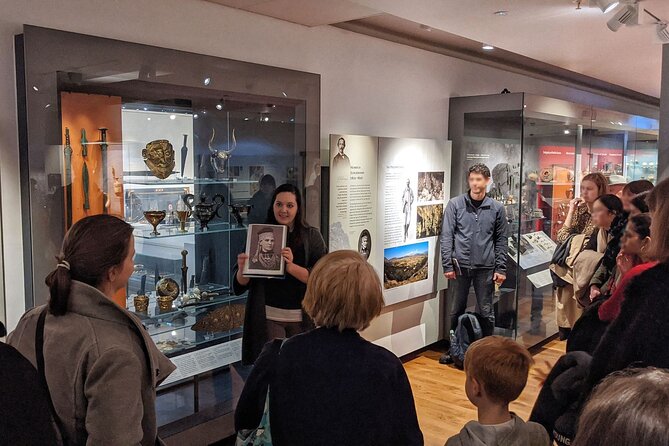
I’d book it if you want an Ashmolean visit that feels like more than sightseeing. The combination of small-group guiding and focused gallery themes—colonial collecting, repatriation, ethics of excavation and display, and the serious discussion of mummies and human remains—makes this a strong choice for anyone who likes thoughtful museums.
I would skip or swap to a different tour if your top priority is a laid-back highlight sweep with minimal emotional or ethical discussion. This one aims right at the uncomfortable parts of how museums work, and it does that with clarity.
If you’re on the fence, use this rule: if you’d rather understand how the museum thinks, book it. If you’d rather just browse art and ancient artifacts at your own pace, consider a more traditional option instead.
FAQ
How long is the Ashmolean Museum Tour?
It runs for approximately 1 hour 15 minutes.
Where does the tour start?
The meeting point is the Ashmolean Museum, Beaumont St, Oxford OX1 2PH, UK, near the Statue Gallery close to the main entrance.
How many people are in the group?
The tour has a maximum of 12 travelers.
What language is the tour offered in?
The tour is offered in English.
Is admission included?
Admission tickets are listed as free for the tour stops.
What topics does the tour cover?
It covers the Ashmolean’s origins, colonial collecting legacies, questions about classical displays and enslavement practices, ethics of excavations and replicas, colonialism and repatriation, and mummies and human remains as display items.
Are mobile tickets used?
Yes, the tour uses a mobile ticket.
What about service animals and public transportation access?
Service animals are allowed, and the meeting point is near public transportation.
What is the cancellation and weather rule?
You can cancel for a full refund up to 24 hours before the experience’s start time. If it’s canceled due to poor weather, you’ll be offered a different date or a full refund.