REVIEW · OXFORD
Top 10 Oxford Highlights with Divinity School and New College
Book on Viator →Operated by LetzGo City Tours GBP · Bookable on Viator
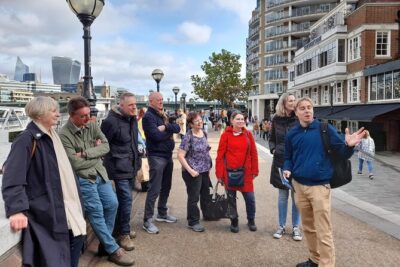
Oxford rewards slow walking. This route makes it efficient and memorable. I especially liked going inside the ticket-included Divinity School and hearing stories from Lucy-style local guides who connect the places to Oxford life. One heads-up: you’ll spend time outside for a couple of big sights, and the whole walk means cobblestones, hills, and stairs.
In about 2 hours 30 minutes, you’ll hit a smart cluster of central landmarks tied to Oxford’s medieval roots and its most famous modern pop-culture moments. The pace stays reasonable, and the group stays small enough (max 30) that you can actually listen and look at the details. It’s also one of the better-value ways to get paid entry into the two major indoor stops without having to juggle tickets on your own.
Best of all, this isn’t just photo stops. The guide weaves in the Oxford Martyrs story, astronomy connections, and the meaning behind famous buildings like the Bridge of Sighs. Wear comfortable shoes; if your feet hate uneven ground, plan a slower day before or after.
In This Review
- Key Oxford moments to look for on this 2.5-hour walk
- Where the tour starts: St Michael at the North Gate and the Oxford Martyrs thread
- Broad Street and the Sheldonian Theatre: you get the view, not the ticket lines
- Blackwell’s Bookshop: the perfect 5-minute Oxford pause (then you can browse for real)
- Bodleian Library: fast architectural glory tied to Harry Potter
- Divinity School: the indoor ticket-included star you’ll remember
- Bridge of Sighs and Hertford College: a famous name, viewed the practical way
- New College Lane and Halley’s House: astronomy shows up in Oxford’s stone
- New College: cloisters and chapel time with admission included
- Merton Street: cobblestones, an old coffee stop, and examination halls
- Oxford Covered Market: finish with local crafts and food
- Price and value: what your $67.96 actually buys
- Who should book this Oxford highlights tour
- Should you book this tour
- FAQ
- How long is the Oxford highlights tour?
- Is admission included anywhere during the tour?
- Which stops are outside-only?
- Do I need to buy extra tickets for St Michael at the North Gate or the Bodleian Library?
- What’s the meeting point and where does it end?
- What should I wear and prepare for?
- Is food or hotel pickup included?
- Is this tour suitable for limited mobility?
Key Oxford moments to look for on this 2.5-hour walk
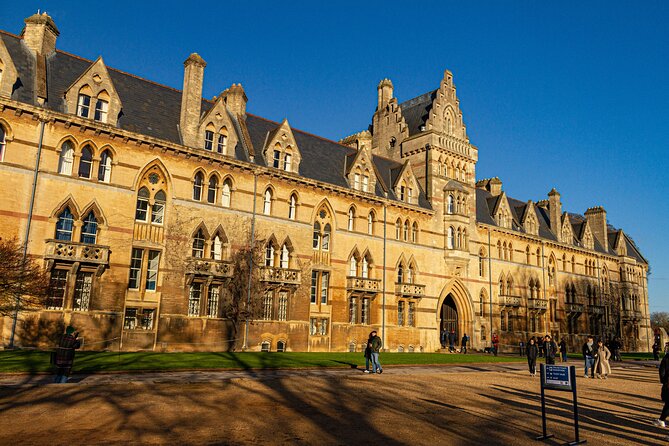
- St Michael at the North Gate: a site with roots around 1000–1050 and an Anglo-Saxon tower.
- Divinity School + New College admissions: your money goes to the places you can actually enter.
- Harry Potter crossover details: Hogwarts-style backdrops are part of the story here.
- Bridge of Sighs (view from outside): close enough to appreciate the design, not stuck behind a ticket line.
- Oxford Martyrs context: the church history connects to the Bocardo Prison tragedy near Broad Street.
- Oxford Covered Market finish: a practical last stop for local food and crafts.
Where the tour starts: St Michael at the North Gate and the Oxford Martyrs thread
You’ll meet at St Michael at the North Gate on Cornmarket Street. The churchyard and tower area is the kind of Oxford scene that makes you slow down, because it doesn’t look like it was designed for selfies. It has real age on its side: the oldest building is dated to roughly 1000–1050, with the tower from about 1040 still there.
What I like about starting here is the story hook. The guide connects St Michael’s to the Oxford Martyrs, who were imprisoned in Bocardo Prison and later burned at the stake. You’re not stuck learning only one moment in time—you get the sense of how the city has layers, and how events near Broad Street shape what you see today. If you’re a history fan, this first stop sets the tone fast.
Keep in mind that you’re mainly absorbing this as you’re walking and standing in the area, not buying extra entry tickets as part of this experience. If you want to go deeper on the church side, you can always plan that separately later.
You can also read our reviews of more tours and experiences in Oxford.


Broad Street and the Sheldonian Theatre: you get the view, not the ticket lines
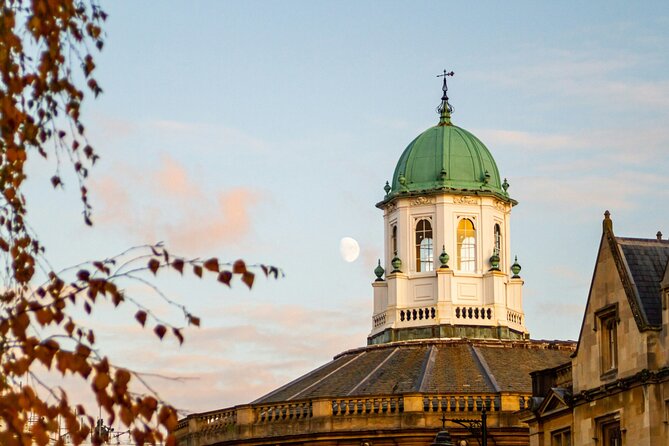
From St Michael’s, the walk heads into Broad Street, where Oxford’s academic power shows up in architecture. The Sheldonian Theatre is the highlight here. It’s an early masterpiece by Sir Christopher Wren, and it looks made for ceremony.
In this tour, you’ll stay outside. That’s not a deal-breaker if your main goal is orientation and context. You still get to frame the building properly, and your guide can explain why the Sheldonian matters without losing time waiting around for indoor access.
Practical tip: Broad Street is photo-friendly, but it’s also busy. If you’re visiting at a peak hour, hold your camera low and move with the group. You’ll get better angles by stepping a half pace aside rather than trying to stop dead in the middle.
Blackwell’s Bookshop: the perfect 5-minute Oxford pause (then you can browse for real)

Next is Blackwell’s Bookshop, the famous Oxford landmark with the reputation for serious shelves. The tour gives you a short photo moment outside, and then you get time to return and browse on your own afterward.
This is a great stop because it resets your brain. Oxford’s architecture is intense; a bookstore gives you something different. It’s also a practical move: you can use the time to pick up a map, a guidebook, or a souvenir book without feeling rushed.
The underground scale is part of what makes Blackwell’s special—over 3 miles of underground shelves. Even if you never see them all, just knowing the depth helps you appreciate why this place has such an Oxford following.
If you’re the type who needs to stretch your legs or grab a quick drink, this is your window.
Bodleian Library: fast architectural glory tied to Harry Potter
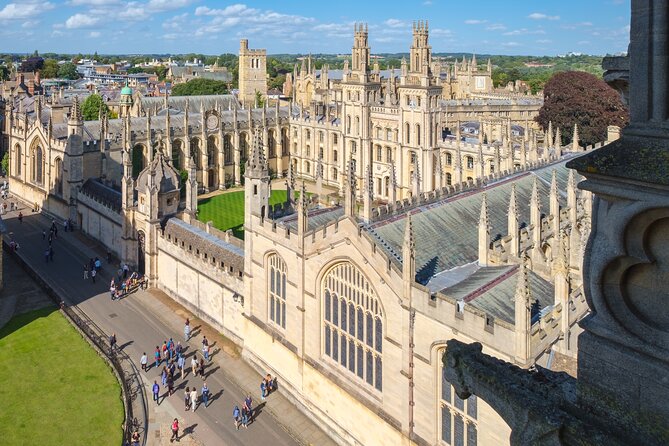
The Bodleian Library stop is short, but it’s a strong one. You’ll enter Oxford University grounds to walk through and take in the atmosphere of one of the most striking university spaces in Oxford and beyond.
Yes, it has famous movie connections. The Bodleian shows up in Harry Potter and the Philosopher’s Stone and also in Harry Potter and the Goblet of Fire. That matters because the guide can point out features in plain language, so you’re not just watching for recognition—you’re learning what you’re looking at.
Just note the trade-off: this stop is not built around paid entry. Admission isn’t included, and you’re likely not going to get the full “tour the library interior” experience in this time slot. Still, even a quick walk-through gives you the setting you need to understand why this library is part of Oxford’s identity.
If you’re a hardcore Harry Potter fan, you may want a longer separate visit later when you have more time.
Divinity School: the indoor ticket-included star you’ll remember
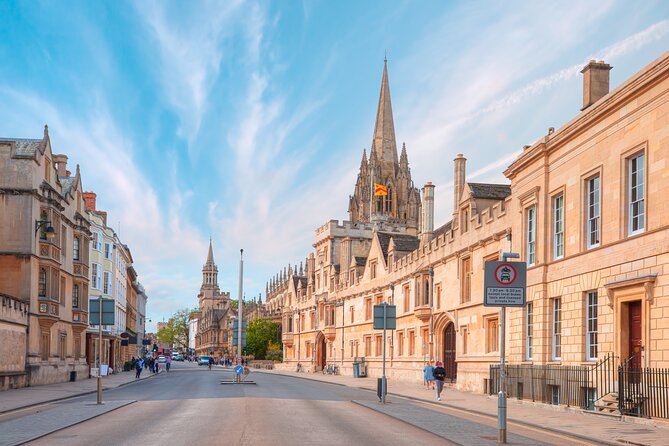
This is the big indoor payoff. The Divinity School is a 15th-century medieval building in the Perpendicular style, and it was designed for lectures, oral exams, and theological discussions. That use matters, because it shapes what the room feels like—purpose-built for thinking out loud.
You’ll have about 20 minutes here, with admission included. That’s a real advantage because Divinity School is one of those places where you want to be able to look around without bargaining for entry time at the counter.
Another reason I think this stop works so well is the pop-culture connection. The Divinity School was used as a backdrop for Hogwarts scenes, including the infirmary and classroom moments. You’ll still get the architectural and historical angle, but the movie tie-in helps the building stick in your memory.
If you only have one indoor “must” in Oxford, make it this one. The outside stops are nice, but this is the one that gives you atmosphere you can’t copy from the street.






Bridge of Sighs and Hertford College: a famous name, viewed the practical way

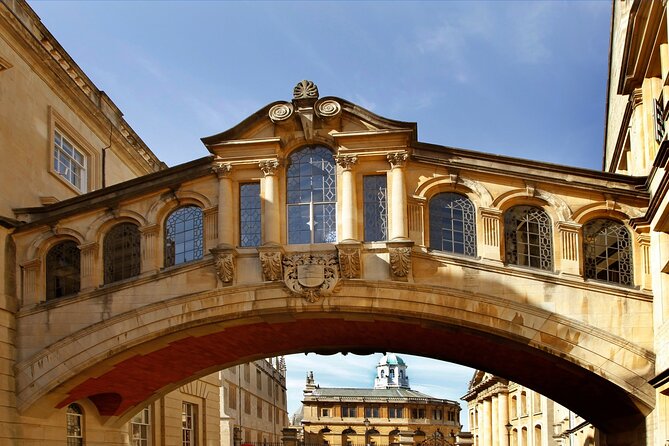
From Divinity School, you reach the Bridge of Sighs area. The bridge was completed in 1914 and connects two buildings at Hertford College. The guide also explains the comparison—its resemblance to the Rialto Bridge is part of why the name stuck, and the public reaction helped make it a well-known Oxford landmark.
In this tour, you’ll stay outside. That’s the right choice for timing and crowd flow, and it keeps the focus on understanding what you’re looking at. Your guide’s job here is to translate design into story: why the bridge is shaped the way it is, and how mythology and fact get tied together.
Even from outside, you should be able to appreciate the curve and the sense of connection it gives between the spaces it links. It’s also a good walking breather: you stand, you look, you listen, and then you move on.
If you hate stopping for long photos, this one can still work because it’s short and story-driven rather than photo-driven.
New College Lane and Halley’s House: astronomy shows up in Oxford’s stone
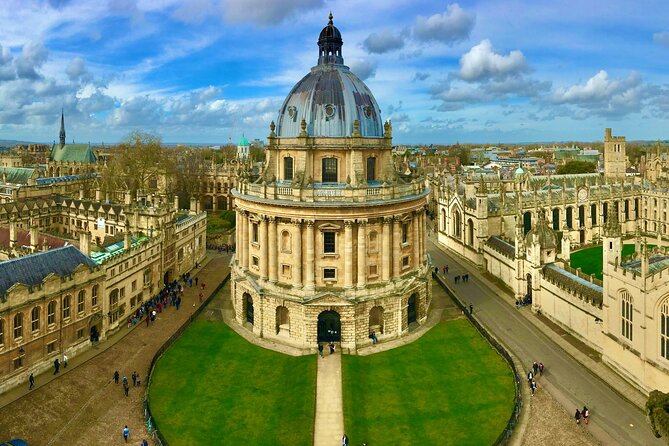
Next you’ll be in New College Lane, with a quick stop outside Halley’s House. Edmund Halley is the astronomer name you’ll hear here, and it’s a smart contrast to the gothic and religious tones you’ve already seen.
Even if you don’t know Halley’s work offhand, the point of this stop is to show Oxford’s range. It’s not only theology and college chapels. Science and observation have deep roots here too.
This part of the walk is brief, and admission isn’t part of it. Think of it as a caption on Oxford’s wall: a short moment that gives the city more dimensions than you’d get from only the big chapel-and-library themes.
New College: cloisters and chapel time with admission included
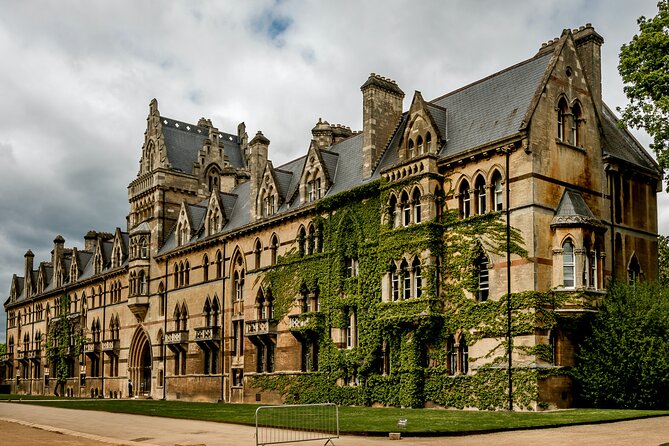
New College is the other indoor highlight, and it’s where you slow down again. You’ll visit this 13th-century college, including the grounds and cloisters, plus time at the chapel. Admission is included, so you’re not stuck doing math on ticket costs while you’re already in Oxford.
What I like about giving New College 40 minutes is simple: it’s enough time to actually feel the place. The cloisters and chapel are quieter zones in the middle of an active city center. You can step out of the tour pace for a moment, look up, and notice the way light moves across stone.
This stop also fits the Oxford story the other sites tell. Early religious purpose, learned rooms, and college life all connect here. If you’ve been collecting architectural impressions, this is where they start to become a pattern.
If your legs are tired by this point, treat this as your reset. Sit down where you can, breathe, and let your eyes do the work.
Merton Street: cobblestones, an old coffee stop, and examination halls
After New College, the tour heads to Merton Street, one of the quaintest cobblestoned streets in the British Isles. The guide makes several stops here and points out specific Oxford quirks.
Two highlights get mentioned in the tour experience. First, the oldest coffee shop in England. Second, the most famous examinations halls at a neo-Jacobean building dating back to the 1880s. Even if you don’t go inside for every detail, having those anchors makes the street more than just a pretty lane.
I also like how this segment slows the walking rhythm a bit. Instead of racing to the next landmark, you get more “pause and understand” time. It’s also a helpful moment to check in with your feet. Cobblestones can be rough, and this is where you’ll feel it if you didn’t heed the comfortable-shoes advice.
If you want a short snack break, this is a good stretch of the schedule to plan it around your energy level.
Oxford Covered Market: finish with local crafts and food
The last stop is Oxford Covered Market, set inside a market building dating back to the 1770s. You’ll have about 15 minutes to explore, with admission included for the market visit.
This is a smart finish because it gives you an easy real-world Oxford experience. The market is a place for local crafts, food, and drink, so you can turn your walking tour into a mini food plan. If you want something to take back to your hotel, this is often where you can find it.
Since you’re running out of time after this, use the stop strategically. Scan for what you like first, then decide. Markets can be tempting, but 15 minutes goes fast.
If the weather turns, the covered space is also a practical win.
Price and value: what your $67.96 actually buys
At $67.96 per person, you’re paying for a guided walk plus included admission to two major indoor stops: the Divinity School and New College. You also get market entry time at the Covered Market. Other major sights in the route are either outside views or short walks where admission is not included.
That’s where the value lies. You’re not trying to independently coordinate tickets for the two biggest “must-see” interiors. You also get an expert local English-speaking guide to connect the dots between architecture, Oxford history, and the stories that make these places feel like more than set dressing.
The experience runs about 2 hours 30 minutes and stays fairly compact around central Oxford, which helps. You’re not spending half a day commuting between distant areas.
One trade-off to consider is that a couple of big-name buildings are outside-only on this specific route. If you specifically want inside time for places like the Sheldonian Theatre or the Bridge of Sighs, you’ll need a separate focused visit later.
Who should book this Oxford highlights tour
This tour fits best when you want an efficient Oxford hit without losing the story. It’s also a good choice if you like the mix of history and pop-culture references, since the tour connects real Oxford spaces to Harry Potter scenes.
It’s especially appealing if you want indoor access to the Divinity School and New College but don’t want to spend your trip managing ticket logistics. The short stops to Oxford landmarks also work well for first-timers who need to build a mental map of central Oxford quickly.
From the feedback I’ve seen, it can work for big and small groups, including kids. Just be ready for a walk with uneven surfaces, hills, inclines/declines, and stairs.
Should you book this tour
I’d book this if your goal is a high-impact walk through central Oxford with admission included for the two biggest indoor sights. The Divinity School time plus New College cloisters and chapel are the core wins, and the guide’s storytelling helps those buildings feel alive, not just old.
I wouldn’t book it if you want a long, inside-focused tour where you enter every major landmark in Oxford. This is built for pace and variety, so a few sites are meant to be viewed from outside.
If you’re visiting Oxford for the first time, have limited time, or want a guided route that saves you from ticket hassle, this is a strong match. Book it soon enough—on average it’s taken about 34 days in advance—so you’re more likely to get the date you want.
FAQ
How long is the Oxford highlights tour?
It runs for about 2 hours 30 minutes (approx.). The schedule is designed around short stops plus the two main indoor visits.
Is admission included anywhere during the tour?
Yes. Admission is included for the Divinity School and New College. Oxford Covered Market also includes admission for the market visit.
Which stops are outside-only?
The tour specifies that you only stay outside for the Sheldonian Theatre and the Bridge of Sighs.
Do I need to buy extra tickets for St Michael at the North Gate or the Bodleian Library?
Admission is not included for St Michael at the North Gate or for the Bodleian Library as part of this experience. You’ll have limited time focused on walking and viewing.
What’s the meeting point and where does it end?
You start at St Michael at the North Gate, Cornmarket St, Oxford OX1 3EY, UK. The tour ends at Cornmarket Street in the city centre near Cornmarket Street.
What should I wear and prepare for?
Wear comfortable shoes because the tour includes uneven surfaces, cobblestones, hills, inclines/declines, and stairs. The tour operates in all weather, so dress appropriately.
Is food or hotel pickup included?
No. Hotel pickup and drop-off, transportation, and food and drink are not included.
Is this tour suitable for limited mobility?
It is not recommended for travellers with limited mobility, since the route includes walking over uneven ground and stairs. Participants should be in good health and able to handle regular walking.