REVIEW · LONDON
British Museum Highlights Private Tour in London including the Rosetta Stone
Book on Viator →Operated by City Wonders UK · Bookable on Viator
A museum this big can feel like a maze at first. This private British Museum highlights tour helps you get your bearings fast while focusing on the objects that most often become your trip’s “wait, that’s real?” moments. I like that you can ask questions in real time, and I also love the direct route to major stops instead of wandering in search mode.
You’ll spend about 2.5 hours with an English guide moving between the museum’s most memorable areas, including the Egyptian Rooms, the famous Parthenon Frieze, and standout British collections like Anglo-Saxon finds. After the guided portion, you’re free to keep exploring on your own where you want to linger.
One consideration: on a crowded day, the museum is still a big, active place with lots of walking and shifting groups. And if meeting-point details aren’t crystal clear for your specific booking, it can cost you time—so build in a little extra patience when you arrive.
In This Review
- Key Things That Make This Tour Worth Your Time
- Why a Private British Museum Highlights Route Works So Well
- The Meeting Point at Montague Place and How to Avoid Time Loss
- What You See During the 2.5 Hours: From Rosetta Stone to Parthenon Frieze
- Getting Oriented Inside the British Museum
- Rosetta Stone: Why It’s More Than a Language Reference
- Parthenon Frieze: A Monument Recreated in Stone
- Egyptian Rooms: Afterlife Beliefs You Can Actually See
- Anglo-Saxon Britain and Sutton Hoo’s Ship Burial
- Pacing, Walking, and When the Museum Gets Crowded
- Value for $141.56: What You’re Actually Paying For
- How Good Guides Change the Whole Museum Experience
- Who This Tour Suits Best (and Who Might Prefer DIY)
- Should You Book This British Museum Highlights Tour?
- FAQ
- How long is the British Museum highlights private tour?
- Where do we meet for the tour?
- Is this a private tour?
- Is the tour language English?
- What does the price include?
- Does the tour include food or hotel pickup?
- What if I need to cancel?
Key Things That Make This Tour Worth Your Time
- Rosetta Stone with real context so you understand why a single slab changed how we read ancient Egypt
- Parthenon Frieze viewing with historical framing, not just a quick photo stop
- Egyptian Rooms focused on afterlife beliefs, helping mummies and funerary objects make sense
- Anglo-Saxon highlights like Sutton Hoo to widen your view beyond the big classical names
- Private pacing you control, with time for questions rather than “next group, next stop”
- Efficient route for limited schedules, ideal when you can’t give the museum a full day
Why a Private British Museum Highlights Route Works So Well
The British Museum can be one of those trips where you feel guilty the whole time. You walk in, spot one incredible thing, then realize you’re still far from the other must-sees—and the place keeps going. With a private highlights approach, the goal is simple: you trade aimless wandering for an efficient path with explanations that actually help you see.
I like that the tour is built for questions. You’re not stuck with a pre-written script that you can’t pause. If something catches your eye—an inscription, a style of carving, an object’s purpose—you can ask, and your guide can connect it to what came before and after.
The other smart part is that you don’t lose your whole afternoon. In about 2 hours 30 minutes, you should come away with a coherent overview of the museum’s sweep—from ancient Egypt to classical Greece to British history—then you can choose what to revisit on your own.
You can also read our reviews of more private tours in London


The Meeting Point at Montague Place and How to Avoid Time Loss
Your tour starts at Montague Place by the British Museum’s north entrance. The meeting spot is described as Montague Place, London, with stone lions by the doorway—so look for those lions as a visual anchor when you get there.
This matters more than it sounds. The museum is free to enter, so entrances can feel busy, and guides have to herd groups through a steady flow of visitors. If you show up exactly at the start time, you might end up waiting while you try to find your guide in the crowd.
Also note that the tour runs as a private experience for your group, ending back at the meeting point. That makes it easier to plan the rest of your day—grab a coffee nearby afterward or continue sightseeing without worrying about transfers.
What You See During the 2.5 Hours: From Rosetta Stone to Parthenon Frieze
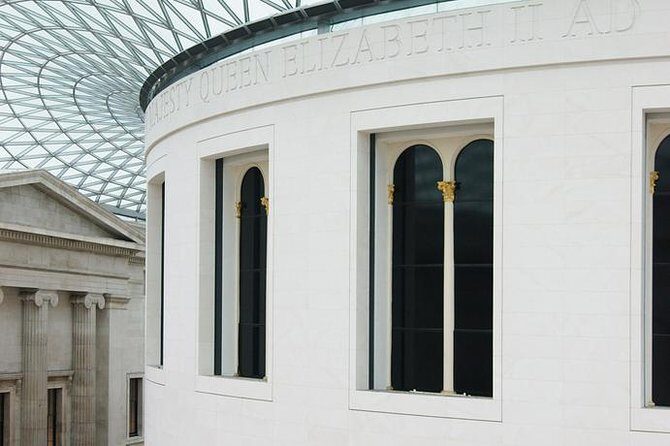
This tour keeps you on the “greatest hits” path, but it doesn’t treat everything like a checkbox. The descriptions you’ll get are meant to give you context for what you’re looking at, not just dates and names.
Here’s the flow you can expect in practice:
Getting Oriented Inside the British Museum
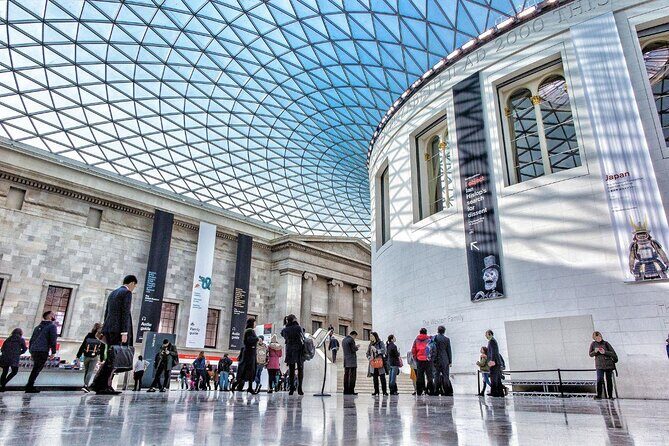
Once you’re in, your guide helps you orient quickly through the museum’s layout. The British Museum has 70 galleries and covers around two million years of human history, so even confident visitors can feel overwhelmed. An expert guide is what turns the museum from a maze into a route with meaning.
Rosetta Stone: Why It’s More Than a Language Reference
You’ll see the Rosetta Stone as one of the standout objects. Yes, many people know it from language-learning headlines, but the key value here is understanding its role in deciphering Egyptian hieroglyphs. Your guide should explain what made this stone so important for unlocking Egyptian writing, so you look at it with better questions in mind.
The Rosetta Stone works on two levels. It’s visually striking even before you read the story. Then, once you understand how it helped scholars interpret hieroglyphs, it becomes a kind of bridge between worlds—ancient Egyptian culture and modern understanding.
You can also read our reviews of more museum experiences in London




Parthenon Frieze: A Monument Recreated in Stone
Another major stop is the enormous Parthenon Frieze. This sculpture is described as a long stretch of classical craftsmanship (over 525 feet long in its original form), and it once stood on the Acropolis in Athens. The tour frames it as one of the most important surviving relics of classical Greece.
What I find useful about this kind of guided stop is learning how to “read” the frieze. Instead of treating it as one big artwork, you start noticing the storytelling and the style—how scenes and figures relate to the broader idea of classical civic life and religious meaning.
Egyptian Rooms: Afterlife Beliefs You Can Actually See
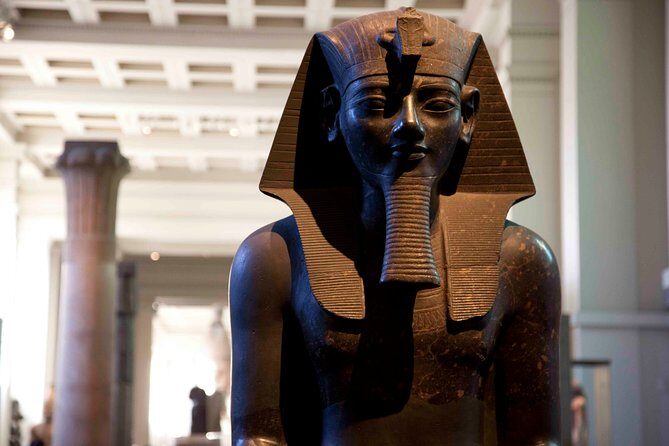
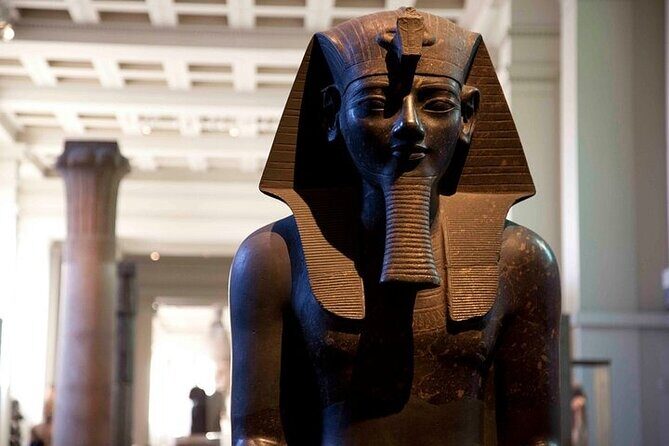
The Egyptian Rooms and their funerary displays are a major focus. Your guide explains why death and the afterlife mattered so much in ancient Egyptian culture, which changes how you view the mummies and associated objects.
If you’ve ever felt stuck staring at museum labels, this is where a guide can make a real difference. Funerary objects can feel strange or distant until someone connects them to beliefs about protection, continuity, and the practical reality of burial practices.
Anglo-Saxon Britain and Sutton Hoo’s Ship Burial
You also get Anglo-Saxon history, including the Sutton Hoo ship burial. The tour highlights how unusual and significant these finds are—and why they survived long enough to be discovered in the first place.
This part is especially valuable because it reminds you that the British Museum isn’t only a museum of other places. It’s also a place where Britain’s own early story can hit you hard, because the artifacts weren’t meant for later viewers. They were made for a world that didn’t survive the way we did.
Pacing, Walking, and When the Museum Gets Crowded
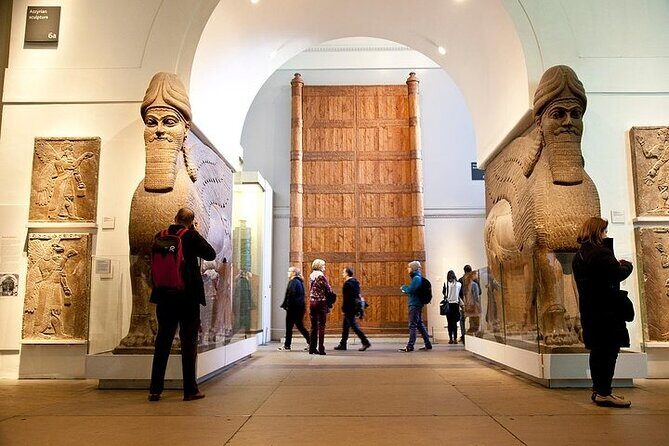
The British Museum Highlights tour is designed to be compact. That’s great if your schedule is tight or if you’re trying to avoid the “where do I even start” feeling.
Still, consider the physical reality: you’ll be moving through major display areas over roughly 2.5 hours. The museum can also be packed—especially on popular days or rainy weeks—so you’ll want comfortable shoes. A quick highlights route is only relaxing if your body can handle the walking and the stair-and-crowd rhythm.
One more timing note: the museum is free to enter, so visitor volume can spike. A guide route helps you avoid getting stuck in the wrong queue or taking detours that cost you time.
Value for $141.56: What You’re Actually Paying For
At $141.56 per person, this isn’t the cheapest way to see the British Museum. But the price makes sense when you think about what you’re buying:
- A professional English guide who can connect objects across different civilizations
- Admission included for the guided portion, so you’re not juggling tickets midstream
- Efficiency—you’re not spending half your time finding the highlights
- A private format for your group, so you can ask follow-up questions
One key point: because the museum itself is free, many people underestimate how much time matters. If you only have half a day, spending it “figuring it out” can feel like wasted sightseeing. With a guide, you’re paying for translation into something you can actually enjoy—story, context, and route planning.
That said, private tours rely on the guide and the day’s conditions. When everything clicks, it’s a high-value experience. When it doesn’t, it can feel expensive compared to walking in and reading labels yourself.
How Good Guides Change the Whole Museum Experience
One of the best parts of the private format is that you’re not stuck with whatever explanation happens to be convenient. Different guides bring different strengths, and you can feel the difference in how confidently they connect objects to the bigger story.
In real-world experiences, guides such as Rob and Guy were praised for being friendly, early-arriving, and strong at pointing out what’s significant without overloading you. Norma was noted for being enthusiastic and very strong on the details behind the top exhibits. Trudy earned repeat praise for making artifacts feel alive with background information and for tailoring the feel of the tour to a small group.
There’s also a reality check. One negative experience described issues like difficulty locating the guide at the start, unclear communication, and a few moments where information wasn’t accurate. Another complaint mentioned professionalism concerns and not respecting exhibit lighting rules. These stand out because they’re the kind of problems that can make the whole experience feel off.
So here’s my practical advice: go in expecting excellence, but also arrive early and be ready to verify your exact meeting instructions on the day.
Who This Tour Suits Best (and Who Might Prefer DIY)

This tour is a great fit if you:
- have limited time in London and want the best highlights in one sitting
- feel overwhelmed by large museums and want a clear route
- like museum storytelling tied to real objects, not just a general overview
- want time to ask questions in an intimate group setting
It may be less ideal if you:
- want to see the museum at your own slow pace for several hours
- enjoy getting lost and browsing lots of small exhibits without guidance
- need a fully step-free, low-walking experience (this tour involves significant movement through major areas)
If you’re a “labels-only” visitor, you can absolutely do the British Museum on your own. But if you’re trying to make your time count, a guide route is one of the most sensible investments you can make.
Should You Book This British Museum Highlights Tour?
Book it if you’re trying to squeeze a meaningful museum experience into a short London window. The strongest reason to choose this tour is that it turns the British Museum’s scale into a human-sized story—Rosetta Stone explained in context, the Parthenon Frieze put into perspective, Egyptian funerary culture made understandable, and Anglo-Saxon finds like Sutton Hoo given the attention they deserve.
Skip or rethink it if you’re already planning a full day to wander and you’re comfortable using a museum guide on your own. With the museum being free, DIY can work well if you love freedom more than direction.
If you do book, arrive a bit early for the Montague Place meeting area, watch for the stone lions landmark, and be ready to start with a clear plan. That’s how you get the main benefit of this experience: seeing more, understanding more, and leaving with fewer “I missed that” regrets.
FAQ
How long is the British Museum highlights private tour?
It runs for about 2 hours 30 minutes.
Where do we meet for the tour?
You meet at Montague Place by the British Museum’s north entrance, near the stone lions.
Is this a private tour?
Yes. It’s private for your group only.
Is the tour language English?
Yes, the guide is provided in English.
What does the price include?
The professional English guide and all fees and taxes are included, and admission for the guided portion is included.
Does the tour include food or hotel pickup?
No. Food and drinks aren’t included, and there’s no hotel pickup or drop-off.
What if I need to cancel?
You can cancel for a full refund up to 24 hours in advance of the experience’s start time. If you cancel less than 24 hours before, the amount paid won’t be refunded.