REVIEW · LONDON
Crime and Policing London Walking Tour
Book on Viator →Operated by Francis Mullan · Bookable on Viator
Follow the clues through central London. This 2h15 walking tour strings together Bow Street, Trafalgar Square, and New Scotland Yard with policing history, cold-case style storytelling, and real police material.
I especially like the former officer perspective, because the stories come with practical detail about how policing worked in London. I also like the small group format (max 20), which makes it easier to ask questions without feeling like you’re shouting over everyone.
One drawback to think about: the tour leans into murders, investigations, and grim episodes, so it’s not the lightest kind of sightseeing.
In This Review
- Key things that make this tour worth your time
- Bow Street to New Scotland Yard: the route and why it works
- Walking with a former officer: what changes when the guide has real experience
- Stop-by-stop: what you’ll see and what each location adds
- Stop 1: Bow Street — Magistrates Court and the Bow Street Runners
- Stop 2: Aldwych — a notorious unsolved murder and espionage
- Stop 3: Charing Cross — the Blue Lamp and a very busy police station
- Stop 4: Northumberland Avenue — Sherlock Holmes Pub, Arthur Conan Doyle, and Scotland Yard
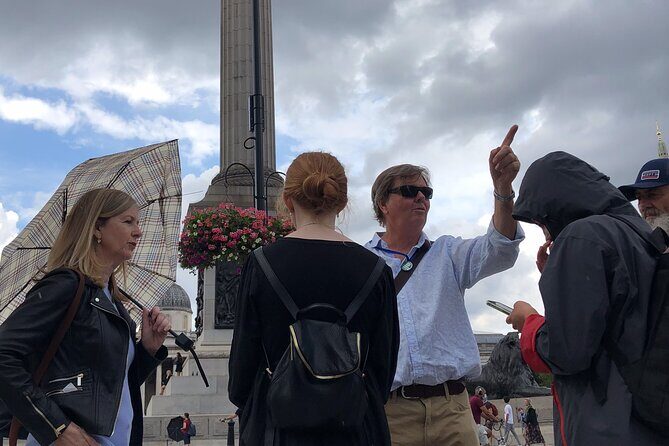
- Stop 5: Trafalgar Square — protests, riots, and the world’s smallest police station
- Stop 6: Whitehall — government heart, women in policing, and wartime London
- Stop 7: Great Scotland Yard — London police creation and first HQ
- Stop 8: Metropolitan Police — the iconic revolving sign
- What this tour teaches you about London crime (without getting lost in gore)
- Price and value: is about $48.61 fair for a 2h15 walk?
- Timing, pace, and comfort: how to plan your day
- Where the walk ends at 35 Victoria Embankment (and why that’s a plus)
- Who should book this tour, and who might want to skip it
- Should you book Crime and Policing London?
- FAQ
- How long is the Crime and Policing London Walking Tour?
- Where does the tour start and where does it end?
- What language is the tour offered in?
- What’s the maximum group size?
- What’s included in the tour besides the guide?
- Are there admission tickets you need to buy for the stops?
- Is the tour suitable for most travelers?
- Is service animal access available?
- What if the tour is canceled due to weather?
- Can I cancel and get a refund?
Key things that make this tour worth your time
- Former-police storytelling: you’re guided by someone with real-world policing experience, not just a textbook historian
- Central London route: major landmarks show up alongside the policing story, so you’re not stuck in one narrow neighborhood
- Real regalia to examine: included kit and equipment lets you look at historic police items up close
- Free admission stops: each listed stop is admission ticket free, so you don’t waste your time hunting for entries
- Active questions encouraged: the format gives you room to ask how things worked, then connect it to what you’re seeing
- Ends near Westminster transport: you finish by New Scotland Yard with easy Tube and bus options for more sightseeing
Bow Street to New Scotland Yard: the route and why it works
This walk is built like a timeline you can actually follow on foot. You’ll cover key spots across central London in about 2 hours 15 minutes, keeping a gentle pace along the way. The idea is simple: as you move through the city, your guide ties each location to how policing developed and how crime shaped public life.
You’ll also appreciate the practical setup. It’s small (maximum 20 travelers), it’s offered in English, and you get a mobile ticket. Plus, the walking part is timed so you can absorb the storytelling without sprinting between photo stops.
The tour starts at Covent Garden Underground (Long Acre) and finishes at 35 Victoria Embankment (New Scotland Yard), close to Westminster Underground. That end point matters because it lets you roll straight into nearby sights, restaurants, and bars without a long commute.
You can also read our reviews of more walking tours in London

Walking with a former officer: what changes when the guide has real experience
A crime and policing tour can go two ways: either it’s mostly “and then this happened,” or it connects the story to how the system operated. This one leans toward the second approach, and that comes through because the guide is (per the tour’s provider) a former police officer and can speak from lived experience.
What I like about this style is how it turns landmarks into working tools. Instead of only describing famous buildings, you learn how institutions functioned: who did what, why certain places mattered, and what policing looked like before the modern setup you recognize today.
Francis Mullan is the main provider listed for the experience, and the feedback also highlights another guide named David for being especially strong at explaining and answering questions. Either way, the tone stays practical. You’re not just hearing facts—you’re getting the “how it would have felt on the ground” layer.
One note: this is still a walking tour with stories, not a courtroom drama. You’ll want to be comfortable with darker subject matter, because the route includes murder-related tales and investigation themes.
Stop-by-stop: what you’ll see and what each location adds
The tour is designed around short, focused stops. Each one is about 10 minutes (with one slightly longer stop), which means you’ll usually get one clear takeaway per location: a key policing fact, a case story, or a piece of how London kept order.
Stop 1: Bow Street — Magistrates Court and the Bow Street Runners
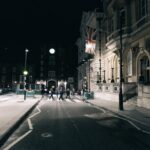
You begin at Bow Street, where you’ll see a police station and Magistrates Court. This spot is presented as a kind of “heart” of early policing in London, and it also connects to the Bow Street Runners, a famous policing group you’ll hear about here.
Why it’s a smart first stop: it gives you a foundation. Before the big city institutions, before the modern police framework, you’re starting with the idea that enforcement and investigations had a center of gravity, and Bow Street was part of that early story.
Practical tip: take a moment to notice how the street setting feels like a working urban area, not a museum. That helps the rest of the route land better, because London crime history is tied to real neighborhoods.
Stop 2: Aldwych — a notorious unsolved murder and espionage
From Bow Street, the walk moves to the Aldwych area, where you’ll hear about a saddest unsolved murder in London. This stop also points into international espionage and murder, broadening the tour beyond local street crime.
What makes this stop valuable is the shift in flavor. You’re not only looking at police buildings; you’re seeing how London’s role in global politics and secrecy can tangle with investigations. It’s also a reminder that “unsolved” doesn’t mean “unknown”—it means there’s still a mystery that history never fully resolved.
This is one of the stops where the tone is likely to feel most intense, so if you prefer lighter sightseeing, it’s worth mentally bracing here.




Stop 3: Charing Cross — the Blue Lamp and a very busy police station
Next comes Charing Cross, where you’ll hear stories described as grisly murder and mayhem. You’ll also see one of the busiest police stations in Europe and learn about the famous Blue Lamp associated with London.
This stop works because it connects crime stories to the everyday machinery of policing. The Blue Lamp detail helps you link pop culture vibes with real public-facing policing. It also gives you a handle on how London presented enforcement to the public.
Practical tip: Charing Cross is busy. Wear shoes that handle crowds, and be ready for the fact that photo angles will be limited by foot traffic.
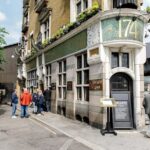
Stop 4: Northumberland Avenue — Sherlock Holmes Pub, Arthur Conan Doyle, and Scotland Yard
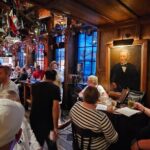
Here you pause near the Sherlock Holmes Pub, tied to the fictional detective created by Arthur Conan Doyle. Then you cross toward Great Scotland Yard, highlighted as where policing was invented.
This stop is playful on the surface, but it’s doing real work. It’s a bridge between myth and institution. You get to look at how the city’s crime image—real and fictional—helped shape what people expect policing to look like.
Also, the guide’s police background helps keep this from turning into only a literary detour. You’ll hear how the real-world setup at Scotland Yard links back to the larger policing evolution you started at Bow Street.
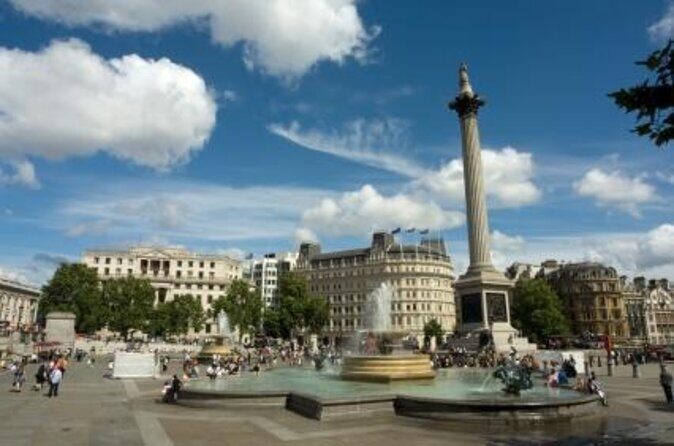
Stop 5: Trafalgar Square — protests, riots, and the world’s smallest police station
At Trafalgar Square, you’ll connect the police story to national celebrations and public unrest. The tour mentions demonstrations and riots, watched by the world’s smallest police station.
This is where the tour becomes less about famous cases and more about policing in public space. Trafalgar Square is a stage. That means policing isn’t only about catching criminals; it’s also about crowd control, visibility, and response when public events turn volatile.
Practical tip: because Trafalgar Square draws crowds, your time here may feel different depending on the day. But the stop is short on purpose, so you get the takeaway without standing around too long.
Stop 6: Whitehall — government heart, women in policing, and wartime London
Next is Whitehall, with Downing Street as a backdrop for the conversation about how policing intersected with government. You’ll also hear about the role of women in policing and the police in wartime London.
This is a thoughtful stop because it widens the lens. Crime and policing in London weren’t just street-level stories; they were also shaped by national priorities. Wartime conditions, plus changing roles for women in the police system, add depth that many walking tours skip.
If you care about social history—who was allowed to do what, and how institutions adapted—this is one of the best parts of the route.
Stop 7: Great Scotland Yard — London police creation and first HQ
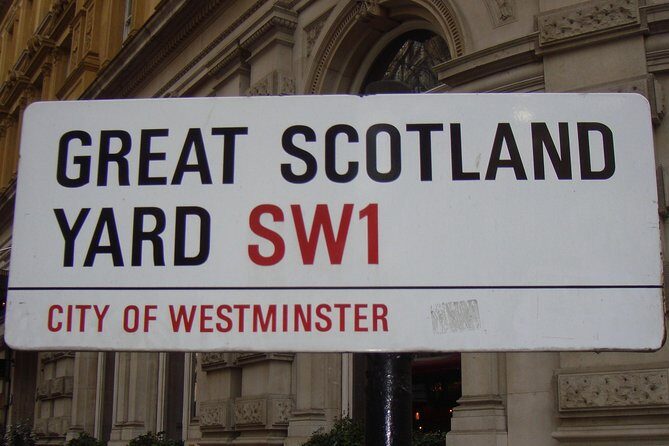
The tour returns to Great Scotland Yard again, focusing on where London police was created and describing it as the first Police HQ.
Revisiting the same broader area is intentional. It’s meant to reinforce the “why this place matters” message from earlier, but with a more focused lens on institutional origins. Think of it as you building a mental map: building, purpose, and legacy.
Stop 8: Metropolitan Police — the iconic revolving sign
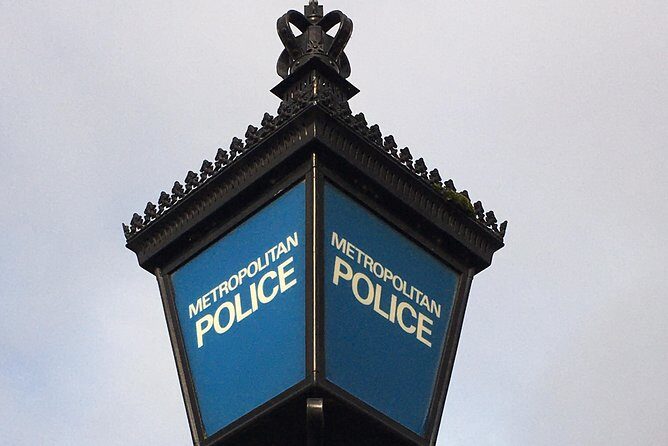
You finish with Metropolitan Police, including the iconic revolving sign that’s famed throughout the world.
This ending point is satisfying because it gives you a recognizable symbol—something you can remember even after you leave the sidewalk. It’s a neat closing for a tour that started with early policing and evolved into modern London’s police identity.
What this tour teaches you about London crime (without getting lost in gore)
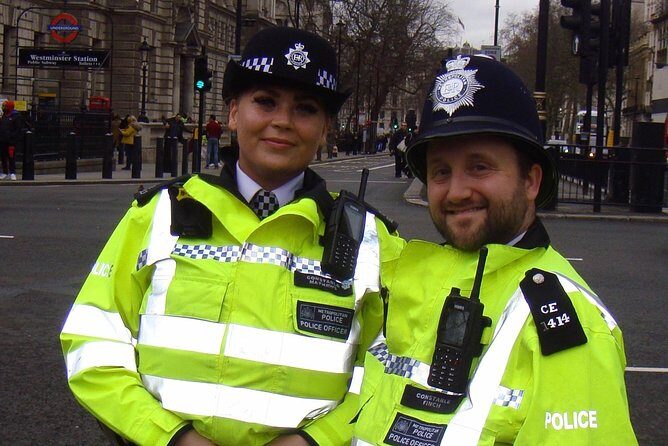
The tour’s strongest value is the framing. You hear about murders and mayhem, yes, but the real takeaway is how policing became a public system. Each location adds a piece: early enforcement in one area, investigations and mystery in another, crowd policing in major squares, and institutional growth through Scotland Yard and the Metropolitan Police era.
I also appreciate that the guide is described as answering questions and sharing personal insights. That matters because crime history is full of details that only make sense when someone explains the logic behind them. When you can ask follow-ups, you leave with understanding, not just a list of spooky stories.
One more practical benefit: this is a way to see central London with intention. You’re not only chasing icons like you might on a standard sightseeing walk. Instead, each landmark has a job in the larger story.
Price and value: is about $48.61 fair for a 2h15 walk?
At $48.61 per person for around 2 hours 15 minutes, it’s priced like a specialized guided experience for central London. The value comes from a few concrete things, not just the topic.
First, you’re paying for a former police officer perspective and real storytelling ability. That’s hard to replicate with a self-guided audio tour, because the best parts of crime history often come from context and clarification.
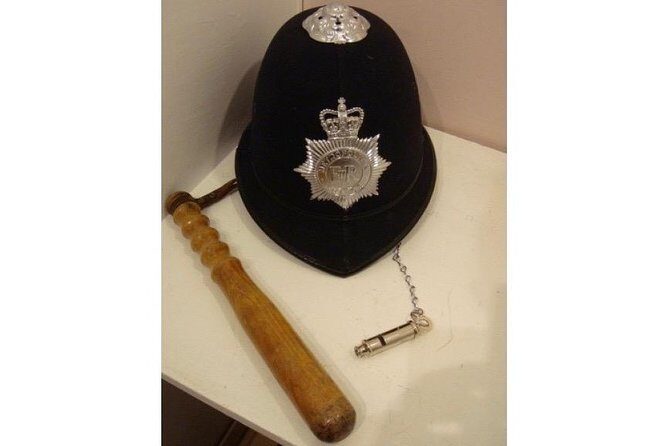
Second, kit and equipment are included, with the chance to examine real historic items of police regalia. Even if you’ve done plenty of museum tours, there’s a difference between reading about objects and actually seeing them up close.
Third, the listed stops are admission ticket free, so you’re not paying extra to access each point. That keeps the budget predictable and prevents the tour from turning into a “surprise fees” situation.
Finally, the group size cap of 20 helps justify the price. Smaller groups tend to mean more interaction, more question time, and fewer people blocking your view when you’re looking at details.
If you like crime history, policing, and how institutions evolve, this is the kind of tour where the cost starts to feel like it buys you understanding.
Timing, pace, and comfort: how to plan your day
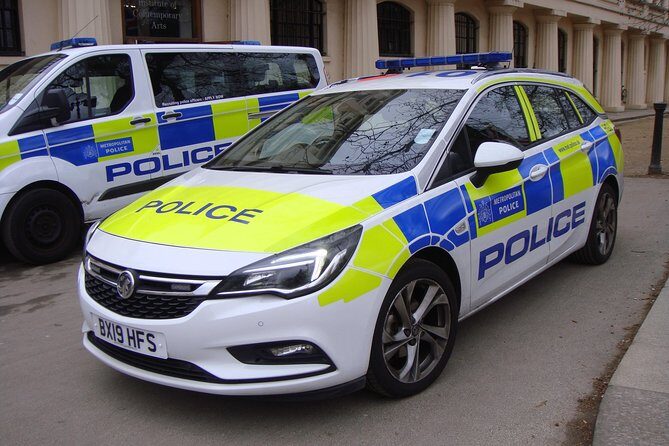
This tour is set up as a gentle pace walking route. That matters because you’re outdoors in central London, often around busy streets and open plazas. Comfortable footwear is the one clear must.
You’ll also want to think about weather. The experience notes it requires good weather, and if it’s canceled for poor conditions, you’re offered a different date or a full refund. That’s not just a legal line; it affects whether you’ll actually enjoy the walk or feel stuck in unpleasant conditions.
On hot days, one review-style example mentions the guide managing sun exposure. You should still plan for heat and hydration, but it’s a sign that this tour is run with real comfort in mind rather than a rigid “no breaks” approach.
Toilets and refreshment stops are said to be available if needed. Still, if you’re the type who hates interrupting flow, you can use the pre-planning stage to time your snack and water before you meet at Covent Garden.
Where the walk ends at 35 Victoria Embankment (and why that’s a plus)
Finishing at New Scotland Yard near Westminster Underground is a smart move for your schedule. It’s a major transport hub with Tube, buses, and riverboat options.
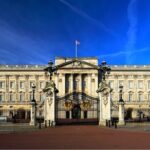
It also puts you close to more sightseeing. One account highlights that after the tour, it’s easy to continue toward big Westminster landmarks like Big Ben and Westminster Abbey, plus the area around Buckingham Palace and Trafalgar Square.
So you’re not stuck doing the classic “pay tour, then wait 45 minutes for transit.” You’re done, you’re near everything, and you can decide your next move on the spot.
Who should book this tour, and who might want to skip it
This is a great match if you:
- love London history but want it told through a specific lens
- enjoy true-crime style stories that connect cases to the real police system
- like asking questions and hearing follow-up explanations from someone with police experience
- want a guided walk that ends near central transport so you can keep sightseeing
It might be less ideal if you:
- want only cheerful, light sightseeing
- get uncomfortable with stories involving murder and grisly episodes
- prefer long museum time over short, outdoor stops
Should you book Crime and Policing London?
I’d book it if you want London with a purpose. The combination of former officer guidance, small group size, and the included chance to handle historic police regalia is a strong mix for the price. Add the fact that the stops are admission ticket free and the walk ends near Westminster Underground, and it becomes a practical day plan, not just an interesting theme.
If you enjoy stories where buildings matter because they once mattered operationally, this tour will feel especially satisfying. If your idea of a great day is avoiding dark topics, choose carefully and be ready for a tougher tone.
In short: book this one when you want London to make sense through policing history, not only through postcards.
FAQ
How long is the Crime and Policing London Walking Tour?
It runs for about 2 hours 15 minutes.
Where does the tour start and where does it end?
It starts at Covent Garden Underground Ltd, Long Acre, London WC2E 9JT, and ends at 35 Victoria Embankment, London SW1A 2JH near Westminster Underground Station.
What language is the tour offered in?
The tour is offered in English.
What’s the maximum group size?
The tour has a maximum of 20 travelers.
What’s included in the tour besides the guide?
Kit and equipment are included, and you’ll have the opportunity to examine real historic police regalia.
Are there admission tickets you need to buy for the stops?
The listed stops are admission ticket free.
Is the tour suitable for most travelers?
It’s described as a walking tour at a gentle pace, and most travelers can participate. Comfortable footwear is recommended.
Is service animal access available?
Service animals are allowed.
What if the tour is canceled due to weather?
The experience requires good weather. If it’s canceled because of poor weather, you’ll be offered a different date or a full refund.
Can I cancel and get a refund?
Yes. You can cancel up to 24 hours in advance for a full refund.